
Table of Contents >> Show >> Hide
- What “Free Garage Plans” Actually Mean (So You Don’t Get Catfished by a PDF)
- Quick Sizing & Door Cheat Sheet
- Before You Build: Permits, Codes, and Other Mood-Killers That Save Your Budget
- 9 Free Garage Plans (And Who Each One Is Perfect For)
- 1) The “Classic” 12' × 20' Detached One-Car Garage
- 2) The 14' × 22' “One-Car Plus Breathing Room” Plan
- 3) The Compact 22' × 22' Detached Two-Car Garage
- 4) The “Standard Modern” 24' × 24' Two-Car Garage
- 5) The 24' × 24' Garage With Loft (The “Storage Upstairs, Sanity Downstairs” Plan)
- 6) The Attic-Truss “Room Above the Garage” Concept
- 7) The 26' × 26' Two-Car Garage With Bonus Room Potential
- 8) The 24' × 34' Three-Car Garage (Or Two Cars + The Best Workshop You’ve Ever Had)
- 9) The 20' × 40' RV / Boat Garage (The “Clearance Anxiety” Killer)
- Build-Smart Upgrades That Make Any Garage Plan Better
- Common Mistakes (So You Don’t Star in Your Own DIY Horror Film)
- FAQ
- Garage-Building “Experience” Notes (The Stuff Nobody Tells You)
- Conclusion
A garage is basically a tuxedo for your car: it keeps the weather off, hides the clutter, and makes your house look like it has its life together.
The only downside? Building one can feel like you’re signing up for a new hobby called “Standing in the lumber aisle questioning your choices.”
The good news: free garage plans are everywheresome are full, permit-ready drawing sets, and some are “here’s the vibe… good luck, champ.”
This guide helps you pick the right kind, choose the right size, and avoid the classic DIY tragedy of building a beautiful garage that’s two inches too small for your truck.
What “Free Garage Plans” Actually Mean (So You Don’t Get Catfished by a PDF)
In the wild, “DIY garage plans” usually fall into three buckets:
- Permit-style plan sets: floor plan, elevations, sections, details, and sometimes electrical layout. These are the golden tickets.
- Sample plans / example drawings: great for layout and materials thinking, but may need local tweaks or engineering depending on wind, snow, soil, and code.
- Step-by-step builds: lots of photos and process guidancefantastic for learning, but not always formatted like a construction drawing set.
Your mission is to match the plan type to your goal. If you’re pulling permits (and you probably are), choose plans that look like they expect a plan reviewer to read thembecause they do.
Quick Sizing & Door Cheat Sheet
Picking the footprint is 80% of garage happiness. The other 20% is remembering you’ll eventually want shelves, a workbench, bikes, and a mysterious collection of “perfectly good boards” you’ll never throw away.
Common Garage Footprints
| Garage Type | Practical Starting Size | Why It Works |
|---|---|---|
| 1-car | 12′ × 20′ to 14′ × 24′ | Fits most cars with room to open doors (and keep your knuckles). |
| 2-car | 20′ × 20′ to 24′ × 24′ | Parking + storage without turning into a sideways-shuffle simulator. |
| 3-car | 24′ × 34′ (and up) | Ideal for families, hobbies, or “I swear I only have one project car.” |
| RV / boat / tall bay | 20′ × 40′ (varies) | High doors, deeper bays, and less heartbreak at clearance time. |
Typical Garage Door Sizes
- Single doors: commonly 8′ or 9′ wide by about 7′ tall (taller options exist for trucks and lifted vehicles).
- Double doors: commonly 16′ wide by about 7′ tall.
Pro tip: measure your actual vehicles (including mirrors, roof racks, and that bike mount you forget exists) before you fall in love with a “standard” plan.
Before You Build: Permits, Codes, and Other Mood-Killers That Save Your Budget
1) Zoning, setbacks, and “Will this even fit on my lot?”
Most garage problems start with a tape measure and end with a zoning office politely saying, “No.”
Check setbacks, lot coverage limits, utility easements, and whether detached structures require special placement rules in your area.
2) Attached garage basics: fire separation and safety
If your garage connects to the house, codes often require a fire-resistant separation between garage and living space.
Translation: the wall/ceiling assembly isn’t just a place to hang old sports postersit’s part of a safety system.
Also, treat carbon monoxide as the sneaky villain it is: keep proper alarms and never idle vehicles in the garage “just for a minute.”
3) Foundations: slab, frost line, drainage, and reality
Foundation choices depend on climate, soil, and what you’re parking. A slab-on-grade is common, but details matterespecially in cold climates where frost depth rules the world.
Drainage matters too: water should move away from the building, not toward your future tool collection.
4) Concrete reinforcement (aka: don’t guess)
Slabs can use wire mesh or rebar depending on thickness and load. The point isn’t to “add metal because it sounds tough,” but to follow guidance that fits your design and local requirements.
If you’re parking heavier vehicles (big trucks, RVs), plan accordingly and consider professional input for the slab design.
9 Free Garage Plans (And Who Each One Is Perfect For)
Below are nine popular free garage plan styles you can find from reputable plan providers and DIY sources. Use them as-is when they meet local requirements, or as a starting point to customize a truly livable garage.
1) The “Classic” 12′ × 20′ Detached One-Car Garage
This is the gateway garage: simple footprint, straightforward framing, and perfect for a single vehicle plus basic storage.
If you’re new to building a garage, start here and learn the rhythm of layout, framing, sheathing, roofing, and doors.
- Best for: sedans, compact SUVs, smaller lots
- Smart add-on: a side service door so you don’t open the big door for one screwdriver
- Watch out: it fills up fastplan wall storage from day one
2) The 14′ × 22′ “One-Car Plus Breathing Room” Plan
If 12′ × 20′ feels tight, a modest bump in width/depth makes daily use noticeably easier.
You get better door swing space, room for a small workbench, and less chance of “mirror-to-wall negotiations.”
- Best for: larger vehicles or anyone who enjoys opening doors like a normal person
- Layout tip: put the window on the workbench side for daylight where it matters
3) The Compact 22′ × 22′ Detached Two-Car Garage
A square two-car footprint is popular because it’s efficient: enough room for two mid-size vehicles with careful layout planning.
It’s also a sweet spot for cost controlbigger than you think, but not “why is my driveway now a runway?” big.
- Best for: two-car households, tight budgets, suburban lots
- Upgrade idea: add a storage bump-out or deep shelves along the back wall
4) The “Standard Modern” 24′ × 24′ Two-Car Garage
If garages had a greatest-hits album, 24′ × 24′ would be Track 1.
It gives you space to park, walk around, and store gear without turning into a human Tetris piece.
- Best for: families, bikes, lawn equipment, light workshop use
- Door choice: one double door (often 16′) or two singles depending on style and structure
- Structural note: garage door openings create narrow wall segmentsfollow bracing details carefully
5) The 24′ × 24′ Garage With Loft (The “Storage Upstairs, Sanity Downstairs” Plan)
A garage with a loft is what happens when you finally admit you own too much stuffbut you want it organized.
A steeper roof can create real upstairs storage (and sometimes a stair layout is built into the plan).
- Best for: seasonal storage, hobby overflow, long-term “I’ll use it someday” items
- Plan detail to love: a dedicated stair location instead of a sketchy ladder situation
- Reality check: check headroom, load capacity, and local rules for loft storage vs. habitable space
6) The Attic-Truss “Room Above the Garage” Concept
This is the plan style for people who want a garage and a bonus spaceoffice, studio, or storagewithout expanding the footprint.
Attic trusses can create a usable area above, but they also raise the importance of engineering, insulation, ventilation, and code compliance.
- Best for: home offices, future guest space (where allowed), serious storage
- Big win: extra square footage without eating the yard
- Big caution: if it’s habitable, requirements changedon’t assume “it’s just a loft” will fly
7) The 26′ × 26′ Two-Car Garage With Bonus Room Potential
This size feels luxurious without being outrageous. You get wider bays, better tool storage options, and room to add a work zone.
Some free plan sets in this category also sketch bonus-room layouts, which is great for long-term flexibility.
- Best for: trucks, gear-heavy households, DIYers who actually use their garages
- Design tip: put outlets everywherefuture you will write you a thank-you note
8) The 24′ × 34′ Three-Car Garage (Or Two Cars + The Best Workshop You’ve Ever Had)
Three-car garages aren’t just for collecting cars. They’re for reclaiming your weekends.
Two bays can be parking, and the third becomes a workshop baytable saw, tool wall, compressor, the whole deal.
- Best for: hobbyists, families with multiple vehicles, small business storage
- Workflow tip: reserve one wall for “dirty” tasks (sanding, lawn tools) and keep the other clean
9) The 20′ × 40′ RV / Boat Garage (The “Clearance Anxiety” Killer)
Tall doors and longer bays change everything. If you own an RV, a boat, or anything that laughs at standard garage heights,
you need a plan that treats door height and interior clearance as first-class citizens.
- Best for: RVs, boats, trailers, tall work vans
- Must-plan items: door height, roof structure, ventilation, and electrical service
- Don’t forget: extra depth for walking space, gear storage, and hitch maneuvering
Build-Smart Upgrades That Make Any Garage Plan Better
These aren’t glamorous, but they’re the difference between “new garage” and “garage you love.”
Electrical and lighting
- Add more outlets than you think you needthen add two more.
- Plan dedicated circuits for a freezer, air compressor, EV charger, or heavy tools.
- Use bright, even overhead lighting; dark garages become clutter magnets.
Wall framing and insulation choices
- Consider 2×6 exterior walls if you want better insulation and a sturdier feel.
- Air-seal and insulate earlyretrofits are possible, but you’ll complain the whole time.
Durability touches
- Use moisture-resistant finishes where splashes happen.
- Plan drainage and exterior grading so water moves away from the building.
- Think about storage systems (shelves, pegboards) before drywall goes up.
Common Mistakes (So You Don’t Star in Your Own DIY Horror Film)
- Undersizing: the #1 regret is “I should’ve gone bigger.”
- Forgetting the door tracks: ceiling space disappears fast with openers, tracks, and lighting.
- Weak storage planning: garages don’t “get messy”they’re designed messy unless you plan storage.
- Skipping bracing details: big door openings mean narrower wall segmentsfollow engineered/braced-wall requirements.
- Not planning future use: if an EV, workshop, or home gym is even a “maybe,” wire and frame accordingly.
FAQ
Is it cheaper to build a garage yourself?
Often, yesespecially if you can handle framing and finishes. The tradeoff is time, learning curve, and the risk of rework.
A common hybrid approach is hiring pros for excavation/concrete and DIY-ing the structure.
Do free garage plans work for permits?
Sometimes. Plans that include full drawing sets and reference code standards tend to be more permit-friendly.
Even then, local departments may require site-specific details (setbacks, snow loads, wind exposure, soil conditions).
What’s the most affordable garage style?
In many markets, post-frame (pole) construction can be cost-effective because it uses fewer continuous foundation elements.
But local conditions and code requirements can change the math.
Garage-Building “Experience” Notes (The Stuff Nobody Tells You)
Let’s talk about the real-world lessons that show up again and again in DIY write-ups, contractor checklists, and homeowner war stories.
Not the glamorous “look at my new garage” photosthe behind-the-scenes stuff that saves you money, time, and at least one loud sigh.
First: everyone thinks they’ll keep the garage clean. Everyone. Then the garage becomes the household’s “temporary” storage for five years.
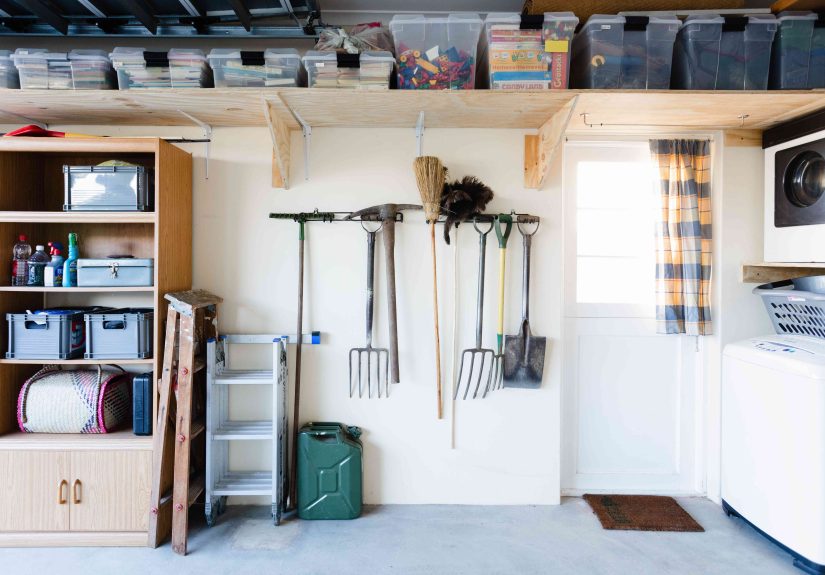
The fix isn’t willpower; it’s design. If you want your car inside, build storage on purpose: overhead racks, deep shelves, and a wall system for shovels,
string trimmers, and rakes. If you don’t plan storage, your garage will plan it for youby stacking everything in the exact spot you need to walk.
Second: the garage door is a sneaky space thief. Tracks, opener hardware, and headroom requirements eat up ceiling real estate fast.
People often picture ceiling-mounted storage or a lift… then install the door and discover they’ve built a beautiful obstacle course.
When picking your garage blueprint, check the headroom and think about future “ceiling stuff” early: lighting, attic access, storage, and any tall vehicle needs.
Third: concrete is not the place to freestyle. A slab that’s underbuilt for your loads (or poorly prepped under the slab) can crack, settle, or drain the wrong way.
Even small choiceslike where the slope goes or whether you planned for water managementshow up later in the form of puddles, stains, and winter ice.
The best move many homeowners make is hiring out excavation and concrete, then DIY-ing the rest with confidence.
Fourth: “I’ll add outlets later” is a lie we tell ourselves when we’re tired. Electrical is cheapest and cleanest before walls are closed up.
Put outlets on every wall. Add dedicated circuits if you plan a freezer, compressor, EV charger, or serious tools.
And don’t forget exterior outletsbecause you’ll absolutely end up pressure washing something at dusk, and extension cords are basically guaranteed to tangle out of spite.
Fifth: build for the climate you live in, not the one you wish you lived in. In cold regions, frost depth, insulation strategy, and air sealing matter.
In hot/humid regions, ventilation and moisture control matter. Either way, garages get brutal temperature swings, and that affects everything from stored paint to the comfort of working inside.
Many DIYers who love their garages later are the ones who planned insulation and a basic heating/cooling strategy from the starteven if it was just “prep now, finish later.”
Finally: the “best” garage isn’t the biggest oneit’s the one that matches how you actually live.
If you wrench on engines, prioritize a workshop bay and tool storage. If you’re a sports family, prioritize racks and floor space.
If you’re an “I park outside because my garage is full” person, prioritize ruthless storage and a layout that makes parking easy.
The plans are the skeleton; the way you use the space is the personality.
Conclusion
The right free garage plan gives you a head startbut the real win is choosing a size and layout that fits your life, your vehicles, and your future hobbies.
Start with the footprint that makes sense, plan the boring-but-important details (permits, foundation, door sizing, electrical), and you’ll end up with a garage that feels like an upgradenot a compromise.







 Close
Close