
Table of Contents >> Show >> Hide
If you love bacon but hate babysitting a splattering skillet, oven cooked bacon is about to be your new
favorite life hack. It’s hands-off, reliably crispy, and perfect when you’re cooking breakfast for more than
one very hungry human. No more standing over the stove wondering why half your strips are floppy and the
other half look like they’ve been through a meteor shower.
This easy oven cooked bacon recipe walks you through the ideal oven temperature, how long to
cook bacon in the oven, and how to tweak time and technique for thick-cut slices, extra-crispy bacon, or
softer, chewier strips. We’ll also talk about food safety, easy cleanup, and smart ways to use that liquid
gold (bacon grease!) in other dishes.
Why Cook Bacon in the Oven?
Oven baked bacon has a few big advantages over stove-top frying, air frying, or microwave shortcuts:
-
Hands-off cooking: Once the bacon is on the pan and the oven is preheated, you mostly
just let the heat do its thing. A quick check near the end, and you’re done. -
Even crispiness: The heat surrounds the bacon more evenly, so you don’t get the “burned
edges, raw middle” situation that can happen in a skillet. -
Easy to cook for a crowd: A rimmed baking sheet can hold an entire package (or more) of
bacon laid out in a single layer. Perfect for big breakfasts, brunches, or breakfast-for-dinner nights. -
Less mess: You still get a little popping, but it’s contained inside the oven, not all
over your stovetop and hands. -
Flexible doneness: Want shatteringly crisp? Leave it in a couple extra minutes. Prefer
bendy, chewy bacon? Pull it early. The oven makes it easy to hit your exact texture.
Easy Oven Cooked Bacon Recipe
Ingredients
- 1 pound bacon (regular or thick-cut)
- Optional: freshly ground black pepper, brown sugar, or maple syrup for flavor variations
Equipment
- Large rimmed baking sheet (or two, if cooking a lot of bacon)
- Parchment paper or aluminum foil
- Optional: oven-safe metal rack that fits inside the baking sheet
- Tongs or a fork
- Paper towels and a plate for draining
Step-by-Step Instructions
-
Preheat the oven.
Set your oven to 400°F (200°C). This is a sweet spot for crispy, evenly cooked
bacon without a ton of smoke. If your oven runs hot or you’re using thin bacon, you can go down to
375°F. For very thick-cut bacon and deeper browning, 415°F–425°F also works; you’ll just
want to watch it more closely near the end. -
Prep the pan for easy cleanup.
Line your rimmed baking sheet with parchment paper or heavy-duty foil.
This keeps the bacon from sticking and makes cleanup as simple as lifting and tossing the liner. If you
like, set a metal rack on top of the lined pan so the bacon cooks slightly elevated and the fat can drip
below. -
Lay out the bacon.
Arrange the bacon slices in a single layer on the baking sheet. The strips can touch, but avoid overlapping.
Overlapping spots won’t crisp up properly. If you’re feeding a crowd, use two pans or cook in batches. -
Add optional seasonings.
For classic bacon, leave it plain. For variations, you can:- Sprinkle a light coating of brown sugar for a sweet, candied effect.
- Brush with maple syrup for smoky-sweet breakfast vibes.
- Add a pinch of black pepper or smoked paprika for extra flavor.
Keep seasonings light; bacon already brings lots of salt and taste on its own.
-
Bake the bacon.
Place the pan on a middle rack and bake:- Regular-cut bacon: about 15–18 minutes
- Thick-cut bacon: about 18–22 minutes
Start checking a couple of minutes early the first time you try this in your oven. Every oven has its own
personality (and some are drama queens). -
Check for doneness.
Bacon is done when the fat looks mostly rendered and the strips are deep golden brown. They’ll firm up and
crisp even more as they cool. If you like it chewier, pull the bacon while the fat is still a bit more
visible and the color slightly lighter. -
Drain and cool slightly.
Use tongs to transfer the cooked bacon to a paper-towel-lined plate. Let it sit for a couple of minutes.
This step improves the crispiness and lets some excess fat drip away. -
Save (or discard) the bacon grease safely.
Once the grease has cooled but is still pourable, carefully pour it into a heat-safe jar if you plan to
cook with it later (amazing for eggs, roasted potatoes, and sautéed greens). If you’re discarding it, let
it fully solidify on the pan and then lift and toss the liner. Don’t pour hot grease down the sink unless
you enjoy surprise plumbing bills.
Oven Bacon Timing Cheat Sheet
Here’s an approximate timing guide. Always adjust based on your oven and bacon thickness:
| Oven Temperature | Bacon Thickness | Approximate Time | Texture |
|---|---|---|---|
| 375°F | Regular | 18–20 minutes | Moderately crisp, some chew |
| 400°F | Regular | 15–18 minutes | Crispy with a little flexibility |
| 400°F | Thick-cut | 18–22 minutes | Crispy edges, chewy center (longer time = crispier) |
| 415–425°F | Thick-cut | 16–20 minutes | Deeply browned, extra-crispy |
Remember, bacon can go from “almost there” to “oops, charcoal” quickly in the last few minutes. Keep an eye
on it near the end, especially when you’re learning how your oven behaves.
Do You Need a Rack for Oven Bacon?
Short answer: no, you don’t have to use a rack. Many professional tests actually prefer
baking bacon directly on parchment or foil over a rimmed sheet pan. The bacon cooks in some of its own fat,
which helps it brown and crisp beautifully. A rack can give you slightly more rendered fat and a bit less
greasiness, but it also makes cleanup more annoying.
- No rack (on parchment or foil): Easiest cleanup, great browning, slightly richer bacon.
-
With rack: Fat drips away, bacon can be a touch leaner, but you may get a little uneven
browning where the wire rack touches.
If you hate scrubbing wire racks, skip it. Your oven baked bacon will still be fantastic.
Food Safety Tips for Bacon
Even though bacon is cured and often smoked, it still counts as raw meat and needs to be handled safely.
-
Keep it cold: Store raw bacon in the refrigerator and use it by the “use by” or “sell by”
date on the package. -
Don’t partially cook and save for later: Avoid cooking bacon halfway, cooling it, and then
finishing it later. It’s safer to fully cook and then reheat. -
Avoid cross-contamination: Use clean cutting boards and utensils, and wash your hands
thoroughly after handling raw bacon. -
Refrigerate leftovers promptly: Let cooked bacon cool slightly, then refrigerate within a
couple of hours in a covered container. Reheat in a skillet, toaster oven, or air fryer to restore some
crispiness.
How to Use Oven Cooked Bacon
Once you’ve got a tray of perfectly cooked bacon, there are endless ways to enjoy it:
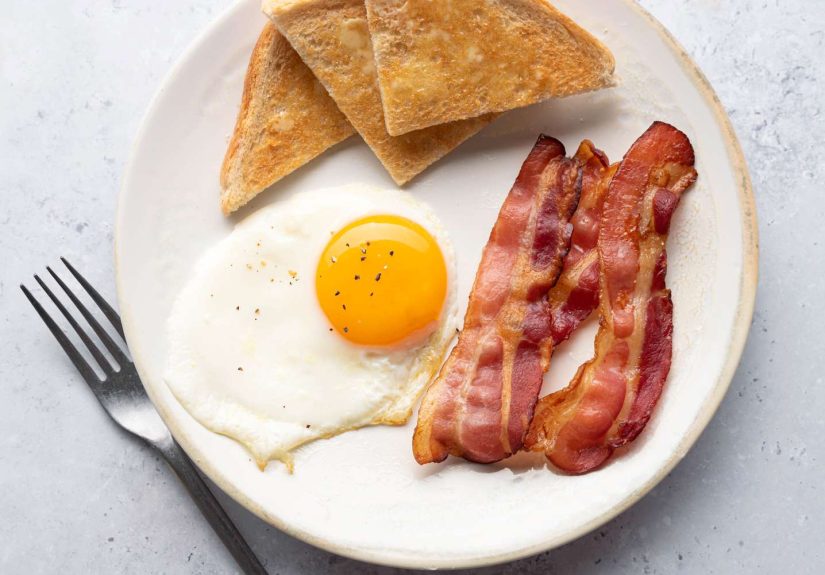
- Classic breakfast: Serve with eggs, toast, and potatoes.
-
BLTs and sandwiches: Oven bacon is flat and even, perfect for layering in BLTs, club
sandwiches, and breakfast sandwiches. - Salads and bowls: Crumble over Caesar salad, baked potatoes, or grain bowls.
- Pasta and soups: Add crispy bits to creamy pasta dishes or as a garnish for soups.
-
Snacking: No explanation needed. Just try not to eat the whole batch standing at the
counter.
Frequently Asked Questions About Oven Bacon
Can I cook bacon straight from the fridge?
Yes. You can take bacon directly from the refrigerator to the pan. If the slices are stuck together, gently
separate them before laying them out. If the bacon is frozen, thaw it in the fridge first for even cooking.
How do I keep the oven from smoking?
Bacon can smoke if your oven runs very hot or if there’s old grease on the oven floor. A few tips:
- Use 400°F instead of very high temps like 450°F.
- Make sure the pan is rimmed so grease doesn’t spill.
- Line the pan so grease doesn’t burn onto bare metal.
- If your oven is dirty, a quick clean can drastically cut down smoke.
How do I reheat oven cooked bacon?
Reheat bacon in a skillet over medium heat, in an air fryer for a couple of minutes, or on a baking sheet in a
350°F oven for 5–7 minutes. Microwaving works in a pinch, but it can soften the bacon and make it less
crisp.
Can I make turkey bacon in the oven too?
Absolutely. Turkey bacon does well in the oven using the same basic method, but often cooks faster. Start
checking at the 10–12 minute mark at 400°F and adjust based on how crispy you like it.
Oven Bacon: Real Kitchen Lessons and Experiences
The first time most people bake bacon in the oven, they have the same reaction: “That’s it?” The process is
so simple that it almost feels like cheating. You line a baking sheet, lay out the bacon, slide it into the
oven, and suddenly you’re wondering why you’ve spent years dodging pops of hot grease on the stovetop.
One of the biggest real-world lessons with oven cooked bacon is learning how your particular oven behaves.
On paper, “400°F for 15–18 minutes” looks like a strict rule. In reality, ovens have moods. Some run
hotter, some cooler; some have hot spots near the back, others brown more quickly near the door. After a
couple of batches, you start to recognize the exact moment your bacon hits your ideal level of crispness.
Maybe your oven is the overachiever that has everything done in 14 minutes, or the slowpoke that needs a
full 20. Once you figure that out, it becomes almost impossible to mess up.
Another practical takeaway is just how much easier it is to cook for a crowd in the oven. Think about
weekend brunch. On the stove, you’re juggling a pan of bacon, eggs in another skillet, maybe pancakes on a
griddle. Something is always on the edge of burning while you turn your back for “just a second.” With oven
bacon, the protein part of breakfast is handled. While the bacon quietly crisps in the oven, you can flip
pancakes, stir scrambled eggs, or actually drink your coffee while it’s still hot. If you’re making breakfast
sandwiches, you can even cook the bacon on one rack and toast English muffins on another for an assembly
line situation that would make a diner cook proud.
Cleanup is another area where people really feel the difference. After you’ve made bacon this way a few
times, scrubbing grease off the stovetop feels … optional, at best. Lining the pan with parchment or foil
means that most of the mess disappears in one motion. If you’re the type who saves bacon grease, you start to
develop a little ritual: carefully pouring that warm, liquid flavor into a glass jar or metal container,
watching it turn cloudy and solid in the fridge, then scooping some out later to fry eggs, sauté veggies, or
roast potatoes. Bacon grease is basically the unofficial spice blend of weekend breakfasts.
You also get a front-row seat to how different brands and styles of bacon behave. Thin, supermarket bacon
tends to cook quickly and can go from “just right” to “a little too crunchy” in a matter of minutes. Thick-cut
slices, especially from butchers or premium brands, usually take longer and stay chewier in the center even
when the edges are crisp. If your household has Team Chewy and Team Crispy members, the oven method makes it
easy to pull a few slices early for the chewy fans and leave the rest in until they’re almost chip-like for
the crispy crowd.
Over time, most people end up customizing the basic oven bacon method to fit their routines. Some swear by
400°F on parchment with no rack; others move to 415°F for slightly faster, deeper browning. A few
folks like to start the bacon in a cold oven so it warms up slowly and renders more gently, while others
insist on a fully preheated oven for maximum sizzle. You’ll likely come up with your own little quirks too:
rotating the pan halfway through, scooting the slices around with tongs, or reserving one corner of the pan
for “extra crispy” pieces that stay in a minute or two longer.
The best part of all this experimentation is that the stakes are low and the reward is high. Even “not quite
perfect” oven bacon is still bacon. Maybe it’s a little darker than you wanted, so it becomes the crumbled
topping for salads and baked potatoes. Maybe it’s a bit softer, so it ends up in breakfast sandwiches where
the texture works beautifully with melted cheese and fried eggs. Either way, once you get comfortable with
this easy oven cooked bacon recipe, it becomes the kind of reliable, low-effort technique you reach for
whenever you want to make breakfast feel like a treat without turning your kitchen into a greasy battlefield.
Conclusion
Oven cooked bacon really is as simple as it sounds: line a pan, lay out the strips, bake until crisp, and
enjoy. By dialing in your oven temperature and timing, you can get bacon exactly the way you like it with
minimal mess and maximum flavor. Whether you’re feeding a crowd, prepping bacon ahead for the week, or just
want an easier Sunday morning, this method gives you consistent, delicious results every time.





 Close
Close