
Table of Contents >> Show >> Hide
- Why In-Flight Emergencies Are a Unique Kind of Hard
- The Goal: Build a “Cabin Chain of Care”
- Train for the Emergencies That Actually Happen
- Improve Diversion Decisions with Better Onboard Assessment
- Make the Post-Landing Handoff as Strong as the Mid-Flight Response
- Design for Prevention (Because Not Every Emergency Has to Become One)
- Practical Experiences and Lessons from Real-World In-Flight Situations (Extra )
- Conclusion: Better Outcomes Come from Better Systems
In-flight medical emergencies are one of those travel plot twists nobody puts on their vision board. One minute you’re negotiating with a tiny bag of pretzels,
the next minute someone is feeling faint, wheezing, or having chest pain at 35,000 feet. The good news: airlines, crews, and even fellow passengers can dramatically
improve outcomes with smarter preparation, clearer teamwork, and better “onboard-to-ground” coordination.
This guide breaks down what actually worksbased on real-world aviation medicine practices and the realities of cabin life (limited space, noise, low humidity, and
the world’s least convenient “clinic”). We’ll keep it practical, evidence-based, and just funny enough to keep you reading without making light of serious situations.
Why In-Flight Emergencies Are a Unique Kind of Hard
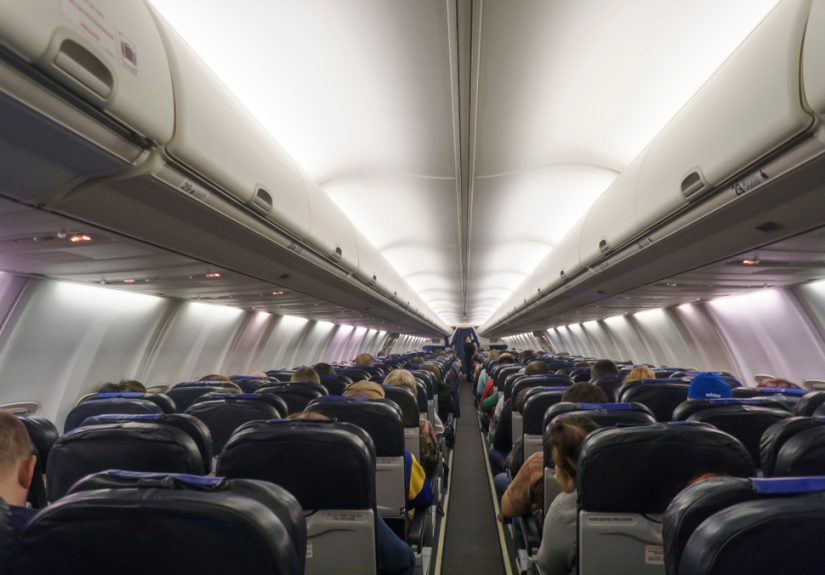
An airplane cabin is a controlled environment, but it’s not a comfortable one for the human body when something goes wrong. Cabin pressure typically feels like being
at several thousand feet above sea level, humidity is low, and the patient can’t exactly “step outside for fresh air.” Add cramped aisles, turbulence, limited lighting,
and the fact that your “ER” is a galley, and you get a medical response that has to be simple, fast, and highly coordinated.
The most common in-flight medical problems are often not the dramatic Hollywood ones. Think fainting or near-fainting, breathing trouble, nausea/vomiting,
and symptoms that can look like cardiac issues (even when they aren’t). The point isn’t to panicit’s to plan for the most likely events, because that’s where
consistent training and good systems save the most people.
The Goal: Build a “Cabin Chain of Care”
Improving the care of in-flight emergencies is less about one magic gadget and more about a reliable chain of actions that happens the same way every time:
recognize the problem, activate help, assess and stabilize, consult ground support, decide on diversion when needed, and hand off cleanly on landing.
When any link is weakconfusing communication, hard-to-find equipment, unclear rolesthe whole response gets slower.
1) Make Early Recognition Everyone’s Job
Many in-flight emergencies start quietly: someone looks pale, sweaty, confused, or “not quite right.” Early recognition matters because simple problems can become
bigger when oxygen is lower, dehydration is common, and anxiety spreads faster than the snack cart.
- For crew: Use a quick visual scan routine during service and cabin checksespecially on long flights and shortly after takeoff/meal service.
- For passengers: Speak up early if you feel faint, short of breath, or have chest discomfort. Waiting rarely makes it easier in a flying metal tube.
- For airlines: Reinforce a “call early” culture in training. A timely response prevents escalations and reduces unnecessary diversions.
A simple standard checklist helps: “What happened? When did it start? Any known medical conditions? Any meds taken today? Any allergies?”
It’s not glamorous, but it’s how you turn panic into information.
2) Activate Help Fast and Assign Roles Clearly
The best in-flight medical response looks like a tiny, well-run team. The worst looks like 10 people hovering while someone rummages for a blood pressure cuff like it’s
a hidden object game. Clear roles reduce chaos:
- Lead responder (usually a senior flight attendant): directs the scene, keeps the aisle clear, and coordinates communication.
- Equipment runner: retrieves the first aid kit, emergency medical kit, oxygen, and AED if indicated.
- Information manager: documents symptoms, vital signs (when available), timeline, and any interventions.
- Cabin control: manages bystanders, relocates passengers if needed, and preserves privacy as much as possible.
If a medically trained passenger volunteers, greatuse them as part of the team, not as a solo hero. Cabin noise and space limitations mean the crew’s logistical
help is just as important as clinical knowledge.
3) Standardize How the Cabin Talks to the Cockpit
Pilots need clear, structured updates to decide whether to divert. “Someone isn’t feeling good” is not helpful. A standardized communication script is.
Airlines can improve care by training crew to deliver brief, relevant data:
- Passenger age range (approximate), symptoms, and level of consciousness
- Breathing status and whether oxygen is being used
- Any known conditions (e.g., asthma, diabetes, heart disease) and medications taken
- Response to initial measures (improving, worsening, stable)
- Whether an AED was applied or CPR started
- Whether ground medical support has been contacted and their recommendation
This is where “systems” beat “good intentions.” When communication is consistent, diversion decisions become safer, faster, and less emotional.
4) Make Emergency Equipment Truly “Ready to Use”
Many U.S. commercial aircraft operating under relevant rules carry required emergency equipmentfirst aid supplies, an emergency medical kit, and an AED
in applicable operations. But improving care depends on equipment being accessible, functional, and familiar.
A kit that exists but is buried, expired, or mysterious helps exactly nobody.
- Accessibility: Store equipment in known, consistent locations, with cabin diagrams available to all crew.
- Usability: Use clear labeling and quick-start cards (especially for the AED and oxygen delivery).
- Maintenance discipline: Treat missing/expired items as operationally critical, not “we’ll fix it later.”
- Practice under cabin conditions: Do drills with noise, tight spaces, and time pressurebecause that’s the real environment.
One high-impact improvement: ensure crews can rapidly differentiate what’s in the first aid kit vs. the emergency medical kit,
and when to escalate to the AED and oxygen. The faster the right tools show up, the faster the patient stabilizes.
5) Use Ground Medical Support Like a Safety Net (Not a Last Resort)
A major advantage in modern aviation is access to ground-based medical consultation. Many airlines use medical communication centers to help assess symptoms,
guide next steps, and support diversion decisions. This can reduce guesswork and help onboard responders focus on immediate stabilization and monitoring.
Airlines can improve outcomes by:
- Training crew on when to call ground medical support (early for concerning symptoms, not only when things are already dire).
- Ensuring the crew can transmit useful information: symptom timeline, observed status, and any available vital signs.
- Standardizing documentation so the recommendation is recorded and shared with the cockpit.
- Using telemedicine support for decision consistency, especially on long-haul routes where diversion options differ.
The big win here is consistency: the cabin team, cockpit, and ground clinician are working from the same facts, in real time.
Train for the Emergencies That Actually Happen
Better training doesn’t mean turning flight attendants into paramedics. It means focusing recurrent training on high-frequency, high-impact scenarios and teaching
crews to execute a predictable response under pressure.
High-value training scenarios
- Syncope/presyncope (fainting): safe positioning, hydration considerations, monitoring, and preventing re-collapse during movement.
- Breathing distress: recognizing severe symptoms, oxygen workflow, and escalation triggers.
- Allergic reactions: early recognition and rapid escalation protocols.
- Chest pain and cardiac arrest response: CPR quality, AED workflow, and role assignment under crowd pressure.
- Hypoglycemia-like symptoms: recognizing warning signs and coordinating supportive care and monitoring.
- Seizure response: safety, timing, and protecting airway without unsafe interventions.
A practical training upgrade: “micro-drills” during recurrent training5 to 10 minutes, repeated often, focused on one skill (AED setup, oxygen delivery,
documentation, cockpit update). Small repetitions build real speed.
Improve Diversion Decisions with Better Onboard Assessment
Diversions are costly and disruptive, but they can also be life-saving. The goal is not “divert less” or “divert more.” The goal is to divert smarter,
based on consistent criteria and good information.
Airlines can strengthen diversion decisions by:
- Defining red flags in training: persistent altered consciousness, severe breathing difficulty, suspected stroke symptoms, uncontrolled bleeding,
or signs of cardiac arrest. - Supporting the cabin team with ground medical consultation to reduce ambiguity.
- Improving documentation so the cockpit receives clear updates, not a confusing stream of partial information.
The more structured the process, the less likely a diversion decision is driven by fear, pressure, or “I guess this feels bad?”
(A highly scientific method, but not the one we want.)
Make the Post-Landing Handoff as Strong as the Mid-Flight Response
A lot of “care quality” is decided after wheels down. If EMS meets the aircraft, they need a clean story: what happened, what changed, what was done, and what
still looks concerning. A handoff that’s vague leads to delays and repeated work.
What a strong handoff includes
- Time symptoms started and whether they progressed
- Observed mental status and breathing status over time
- Any known conditions, allergies, and medications reported
- Interventions performed (oxygen, AED applied, CPR started, etc.)
- Ground medical support recommendation (if used)
- Any triggering events (meal, medication, movement, panic, exertion)
Airlines can improve care by standardizing a one-page incident form (paper or digital) that matches what EMS and emergency departments actually need.
That’s not “extra paperwork.” That’s continuity of care.
Design for Prevention (Because Not Every Emergency Has to Become One)
Some in-flight emergencies are unavoidable. Others are preventable with better passenger guidance and small operational tweaks.
Prevention-focused improvements can reduce episodes of fainting, breathing distress, and “I stood up too fast and now I’m seeing stars.”
- Preflight education: Encourage at-risk travelers to bring needed medications in carry-ons and avoid skipping meals or fluids.
- Movement strategies: On longer flights, remind passengers to move and stretch when safe, and to stand slowly after long sitting periods.
- Hydration nudges: Offer water proactively on longer routes; low humidity can contribute to dehydration and discomfort.
- Special assistance pathways: Make it easy for passengers with known conditions to alert the airline and plan for oxygen or seating needs when appropriate.
This is where airlines can reduce “medical moments” without turning the cabin into a wellness retreat. (If the seat pitch won’t improve, at least the process can.)
Practical Experiences and Lessons from Real-World In-Flight Situations (Extra )
If you read enough reports from clinicians, flight attendants, and frequent flyers, a pattern emerges: most in-flight emergencies aren’t mysteriousthey’re
familiar medical problems happening in an unfamiliar place. The cabin changes how fast things feel urgent. A passenger who might “wait it out” on the ground
can feel dramatically worse when the air is dry, oxygen pressure is lower, and anxiety is doing backflips.
One of the most commonly described experiences is a fainting episode shortly after boarding or during service. The setup is almost always the same:
someone stands up quickly, feels warm and lightheaded, and then the cabin becomes a domino course of concerned faces. The best responses share three traits:
the crew clears space quickly, assigns one person to document, and avoids crowding the passenger. When the aisle is clogged with helpers, the patient can’t breathe
comfortably, and crew can’t access equipment or move carts. “Too many helpers” is a real operational hazardkind intentions, bad geometry.
Breathing complaints are another classic. Sometimes it’s asthma, sometimes it’s anxiety, sometimes it’s a respiratory illness, and sometimes it’s “I didn’t realize
the cabin air would feel like this.” The experience lesson here is communication: responders who calmly explain what they’re doingchecking how the person is
breathing, asking about history, and using the onboard toolsreduce panic, which can reduce symptoms. The cabin is loud, so the “quiet confidence” has to be
visible: clear hand signals, short instructions, and direct eye contact. That’s not bedside manner; it’s cabin-side survival.
Allergic reactions show how valuable early escalation is. In stories where outcomes were better, someone spoke up fast (“I’m allergic,” “I’m swelling,” “I can’t
swallow”), and the crew immediately moved into a rehearsed routine: equipment retrieval, cabin control, and contact with ground support. In stories where things
got worse, there was delayeither the passenger waited, or the seriousness wasn’t recognized right away. The lesson: treat rapidly worsening symptoms as time-sensitive,
and don’t negotiate with denial at cruising altitude.
Chest pain narratives are tricky because the experience is often ambiguous. Some passengers describe tightness from anxiety, reflux, or muscle strain; others may have
real cardiac issues. What the strongest responses have in common is disciplined information gathering: symptom onset, triggers, and whether the person appears pale,
sweaty, short of breath, or confused. When documentation is strong and cockpit updates are structured, diversion decisions become clearer. When documentation is fuzzy,
everyone feels stuckand that’s when “decision by stress” sneaks in.
Finally, responders often report that the biggest practical frustration isn’t the medical partit’s the logistics. Finding space, keeping the aisle open, communicating
with the cockpit, and preparing for EMS on arrival can make or break the experience. Improving in-flight emergency care means training and practicing these logistics
until they feel automatic. The cabin won’t become a hospital, but it can become a well-run response environmentand that’s how you protect passengers when surprises happen.
Conclusion: Better Outcomes Come from Better Systems
Improving the care of in-flight emergencies is a systems problem with a systems solution: recognize issues earlier, run a predictable team response, communicate clearly
with the cockpit, use equipment confidently, connect to ground medical support, and hand off cleanly after landing. The cabin environment will always be challenging,
but a standardized “chain of care” turns chaos into coordination.
For airlines, the upgrades that matter most are the unglamorous ones: scenario-based training for common events, disciplined equipment readiness, clear role assignment,
and documentation that supports smart diversion decisions. For passengers, the best move is also simple: speak up early and be prepared with your own essentials.
In other words: pack your meds like you pack your chargerbecause both are oddly hard to replace at 35,000 feet.






 Close
Close