
Table of Contents >> Show >> Hide
- What Was the TMS1000?
- Why the TMS1000 Was Such a Breakthrough
- TMS1000 vs. Early Microprocessors
- The Technology Inside the TMS1000
- From Calculators to Talking Toys
- The Road to the TMS1000
- What Made the TMS1000 So Commercially Smart
- The TMS1000’s Limitations, and Why They Did Not Stop It
- The Lasting Legacy of the TMS1000
- Why the TMS1000 Still Deserves Attention Today
- Experiences Around the TMS1000: Why This Early Microcontroller Still Feels Alive
- Conclusion
- SEO Tags
If modern electronics had a family tree, the TMS1000 would be one of the scrappy ancestors in an old sepia photo, standing there like, “You’re welcome, toaster.” Long before microcontrollers quietly took over cars, coffee makers, toys, thermostats, and half the gadgets in your junk drawer, Texas Instruments introduced a chip that helped turn the idea of embedded intelligence into a practical, mass-market reality.
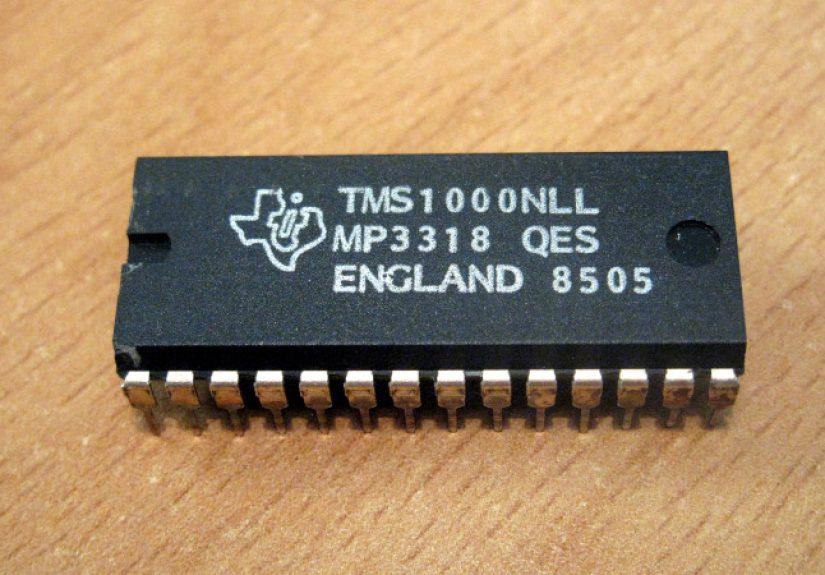
That chip was the TMS1000, a 4-bit device that brought together processing power, memory, and input/output on a single piece of silicon. Today, that sounds almost suspiciously normal. In the early 1970s, it was a big deal. A very big deal. The kind of big deal that made engineers rethink how products could be built, priced, and shipped at scale.
This is the story of why the TMS1000 matters, what made it different, how it compared with early microprocessors, and why its legacy still echoes through every embedded system that blinks, beeps, measures, counts, or politely pretends not to be a computer.
What Was the TMS1000?
The TMS1000 was a microcontroller family introduced by Texas Instruments in 1974. It is widely recognized as the first commercially available general-purpose microcontroller family. That wording matters, because early chip history is a wonderfully nerdy minefield. If you ask ten hardware historians who was “first,” you may get eleven answers and one argument about patents.
Still, the TMS1000 earns its place in history because it packaged the ingredients that define a microcontroller into one chip: a CPU, ROM, RAM, and I/O. In plain English, it was not just a processor that needed a small parade of supporting chips to do anything useful. It was much closer to a complete embedded computer on a chip.
That distinction is the whole game. Early microprocessors were revolutionary, but they often needed external memory and extra logic to become part of a working system. The TMS1000 pushed integration further. For product designers, that meant fewer chips, simpler boards, lower costs, and more realistic odds of fitting intelligence into consumer devices without needing the budget of a moon launch.
Why the TMS1000 Was Such a Breakthrough
It turned “embedded computing” into a practical product strategy
Before chips like the TMS1000, building electronic control into a product could be bulky, expensive, and awkward. Designers often had to use combinations of logic chips or external processor support components. That worked, but it was hardly elegant. It was the electronic equivalent of building a garden shed with cathedral scaffolding.
The TMS1000 simplified the equation. Because it combined core computing functions on one chip, manufacturers could use it in calculators, alarms, toys, appliances, and control systems where cost mattered just as much as capability. This was not a chip built to win benchmark wars. It was built to win the real war: getting into shipping products by the millions.
It helped define what a microcontroller actually is
Today, the term microcontroller is familiar. In the 1970s, the category itself was still forming. The TMS1000 made the concept concrete. It showed the industry that many devices did not need a general-purpose computer brain with lots of external baggage. They needed a cheap, compact, dedicated controller that could run fixed code reliably over and over again.
That idea became foundational. A microwave oven does not need existential freedom. A garage door opener does not need to discover poetry. A toy that says words out loud mostly needs to do exactly the same job every single time. The TMS1000 was built for that kind of work, and that made it incredibly influential.
TMS1000 vs. Early Microprocessors
One reason the TMS1000 keeps showing up in discussions of computing history is because it arrived in the same era as the early microprocessor boom. The inevitable comparison is with the Intel 4004, introduced in 1971 and celebrated as the first commercially available microprocessor.
The Intel 4004 was a landmark, but it was a microprocessor, not a full microcontroller in the modern sense. It provided CPU functionality, while memory and peripheral support typically lived elsewhere in the system. The TMS1000, by contrast, was designed to be more self-contained for embedded control applications.
That difference may sound technical, but it shaped the market. Microprocessors were ideal when designers wanted flexible computing platforms. Microcontrollers were ideal when they wanted a compact, repeatable, cost-sensitive control system. The TMS1000 did not replace the microprocessor revolution; it helped launch the parallel revolution of embedded electronics.
In other words, if the early microprocessor was the brain that helped create personal computing, the early microcontroller was the practical little brain that slipped into everyday products and quietly started running the modern world from the inside.
The Technology Inside the TMS1000
A 4-bit architecture with a very specific mission
The original TMS1000 was a 4-bit microcontroller. By modern standards, that sounds tiny. By 1970s consumer-product standards, it was smart, efficient, and exactly large enough to matter. It was designed for tasks like scanning keys, controlling displays, handling simple logic, and managing predictable sequences of operations.
The chip family included on-chip program memory and data memory, along with a set of I/O lines for interacting with the outside world. One commonly cited configuration for the original device includes 1 KB of ROM, 64 x 4 bits of RAM, and 23 I/O lines. That is not much if you are trying to stream video. It is plenty if you are trying to run a calculator, a control panel, or a toy that wants to impress children in 1978.
Harvard architecture before it was a cocktail-party flex
The TMS1000 used separate storage paths for program and data memory, a hallmark of Harvard architecture. That approach helped simplify the design and suited the chip’s job as a dedicated embedded controller. It also foreshadowed a pattern that became common in microcontroller design later on.
The instruction set was modest, the data paths were narrow, and the device was engineered for focused, repeatable control tasks rather than broad computational ambition. That was not a flaw. It was the point.
Mask ROM: great for volume, terrible for indecision
One of the most important things to understand about the TMS1000 is that it relied on mask-programmed ROM. Once a design was finalized, the program was fixed during manufacturing. That kept unit costs low in high-volume production, but it also meant developers could not casually patch a bug after shipment. There was no over-the-air update. There was barely over-the-bench update.
That limitation sounds brutal now, but it fit the economics of the time. If a company planned to sell thousands or millions of identical products, mask ROM made sense. It was cheap, stable, and perfect for devices that were supposed to do one job forever.
From Calculators to Talking Toys
The TMS1000 was not just historically important because of what it was. It mattered because of where it went. Texas Instruments used the TMS1000 family in its own products, and the chip also appeared in a wide range of embedded applications, including alarms, garage door openers, instruments, and toys.
One early TI use was the SR-16 calculator. Later, the TMS1000 became famous as the “brains” of the original Speak & Spell. That product deserves its own little spotlight because it helped make invisible silicon feel magical to ordinary people. Speak & Spell was not just another electronic gadget; it was a talking learning toy that made speech synthesis feel futuristic, slightly uncanny, and wildly memorable.
For many people, products like Speak & Spell were among the first clues that computers were shrinking out of room-sized mythology and into the objects around them. The TMS1000 was one of the chips that helped make that cultural transition possible.
The Road to the TMS1000
The TMS1000 did not appear out of nowhere. Its roots trace back to Texas Instruments work on earlier single-chip calculator devices in the early 1970s. Engineers Gary Boone and Michael Cochran played central roles in that development, and their earlier calculator-on-a-chip work provided the technical and conceptual foundation for the later general-purpose microcontroller family.
This history is important because it shows the TMS1000 was not a random lucky leap. It was the product of a broader shift in semiconductor thinking: if you could integrate more of a system onto one chip, you could unlock new markets. The leap from calculator logic to embedded control was not just a change in product category. It was a change in the way engineers imagined the purpose of silicon.
What Made the TMS1000 So Commercially Smart
It was affordable enough to matter
Historical accounts often note that TMS1000 family chips were available for about $2 in volume in the mid-1970s. That kind of pricing was a major part of the chip’s story. A brilliant chip that nobody can afford is a museum piece waiting to happen. A cheap chip that solves real manufacturing problems becomes a movement.
The TMS1000 hit a sweet spot between integration and cost. It did not need to be glamorous. It needed to be useful, manufacturable, and cheap enough to disappear into everyday products without making the final retail price absurd.
It fit the needs of dedicated systems
Embedded products usually do not need to be infinitely flexible. They need to be reliable, predictable, and inexpensive. The TMS1000 delivered exactly that. Its limited but carefully chosen capabilities made it a practical fit for single-purpose designs, which is why the chip family reached high production volumes.
That lesson still matters today. In embedded design, elegance often means using exactly enough computing power, not the most computing power. The TMS1000 taught that lesson early.
The TMS1000’s Limitations, and Why They Did Not Stop It
No romantic tech history is complete without a reminder that old chips were delightfully stubborn. The TMS1000 had constraints everywhere. It was 4-bit. It had tiny memory. Development was far less convenient than what engineers expect now. Some versions offered limited subroutine depth, and the architecture was unapologetically specialized.
Yet those limitations were not deal-breakers because the chip was never trying to be a desktop computer. It was trying to solve focused real-world control problems at scale. In that context, its tradeoffs were not weaknesses so much as disciplined design choices.
That is part of what makes the TMS1000 so interesting today. It is a reminder that successful computing history is not only about power. It is also about fit. The right chip at the right price, for the right job, can change an industry.
The Lasting Legacy of the TMS1000
The TMS1000 helped establish the commercial logic of the microcontroller market. Later families from Intel, Motorola, Microchip, and many others expanded the category dramatically. Over time, microcontrollers gained more bits, more memory, easier programming, lower power consumption, and friendlier development tools. But the core idea remained the same: put enough computing on one chip to let a product sense, decide, and control.
That idea is now everywhere. It lives in remote controls, washing machines, industrial sensors, medical devices, thermostats, keyboards, smart locks, and countless invisible systems that keep modern life moving. Many of those products are descendants, conceptually speaking, of the approach the TMS1000 helped prove.
So while it may not enjoy the same mainstream fame as the Intel 4004 or the later 8051, the TMS1000 deserves serious credit. It helped make computing not just personal, but pervasive.
Why the TMS1000 Still Deserves Attention Today
There is something wonderfully humbling about looking at a chip this small and realizing how large its impact was. The TMS1000 did not become famous because it powered giant mainframes or flashy consumer computers. It became important because it helped intelligence seep into ordinary objects. That is arguably the more profound transformation.
When historians talk about the rise of embedded systems, the TMS1000 belongs near the start of the conversation. It helped bridge the gap between the theoretical promise of integrated computing and the messy, practical demands of real products. It showed that a single chip could do enough, cost little enough, and ship broadly enough to change what manufacturers believed was possible.
And that, honestly, is the kind of revolution that ages well. Not loud. Not glamorous. Just quietly foundational.
Experiences Around the TMS1000: Why This Early Microcontroller Still Feels Alive
One of the most interesting things about writing about the TMS1000 is that it does not feel like a dead artifact. It feels like a familiar ancestor. If you have ever opened a toy, repaired an old calculator, tinkered with retro electronics, or programmed a modern Arduino and thought, “Wow, this little board is doing a lot,” you are already standing in the shadow of what the TMS1000 helped start.
There is also a distinctly human experience tied to the chip’s era. Imagine being a product designer in the mid-1970s and realizing you could replace a mess of logic with one programmable device. That must have felt a bit like switching from assembling furniture with a shovel to using an actual screwdriver. Suddenly, products that were too complex, too expensive, or too bulky could move into the real world.
Collectors and retro-computing fans still talk about TMS1000-based products with a kind of affection normally reserved for vintage guitars and stubborn old cars. Part of that is nostalgia, of course. But part of it is respect. These machines did clever things with microscopic resources. They worked with tiny memories, simple instruction sets, and fixed programs, yet still managed to feel futuristic in their time.
The original Speak & Spell is a perfect example. For people who grew up with it, the experience was unforgettable. It talked. It challenged you. It sounded weird in exactly the right way. Behind that experience sat the same larger truth that made the TMS1000 important in the first place: computation was no longer trapped in giant systems or specialist labs. It was becoming part of daily life, one product at a time.
Even for engineers today, there is something refreshing about the TMS1000 mindset. Modern development often assumes abundance: more memory, more speed, more layers, more libraries, more everything. The TMS1000 came from a world of constraint, where every bit had a job and every design choice had consequences. Studying that world can sharpen your appreciation for elegant engineering. It reminds you that good design is not about stuffing in features until the chip groans. It is about matching the tool to the task.
There is also a strangely emotional thrill in tracing the lineage from the TMS1000 to the present. Today’s microcontrollers run smart homes, wearables, drones, and sensors scattered across factories and cities. They are vastly more powerful, but the core philosophy is recognizable. Make a small, reliable computer that lives inside something else and quietly makes that thing smarter. That is the TMS1000 story, and it still sounds modern because, in a way, it never stopped happening.
So the experience of learning about the TMS1000 is not just historical. It is reflective. It makes you notice the hidden computers around you. It makes you appreciate the engineers who built useful magic out of severe limits. And it makes you realize that one of the biggest shifts in technology was not putting a computer on every desk. It was putting a tiny computer inside everything else.
Conclusion
The TMS1000 was not merely an early chip with an impressive first-to-market claim. It was a turning point in how electronic products were conceived and built. By integrating CPU, memory, and I/O into a compact, commercially viable package, Texas Instruments helped define the modern microcontroller and accelerate the rise of embedded systems.
Its specs now look charmingly small, but its impact was anything but. The TMS1000 made it practical to put computing into ordinary products, and that decision reshaped the electronics industry from the inside out. In the history of computing, some breakthroughs sit on desks and demand attention. Others vanish into products and quietly change the world. The TMS1000 did the second one, which may be even more impressive.







 Close
Close