
Table of Contents >> Show >> Hide
- 1. Dance Marathons Turned Exhaustion into a Ticketed Spectacle
- 2. Haunted Houses Became Community-Approved Mischief Control
- 3. Flagpole Sitting Made America Stare Upward for Reasons Nobody Can Fully Defend
- 4. Miniature Golf Exploded Because America Wanted Cheap Fun with Fake Obstacles
- 5. Jigsaw Puzzles Became a National Obsession Because They Were Cheap and Orderly
- 6. Monopoly Let Cash-Strapped Families Pretend to Be Real-Estate Tyrants
- 7. Radio Serials Turned Living Rooms into Escape Hatches
- 8. Movie Theaters Sold Glamour for the Price of Pocket Change
- 9. Ripley’s Believe It or Not! Proved That Weirdness Was Marketable Comfort
- 10. Goldfish Swallowing Turned a College Bet into a National “Please Stop” Moment
- Why These Distractions Mattered More Than They Seem
- Experiences from the Edges of Hard Times
The Great Depression was brutal. Jobs vanished, banks collapsed, savings evaporated, and optimism often packed a suitcase and left town. Yet Americans did what people have always done when life got too heavy: they searched for relief. Sometimes that relief was sensible, like a cheap movie or a radio program. Sometimes it was less sensible, like watching exhausted strangers shuffle through a dance marathon or gathering to stare at a man perched on top of a pole for days. Human beings, it turns out, are wonderfully inventive when they need to forget reality for an hour.
That is what makes the era’s oddball amusements so fascinating. The 1930s were not just a decade of breadlines and foreclosures. They were also a decade of miniature golf booms, jigsaw puzzle frenzies, haunted-house Halloween parties, and property-trading board games enjoyed by people who could barely afford rent. These weren’t just random fads. They were coping mechanisms with jazz hands. They offered distraction, routine, fantasy, and sometimes even the tiny thrill of thinking, “Well, at least I am not the one swallowing a goldfish.”
Here are 10 of the weirdest distractions from the Great Depression, and why they mattered more than their silliness might suggest.
1. Dance Marathons Turned Exhaustion into a Ticketed Spectacle
Few Depression diversions were stranger than the dance marathon, a form of entertainment that asked one basic question: what if endurance, desperation, and jazz music all moved into the same building? Contestants danced, swayed, shuffled, and sometimes nearly collapsed for days or even weeks while audiences paid to watch. That sounds less like leisure and more like capitalism after too much coffee, but it was wildly popular.
Part of the appeal was pure spectacle. Viewers came for the drama, the rivalries, the near-meltdowns, and the grim determination. But for contestants, marathons could mean something more practical: meals, temporary shelter, and a chance at prize money. In a decade when steady work was scarce, dancing until your knees filed a formal complaint could look like an opportunity. The weirdness was the point. The more extreme the event, the more it pulled people away from ordinary misery.
2. Haunted Houses Became Community-Approved Mischief Control
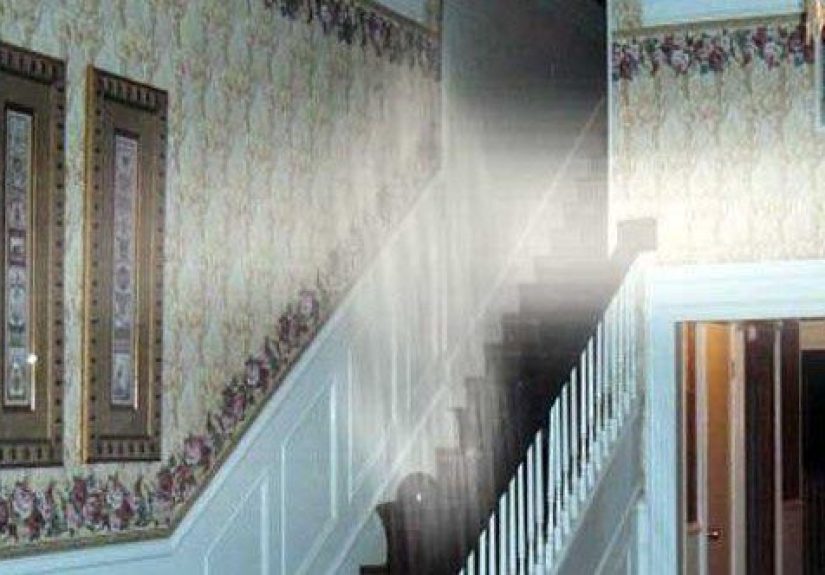
Halloween did not always look like the candy-fueled neighborhood parade we know today. During the Depression, communities worried about teenage vandalism and rough pranks on Halloween night. Their solution was surprisingly theatrical: organize events, create haunted attractions, and give young people a sanctioned place to be weird on purpose.
So haunted houses, costume parties, and structured trick-or-treating began to gain real traction. It was clever social engineering dressed up as cobwebs. Parents and towns could redirect chaos into cheap, spooky fun. And because Depression households had little money for elaborate celebrations, the homemade nature of these attractions was part of the charm. A dark hallway, an old bedsheet, and a suspicious noise from behind a curtain could do a lot of work. In hard times, low-budget horror was still horror.
3. Flagpole Sitting Made America Stare Upward for Reasons Nobody Can Fully Defend
If the economy was down, at least somebody was up. Flagpole sitting was one of those endurance crazes that sounds like it was invented after a dare and never properly supervised. People climbed onto poles and stayed there for absurd lengths of time while crowds gathered below to gawk, cheer, and wonder whether civilization had taken a wrong turn.
The stunt had roots in the late 1920s, but it spilled into the Depression years because it was inexpensive, public, and deeply odd. It gave towns a local attraction and newspapers something irresistible to print. People did not need tickets, velvet ropes, or complicated equipment. They just needed a pole, a stunt performer, and a community willing to spend a few afternoons asking, “Is he still up there?” The answer, somehow, was often yes.
4. Miniature Golf Exploded Because America Wanted Cheap Fun with Fake Obstacles
Miniature golf sounds innocent enough today, but during the early 1930s it became a full-on national craze. Courses popped up everywhere, including rooftops, vacant lots, and city spaces that had no business pretending to be golf destinations. Americans embraced it because it was affordable, social, and just goofy enough to feel like a vacation in miniature.
That last part mattered. Real golf carried class baggage. Mini golf democratized the idea by shrinking the course, lowering the cost, and adding ridiculous obstacles. You no longer needed country-club credentials. You just needed a putter, a little patience, and the emotional resilience to lose to a windmill. In a decade defined by scarcity, mini golf offered a tiny, controlled universe where the hazards were fake, the stakes were low, and the scoreboard did not involve unemployment statistics.
5. Jigsaw Puzzles Became a National Obsession Because They Were Cheap and Orderly
The jigsaw puzzle craze of the Depression makes perfect sense once you stop and think about it. When the outside world is chaotic, there is deep comfort in taking a pile of nonsense and forcing it to become a lighthouse, a farm scene, or a suspiciously cheerful landscape. Puzzles were inexpensive, reusable, and absorbing. Better yet, they rewarded patience, which the 1930s handed out whether people wanted it or not.
Manufacturers produced affordable cardboard puzzles in huge numbers, and newsstands sold them widely. Families gathered around tables. Friends swapped puzzles. Some people became absolutely feral about edge pieces. The appeal was more than boredom relief. Puzzles gave people a sense of control and completion, two emotional luxuries that were in short supply. The world might be broken, but at least this cardboard barn still had a roof if you could find the right piece.
6. Monopoly Let Cash-Strapped Families Pretend to Be Real-Estate Tyrants
Nothing says “coping with financial collapse” quite like pretending to own half of Atlantic City. Monopoly hit its stride in the 1930s, and its success was not accidental. The game gave players a fantasy of wealth, risk, control, and triumph at a time when real life was offering mostly the opposite.
There is a delicious irony here. Families with shrinking budgets sat around a table gleefully charging one another rent, building houses, and plotting economic domination. It was make-believe capitalism served with laughter and mild domestic betrayal. Yet that fantasy had emotional value. Board games were cheap, reusable, and good for long evenings at home. Monopoly especially worked because it transformed money anxiety into play. It let Americans rehearse abundance while living through shortage.
7. Radio Serials Turned Living Rooms into Escape Hatches
By the 1930s, radio had become a central feature of American life. It brought news, comedy, music, serial drama, sports, and national voices right into the home. For Depression families, that mattered enormously. A radio could make a cramped room feel connected to a bigger world. It could also drown out, at least temporarily, the sound of worry.
Listeners followed serialized adventures, comedy programs, and children’s shows with real devotion. Little Orphan Annie found a huge audience. So did Amos ’n’ Andy, a massively popular show whose legacy is complicated by its racist roots and stereotypes. Radio could comfort, entertain, and also reflect the biases of its era. Then there was the famous 1938 War of the Worlds broadcast, which showed just how immersive the medium had become. A nation already on edge proved remarkably willing to believe that Martians had chosen New Jersey, which, in fairness, is a sentence that still has energy.
8. Movie Theaters Sold Glamour for the Price of Pocket Change
Hollywood did surprisingly well during the Depression because it offered something many people desperately needed: visual proof that another world was possible, even if only for ninety minutes. Movie tickets stayed relatively cheap, and theaters leaned into the bargain. Musicals, comedies, gangster pictures, romances, and later monster movies gave audiences a steady flow of escape.
And what an escape it was. Outside, life could feel gray, rationed, and anxious. Inside, theaters glowed. Movie palaces offered velvet seats, giant screens, sparkling chandeliers, and stories full of wisecracks, tap dancing, glamour, and revenge. Even when films touched serious themes, they were still polished and dramatic in ways everyday life was not. Depression audiences were not foolish for wanting this. They were practical. When reality refuses to be charming, a Busby Berkeley number starts looking medically necessary.
9. Ripley’s Believe It or Not! Proved That Weirdness Was Marketable Comfort
Robert Ripley built an empire out of oddities, curiosities, and the kind of facts that make you stop mid-sandwich. During the Great Depression, his Believe It or Not! brand thrived because it gave Americans a steady parade of the bizarre. Strange objects, unusual people, unbelievable feats, and exotic stories all arrived packaged as entertainment.
That kind of content fit the mood of the era better than it may seem. When daily life was filled with grim headlines, Ripley offered an alternate emotional menu: surprise, disbelief, fascination, and the small pleasure of saying, “Well, that’s certainly not my problem.” His success stretched across newspapers, radio, and film, making him one of the era’s most effective merchants of distraction. He sold the comforting idea that the world was still full of wonders, even if many of them were gloriously weird.
10. Goldfish Swallowing Turned a College Bet into a National “Please Stop” Moment
Late in the Depression decade, America briefly became obsessed with goldfish swallowing. Yes, actual goldfish. The fad is commonly traced to a 1939 Harvard stunt in which a student swallowed a live goldfish to win a ten-dollar bet. Because this is history and not satire, the stunt spread. Other students tried to top it. Records were discussed. Standards were debated. Somewhere, dignity quietly left the room.
Why did it catch on? Partly because it was outrageous, easy to sensationalize, and perfectly designed for newspaper coverage. It had all the ingredients of a classic fad: competition, absurdity, social imitation, and a complete lack of adult approval. It also captured something essential about the end of the Depression era. Americans had spent years enduring stress, uncertainty, and spectacle. By 1939, the culture was more than capable of turning one dumb stunt into a national hobby. Weird distractions do not need to make sense. They just need to spread faster than common sense can catch them.
Why These Distractions Mattered More Than They Seem
It is easy to laugh at these entertainments, and honestly, we should laugh a little. A culture that embraced flagpole sitters, dance marathons, and fish-swallowing contests deserves affectionate side-eye. But these distractions were not trivial in the way people sometimes assume. They gave structure to empty hours, created shared rituals, and let people participate in something larger than their private worries.
That is the key to understanding Great Depression entertainment. The strange stuff was not separate from the hardship. It grew out of it. Cheap amusements, communal spectacles, and fantasy-rich games made emotional survival easier. They offered a break from shame, boredom, fear, and monotony. Even ridiculous fads can do serious work when times are hard.
In other words, Depression-era Americans did not distract themselves because they were frivolous. They distracted themselves because they were human. And humans, when cornered by history, will absolutely invent mini golf, haunted houses, and competitive nonsense if it helps them keep going.
Experiences from the Edges of Hard Times
To understand these weird distractions fully, it helps to picture how they may have felt in ordinary life. Not as isolated headlines, but as lived experience. Imagine a family in 1933 finishing a modest supper, clearing the table, and pulling out a jigsaw puzzle whose box corners are already frayed. The parents are tired. The children are restless. Nobody says, “Let us now engage in affordable morale preservation,” because that would be a very odd family. They just start sorting pieces. Blue pieces over here. Border pieces there. Someone insists they found the barn roof. Someone else is clearly wrong. For an hour, the room is not ruled by unpaid bills. It is ruled by puzzle law.
Or picture a young couple with very little money but a strong need to leave the apartment and pretend life is still fun. They head to a miniature golf course built with cheap materials and big imagination. The obstacles are silly, the rules are flexible, and nobody needs formal clothes or social status to play. They can laugh, compete, flirt, and spend a few coins for an evening that feels almost normal. That “almost” matters. During the Depression, many experiences were valuable precisely because they created the illusion of ordinary pleasure.
Now shift scenes to a movie theater. Outside, shoes are worn thin and the future looks stingy. Inside, everything shines. The lobby feels grander than the neighborhood. The screen is enormous. The stars are dressed like rent has never been due in their lives. Maybe the film is a musical, maybe a comedy, maybe a gangster picture with enough swagger to power a small town. Whatever is playing, the effect is similar: for a little while, the audience sits in a dark room and borrows a brighter reality. That was not escapism in a cheap sense. It was relief. Sometimes relief is the most useful thing art can offer.
Even the stranger entertainments had emotional logic. A dance marathon was not only bizarre; it was social theater. Spectators gathered, talked, judged, rooted for favorites, and watched human grit become performance. A flagpole sitter turned an empty afternoon into an event. A radio drama made a family feel connected to millions of unseen listeners at the exact same moment. Ripley’s oddities reminded people that the world was still surprising. Monopoly let players imagine power. Halloween haunted houses gave communities a way to convert anxiety into shared fun with fake cobwebs and real snacks.
These experiences also reveal something important about resilience. People did not survive the Depression on policy alone, or on grit alone, or on some heroic national seriousness. They also survived on jokes, games, spectacle, routine, gossip, melody, cheap thrills, and absurd fads. They survived by finding ways to feel entertained without feeling wasteful. They survived by making meaning out of whatever was available: cardboard puzzles, radio tubes, vacant lots, dance floors, candy apples, newsprint, or a board game that let them buy imaginary railroads while real money was scarce.
That is why the weird distractions of the Great Depression still matter today. They show that when the world becomes unstable, people do not just seek solutions. They seek pauses. They seek company. They seek stories, laughter, manageable rituals, and chances to feel delight before the next hard morning arrives. History is not only made in cabinets and markets. Sometimes it is made around a radio, at a mini-golf hole, or under a flagpole where a crowd has gathered for no sensible reason except that they badly need something to talk about.




 Close
Close