
Table of Contents >> Show >> Hide
- Before You Plant: The 6 Rules That Make These Plans Work
- Plan 1: The “Monarch Mile” Sunny Border
- Plan 2: The Four-Season Berry & Shelter Hedge
- Plan 3: The Hummingbird “Hot Strip”
- Plan 4: The Mini-Prairie Meadow (20×20 or Smaller)
- Plan 5: The Rain Garden Oasis
- Plan 6: The Woodland Edge “Layer Cake”
- Plan 7: The Patio Pollinator Bar (Containers That Actually Work)
- Plan 8: The Edible “Caterpillar Corner” Herb Bed
- Plan 9: The “Lawn-to-Life” Corner Conversion
- Plan 10: The Birdbath + Drip Garden (Tiny Water, Huge Impact)
- Plan 11: The “Night Shift” Moon Garden (Moths Welcome)
- Plan 12: The Kid-Friendly Butterfly Loop (A Pathway Garden)
- How to Customize Any Plan for Your Region
- Conclusion: Build a Garden That Feels Alive
- Experiences From Real Gardens: What People Learn (and Laugh About) Along the Way
If your garden feels a little too quietmore “screensaver” than “nature documentary”you’re not alone.
The good news: you don’t need a huge yard or a PhD in Plant Whispering to bring in birds and butterflies.
You need a plan that delivers what wildlife actually wants: food, water, shelter, and safe places to raise young,
served up in a landscape that looks intentional (not like you lost a fight with a seed packet).
Below are 12 beautiful, practical garden plans you can copy, mix, and adaptwhether you’ve got a sprawling backyard,
a skinny side yard, or a patio that technically qualifies as “outdoor-ish.” Each plan includes layout ideas, plant suggestions,
and small design tweaks that make a big difference for feathered visitors and winged pollinators.
Before You Plant: The 6 Rules That Make These Plans Work
1) Plant for the whole life cycle (not just the pretty part)
Adult butterflies sip nectar, but caterpillars need host plants (milkweed for monarchs, parsley-family herbs for black swallowtails,
violets for fritillaries, and so on). Birds love berries and seeds, but many also rely on insects to feed nestlings.
Translation: a garden that supports caterpillars and native insects is a garden that supports birds.
2) Use natives as your “main characters”
Native plants match local weather and soils, bloom when local wildlife needs them, and tend to support more native insects.
You can still include a few well-behaved non-natives for style, but let natives do most of the heavy lifting.
3) Create a buffet that runs from spring through fall
Wildlife doesn’t only show up for summer vacation. Aim for continuous bloomearly spring through late fall
and include plants with different flower shapes so you attract more species.
4) Plant in clumps, not single “lonely flowers”
Pollinators find and feed more efficiently when the same plant is grouped together.
Think “drifts” or “blocks,” not “one of everything like a botanical sample tray.”
5) Add water (and make it easy to use)
A simple birdbath helps, but moving water (a drip, bubbler, or tiny fountain) can be irresistible to birds.
Butterflies also appreciate shallow wet areas (like damp sand) for mineralsa behavior called “puddling.”
6) Skip the pesticide shortcuts
If you want butterflies, you’ll need caterpillars. And caterpillars… eat plants. That’s not failure; that’s success with tiny jaws.
Use integrated pest management (observe first, treat only when necessary), avoid systemic insecticides like neonicotinoids,
and never spray blooms when pollinators are active.
Plan 1: The “Monarch Mile” Sunny Border
Best for: fence lines, driveways, or any long sunny edge (8–20+ feet)
Layout
- Back row (tall): native grasses + tall late-season bloomers
- Middle row (medium): nectar workhorses
- Front edge (low): compact flowers + groundcover
Plant palette (mix by region)
- Host plant anchor: milkweed (choose species native to your area)
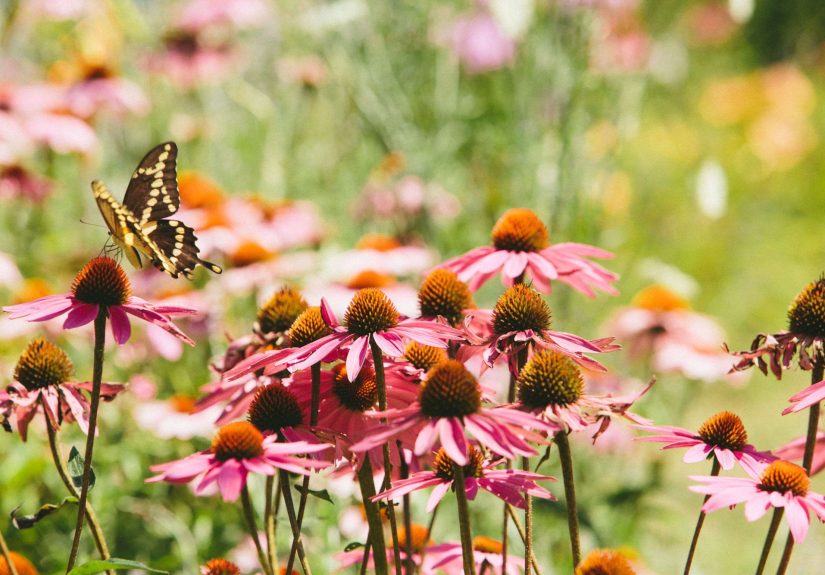
- Nectar mid-season: bee balm, coneflower, blazing star
- Late-season fuel: asters and goldenrod (critical for fall migration and butterflies finishing the season)
- Structure: switchgrass or little bluestem
Why it works
This border delivers a clear flight path, big nectar “landing zones,” and the host plants monarchs need.
It also looks like a designed garden bedaka something your neighbors will compliment instead of “politely ignore.”
Plan 2: The Four-Season Berry & Shelter Hedge
Best for: property lines, privacy screens, windy yards
Layout
- Layer 1: small tree or large shrub every 10–15 feet
- Layer 2: berry shrubs in front (grouped in 3s)
- Layer 3: native perennials at the edge for butterflies
Bird-smart plants
- Berries: serviceberry, elderberry, dogwood, viburnum, winterberry holly
- Evergreen cover (where appropriate): native juniper/cedar varieties
Butterfly bonus
Pair berry shrubs with nectar perennials (asters, coneflower, goldenrod) and you get a hedge that feeds birds
while also acting like a butterfly café along the “edge habitat” butterflies naturally love.
Quick caution: If you live where nandina is common, consider swapping it for bird-safer berry shrubs.
Plan 3: The Hummingbird “Hot Strip”
Best for: sunny beds near patios, windows, or outdoor seating
Layout
- Make a 3–5 foot deep bed with repeating pockets of red/orange tubular flowers.
- Add a small shrub or trellis as a perch zone.
Plant picks
- Stars: cardinal flower, bee balm, native salvia
- Vines (choose non-invasive natives): coral honeysuckle on a trellis
- Support cast: penstemon, columbine (great early-season nectar in many regions)
Design tip
Add a shallow moving-water feature (even a tiny bubbler in a bowl). Hummingbirds notice sparkle like it’s their job.
(It kind of is.)
Plan 4: The Mini-Prairie Meadow (20×20 or Smaller)
Best for: replacing a chunk of lawn; sunny, well-drained areas
Layout
- Use a 70/30 blend: ~70% native grasses, ~30% wildflowers (by plant count, not vibes).
- Include a mowed or mulched edge so it reads as “meadow on purpose.”
Core plants
- Grasses: little bluestem, switchgrass
- Wildflowers: black-eyed Susan, coneflower, blazing star, asters, goldenrod
Why birds love it
Seedheads feed finches and sparrows; grasses provide cover; insects thrivemeaning nesting birds get the protein they need.
Leave seedheads standing through winter for both food and shelter.
Plan 5: The Rain Garden Oasis
Best for: low spots that collect water; downspout outflows
Layout
- Center (wettest): moisture-loving natives
- Middle ring: pollinator perennials
- Outer ring (drier): tough edge plants and grasses
Wildlife features
- Add a shallow “puddling zone”: a dish or depression filled with damp sand and a few flat stones.
- Include late-season bloomers so butterflies have fuel when other gardens quit early.
Plan 6: The Woodland Edge “Layer Cake”
Best for: part shade along tree lines; north/east sides of homes
Layout
- Canopy/understory: small native tree (if space allows)
- Shrubs: viburnum, native honeysuckle shrubs (region-dependent)
- Perennials: shade-tolerant bloomers + host plants
Butterfly-friendly picks
- Host plants: violets (for fritillaries), pawpaw (for zebra swallowtail in many eastern areas)
- Nectar: native phlox, columbine, asters that tolerate part shade
Woodland edges are naturally busy ecosystems. Your job is to copy that “layered” lookthen enjoy the show.
Plan 7: The Patio Pollinator Bar (Containers That Actually Work)
Best for: balconies, patios, small courtyards
Layout
- Use 3–5 large pots instead of many tiny ones (pots dry fast; butterflies are not into crunchy, dehydrated flowers).
- Group pots together to form a nectar station.
Container all-stars
- Nectar: compact coneflower varieties, salvia, coreopsis (choose region-appropriate natives when possible)
- Host plant pot: a milkweed container (if you can keep it watered) or parsley/dill for swallowtails
- Bird add-on: a shallow dish with stones for safe sipping
Plan 8: The Edible “Caterpillar Corner” Herb Bed
Best for: gardeners who want butterflies without sacrificing the whole vegetable garden
Layout
- A 4×8 raised bed (or two half-beds) with herbs on one side and flowers on the other.
- Place it near the kitchen for easy snippingand easy butterfly watching.
Host plant focus
- For black swallowtails: parsley, dill, fennel (plant extra; caterpillars do not do “portion control”)
- Nectar nearby: zinnias (if you use annuals), native asters, coneflower, bee balm
Plan 9: The “Lawn-to-Life” Corner Conversion
Best for: people who want a wildlife garden but aren’t ready to break up with their whole lawn
Layout
- Convert two sunny corners of your yard into 6×6 or 8×8 planting islands.
- Add a curved edge and mulch path between them for an intentional feel.
Planting formula
- Island A: milkweed + mid-season nectar
- Island B: asters + goldenrod + native grass clumps
This plan is sneaky: it looks like landscaping, but it functions like habitat. The best kind of trick.
Plan 10: The Birdbath + Drip Garden (Tiny Water, Huge Impact)
Best for: any yard; especially hot climates or urban areas
Layout
- Place a birdbath in dappled shade (cooler water, safer feel).
- Add a dripper or small solar fountain for movement.
- Surround with nectar flowers in a 5–7 foot ring.
Plant ring suggestions
- Low: coreopsis, native groundcovers
- Medium: coneflower, bee balm
- High accents: blazing star, asters
Plan 11: The “Night Shift” Moon Garden (Moths Welcome)
Best for: people who sit outside at dusk and want more than mosquitoes for company
Layout
- Choose a bed visible from a porch or window.
- Use pale blooms and fragrant flowers that carry scent at night.
Why it matters
Moths are pollinators too, and they’re bird food. A garden that supports nighttime pollinators also supports the larger food web.
Plan 12: The Kid-Friendly Butterfly Loop (A Pathway Garden)
Best for: families, schools, or anyone who likes an excuse to wander outside with coffee
Layout
- Create a simple loop path (mulch or stepping stones) around two planting beds.
- Put host plants in one bed and nectar plants in the other.
Make it interactive
- Add a small sign: “Caterpillars live here. Yes, they’re allowed to snack.”
- Include a shallow puddling dish and a bench for “serious butterfly research.”
How to Customize Any Plan for Your Region
- Match plants to your conditions (sun, soil moisture, winter temps). The “right plant, right place” rule beats wishful thinking every time.
- Choose region-native host plants for the butterflies you actually have.
- Use local bloom timing to fill gapsaim for at least three bloom waves: spring, summer, fall.
- Keep a “wild corner”: a brush pile, leaf litter under shrubs, or hollow stems left over winter can be valuable habitat.
Conclusion: Build a Garden That Feels Alive
The best bird-and-butterfly gardens aren’t about one “magic plant.” They’re about stacking small, smart choices:
native blooms in clumps, host plants for caterpillars, berries and shelter for birds, clean water, and chemical-free care.
Pick one plan, start with one bed, and expand as you see what shows up.
Experiences From Real Gardens: What People Learn (and Laugh About) Along the Way
Gardeners who set out to attract birds and butterflies tend to have the same first-season surprise: the garden becomes a stage,
and the cast members do not follow your script. You plant milkweed dreaming of monarchsand suddenly you’re staring at leaves that look
like they were hole-punched by a miniature office worker. Then the realization hits: that’s the point. If nothing is eating your host plants,
you’re basically running a butterfly restaurant with no customers.
Another common experience is the “where did all these birds come from?” moment. It often happens after adding water.
A gardener might spend weeks obsessing over flower choices, then install a simple birdbath or a tiny dripper andboomdaily visitors.
The movement and sound of water can act like a billboard for birds flying overhead, especially during warm spells.
People also notice that birds behave differently depending on placement: tucked near shrubs feels safer than out in the open,
and shallow water with stones helps smaller birds (and keeps the whole situation from turning into a slippery spa disaster).
Butterflies, meanwhile, teach patience. Many gardeners report that year two is when things “click.”
Perennials bulk up, bloom timing stretches out, and clumps become obvious landing pads instead of scattered single stems.
That’s why meadow-style plans and pollinator borders can look a bit sparse early onthen suddenly they turn into a living mosaic.
The most satisfying moment is often a late-summer afternoon when asters or goldenrod are buzzing, fluttering, and humming all at once
the garden equivalent of a sold-out concert where everyone actually behaves.
People also learn that a wildlife garden is a negotiation, not a dictatorship. Squirrels may “redecorate” mulch.
Rabbits might sample seedlings. Some gardeners respond by trying to outsmart nature; the happier ones set up small defenses
(temporary fencing, plant cages, extra seedlings) and keep going. They focus on resilience: repeating tough natives, diversifying plantings,
and designing edges that look tidy even when the inside is gloriously messy.
Finally, there’s the mindset shift that shows up in conversations: gardeners stop seeing “imperfection” as failure.
A chewed leaf becomes proof of a functioning food web. Seedheads left standing in winter become intentional bird feeders.
Leaf litter under shrubs becomes habitat rather than “yard waste.” And once that shift happens, people often say the garden feels more restful.
It’s not just a displayit’s a place where something is always happening. Birds forage, butterflies drift through, and you get the rare joy
of realizing your yard isn’t just landscaping. It’s a small, working ecosystem with excellent aesthetics.






 Close
Close