
Table of Contents >> Show >> Hide
- 1) Start With a Water Budget (Yes, Like a Grown-Up)
- 2) Design in Hydrozones: Group Plants by Thirst Level
- 3) Build Better Soil: More Sponge, Less Sandcastle
- 4) Mulch Like You Mean It (3 Inches Is a Love Language)
- 5) Shrink the LawnKeep Only the Turf You Use
- 6) Choose Native and Climate-Adapted Plants (They’re Built for This)
- 7) Install Drip Irrigation Where It Counts
- 8) Add a Smart Controller (Let Weather Do the Scheduling)
- 9) Create Shade and Wind Protection to Cut Evaporation
- 10) Use Permeable Paths and Patios to Keep Rain Where You Need It
- 11) Harvest Rainwater (Even a Barrel Helps)
- 12) Design a “Dry Creek” and Rock Features That Work as Water Tools
- Maintenance That Keeps Water Use Low (Without Turning You Into a Gardener Monk)
- Conclusion: A Lush Garden Can Be a Low-Water Garden
- Real-World Experiences and Lessons From Water-Wise Gardens (Extra )
If your hose has started giving you the side-eye (and your water bill is acting brand-new every month), you’re not alone. The good news: a low-water garden doesn’t have to look like a bowl of gravel with “Hope” written on a rock. With a few smart design moves, you can build a landscape that stays attractive, resilient, and surprisingly chill about rainfall.
The secret isn’t a single “magic drought plant.” It’s a system: plan for your climate, keep moisture where it belongs, and stop watering the things that don’t need it. Below are 12 drought-tolerant landscaping ideaspractical, design-forward, and friendly to both your schedule and your sprinkler timer.
1) Start With a Water Budget (Yes, Like a Grown-Up)
Before you buy plants, decide how much water you’re willing to spend on your yardthen design within that reality. Think of it as meal-prepping, but for moisture. A clear water budget helps you avoid the classic mistake: installing a thirsty landscape and hoping “future you” will magically become a full-time irrigator.
How to do it
- Identify your sunniest, hottest areas (they’ll need tougher plants or more shade).
- Measure or estimate irrigated square footage (small changes here = big water savings).
- Decide where you truly want “lush” and where “handsome and hardy” is totally fine.
2) Design in Hydrozones: Group Plants by Thirst Level
A hydrozone is simply a planting area where everything has similar water needs. It’s the landscaping version of not serving toddlers and teenagers the same portion size. When you mix high-water plants with low-water plants in one bed, somebody sufferseither the drought-tough plants rot from overwatering or the thirsty ones sulk dramatically.
Quick hydrozone map
- Low-water zone: most of the yardnative shrubs, ornamental grasses, succulents, tough perennials.
- Moderate-water zone: near the house or patioplants you see up close and baby a little.
- High-water zone (tiny): a small “wow” spotcontainers or a single accent bed.
3) Build Better Soil: More Sponge, Less Sandcastle
Drought-tolerant landscaping isn’t just about plantsit’s about the ground they live in. Healthy soil holds moisture longer, so roots can sip slowly instead of begging daily. Improving soil can be the difference between “low-water garden” and “crispy plant museum.”
Soil upgrades that actually help
- Add compost to planting areas to improve structure and water-holding capacity.
- Avoid over-tilling; it breaks soil aggregates and can increase evaporation.
- Top-dress beds annually with a thin layer of compost before mulching.
4) Mulch Like You Mean It (3 Inches Is a Love Language)
Mulch is the bouncer that keeps evaporation from crashing your garden party. It shades soil, reduces water loss, suppresses weeds (which are basically tiny water thieves), and buffers temperature swings.
Mulch rules for maximum water savings
- Use organic mulch (wood chips, shredded bark, leaf mulch) in planting beds.
- Keep mulch a few inches away from trunks and crowns to avoid rot.
- Refresh as it breaks downyour soil will thank you with better moisture retention.
5) Shrink the LawnKeep Only the Turf You Use
Lawns aren’t “bad,” but wall-to-wall turf is often the thirstiest, highest-maintenance choiceespecially if nobody actually hangs out on it. The smartest move is to keep lawn where it earns its keep and replace the rest with drought-tolerant alternatives.
Easy swaps for unused grass
- Low-water groundcovers: creeping thyme (where climate allows), sedum, native groundcovers by region.
- Ornamental grasses: blue grama, little bluestem, feather reed grass (choose region-appropriate species).
- Hardscape “rooms”: patios, decomposed granite seating areas, stepping-stone paths with gravel.
6) Choose Native and Climate-Adapted Plants (They’re Built for This)
Native plants evolved to handle local weather patterns, including dry spells. Climate-adapted plantsoften Mediterranean or desert-region speciescan also thrive with limited water once established. Either way, you’re letting genetics do the heavy lifting.
Examples of drought-tough plant types
- Perennials: yarrow, blanket flower, salvia, agastache (varies by region).
- Shrubs: manzanita (West), yaupon holly (South), sumac (many regions), juniper groundcovers.
- Herbs: lavender, rosemary, sagesun-lovers that don’t demand constant watering.
Tip: “Drought-tolerant” still needs establishment watering for the first season (sometimes two). After that, the goal is deep, infrequent wateringtraining roots to go down, not hover at the surface.
7) Install Drip Irrigation Where It Counts
Sprinklers are great at watering sidewalks, driveways, and the general concept of “somewhere over there.” Drip irrigation, on the other hand, delivers water near the root zonemore efficient, less evaporation, and fewer fungal issues from wet foliage. If you want the biggest “wow” upgrade for water savings, start here.
Drip system essentials
- Use pressure regulation and filtration (drip hates debris).
- Match emitter placement to plant size (shrubs need a wider wetting area than a small perennial).
- Check seasonally for clogs and leakstiny problems waste big water over time.
8) Add a Smart Controller (Let Weather Do the Scheduling)
Watering “every Tuesday forever” is how you end up irrigating during rain… and then paying for it. Smart irrigation controllers and proper scheduling help adjust watering to actual conditions. That means fewer wasted cycles and healthier rootsbecause plants prefer consistency, not surprise pool parties.
Smarter watering habits
- Water early morning to reduce evaporation loss.
- Run cycles long enough to soak, not just sprinkle (deep roots = tougher plants).
- Skip watering during wind or rainnature’s already on the job.
9) Create Shade and Wind Protection to Cut Evaporation
Microclimates matter. A bed next to a hot wall or reflective pavement dries out faster than the same plants in light shade. Adding shade and blocking wind can reduce plant stress and water demandwithout adding a single drop.
Design moves that cool things down
- Plant a small tree strategically to shade patios and south/west exposures.
- Use trellises, fences, or shrubs as windbreaks in exposed areas.
- Pair sun-baked spots with plants that naturally love heat and lean soil.
10) Use Permeable Paths and Patios to Keep Rain Where You Need It
Traditional concrete sends rainwater away as fast as possible. Permeable surfaceslike permeable pavers, gravel paths, and porous pavementlet water infiltrate into the soil, reducing runoff and helping recharge moisture in the root zone. It’s landscaping that works with gravity instead of fighting it.
Permeable options that look polished
- Permeable interlocking pavers for walkways and patios.
- Decomposed granite or gravel paths with edging for clean lines.
- Stepping stones set in gravel (a classic “low-water garden” look).
11) Harvest Rainwater (Even a Barrel Helps)
Rainwater harvesting doesn’t have to be a sci-fi cistern situation. A simple rain barrel can capture roof runoff and give you “free” water for containers, new plantings, and dry spells. Bigger systems can supply drip irrigation or landscape zones, depending on local rules and your setup.
Beginner-friendly rain harvesting
- Start with one barrel at a downspout and a screened inlet to keep debris out.
- Use stored rainwater for hand-watering establishment plants and container gardens.
- Direct overflow away from foundations and toward planted areas when possible.
12) Design a “Dry Creek” and Rock Features That Work as Water Tools
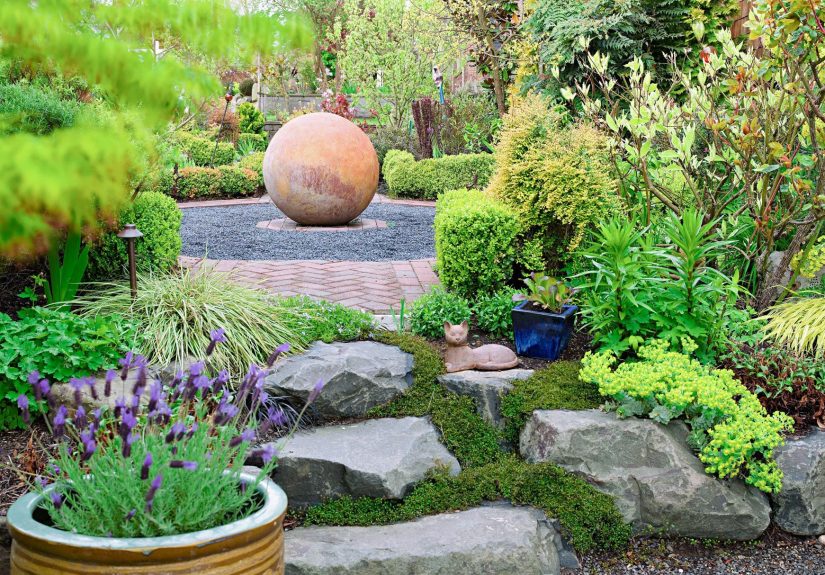
Here’s the fun part: drought-tolerant landscaping can look intentional, artistic, and downright expensive (without the expensive water habit). Dry creek beds, rock gardens, and gravel “rivers” do more than look goodthey help manage runoff during storms, guide water toward planting areas, and reduce muddy erosion.
How to make it functional (not just decorative)
- Shape the creek bed to follow natural drainage patterns.
- Use larger stones as anchors and smaller gravel as fill for a realistic look.
- Plant drought-tough species along the edgesthink ornamental grasses, native perennials, and low shrubs.
Maintenance That Keeps Water Use Low (Without Turning You Into a Gardener Monk)
Low-water landscapes are lower maintenancenot no maintenance. A few habits keep them thriving without constant irrigation:
- Weed early and often: weeds steal water and create unnecessary competition.
- Prune lightly: heavy pruning can trigger thirsty regrowth in hot weather.
- Feed moderately: too much fertilizer pushes lush growth that needs more water.
- Adjust irrigation seasonally: your garden doesn’t need the same schedule in April and August.
Conclusion: A Lush Garden Can Be a Low-Water Garden
The best drought-tolerant landscapes don’t rely on one heroic plantthey rely on smart design. When you hydrozone your beds, improve soil, mulch properly, upgrade irrigation, and choose climate-fit plants, you build a garden that stays beautiful with less effort and far less water. In other words: you stop “fighting the weather” and start landscaping like you’ve met your climate.
Real-World Experiences and Lessons From Water-Wise Gardens (Extra )
People who switch to drought-tolerant landscaping often expect one dramatic moment where everything becomes effortless: they plant a few succulents, retire their sprinkler system, and ride into the sunset on a tumbleweed. Real life is a bit more… practical. The most common “experience-based” lesson is that the first season matters more than the first week. Even tough plants need time to establish roots, and that usually means consistent watering at the beginningthen a steady taper toward deep, infrequent soakings.
Another frequent surprise: mulch is not optional fluff. Gardeners who skip mulch (or apply a thin “decorative dusting”) notice the difference fast. Bare soil heats up, dries out, and crusts over. Mulched beds stay cooler, hold moisture longer, and look finished. Many water-wise gardeners also learn to avoid piling mulch against trunks and crownsbecause nothing says “I tried” like a perfectly drought-tolerant shrub that rots from the base up.
Drip irrigation, when people finally try it, tends to create a mild obsession. The first “aha” moment usually happens when someone realizes they’ve been watering their driveway for years. But drip comes with its own learning curve: emitters clog, tubing shifts, and a tiny leak can quietly waste water until you notice a mysteriously lush patch of weeds. The experience-based fix is simple: do quick seasonal checkups. Walk your lines, look for uneven growth, and flush filters. Five minutes now beats a month of “Why is that plant mad?”
Hydrozoning is another concept that feels obvious only after you live it. Folks who mix high-water and low-water plants in one bed often end up in a cycle of constant tweakingwatering more for one plant, then losing another to soggy roots. Once beds are grouped by water needs, maintenance becomes calmer: you can water zones appropriately instead of negotiating with every individual plant like it’s a tiny botanical courtroom.
Finally, many people discover that a low-water garden looks better when it’s designed like a landscapenot a collection of “survivors.” Repeating a few plant shapes, using gravel or permeable paths to create structure, and adding one or two focal points (a boulder, a specimen shrub, a sculptural agave in warm climates) makes the whole yard feel intentional. The practical takeaway from real gardens is encouraging: drought-tolerant landscaping isn’t a sacrifice. It’s a design style that rewards smart planning, a little patience in year one, and a willingness to let your yard be beautiful without needing constant drinks.





 Close
Close