
Table of Contents >> Show >> Hide
- Why Speedy School Mornings Matter
- 17 Ways to Get Ready for School Quickly
- 1. Pack Your Backpack the Night Before
- 2. Pick Out Your Clothes in Advance
- 3. Use a Simple Morning Checklist
- 4. Set One Wake-Up Time and Stick to It
- 5. Stop Hitting Snooze
- 6. Shower at Night If Mornings Are Tight
- 7. Keep Breakfast Fast, Not Fancy
- 8. Prep Breakfast Ingredients Ahead of Time
- 9. Create a “Launch Zone” by the Door
- 10. Keep Your Essentials in the Same Place Every Day
- 11. Reduce Decisions in the Morning
- 12. Build in a Five-Minute Buffer
- 13. Check the Weather Before Bed
- 14. Charge Devices Overnight
- 15. Practice a “Dry Run” for New Routines
- 16. Break Big Tasks Into Tiny Steps
- 17. Create a Routine You Can Actually Repeat
- A Quick 20-Minute School Morning Example
- Common Mistakes That Make School Mornings Slower
- of Real-Life School Morning Experience
- Final Thoughts
- SEO Tags
Some school mornings feel like a relay race where the baton is a missing sock. One minute you are brushing your teeth like a responsible human, and the next minute you are sprinting through the house yelling, “Where is my backpack?” If that sounds painfully familiar, good news: getting ready for school quickly is less about moving at superhero speed and more about building a routine that saves your brain from early-morning chaos.
The fastest school mornings are not the ones where you do everything in a rush. They are the ones where you do fewer things at the last second. That is the secret. When you reduce decisions, prep ahead, and give yourself a routine that practically runs on autopilot, you can get dressed, fed, packed, and out the door without turning your kitchen into a dramatic reality show.
Below are 17 smart, realistic ways to get ready for school quickly, whether you are a student trying to stop running late or a parent trying to get everyone out the door with your sanity intact.
Why Speedy School Mornings Matter
Quick school mornings are not just about punctuality. They can shape the whole day. When your morning starts with a scramble, everything feels harder. You are more likely to forget homework, skip breakfast, leave your water bottle behind, and arrive at school already feeling stressed. On the other hand, a smoother routine helps you feel calmer, more focused, and more in control before first period even starts.
And no, this does not require waking up at 4:45 a.m. to journal by candlelight and blend a green smoothie worthy of a wellness influencer. It just takes practical habits that cut waste, reduce friction, and make the basics easier.
17 Ways to Get Ready for School Quickly
1. Pack Your Backpack the Night Before
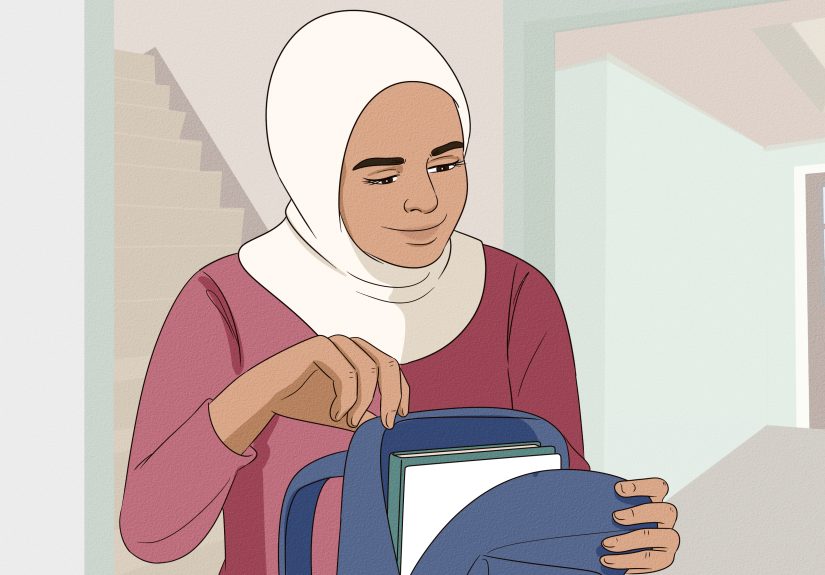
This is the king of all time-saving school tips. Put your homework, folders, charged laptop, lunch card, sports gear, permission slips, and anything else you need into your backpack before bed. Then place the bag by the door. Morning-you is not a detective. Morning-you should not have to search the entire house for a math worksheet that was “definitely on the table yesterday.”
2. Pick Out Your Clothes in Advance
Standing in front of a closet at 6:45 a.m. and suddenly questioning every outfit you own is not a productive use of time. Choose your clothes the night before, including socks, shoes, jacket, and accessories. If you wear a uniform, lay that out too. You are not trying to win a fashion award before homeroom. You are trying to leave the house fully dressed and emotionally stable.
3. Use a Simple Morning Checklist
A checklist sounds basic because it is basic, and basic works. Write down your must-do steps in order: wake up, use the bathroom, get dressed, brush teeth, wash face, eat breakfast, grab backpack, leave. The magic is that you stop relying on memory when your brain is still booting up. Younger kids can use a visual checklist with pictures. Older students can keep a note on their phone or mirror.
4. Set One Wake-Up Time and Stick to It
Waking up at a different time every school day can make mornings feel rougher than they need to be. A regular wake-up time trains your body to expect movement. It also reduces the temptation to hit snooze six times and negotiate with reality. Consistency is boring, yes, but it is wonderfully effective.
5. Stop Hitting Snooze
The snooze button feels like a gift from heaven, but it is usually a trap. Those tiny extra chunks of sleep do not leave you refreshed. They leave you groggy, late, and oddly annoyed at your alarm for doing exactly what it was hired to do. Put your phone or alarm across the room so you have to physically get up to turn it off. Once your feet hit the floor, you are halfway to success.
6. Shower at Night If Mornings Are Tight
If your morning routine always gets jammed up in the bathroom, move your shower to the evening. Night showers save time, reduce traffic if multiple people share a bathroom, and make the morning feel less packed. This is especially helpful for students with long hair, elaborate skin-care routines, or a household that turns into an Olympic event every time someone needs the mirror.
7. Keep Breakfast Fast, Not Fancy
A quick school morning is not the time to audition for a cooking show. Build a go-to breakfast list that takes five minutes or less. Think yogurt and fruit, peanut butter toast, overnight oats, egg bites, cereal with milk, a smoothie, or a banana with a granola bar. The goal is consistency, not culinary greatness. A fast breakfast beats skipping breakfast and realizing by second period that your stomach is filing a formal complaint.
8. Prep Breakfast Ingredients Ahead of Time
If breakfast slows you down, do the setup the night before. Put bowls on the counter, portion smoothie ingredients, set out dry cereal, or prep overnight oats. This small move saves surprising amounts of time, especially when several people are trying to eat at once. Tiny setup, huge payoff.
9. Create a “Launch Zone” by the Door
Designate one spot for the things you need to leave with every day: backpack, shoes, water bottle, keys, lunch, library books, and sports gear. When everything lives in one place, you eliminate the classic pre-exit chaos loop of finding one item, forgetting another, then wandering room to room like a confused NPC in a video game.
10. Keep Your Essentials in the Same Place Every Day
This rule sounds almost offensively obvious, but it is powerful. Your ID badge, headphones, charger, hairbrush, deodorant, bus pass, and shoes should have permanent homes. Not “wherever I tossed them.” Permanent homes. The fewer daily hide-and-seek games you play, the faster you get out the door.
11. Reduce Decisions in the Morning
Decision fatigue is real, and it shows up early. The more choices you make before school, the slower you move. Choose from two breakfast options, not twelve. Rotate a few reliable outfits. Know which shoes you wear on gym days. Mornings get easier when you stop requiring yourself to reinvent life before 8 a.m.
12. Build in a Five-Minute Buffer
People love pretending they can leave the house at the exact second they finish brushing their teeth. Life laughs at that plan. Build in a five-minute cushion for things like tying shoes, signing a paper, filling a water bottle, or locating the hoodie that mysteriously vanished overnight. Buffers turn “we are doomed” into “we are fine.”
13. Check the Weather Before Bed
One of the fastest ways to slow down a school morning is to discover at the last second that it is raining, freezing, or weirdly hot. Check the weather the night before and set out the right coat, umbrella, shoes, or layers. That way you are not scrambling because the sky decided to be dramatic.
14. Charge Devices Overnight
If you need a phone, tablet, or laptop for school, charge it overnight in the same place every evening. Morning is a terrible time to realize your Chromebook is at 7 percent and your charger is somewhere in the couch dimension. Plug in early. Sleep peacefully.
15. Practice a “Dry Run” for New Routines
New school year? New bus stop? New outfit expectations? New drop-off system? Practice it. A trial run helps everyone understand timing and weak spots before a real school day is on the line. It is much better to discover you need ten more minutes on a Tuesday practice than during the actual first day of school when stress is already tap dancing on your last nerve.
16. Break Big Tasks Into Tiny Steps
If you or your child gets overwhelmed in the morning, shrink each task. Instead of “Get ready,” try “Put on your shirt,” then “Put on your shoes,” then “Brush your teeth.” Specific steps reduce resistance because the brain knows exactly what to do next. This strategy is especially helpful for younger children and for students who struggle with organization or attention.
17. Create a Routine You Can Actually Repeat
The best fast morning routine is not the most ambitious one. It is the one you can repeat on a random Wednesday when everyone is tired and nobody feels inspirational. Make it realistic. Keep it simple. A routine that works 80 percent of the time is far better than a perfect schedule that collapses the moment someone cannot find a sock.
A Quick 20-Minute School Morning Example
If you want a model to copy, here is a simple example:
- Minute 1–3: Get up, turn off alarm, use the bathroom.
- Minute 4–7: Get dressed in the clothes you already picked out.
- Minute 8–11: Brush teeth, wash face, fix hair.
- Minute 12–16: Eat a quick breakfast.
- Minute 17–18: Put lunch and water bottle in your backpack.
- Minute 19–20: Grab your things from the launch zone and leave.
Will every morning fit neatly into this plan? Absolutely not. Some mornings will still be chaos with a side of confusion. But a repeatable structure makes it much easier to recover when things go sideways.
Common Mistakes That Make School Mornings Slower
Sometimes the fastest fix is spotting what is making you late in the first place. A few common time-wasters include staying up too late, relying on multiple snooze alarms, scrolling on your phone before getting dressed, leaving homework until morning, and trying to make every breakfast a full production. Another big one is assuming you have “plenty of time” when you absolutely do not.
If mornings keep falling apart, do not just try harder. Diagnose the problem. Are you tired? Disorganized? Missing supplies? Taking too long to choose clothes? Once you identify the bottleneck, you can fix it without overhauling your entire life.
of Real-Life School Morning Experience
The funniest thing about school mornings is that almost everyone thinks their household is uniquely chaotic. It usually is not. One family swears the problem is the bathroom mirror. Another blames the dog, who apparently sits on the exact shoe needed every Thursday. A middle school student insists she is always “basically ready,” even while holding one sneaker, half a bagel, and a science project that clearly should have been finished yesterday. The details change, but the theme stays the same: mornings feel hard when too many things are happening at once.
A lot of students discover that being “bad at mornings” is not really a personality trait. It is often just a routine problem in a messy disguise. For example, one high schooler might think he is hopelessly late by nature, but once he starts charging his laptop at night, laying out his clothes, and putting his keys in the same bowl every evening, he suddenly becomes a person who leaves on time three days in a row. Then four. Then most days. It is not magic. It is systems.
Parents often notice the same pattern. The mornings that go well are not necessarily quieter children, easier schedules, or better luck. They are the mornings where fewer decisions need to be made. Clothes are ready. Lunch is mostly packed. Backpacks are by the door. The weather has already been checked. The family knows what “time to leave” actually means. In other words, success usually starts the night before, not at sunrise.
There is also a huge emotional side to quick school mornings that people do not talk about enough. When students wake up rushed, they often feel behind before the day even begins. That can make small problems feel enormous. A missing worksheet becomes a catastrophe. A tangled ponytail becomes a crisis. A slow toaster becomes personal betrayal. But when there is even a little cushion in the morning, the whole mood changes. People speak more kindly. Kids feel less panicked. Adults stop sounding like emergency broadcasters.
Another common experience is learning that a “perfect” routine is less useful than a flexible one. Maybe Monday mornings are easy, but Tuesdays are harder because of band practice gear. Maybe younger kids need more step-by-step reminders, while teens need more independence and fewer speeches before 7 a.m. Families often do best when they adjust the routine to real life instead of trying to force real life into a fantasy schedule. Fast routines work best when they are customized, not copied blindly.
And then there are the small wins that make everything worth it. The student who remembers everything without being reminded. The parent who is not frantically signing a permission slip on the hood of the car. The kid who actually eats breakfast instead of surviving on vibes until lunch. Those moments may seem small, but they add up. A good school morning does not need to look glamorous. It just needs to feel smoother than yesterday. That is progress. That is success. And honestly, that is enough.
Final Thoughts
If you want to get ready for school quickly, do not focus on moving faster. Focus on making mornings easier. Prep the night before, simplify your choices, keep essentials in one spot, and build a routine that can survive real life. Quick school mornings are not about perfection. They are about reducing the number of things that can go wrong before first period.
Start with just three changes this week: pack your bag at night, choose your clothes before bed, and keep breakfast simple. Those alone can make a major difference. Then add the rest as needed. Before long, your mornings may not feel glamorous, but they will feel doable. And on school days, that is basically luxury.





 Close
Close