
Table of Contents >> Show >> Hide
- Before You Start: Prep, Tools, and Thrift Store Hunting
- 21 DIY Thrift Store Dresser Makeover Ideas
- 1. Classic White Farmhouse Dresser
- 2. Deep Navy Statement Piece
- 3. Two-Tone Wood and Paint Mix
- 4. Boho Cane or Rattan Fronts
- 5. Color-Block Drawers
- 6. Ombre Gradient Makeover
- 7. Stenciled or Wallpapered Drawer Fronts
- 8. Raw Wood Scandinavian Look
- 9. Black Modern Makeover
- 10. Faux Apothecary or Card Catalog Drawer Fronts
- 11. Dresser Turned Bathroom Vanity
- 12. TV Stand or Media Console Dresser
- 13. Nursery-Ready Changing Station
- 14. Distressed Coastal Dresser
- 15. Bold Color “Joy Bomb” Dresser
- 16. Farmhouse Meets French Country
- 17. Industrial-Inspired Dresser
- 18. Decoupaged Vintage Map or Floral Fronts
- 19. Chalkboard or Kids’ Art Station Dresser
- 20. Entryway Organizer and Shoe Station
- 21. Mixed Hardware “Collected Over Time” Look
- Tips for a Durable, Professional-Looking Finish
- Real-Life Lessons from Thrifted Dresser Makeovers
If you’ve ever wandered past a chipped, sad-looking dresser at the thrift store and thought, “Someone should really do something about that,” congratulations you’re officially someone. With a little paint, some sandpaper, and a dash of courage, that $20 castoff can become the star of your bedroom, entryway, or even your bathroom. These DIY thrift store dresser makeover ideas are inspired by real Hometalk-style projects and other budget-savvy furniture flips, all tweaked to work for normal humans (not just professional refinishers with a warehouse of power tools).
Below you’ll find 21 makeover ideas to help you turn thrift store dressers into custom pieces that look like they came from a boutique not the bargain corner. Whether you love farmhouse, boho, modern, or a little bit of everything, there’s a dresser makeover idea here with your name on it.
Before You Start: Prep, Tools, and Thrift Store Hunting
Before we dive into the fun stuff, it pays to talk basics. Great dresser makeovers don’t start with paint they start with prep.
Choose the Right Dresser
When you’re cruising thrift stores, Facebook Marketplace, or yard sales, look for dressers that are structurally solid. Dovetail joints, real wood (not spongy particleboard), and smooth-opening drawers are all good signs. Scratches, ugly stain, and dated hardware are fine; broken frames and warped drawers are not your friends. If you’re planning to resell, solid wood dressers tend to flip for more and last longer.
Basic Supplies You’ll Use Again and Again
You don’t need a full workshop to pull off a dresser transformation. A simple starter kit usually includes:
- Mild cleaner or degreaser and a scrub sponge
- Screwdriver for removing hardware and drawers
- Sanding sponge or orbital sander with medium and fine grits
- Primer (especially for dark finishes or stain bleed-through)
- Furniture paint or chalk/mineral paint
- Topcoat: clear wax, polyurethane, or water-based polycrylic
- Painter’s tape, drop cloth, and a good-quality brush or foam roller
Give the piece a thorough clean, lightly sand to scuff the finish (unless your paint brand specifically says you can skip sanding), and prime if needed. This is the un-glamorous part, but it’s what separates a cute Instagram project from a dresser that actually survives daily use.
21 DIY Thrift Store Dresser Makeover Ideas
1. Classic White Farmhouse Dresser
If you want a makeover that works with almost any decor, go farmhouse. After cleaning and sanding, prime your dresser and paint it a crisp white or soft off-white. Distress the edges lightly with fine sandpaper to let the wood peek through, then add simple black or rubbed bronze hardware. This combo looks intentional, modern, and high-end even if the dresser cost less than dinner.
2. Deep Navy Statement Piece
For a bolder look, try a rich navy or midnight blue. This color is especially stunning on dressers with simple, clean lines. Use a satin or semi-gloss finish for a subtle sheen, and pair it with brass or gold pulls. Style it with a mirror and a plant, and suddenly your “before” photo looks like it belongs in a furniture horror story.
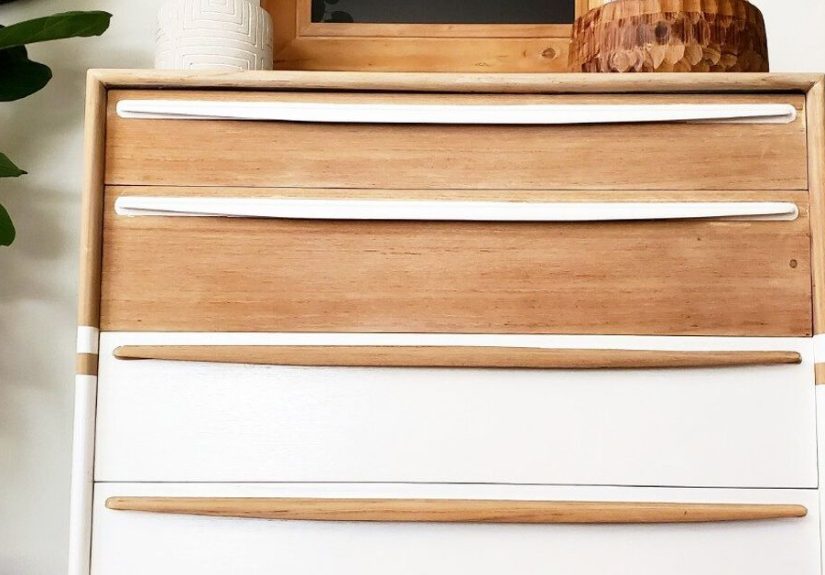
3. Two-Tone Wood and Paint Mix
Can’t decide between natural wood and paint? You don’t have to. Sand the top and maybe the drawer fronts back to bare wood, then stain them in a warm medium tone. Paint the dresser body a contrasting color white, charcoal, or sage green all work beautifully. The natural wood softens the painted look and makes even a quirky thrift find feel custom and balanced.
4. Boho Cane or Rattan Fronts
Boho dressers are trending hard, and they’re surprisingly DIY-friendly. Remove flat drawer fronts and add pre-woven cane or faux rattan panels (you can find them online or at some home centers). Paint the frame a warm white or sandy beige and swap in leather pulls or simple wood knobs. The texture makes the piece look like it came from a designer catalog rather than a dusty back corner of the thrift store.
5. Color-Block Drawers
Color-blocking is made for dressers because drawers naturally create stripes. Choose two or three coordinating colors think blush, terracotta, and creamy white and paint each drawer a different shade. Keep the frame neutral so the drawers pop. This is a great way to use up leftover paint samples and create a playful piece for a kids’ room or craft space.
6. Ombre Gradient Makeover
For a more artistic look, go ombre. Pick a base color and gradually add white to each batch as you work your way up the dresser. The bottom drawer is darkest, the top is lightest, and everything in between looks like a smooth color gradient. Matching hardware and a simple topcoat keep it from feeling too busy while still adding major “wow” factor.
7. Stenciled or Wallpapered Drawer Fronts
If you love pattern but don’t want to commit to a full piece, focus on the drawer fronts. After painting the dresser a solid color, use a stencil to create a repeating motif or apply peel-and-stick wallpaper to the front of each drawer. Trim neatly around the edges and seal with a clear topcoat if needed. This is an easy way to get a designer pattern without mastering freehand painting.
8. Raw Wood Scandinavian Look
Scandi-inspired dressers favor light, natural wood and simple shapes. If your thrift find is solid wood, sand it down to remove old finish and stain. Use a light stain or even a clear matte sealer to preserve the natural color, then replace dated hardware with simple black bar pulls or minimalist knobs. The result is clean, airy, and perfect for modern or minimalist spaces.
9. Black Modern Makeover
Nothing says “I’m not old, I’m vintage” like a sleek black dresser. A high-quality black furniture paint instantly hides mismatched wood tones and dated details. Choose a smooth, brushstroke-minimizing product, and finish with a protective topcoat. Add slender gold or matte black hardware and style with art and greenery. This makeover is especially great for boxy, mid-century dressers.
10. Faux Apothecary or Card Catalog Drawer Fronts
Turn a basic dresser into a faux-apothecary cabinet by tricking the eye. Use thin trim to visually divide wide drawers into smaller “compartments.” Paint everything the same color, then add label-style pulls or card catalog hardware. It feels like something rescued from an old library, even though you know it started life as a plain dresser in a thrift store pile.
11. Dresser Turned Bathroom Vanity
For a more advanced DIY project, convert a solid thrifted dresser into a bathroom vanity. After checking that it’s the right height and width, carefully cut an opening in the top for a sink and in the back for plumbing. Seal the top with a water-resistant finish and reinforce any weak spots. When it’s done, you’ll have a vanity with more personality (and often more storage) than most ready-made options.
12. TV Stand or Media Console Dresser
Old dressers make excellent TV stands. Remove the top row of drawers and add a shelf or two for electronics. Drill small holes in the back for cords, paint or stain the exterior, and keep the lower drawers for storing games, blankets, or DVDs you secretly still own. It’s a smart way to repurpose a tall chest into a functional living room piece.
13. Nursery-Ready Changing Station
Skip the flimsy changing table and flip a sturdy dresser instead. Paint it in a soft color like dusty blue, sage, or pale peach. Add a non-slip changing pad on top and use the drawers for diapers, wipes, and baby clothes. When your kid outgrows diapers, just remove the pad and you’ve still got a beautiful dresser that can grow with them.
14. Distressed Coastal Dresser
If your home leans coastal or cottage-y, try a lightly distressed, beachy finish. Paint the dresser in a soft blue, seafoam, or weathered gray. Once dry, use a sanding sponge to distress edges and corners. Whitewashed or rope-style knobs complete the seaside vibe. Pair it with woven baskets and driftwood decor to really sell the “beach house on a budget” look.
15. Bold Color “Joy Bomb” Dresser
Sometimes subtle just isn’t your style. Choose a bold, happy color think emerald green, mustard yellow, or hot coral and commit. With good prep and paint, you’ll get a smooth, saturated finish that turns the dresser into a room’s focal point. Keep hardware simple and let the color do the talking. This works especially well in entryways, office spaces, or guest rooms.
16. Farmhouse Meets French Country
Combine classic farmhouse white with gentle curves and romantic details for a French country feel. Use a creamy white paint, lightly distress carved details, and replace hardware with vintage-style glass or floral knobs. If your dresser has a mirror, paint the frame to match and consider antiquing the mirror for extra charm. This makeover is perfect for bedrooms and dressing areas.
17. Industrial-Inspired Dresser
Give a plain dresser an industrial edge with dark paint, metal-style hardware, and maybe even faux metal details. Paint the body charcoal or black, then add bin pulls, label holders, or pipe-style handles. If you’re feeling ambitious, use faux concrete paint techniques on the top or add decorative corner brackets. It’s a great match for lofts, teen rooms, and home offices.
18. Decoupaged Vintage Map or Floral Fronts
Decoupage is your friend when you want a one-of-a-kind dresser without hand-painting tiny details for hours. Apply trimmed pieces of vintage-style maps, florals, or botanical prints to drawer fronts using decoupage medium. Smooth out bubbles, seal thoroughly, and pair with simple knobs so the art gets all the attention. This is a fun option for guest rooms, craft rooms, or reading nooks.
19. Chalkboard or Kids’ Art Station Dresser
Turn a thrift store dresser into a kid-friendly command center. Paint the sides or drawer fronts with chalkboard paint, and fill the drawers with art supplies, games, and toys. Kids can label drawers with chalk, draw on the sides, and help keep things somewhat organized (in theory, at least). It’s playful, functional, and easily updated as they grow.
20. Entryway Organizer and Shoe Station
Short dressers work beautifully in entryways. Paint or stain the piece, then designate drawers for shoes, scarves, hats, and bags. Add hooks or a mirror above, plus a tray on top for keys and mail. If you live with people who drop their stuff everywhere, this makeover might actually save your sanity or at least your floors.
21. Mixed Hardware “Collected Over Time” Look
If you can’t resist scooping up pretty knobs and pulls from clearance bins or flea markets, this one’s for you. Paint the dresser a solid, neutral color and use different hardware on each drawer. Keep finishes cohesive (for example, all brass or all black) so it feels intentional. The effect is charming, eclectic, and very Hometalk like the piece slowly evolved with your home over the years.
Tips for a Durable, Professional-Looking Finish
Once the creative part is done, a few finishing steps will help your thrift store dresser makeover go the distance:
- Don’t skip curing time. Paint may feel dry to the touch in a day, but it often needs several days to fully cure. Avoid heavy use until the finish has hardened.
- Seal high-traffic areas. Use wax or a clear topcoat on dresser tops and drawer fronts that see the most contact.
- Upgrade drawer function. Wax the sides of wooden drawers or lightly sand them so they slide better. Fresh liner paper inside drawers makes the piece feel brand new.
- Protect floors. Add felt pads under dresser legs, especially if you’ve added height or changed the base.
Real-Life Lessons from Thrifted Dresser Makeovers
Ask anyone who’s fallen down the Hometalk rabbit hole of DIY dresser makeovers and they’ll tell you: every flip teaches you something. Some projects go exactly as planned. Others? Let’s just say they end up as “learning experiences” that involve sanding off an entire coat of paint you swore was the perfect color.
One common experience DIYers share is the moment right after they drag a heavy dresser into the garage and really see it. Maybe the veneer is more damaged than it looked in the store. Maybe there’s a mystery smell. (Pro tip: leave drawers open in the sun, scrub with vinegar-water, and don’t be afraid of odor-blocking primers.) It’s normal to feel a little buyer’s remorse at this stage. But after a deep clean and the first pass with a sanding sponge, that doubt usually starts to fade.
Another shared lesson: your first idea doesn’t have to be your final idea. A lot of DIYers start with a plan for a bright color and end up falling in love with a neutral, or vice versa. Maybe you meant to do a clean modern black dresser and halfway through you realize the carved details are begging for a more romantic, distressed look. Paint is forgiving. If a color feels wrong, let it dry, live with it for a day or two, and repaint. You’d be surprised how often the “second try” becomes the favorite project.
There’s also the hardware saga. Many thrifted dressers come with dated handles that are, frankly, doing them dirty. Swapping to new hardware is one of the easiest upgrades, but it comes with a few surprises. The screw holes might not match new pulls, the spacing might be odd, or one handle might be missing. DIYers quickly become pros at filling old holes with wood filler, sanding smooth, and drilling new ones. Some people even end up reusing original hardware after a transformation with spray paint or metal polish, realizing that the old pulls actually had great bones all along.
If you decide to sell your dresser flips, you’ll learn a different set of lessons. Pricing is a big one. New flippers tend to undervalue their work, forgetting to factor in supplies and time. Watching what similar pieces sell for in your area helps a lot. So does taking good photos: natural light, styled decor on top, and clutter-free backgrounds make a huge difference in how quickly a dresser gets claimed on resale sites. Many furniture flippers discover that neutral colors and classic styles sell fastest, while bolder looks attract a slightly smaller but more enthusiastic crowd.
Then there’s the emotional side. Finishing a dresser makeover gives you a very specific kind of satisfaction: you turned something unwanted into something beautiful and useful again. That feeling tends to be addictive. What starts as “just one dresser for the guest room” often turns into “well, I already have extra paint, so maybe I’ll grab that little three-drawer chest I saw at the thrift store, too.” Before long, your friends and family are texting you photos from Goodwill asking, “Is this one worth saving?”
You also learn to see potential everywhere. Instead of walking past beat-up pieces, you start imagining them painted navy with brass pulls, or stripped down to raw wood, or wrapped in wallpaper. You recognize solid construction and quality details underneath bad finishes. That mindset shift from “old and ugly” to “full of potential” is one of the biggest gifts thrift store dresser makeovers offer.
Most of all, you learn that you don’t have to be perfect to create something beautiful. Your brushstrokes might not be invisible. A drawer might stick a tiny bit on humid days. But none of that matters when you walk into the room, look at your dresser, and remember what it looked like the day you wrestled it out of the thrift store. You did that. And once you’ve done it once, you’ll never look at a “cheap old dresser” the same way again.
So the next time you scroll through Hometalk or see an amazing before-and-after online, don’t just save it for “someday.” Grab a tape measure, head to your favorite thrift spot, and bring home a project. Your dream dresser might be sitting there right now, hiding under a bad paint job and a $25 price tag, just waiting for its makeover moment.





 Close
Close