
Table of Contents >> Show >> Hide
- Why a Blue Front Door Works So Well
- How to Choose the Right Shade Before You Open the Paint Can
- 24 Blue Front Doors for a Warm and Welcoming First Impression
- 1. Classic Navy Blue
- 2. Soft Sky Blue
- 3. Dusty Blue
- 4. Cobalt Blue
- 5. Slate Blue
- 6. Blue-Green Teal
- 7. French Blue
- 8. Deep Denim Blue
- 9. Robin’s-Egg Blue
- 10. Midnight Blue
- 11. Powder Blue
- 12. Blue Ash
- 13. Coastal Blue
- 14. Haint Blue-Inspired Door
- 15. Stormy Blue
- 16. Cerulean Blue
- 17. Smoky Blue
- 18. Indigo Blue
- 19. Aqua Blue
- 20. Colonial Blue
- 21. Sapphire Blue
- 22. Blue-Gray Front Door
- 23. Bright Barn Blue
- 24. Almost-Black Blue
- What Makes a Blue Door Feel Warm Instead of Cold
- Experiences That Make Blue Front Doors So Easy to Love
- Final Thoughts
Some homes smile. Others just sort of stand there with their hands in their pockets. A blue front door is one of the easiest ways to make sure your house lands in the first category. It feels classic without being boring, colorful without shouting, and welcoming without trying too hard. In other words, it is the design equivalent of offering guests a great cup of coffee before they even knock.
Blue is especially powerful at the entry because it can shift personalities with ease. A pale powder blue feels airy and cottage-like. A deep navy looks polished and grounded. A teal-leaning blue brings energy, while a smoky slate blue feels tailored and calm. That range is exactly why blue front doors keep showing up on everything from white farmhouses to brick Colonials, coastal cottages, modern exteriors, and traditional homes with serious porch charm.
Why a Blue Front Door Works So Well
A blue front door earns its keep because it plays nicely with so many exterior materials and colors. White siding, warm beige paint, gray stone, red brick, natural wood, black shutters, brass hardware, and even weathered shingles tend to look better next to the right shade of blue. That versatility matters, because the door is not decorating in isolation. It has to work with the whole cast: trim, shutters, railings, porch flooring, landscaping, lighting, and the occasional package delivery pile.
Blue also strikes a rare balance between warmth and calm. Some bright door colors can feel playful but chaotic. Some dark neutrals can feel elegant but a little stern. Blue sits right in the sweet spot. It suggests freshness, confidence, and comfort all at once. And when paired with the right finish, especially satin, semi-gloss, or gloss, it adds depth and definition that make the entry feel intentionally designed instead of randomly painted on a Saturday afternoon.
How to Choose the Right Shade Before You Open the Paint Can
Start by looking at your home’s fixed elements. If you have red brick, warmer or deeper blues often look richer than icy tones. If your home is bright white, almost any blue can work, from soft sky tones to bold cobalt. Gray siding usually loves slate, navy, or blue-green shades. Natural wood and stone often pair beautifully with muted coastal blues, mineral blues, and weathered mid-tones.
Next, think about style. Traditional homes usually shine with navy, inky blue, or historic blue tones. Coastal and cottage exteriors can carry lighter, breezier shades. Modern homes often benefit from cleaner, sharper blues that feel architectural instead of whimsical. And if your porch already has statement tile, colorful planters, or lots of greenery, a quieter blue may let those details do some of the talking.
Finally, do not ignore hardware and sheen. A blue front door with brass hardware feels warmer and more collected. The same door with matte black hardware looks crisper and more contemporary. Add crisp white trim, and the whole entry suddenly looks like it has excellent posture.
24 Blue Front Doors for a Warm and Welcoming First Impression
1. Classic Navy Blue
If you want a shade that rarely misses, navy is your friend. It feels timeless, grounded, and elegant, especially on traditional homes, Colonials, and coastal exteriors. Pair it with brass hardware and white trim for a look that says, “Yes, we do have our life together,” even if there are three unmatched shoes on the porch.
2. Soft Sky Blue
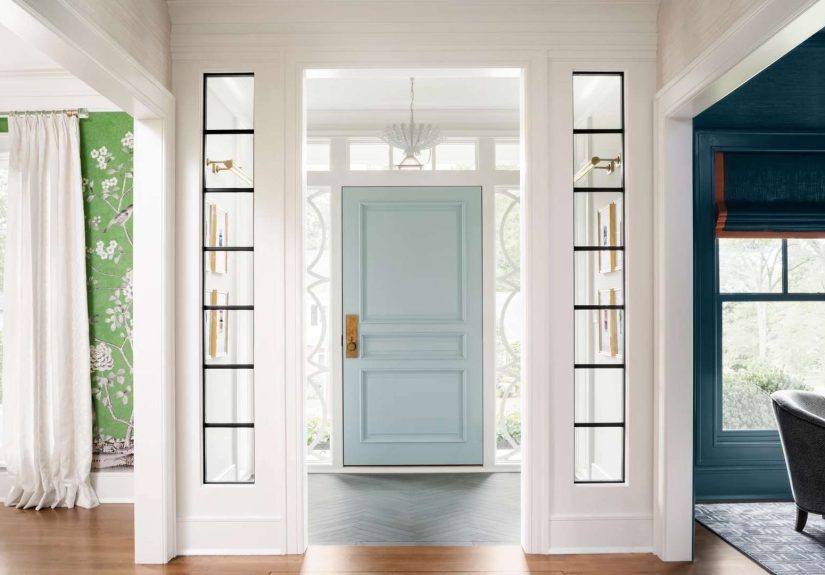
Sky blue brings a lighter, breezier mood to the entry. It is especially lovely on cottages, bungalows, and homes with lots of natural light. This shade works beautifully with white siding, pale gray exteriors, and simple black lanterns, creating an entry that feels cheerful but not sugary.
3. Dusty Blue
Dusty blue has a muted, slightly weathered quality that feels sophisticated and easygoing at the same time. It is ideal if you want color without a loud pop. On older homes, this tone often feels authentic and settled, like it has always belonged there.
4. Cobalt Blue
Cobalt is for homeowners who want their front door to make a stylish entrance before anyone else does. It is bold, crisp, and energetic, especially against white stucco, light brick, or neutral siding. Keep the surrounding decor simple so the color can shine without turning the entry into a costume party.
5. Slate Blue
Slate blue is a great choice when you love blue but want something quieter and more tailored. It has gray undertones that make it feel grown-up and architectural. On homes with stone, charcoal accents, or cool gray trim, slate blue looks particularly polished.
6. Blue-Green Teal
A blue-green door adds personality fast. It feels warm, inviting, and a little bit luxe, especially when paired with natural wood, off-white walls, and layered greenery. This is a great fit for homes that want a welcoming front entry with more personality than plain navy.
7. French Blue
French blue brings a refined softness that works beautifully on classic and cottage-style homes. It has enough color to stand out but enough restraint to feel elegant. Add matching planters or a patterned porch rug, and the whole entry starts to feel charming in that suspiciously effortless way.
8. Deep Denim Blue
Denim blue feels relaxed, familiar, and slightly rustic. It is ideal for farmhouse exteriors, craftsman homes, and houses with natural wood details. Unlike a super-dark navy, denim blue has a friendlier, more casual energy that makes the entry feel lived-in and welcoming.
9. Robin’s-Egg Blue
This fresh, airy blue is full of charm. It works especially well with white clapboard, beadboard porches, and cottage landscaping. Robin’s-egg blue can read vintage, coastal, or garden-inspired depending on the surrounding decor, which makes it surprisingly versatile.
10. Midnight Blue
If your goal is drama with discipline, midnight blue is a standout. It almost reads black in low light but reveals its blue depth in the sun. This makes it perfect for modern, traditional, or brick homes that want a moody front door without going full black.
11. Powder Blue
Powder blue is soft and approachable, making it ideal for homes that lean sweet, airy, or Southern-inspired. It can instantly lighten a heavier facade and soften darker architectural details. Pair it with white trim, warm wood, or porch swings for peak welcome-home energy.
12. Blue Ash
A blue with subtle gray and green undertones can feel contemporary without losing warmth. This kind of shade works beautifully on brick homes where you want contrast, but not a jarring one. It looks especially good with modern house numbers and simple sconces.
13. Coastal Blue
Coastal blue is breezy without being theme-y. It pulls inspiration from sea and sky, but when used well, it still feels refined rather than beach-rental obvious. Try it with weathered shingles, white trim, and brushed nickel or antique brass hardware.
14. Haint Blue-Inspired Door
Haint blue is traditionally used on porch ceilings, but a front door in a similarly soft, ethereal shade can feel magical. It is subtle, warm, and wonderfully Southern in spirit. On homes with wraparound porches or vintage details, it creates instant softness.
15. Stormy Blue
Stormy blue brings more depth than a medium blue but less formality than navy. It is a terrific bridge color for transitional homes that mix traditional and modern details. This shade looks especially sharp beside crisp white trim and black outdoor lighting.
16. Cerulean Blue
Cerulean has a clean, uplifting quality that feels bright without becoming childish. It can wake up a neutral exterior and look stunning against pale brick, cream siding, or warm white paint. If your landscaping includes lots of green, cerulean will really sing.
17. Smoky Blue
Smoky blue softens the entry in a very grown-up way. It is muted, calming, and incredibly easy to live with. If you are nervous about committing to blue, this is a smart middle ground because it reads almost like a neutral with a little extra personality.
18. Indigo Blue
Indigo feels rich, layered, and slightly artistic. It is an excellent choice for homes with character, especially older properties with detailed trim, transom windows, or paneled doors. Add unlacquered brass or aged bronze hardware and you have a front entry with real presence.
19. Aqua Blue
Aqua is playful, sunny, and ideal for homes that want a front door with instant vacation energy. It works best when the rest of the exterior stays calm, allowing the door to provide the fun. Think white siding, simple trim, and maybe a plant that is thriving harder than you are.
20. Colonial Blue
For historic homes or traditional facades, a heritage-inspired colonial blue is a reliable choice. It feels dignified and period-friendly without looking stiff. This tone tends to work beautifully with brick walkways, black shutters, and symmetrical architecture.
21. Sapphire Blue
Sapphire has jewel-tone richness that makes the door feel elevated and a little glamorous. It is a great pick for homes with clean lines, darker shutters, or formal landscaping. Keep the wreath understated and let the color do the dazzling.
22. Blue-Gray Front Door
Blue-gray is what you choose when you want the mood of blue and the flexibility of gray. It is subtle, elegant, and extremely forgiving across changing light conditions. On modern farmhouses and neutral exteriors, it looks calm, crisp, and expensive.
23. Bright Barn Blue
This shade leans a bit more playful and rustic, making it perfect for farmhouse, cottage, or country-style homes. It has enough punch to make a strong first impression, but it still feels homey. Pair it with warm wood benches, black lanterns, and galvanized planters.
24. Almost-Black Blue
An almost-black blue gives you the drama of a dark entry with just enough color to feel softer and more dimensional than standard black. It is bold, elegant, and especially effective on white, cream, gray, or brick exteriors. Think of it as the little black dress of front doors, but friendlier.
What Makes a Blue Door Feel Warm Instead of Cold
Not every blue automatically feels cozy. The warmth comes from the pairing. Brass or aged bronze hardware can bring out richness. Warm white trim softens the contrast. Natural fiber doormats, terracotta pots, leafy planters, and wood porch furniture keep the color from feeling too crisp or remote. Even a simple wreath can shift the entire mood from “pretty door” to “welcome in.”
Finish matters too. A satin or semi-gloss finish reflects enough light to make the door feel cared for and lively. High-gloss can be stunning on the right architecture, especially on paneled doors, but it works best when the prep is excellent. In other words, gloss is fabulous, but it absolutely notices if you cut corners.
Experiences That Make Blue Front Doors So Easy to Love
Living with a blue front door is one of those small home decisions that tends to pay you back in tiny, satisfying ways. First, there is the daily arrival. A good blue door has presence. It gives your eye somewhere to land when you pull into the driveway after a long day, and that matters more than people expect. It can make the whole house feel more intentional, even if you have not touched the landscaping, porch railings, or light fixtures yet.
There is also the seasonal advantage. In spring and summer, blue looks fresh next to green lawns, potted herbs, and blooming flowers. In fall, it plays beautifully with rust, terracotta, burgundy, and golden tones. During the holidays, blue becomes a surprisingly versatile backdrop for wreaths, garlands, lanterns, and evergreen arrangements. It is one of those rare colors that can feel cool in the best way during hot months and still feel cozy when the weather turns cold.
Another common experience is that a blue front door often changes how guests read the house before they ever step inside. Deep blues tend to feel stable and elegant. Lighter blues feel open and airy. Mid-tone blues often come across as friendly and approachable. That emotional read happens fast. People may not say, “What a wonderfully calibrated shade with balanced undertones,” because most visitors are not secretly paint historians, but they do notice how the entry makes them feel.
Blue doors also tend to photograph well, which is no small thing in the age of delivery photos, holiday snapshots, real estate listings, and accidental family portraits taken on the porch because the lighting was good for once. A rich blue gives shape and contrast, helping wreaths, seasonal decor, and even simple black hardware stand out more cleanly. It is a hardworking background color in a place that gets seen often.
Homeowners also love how easy a blue door is to style. Swap the doormat, add new planters, change the wreath, switch to brass house numbers, or update the sconces, and the door suddenly feels new again without repainting. That flexibility makes blue a practical color, not just a pretty one. You are not locked into one vibe forever. A navy door can lean coastal with striped pillows, traditional with boxwoods, or modern with minimalist hardware and oversized planters.
Perhaps the best part is that blue manages to be memorable without feeling exhausting. Some colors look exciting on day one and strangely loud by month three. Blue usually does the opposite. It grows on you. It feels more anchored over time. And because it sits somewhere between neutral and statement color, it gives your house character without making the rest of the exterior work overtime to keep up. That is a pretty great quality for something you pass through every day.
Final Thoughts
If you want a front entry that feels warm, stylish, and easy to love for the long haul, blue is one of the smartest choices you can make. Whether you go pale and breezy, deep and dramatic, or somewhere beautifully in between, the right blue front door can transform your curb appeal and make your home feel more welcoming before anyone even reaches for the knob.





 Close
Close