
Table of Contents >> Show >> Hide
- Quick Table of Contents
- Why Her Images Feel Like Dreams With A Budget
- The 25 Reality-Bending Photographs (With Notes)
- Ouroboros (2025), from the series Serpentia
- Third Skin (2025), from the series Serpentia
- Behind Back (2024), from the series Circles
- Seesaw (2021), from the series Circles
- Touching (2021), from the series Circles
- Whisper to Me What You See (2021), from the series Circles
- The Weight (2021), from the series Circles
- Angel (2021), from the series Circles
- On and On (2021), from the series Circles
- The Three of Us (2020), from the series Circles
- Without Clouds (2020), from the series Circles
- Clock (2019)
- Untitled #I, from the series Tanec Praha
- Untitled #II, from the series Tanec Praha
- How do fish sleep?
- GOOD (2020)
- Water and Love
- Untitled, from the series Helena’s things (2016)
- Untitled (2018)
- Untitled #1 (2014), from the series Evolve
- Untitled #4 (2014), from the series Evolve
- Untitled #1 (2011), from the series Air Force
- Untitled #2 (2011), from the series Air Force
- Untitled #3 (2011), from the series Air Force
- Untitled #4 (2011), from the series Air Force
- Untitled #6 (2011), from the series Air Force
- Robot (2011)
- Never Happened III (2007)
- Untitled #3 (2008), from the series Never Happened I.
- Untitled #1 (2007), from the series Never Happened II.
- Untitled #2 (2007), from the series Never Happened II.
- Girl (2006)
- Boy (2006)
- How To “Read” Surreal Photography Without Overthinking Yourself
- A 500-Word Experience: What It Feels Like To Step Into Her World
- Conclusion
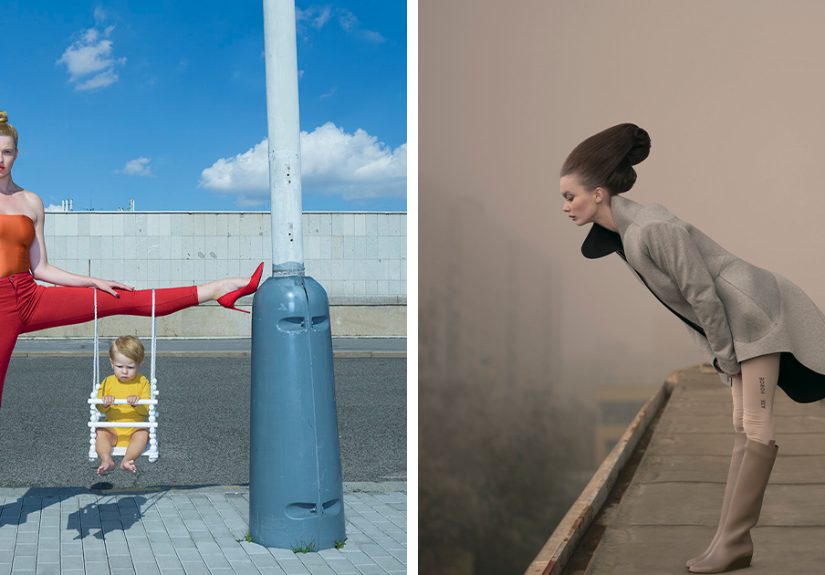
Some photographers “capture” reality. Bára Prášilová politely taps reality on the shoulder, asks it to move over, then builds a whole new universe where circles have opinions, hair behaves like rope, and symbolism shows up uninvitedlike that one friend who “just happened to be in the neighborhood” and is now eating your snacks.
Prášilová (often searched as “Bara Prasilova”) is known for surreal photography that looks impossibly clean and strangely believable at the same time. The trick isn’t a single trick. It’s the full recipe: conceptual thinking, meticulous art direction, hand-built props, controlled light, and a sense of humor that never winks too hard. The result is fine art photography that borrows the polish of editorial photography, then uses it to smuggle in a dream.
Quick Table of Contents
Why Her Images Feel Like Dreams With A Budget
Surrealism isn’t just “weird for weird’s sake.” At its best, it’s a visual shortcut to the subconsciousdream logic, symbolic objects, and scenes that feel emotionally true even when they’re physically impossible. In photography, that means a single frame can behave like a short story: a character, a conflict, a clue, and an unresolved ending.
Prášilová’s signature approach tends to land in a sweet spot: the scene is unreal, but the materials feel real. Instead of leaning only on post-production to manufacture magic, she often constructs the magic in front of the lens with wardrobe, set pieces, and carefully designed objectsthen uses editing to refine, not replace, the reality of what was staged. That’s why her surreal photographs don’t float away; they stay grounded, like a dream wearing sensible shoes.
Another reason her conceptual photography lands: the images don’t over-explain. You’re invited to interpret, not instructed to decode. The humor is there, but it’s drymore “absurd museum label” than “look, a random banana.” And because the craft is so precise, the viewer’s brain stops arguing and starts participating.
The 25 Reality-Bending Photographs (With Notes)
Below are 25 standout photographs and titles from across Prášilová’s bodies of workspanning newer explorations like Serpentia, the motif-driven Circles, and earlier series such as Air Force, Evolve, and Never Happened. Think of this as a guided tour where the docent lets you laugh, stare, and quietly question your life choices (in a good way).
-
Ouroboros (2025), from the series Serpentia
A title that already screams “ancient symbol of cycles,” Ouroboros sets the tone: transformation, repetition, and the unsettling comfort of patterns we can’t quite quit. The surreal edge comes from how myth feels physicallike folklore put on studio lighting and told to hold still.
-
Third Skin (2025), from the series Serpentia
This one reads like a metaphor you can touch. “Third skin” suggests protection, persona, inheritancesomething layered beyond the body. The photograph’s tension is classic Prášilová: beauty plus unease, staged with editorial-level precision, then left emotionally open-ended.
-
Behind Back (2024), from the series Circles
The phrase “behind your back” is usually about secrets. Here it becomes a visual strategy: what’s hidden becomes the main event. The surreal punch is in the implied narrativeyour brain starts writing a story, and the photograph refuses to confirm your draft.
-
Seesaw (2021), from the series Circles
Childhood play turns into adult physics: balance, power, negotiation. In Prášilová’s hands, the seesaw becomes a symbol of relationshipswho rises, who drops, who pretends they’re “fine” while gripping the metaphor for dear life.
-
Touching (2021), from the series Circles
This is surrealism with manners: it looks composed, almost calm, and then the meaning creeps in. “Touching” can be contact, tenderness, intrusion, curiosity. The image leans into that ambiguitysoft concept, sharp execution.
-
Whisper to Me What You See (2021), from the series Circles
The title acts like a spell. It turns viewing into intimacy: the photograph asks you to confess what you notice. Surreal photography thrives herewhat you “see” depends on what you bring. It’s a mirror disguised as a scene.
-
The Weight (2021), from the series Circles
Prášilová often uses objects that feel heavier than their materialsweights, hoops, props that carry social meaning. This image pushes reality by turning “weight” into both a literal presence and a psychological load. You can feel it even if you can’t measure it.
-
Angel (2021), from the series Circles
“Angel” could be innocence, surveillance, comfort, pressure. In surreal conceptual photography, titles are doors, not captions. Here, the door opens to contradiction: the sacred can feel awkward, and the awkward can feel sacred.
-
On and On (2021), from the series Circles
Cycles, repetition, routineslife’s greatest hits album. The surreal energy comes from how the image makes repetition visible. It’s not a loop on a screen; it’s a loop in a body, a habit, a family story that keeps retelling itself.
-
The Three of Us (2020), from the series Circles
A title that implies a triangleexcept the series is Circles, which is exactly the point. Relationships aren’t neat shapes. This photograph plays with identity and togetherness: who belongs, who’s watching, who’s carrying the invisible center.
-
Without Clouds (2020), from the series Circles
“Without clouds” sounds peacefuluntil you realize clouds also hide the harsh parts of light. Prášilová’s surreal tone often lives in that kind of reversal: clarity can be uncomfortable, and beauty can feel like a spotlight you didn’t ask for.
-
Clock (2019)
Time is a universal propone we all “use,” yet none of us understands. In surreal photography, clocks aren’t about punctuality; they’re about control, aging, urgency, and the comedy of pretending we’re in charge of any of it.
-
Untitled #I, from the series Tanec Praha
Movement photographed as sculpture: dancers become geometry, and the body becomes design. The surreal twist is how motion feels frozen without becoming deadlike the image captures a thought mid-sentence.
-
Untitled #II, from the series Tanec Praha
A companion piece that expands the same idea: choreography as visual metaphor. In Prášilová’s world, performance isn’t just entertainment; it’s a language for tension, control, and the strange negotiations we make with gravity (and each other).
-
How do fish sleep?
A question title is a delightful trap. It suggests curiosity, childhood science, and then it swerves into philosophy: what do we do when we can’t “turn off”? The photograph feels like a visual riddlefunny on the surface, quietly existential underneath.
-
GOOD (2020)
A single word with suspicious confidence. In surreal conceptual photography, “GOOD” can be affirmation, sarcasm, coping mechanism, or a sticker slapped over something complicated. The image’s power is in that tension: is this genuinely goodor just labeled that way?
-
Water and Love
Water is emotion’s favorite costume: reflective, unpredictable, gentle, dangerous. Pair it with love and you get a mood that changes faster than a group chat. The surreal effect comes from how the scene makes feeling look physicallike you could scoop it up.
-
Untitled, from the series Helena’s things (2016)
“Things” become characters. This photograph pushes reality by elevating objects into story driversmemory, inheritance, domestic mythology. It’s the kind of image that makes you look at your own closet like it’s plotting something.
-
Untitled (2018)
Untitled works invite you to do the namingand therefore the meaning-making. Prášilová uses that openness like a stage: she sets the lighting and props, then hands you the script and says, “You tell me what’s happening.”
-
Untitled #1 (2014), from the series Evolve
Evolve is where her surreal language leans into transformationbody, identity, relationship. The image feels like a metamorphosis paused, not for explanation, but for examination. You’re not asked to believe; you’re asked to consider.
-
Untitled #4 (2014), from the series Evolve
A second evolution note, different emotional temperature. The surreal hook often arrives through material contrastsoft vs. rigid, human vs. object, intimacy vs. distance. Prášilová’s art direction makes those opposites look inevitable, like they were always meant to collide.
-
Untitled #1 (2011), from the series Air Force
Despite the title, this isn’t about jets and macho movie trailers. It’s about inner balancehow you stay upright when the environment feels foggy. Surreal photography loves fog because it’s honest: sometimes you really can’t see the whole picture.
-
Untitled #2 (2011), from the series Air Force
Another “Air Force” frame, another psychological weather report. The surreal quality comes from the mood of suspensionlike the subject is floating between decisions. Not flying, not falling. Just… hovering in the awkward middle where most of life actually happens.
-
Untitled #3 (2011), from the series Air Force
This one reads like a parable about influence. The scene implies that surroundings can distort your sense of self, but they don’t get the final vote. Prášilová’s controlled compositions turn that idea into something you can see, not just nod at politely.
-
Untitled #4 (2011), from the series Air Force
A fog-bound world, crisp subject, and the tension between them. The surreal move is subtle: the environment feels unreal, but the person feels exact, as if the photograph is insisting that clarity is possible even when the background refuses to cooperate.
-
Untitled #6 (2011), from the series Air Force
The series’ themesbalance, perception, and the choice to “fall down” figurativelyland like a quiet challenge. The surrealism here isn’t loud. It’s the unsettling calm of a dream where you’re not chased… you’re just asked questions you can’t dodge.
-
Robot (2011)
When Prášilová invokes the artificial, it rarely reads like sci-fi. It reads like daily life: automation, performance, the roles we repeat until they feel mechanical. The surreal punchline is that the “robot” can look more human than the humansbecause it’s built from our habits.
-
Never Happened III (2007)
The title is both denial and invitation. A “memory of what never happened” is basically a dream with paperwork. The surreal strength here is emotional truth: even if the event didn’t occur, the feeling is realand the photograph gives it a body.
-
Untitled #3 (2008), from the series Never Happened I.
This series taps into childhood perceptionhow kids accept what they sense until the adult world trains it out of them. The surreal image becomes a protest against that training: what if your earliest “impossible” perceptions were actually a kind of wisdom?
-
Untitled #1 (2007), from the series Never Happened II.
Prášilová’s surreal scenes often function like fables without morals. You get the setup, the mood, the symbolic objectsand then you’re trusted to find your own meaning. It’s refreshing, like being treated as an adult at a magic show.
-
Untitled #2 (2007), from the series Never Happened II.
Another frame, same core theme: the slow social process of learning to doubt what you feel. Surreal photography becomes a reclaiming tool here. The image doesn’t ask, “Is this real?” It asks, “Why do you need permission to experience it?”
-
Girl (2006)
Early work can feel like a seedsimple on the surface, dense underneath. “Girl” reads like a character introduction, where identity is still forming and the world is still negotiable. The surreal tone is subtle: it’s the feeling that reality hasn’t hardened yet.
-
Boy (2006)
A companion portrait that similarly treats identity as a story in progress. In Prášilová’s broader universe, gender and social roles aren’t fixed statements; they’re questions. Even a straightforward title can become surreal when the image refuses easy assumptions.
How To “Read” Surreal Photography Without Overthinking Yourself
1) Start with what’s physically true
In strong surreal photography, the lighting still has logic. The materials still have texture. The body still has weight. Notice what feels tangible firstbecause that’s often the bridge the artist builds to lure you into the impossible.
2) Identify the “symbol objects” (then don’t force a single answer)
Circles, clocks, fog, water, skinsthese aren’t random decorations. They’re symbols that can carry multiple meanings at once: repetition and escape, time and pressure, clarity and confusion. If you pick one interpretation and lock it in, you’ll miss the fun.
3) Look for tension pairs
Prášilová loves opposites: beauty vs. discomfort, humor vs. seriousness, control vs. vulnerability. Surrealism thrives on that friction. It’s not there to “confuse” you; it’s there to keep the image alive after the first glance.
4) Ask “why this had to be a photograph”
Plenty of ideas could be paintings. Prášilová’s work often insists on the photographic mediumon the feeling that the scene was staged, lit, built, and captured. That “it happened (somehow)” energy is what makes the impossible feel personal.
5) Let your brain laugh first
Humor is a shortcut to honesty. If you chuckle, you’re already engaged, and now the photograph gets to slide the deeper themes in while you’re emotionally unguarded. Consider it intellectual pickpocketing, but make it art.
A 500-Word Experience: What It Feels Like To Step Into Her World
Imagine walking into a gallery where the air feels a little too clean, like someone just polished the atmosphere. You’re not greeted by chaos. You’re greeted by precisionimages that look as if they were assembled with tweezers and a ruler, then struck by lightning at the last second. Your first reaction is usually something wonderfully human and unacademic: “Wait… how?”
You step closer and realize the “how” is only the doorway. The real experience is the slow shift from curiosity to recognition. A photograph titled The Weight doesn’t need to show you a literal burden for you to feel your shoulders tighten. A piece like Seesaw can make you remember relationships that never stayed balanced, even when everyone smiled for the group photo. The surreal element isn’t an escape hatch from reality; it’s a flashlight aimed at the parts of reality that are hard to say out loud.
Then the humor arrivesnot as a punchline, but as a pressure valve. You might catch yourself laughing softly, not because the work is “silly,” but because it’s accurate in a sideways way. It’s the laugh you make when someone describes your exact coping mechanism using a metaphor involving fog, circles, or a suspiciously confident word like GOOD. The images let you feel heavy things without drowning in them.
The longer you look, the more you notice how the photographs are built for repeat visits. On the first pass, you see the scene. On the second, you see the rules the scene is breaking. On the third, you realize the rules might be yours. That’s when Prášilová’s work really “pushes the boundaries of reality”: it doesn’t only warp the external world; it nudges the viewer’s internal limitswhat you allow yourself to feel, what you call acceptable, what you label impossible.
And here’s the strange gift: after you leave, normal life looks slightly more editable. Not in a fake wayin an empowered way. You start spotting symbolism in everyday objects. A hallway mirror feels like an invitation. A repeating habit looks like a circle you could step out of. If surreal photography is a conversation with the subconscious, Prášilová’s images don’t shout. They whisper. And you catch yourself whispering back, “Okay. I see it.”
Conclusion
Bára Prášilová’s surreal photographs don’t just bend reality; they hold it still long enough for you to notice what you usually rush pastpatterns, roles, fear, tenderness, and the hilariously complicated business of being human. Across Serpentia, Circles, Evolve, Air Force, and Never Happened, her work proves that conceptual photography can be both impeccably crafted and emotionally messy the best combination, honestly, because life is exactly that.





 Close
Close