
Table of Contents >> Show >> Hide
- First: What Kind of “Red” Are We Talking About?
- The Quick Color Theory Cheat Sheet
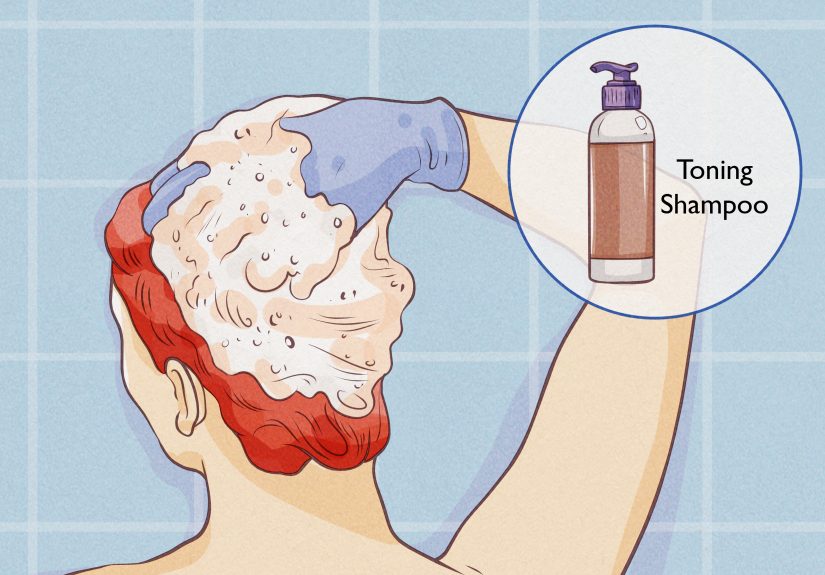
- Way #1: Neutralize Red with a Green-Based Toner (or Toning Shampoo/Gloss)
- Way #2: Fade Red Gently with Clarifying Shampoo (and a Vitamin C “Boost”)
- Way #3: Use a Color Remover (or Go Pro) for a True Reset
- Choose the Right Way: A Simple Decision Guide
- Aftercare: Keep Red From Sneaking Back
- FAQ: Quick Answers to Common “Why Is My Hair Doing This?” Questions
- Real Experiences: of “Yep, Been There”
You wanted “soft caramel brunette,” and somehow you got “sriracha sunset.” Or maybe your highlights are
looking less “sun-kissed” and more “rusty mailbox.” Either way: welcome to the club. Red and warm tones
love to hang around in hair like an uninvited houseguest who also eats your leftovers.
The good news: getting red out of hair is absolutely doablewhether you’re dealing with a too-red dye job,
brassy warmth that keeps creeping back, or that stubborn auburn cast that shows up every time your color fades.
The trick is choosing the right fix for your kind of red.
In this guide, you’ll get three reliable, stylist-approved approachesplus practical “choose-your-own-adventure”
tips, a few mistakes to avoid (because some of us learn the hard way), and real-life experiences at the end so you
feel less alone in your “why is my hair the color of a penny” era.
First: What Kind of “Red” Are We Talking About?
“Red” can mean a few different things, and each one responds best to a different strategy:
- Too-red dye job: Your fresh color looks cherry, copper, or auburn when you wanted neutral brown.
- Brassy warmth: Your hair is drifting orange/red as the color fades, especially on highlighted or lightened hair.
- Underlying warm pigment: Natural brunettes often reveal red/orange undertones when lightened or after repeated coloring.
Think of hair like a lasagna: color sits in layers, and “warmth” is often baked into the base. That’s why red tones
can pop up even if you didn’t ask for them (and did not RSVP).
The Quick Color Theory Cheat Sheet
This is the not-boring part of science: colors opposite each other on the color wheel neutralize each other.
That means the fastest way to reduce redness is usually not “more brown,” but the right opposite tone.
- Green helps cancel red
- Blue helps cancel orange
- Purple helps cancel yellow
If your hair reads as true red/auburn, you’ll lean greener/ashier. If it’s more copper/orange, you’ll lean bluer.
If it’s blonde brass (yellow), you’ll reach for purple. Simple in theory, powerful in practice.
Way #1: Neutralize Red with a Green-Based Toner (or Toning Shampoo/Gloss)
If your hair color is mostly “fine” but you’re seeing an obvious red cast, neutralizing is usually the cleanest,
least chaotic fix. You’re not trying to erase your coloryou’re trying to balance it.
Best for
- Hair that’s too red but not extremely dark
- Brunettes seeing red brassiness in sunlight
- People who want a cooler, more neutral brown without starting over
Your options (from gentlest to strongest)
-
Green toning shampoo/conditioner: subtle, gradual correction over multiple washes.
Great if you’re nervous or new to toning. - Color-depositing mask/gloss: stronger than shampoo, usually leaves more shine and more noticeable tone shift.
-
Demi-permanent “ash” or “matte” (green-based) toner: the closest at-home version of a salon tone-down,
but still lower-commitment than permanent dye.
How to do it (without accidentally going swampy)
-
Do a strand test. Pick a small hidden section (behind the ear works) and test first.
This tells you how fast your hair grabs pigment. -
Pick the right “opposite.”
If your hair looks red, choose green/ash.
If it looks orange/copper, blue is often the better match. -
Start short. For toning shampoos/masks, begin with 1–3 minutes.
You can always do another wash; you can’t un-green your hair instantly. -
Condition afterward. Toning products can be drying, especially if you’re also trying to fade color.
Follow with a hydrating conditioner or mask.
Example: “I wanted mushroom brown. I got cinnamon.”
If you dyed your hair medium brown and it came out warm or reddish, a green-leaning gloss or ash demi can pull
it back toward neutral. Many people see the biggest improvement after 2–4 uses of a toning shampoo/mask,
then maintain with once-a-week toning.
Pro tip: If your hair is porous (bleached, damaged, or very light), toners can “grab” quickly.
Dilute a toning shampoo with regular conditioner the first time for a softer landing.
Way #2: Fade Red Gently with Clarifying Shampoo (and a Vitamin C “Boost”)
If your red is coming from dye that’s too intenseor you just want it to chill out before you tonefading is a smart
first step. Think of this as letting some of the extra pigment “let go” before you color-correct.
Best for
- Semi-permanent or fresh dye that’s simply too bold
- Permanent dye you want to soften (not fully erase)
- People who prefer a slower, lower-risk approach
Option A: Clarifying shampoo “reset” routine
- Wash with clarifying shampoo using warm water (warm helps open the cuticle slightly).
- Let it sit 1–2 minutes before rinsing to maximize cleansing.
- Condition deeply afterwardclarifying shampoos are strong cleansers and can leave hair dry.
Do this sparingly. A lot of people get overexcited and go “clarify daily,” then wonder why their hair feels like a
decorative broom. For most, once a week (or a few times over a short correction window) is plenty.
Option B: Vitamin C + clarifying shampoo mask (a classic fade trick)
Vitamin C (ascorbic acid) is often used as a gentle “nudge” to help fade dyeespecially semi-permanent color.
It’s not magic, but it can take the edge off.
- Crush plain vitamin C tablets into a fine powder (or use pure ascorbic acid powder).
- Mix with clarifying shampoo into a paste.
- Apply to damp hair, saturating the reddest areas.
- Cover with a shower cap and leave on 30–60 minutes.
- Rinse thoroughly and follow with a rich conditioner or mask.
Important: This can be drying. If your hair is already fragile, do one round, reassess, and focus on
conditioning for a few days before repeating.
Example: “My red dye is too loud, but I don’t want bleach.”
Start with 1–2 clarifying washes across a week, then try one vitamin C mask. After that, reassess in daylight.
If the color is less intense but still warm, move to Way #1 (toning) for a more controlled, polished finish.
Way #3: Use a Color Remover (or Go Pro) for a True Reset
If your hair is aggressively red, uneven, or layered with multiple dye jobs (a.k.a. “my hair has a history”), you may need
a reset button. That usually means a hair color remover or a professional color correction.
Best for
- Permanent dye that won’t budge with fading
- Very intense red/copper that you want significantly reduced
- Patchy or uneven results from at-home coloring
What a hair color remover actually does
Many at-home removers are designed to target artificial dye molecules so they can be rinsed out more easily.
They don’t “restore” your natural color like time travel; they simply remove some of the added pigment so you have a more workable base.
That base can look warmer than expected afterwardbecause once the artificial dye lifts, your underlying warm pigment can show through.
How to do it safely(ish)
- Read the instructions like it’s a contract. (Because it kind of is.)
- Ventilate and protect. Gloves, old shirt, petroleum jelly around the hairlinebasic survival gear.
- Rinse for a long time. Seriously. Rinsing thoroughly can make or break the final result.
- Condition and baby your hair. Deep conditioner, gentle detangling, low heat for at least a week.
When you should get professional help
- You’ve bleached recently and your hair feels stretchy or fragile.
- You have multiple layers of box dye and uneven bands of color.
- You want a major shift (like red to blonde) in one go.
A colorist can use controlled lightening, fillers, and professional toners to get you to a neutral shade with less risk of
surprise orange (or surprise breakage). Yes, it costs more. So does buying five “miracle” products that don’t work.
Example: “I want this red GONE.”
If you truly want a significant removalnot just toning downstart with a color remover. Then, once you see the new base
in natural light, decide whether you need a toner (Way #1) or a darker overlay to reach your target shade.
Choose the Right Way: A Simple Decision Guide
- My hair is only slightly red/brassy: Start with Way #1 (toning).
- My dye is too intense but I can live with it fading: Start with Way #2 (fading), then tone.
- My hair is very red, uneven, or layered with dye: Consider Way #3 (remover or pro).
Aftercare: Keep Red From Sneaking Back
Once you’ve cooled things down, maintenance mattersbecause warmth loves a comeback tour.
- Use color-safe shampoo most days and save clarifying for occasional resets.
- Maintain tone weekly with the right pigmented product (green/blue/purple depending on your warmth).
- Condition like it’s your job. Hydrated hair holds tone more evenly and looks shinier.
- Protect from sun and heat. UV and hot tools can dry hair and speed fading, which often reveals warmth.
FAQ: Quick Answers to Common “Why Is My Hair Doing This?” Questions
Why does my brown hair pull red?
Many brunettes have natural warm undertones (red/orange) in the underlying pigment. When hair is lightened, dyed, or fades,
those undertones can show more strongly.
Can I use ash dye to fix red hair?
Often, yesash shades are designed to be cooler and can help neutralize warmth. But start carefully, strand test, and consider a demi-permanent option
if you’re not ready for a full commitment.
Will purple shampoo fix red?
Purple targets yellow tones. If your “red” is really a warm blonde/yellow brass, it may help a littlebut true red usually needs green,
and orange/copper often needs blue.
Is it safe to keep stripping and toning repeatedly?
Hair can only handle so much “rough handling” before it gets dry, weak, or prone to breakage. If you’ve already bleached, or your hair feels fragile,
slow down, condition, and consider professional help for big corrections.
Real Experiences: of “Yep, Been There”
The first time I tried to “just go brown,” I learned a universal truth: hair has opinions. I chose what looked like a neutral brunette shade,
followed the directions, and felt confidentuntil I stepped into sunlight and realized I’d accidentally joined the Cinnamon Society. Indoors,
it looked fine. Outside? My hair was doing a warm-toned TED Talk.
Here’s what actually helped: I stopped panic-buying random “fixes” and treated it like a process. I started with two clarifying washes across a week.
Not dailyjust enough to gently fade the fresh pigment so it wasn’t shouting. My hair immediately felt drier (hello, hay era), so I paired every wash
with a moisturizing mask and kept heat styling minimal. That alone softened the intensity, but the red cast was still there, especially at the ends.
Next came toningthe step I used to fear because I once had a friend whose hair went faintly green for a weekend (iconic, but not the vibe).
I did a strand test with a green-leaning toning product, left it on for a short time, rinsed, and checked in natural light. The difference was subtle
but real: less “penny,” more “cool cocoa.” The key was patience. Instead of trying to neutralize everything in one dramatic session, I toned lightly
once a week. Within a few washes, the overall brown looked calmer, and the shine improved because I wasn’t constantly attacking my hair.
Another time, I watched someone try to fix a too-red box dye by immediately going darkerlike, midnight darker. It covered the red… technically.
But it also made the color look flat, and as it faded, the warmth came back anyway. The better lesson: if your goal is neutral, use neutralizing tones
(green/ash) rather than piling on more pigment and hoping the universe sorts it out.
The most dramatic story I’ve seen was a “layer cake” dye situation: multiple reds over time, then an attempt to go blonde. The result was uneven bands
of copper, orange, and goldpretty in a sunset, stressful on a head. That’s when a color remover (and later a professional toner) made the most sense.
The remover didn’t magically restore natural color, but it created a more even base so toning could actually work. The biggest mistake would’ve been
jumping straight to bleach again.
If you take one thing from these experiences, let it be this: getting red out of hair is usually a sequence, not a single swing.
Fade if needed, neutralize with the right opposite tone, and treat your hair kindly in between. You’ll get a better colorand your hair will still feel
like hair, not like a broom with dreams.







 Close
Close