
Table of Contents >> Show >> Hide
- What Does It Really Mean to “Win” a Fight at School?
- Way 1: Win the Moment by Staying Calm and Creating Distance
- Way 2: Win Your Safety by Having a Plan Before Trouble Starts
- Way 3: Win the Long Game by Documenting, Reporting, and Following Up
- Why Fighting Back Usually Does Not Solve the Problem
- How Bystanders Can Help Without Making Things Worse
- What Parents and Teachers Should Know
- of Real-Life Experience: What Students Learn After School Conflict
- Conclusion: The Smartest Win Is Staying Safe
Editorial note: In this article, “win” does not mean throwing the best punch, becoming a hallway legend, or starring in a cafeteria sequel nobody asked for. Winning a fight at school means staying safe, keeping your record clean, protecting your confidence, and getting the right people involved before the situation gets worse.
School fights can start fast. One rude comment becomes a shove. One group chat joke turns into a hallway confrontation. One “What are you looking at?” suddenly feels like the opening line of a movie sceneexcept real life comes with suspensions, injuries, anxious parents, police reports, and teachers who definitely do not appreciate dramatic slow-motion entrances.
The truth is simple: the smartest student in a conflict is not always the loudest, strongest, or most intimidating. The real winner is the person who knows how to control the moment, avoid unnecessary harm, and use the school’s support system before a bad situation becomes a permanent problem.
This guide breaks down 3 ways to win fights at school without escalating violence. These strategies focus on de-escalation, self-control, safety planning, and reportingskills that help students handle bullying, peer pressure, threats, and aggressive classmates in a way that protects both their body and their future.
What Does It Really Mean to “Win” a Fight at School?
Most students think winning means defeating the other person. But in a school setting, that definition is risky and usually wrong. A physical fight can lead to injuries, suspension, expulsion, criminal consequences, athletic ineligibility, damaged friendships, and a reputation that follows you longer than the bruise does.
A better definition of winning is this: you leave safely, you do not make the situation worse, you get help when needed, and you do not let someone else’s bad behavior control your future.
That kind of win takes more discipline than swinging back. It takes calm under pressure, smart decision-making, and the courage to walk away even when your pride is screaming, “Say something cool!”
Way 1: Win the Moment by Staying Calm and Creating Distance
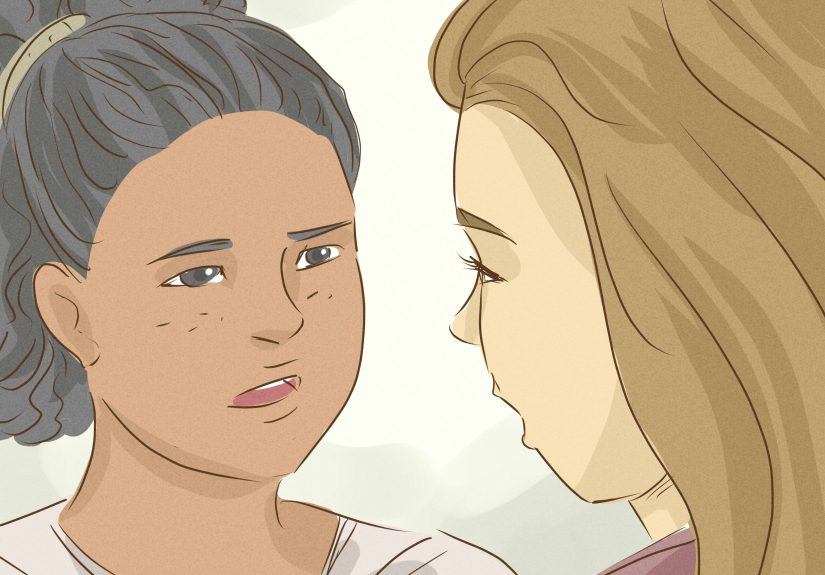
The first few seconds of a school conflict matter. When someone gets in your face, insults you, blocks your path, or tries to embarrass you in front of others, your body may react before your brain has fully clocked in for duty. Your heart pounds. Your hands tighten. Your face gets hot. You may feel like you have to respond immediately.
That is exactly when staying calm becomes your strongest move.
Use a Calm, Clear Voice
A calm voice does not mean a weak voice. It means controlled, direct, and not emotionally explosive. Instead of shouting, threatening, or insulting the person back, use short statements that set a boundary.
Examples include:
- “Stop. I’m not doing this.”
- “Move back. I don’t want trouble.”
- “I’m walking away.”
- “This is not worth it.”
The goal is not to deliver a speech worthy of a motivational poster. The goal is to make your message simple enough that everyone nearby understands what is happening: you are not trying to fight.
Do Not Feed the Crowd
Many school fights get worse because of the audience. Students may record, laugh, chant, or pressure both people to “do something.” The crowd can make a conflict feel bigger than it is. Suddenly, the fight is not just between two studentsit becomes a performance.
Do not perform.
When people are watching, your pride may feel personally attacked. But pride is a terrible decision-maker. It has confidence, yes, but absolutely no legal training. If a crowd is forming, that is your sign to leave, move toward adults, or get to a public area where staff can intervene.
Create Space Without Escalating
If someone steps too close, distance helps. Move toward an open area, a classroom door, a school office, a teacher, or a group of responsible students. Avoid cornering the other person or matching their aggression. Do not shove them to “prove a point.” Do not square up. Do not make threats.
Creating space is not running away from the problem. It is refusing to give the problem a front-row seat in your life.
Example: The Hallway Challenge
Imagine someone bumps your shoulder in the hallway and says, “You got a problem?” A risky response is: “Yeah, you.” That might feel satisfying for half a second, right before the situation turns into chaos.
A smarter response is: “No. I’m going to class.” Then keep moving toward a teacher, classroom, or office. You have just won the first round because you refused to let someone else choose your behavior.
Way 2: Win Your Safety by Having a Plan Before Trouble Starts
Most students wait until a situation is already intense before thinking about what to do. That is like trying to build an umbrella during a thunderstorm. A safety plan helps you respond faster and smarter if bullying, threats, or repeated conflict is happening.
Know Your Safe People
Every student should know which adults they can go to at school. This might be a teacher, counselor, coach, administrator, school nurse, bus driver, or office staff member. The title matters less than trust and availability.
Make a short mental list of people who will take you seriously. If one adult does not respond well, try another. Reporting a safety issue is not “snitching.” It is using the system that exists to keep students safe. Silence often protects the aggressor, not the target.
Know Your Safe Places
Some areas of school are more likely to become conflict zones: unsupervised hallways, bathrooms, locker rooms, parking lots, stairwells, lunch lines, bus stops, or corners where staff rarely appear. If someone has threatened you, avoid isolated spots when possible.
Safe places may include:
- The main office
- A teacher’s classroom
- The school counselor’s office
- The library or media center
- A supervised cafeteria area
- A busy hallway near staff
This does not mean you should live your school day like a spy movie. It simply means you should understand your environment and make choices that reduce risk.
Use Friends the Right Way
Friends can help, but only if they help safely. A good friend does not hype you up to fight. A good friend walks with you, gets an adult, records details for documentation if safe and allowed, or helps you leave the situation.
There is a big difference between support and escalation. Support sounds like, “Let’s go talk to Ms. Carter.” Escalation sounds like, “Don’t let them disrespect you!” One protects your future. The other may get everyone called to the principal’s office before lunch.
Practice What You Will Say
Planning your words ahead of time makes it easier to stay calm when emotions rise. You can practice simple lines like:
- “I’m not fighting you.”
- “Back up.”
- “I already reported this.”
- “I’m going to an adult now.”
These phrases are not magic spells. You will not say “Back up” and turn into a conflict-resolution wizard with a cape. But prepared words give your brain something useful to grab when stress makes everything feel messy.
Way 3: Win the Long Game by Documenting, Reporting, and Following Up
One of the biggest mistakes students make is treating every conflict like a one-time event. Sometimes it is. But if someone repeatedly insults, threatens, shoves, humiliates, cyberbullies, or targets you, it may be part of a pattern. Patterns need documentation.
Write Down What Happened
After an incident, write down the details as soon as you can. Include the date, time, location, names of people involved, witnesses, what was said, what happened physically, and which adults were told. Keep the tone factual. You are not writing a dramatic novel titled The Cafeteria Betrayal. You are creating a clear record.
A useful note might look like this:
“April 25, 12:20 p.m., outside Room 204. Jordan blocked my way and said, ‘I’ll get you after school.’ Sam and Mia were nearby. I walked to Mr. Lewis’s room and told him what happened.”
That type of documentation is much stronger than saying, “They always mess with me,” even if that statement is true. Details help adults understand the seriousness of the situation and respond more effectively.
Save Digital Evidence
If the conflict includes cyberbullying, group chat harassment, threats, fake accounts, or embarrassing posts, save screenshots. Include usernames, dates, and times when possible. Do not respond with threats of your own. A heated reply can make the situation look mutual, even if you were targeted first.
Block or mute when needed, but save evidence before it disappears. Then show it to a trusted adult, parent, guardian, counselor, or school administrator.
Report Clearly and Follow Up
When reporting, be specific. Instead of saying, “People are bothering me,” say, “This student threatened to fight me after school yesterday and again today. I do not feel safe walking to the bus.”
Ask what the next steps are. Will staff monitor a hallway? Contact parents? Adjust seating? Help with a safety plan? Document the report? Follow up if nothing changes. Schools may be busy, but student safety should not get lost under a pile of permission slips and morning announcements.
Get Help Outside School When Needed
If threats are serious, involve a parent or guardian immediately. If there is a weapon, stalking, repeated assault, sexual harassment, hate-based harassment, or a credible threat of serious harm, adults may need to contact school leadership, district officials, law enforcement, or emergency services.
It is always better to be “too careful” than to ignore a warning sign and regret it later.
Why Fighting Back Usually Does Not Solve the Problem
Many students believe fighting back will make bullying stop. Sometimes people say, “Just hit them once and they’ll leave you alone.” That advice sounds simple, but real life is rarely that neat.
Fighting back can cause injuries. It can also make adults see both students as equally responsible, even when one person started it. It may create revenge, group conflict, online drama, or pressure for another fight. It can also affect sports, clubs, scholarships, school records, and family trust.
More importantly, fighting back teaches your brain that violence is the main tool for solving problems. That is a heavy tool to carry around. It may work in one moment and fail badly in the next.
Real confidence is not needing to prove you can hurt someone. Real confidence is knowing you can stay composed when someone else is losing control.
How Bystanders Can Help Without Making Things Worse
If you see a fight about to happen, you can helpbut do not jump into the middle like an action hero with homework due. The safest bystander actions are often simple and fast.
- Get a teacher, coach, security officer, or administrator immediately.
- Tell others not to record or encourage the fight.
- Help the targeted student leave if it is safe.
- Stand near other calm students instead of forming a loud crowd.
- Report what you saw honestly afterward.
Bystanders have power. A crowd can turn a tense moment into a fight, but a few calm students can also make it easier for someone to walk away.
What Parents and Teachers Should Know
Students often avoid reporting conflict because they fear being called dramatic, weak, or a snitch. Adults can help by taking reports seriously, asking calm questions, documenting patterns, and checking in after the first conversation.
Parents should avoid responding with instant rage, even when anger is understandable. A calm parent is easier for a student to talk to. Teachers should watch for changes in behavior: skipping lunch, avoiding certain hallways, sudden grade drops, frequent nurse visits, withdrawal, or unusual irritability.
School fights are rarely just about one moment. They often grow from stress, social pressure, bullying, embarrassment, rumors, or online conflict. The earlier adults intervene, the easier it is to prevent harm.
of Real-Life Experience: What Students Learn After School Conflict
Students who have been close to school fights often describe the same lesson afterward: the moment felt huge, but the consequences lasted longer than the anger. In the heat of the situation, it may seem like everyone is watching and judging. The hallway feels like a stage. Your friends are nearby. Someone has a phone out. Your reputation feels like it is hanging by a thread. But later, when the crowd is gone, what remains is the office meeting, the parent phone call, the anxiety, and the question nobody likes answering: “Was it worth it?”
One common experience is realizing that walking away feels embarrassing for about five minutes, but getting suspended can affect an entire semester. A student might avoid a fight in the cafeteria and feel annoyed when classmates say, “Why didn’t you do anything?” But the next day, that student is still in class, still on the team, still eligible for the field trip, and still trusted by adults. That is not losing. That is playing chess while everyone else is arguing over checkers.
Another experience is learning that calm words work better when practiced. Students who have rehearsed simple lines“I’m not fighting,” “Move back,” “I’m going to class”often find it easier to use them under stress. Without practice, the brain may grab the nearest insult and throw it like a dodgeball. With practice, students have a script that helps them stay steady.
Some students also learn the value of documenting early. At first, writing things down may feel unnecessary. But after the third rude message, the second hallway threat, or another rumor posted online, details matter. A clear record helps parents, counselors, and administrators see the pattern. It turns “drama” into evidence. It also helps the student feel less powerless because they are doing something organized and constructive.
Many students discover that friends can either save the day or pour gasoline on it. The best friends are not always the loudest ones. A real friend says, “Come on, let’s leave,” or “I’ll go with you to the counselor.” A risky friend says, “You better not let that slide.” The second type may sound loyal, but loyalty that gets you suspended is not exactly premium membership material.
The biggest lesson is that winning a fight at school is not about fear. It is about control. You cannot always control what someone says, posts, or tries to start. You can control whether you escalate, whether you seek help, whether you protect your future, and whether you let one bad moment define you. That kind of win may not get applause in the hallway, but it earns something better: safety, self-respect, and a clean path forward.
Conclusion: The Smartest Win Is Staying Safe
The best way to win fights at school is to avoid turning conflict into violence. Stay calm in the moment, create distance, know your safe people and places, document what happens, report serious behavior, and follow up until the situation is addressed.
There is nothing weak about walking away from a fight. It takes strength to control your reaction when someone is trying to pull you into trouble. It takes confidence to choose safety over applause. And it takes maturity to understand that the real goal is not proving you can fightit is proving that nobody else gets to control your future.




 Close
Close