
Table of Contents >> Show >> Hide
- The Night 43 Monkeys Went Missing
- Why Police Had to Get Blunt
- Are Escaped Lab Monkeys Dangerous?
- How the Search Worked (And Why It Took Time)
- What This Escape Revealed About the Research-Primate Pipeline
- The Ethics Debate (Without the All-Caps)
- What Residents Can Learn From the “Monkey Farm” Moment
- Experiences Related to the Escape (What It Felt Like on the Ground)
- Conclusion
If you’ve ever wondered what it feels like when your small town becomes a national headline overnight, imagine this:
you wake up, check your phone, and the internet is yelling about escaped monkeys. Not “a monkey.”
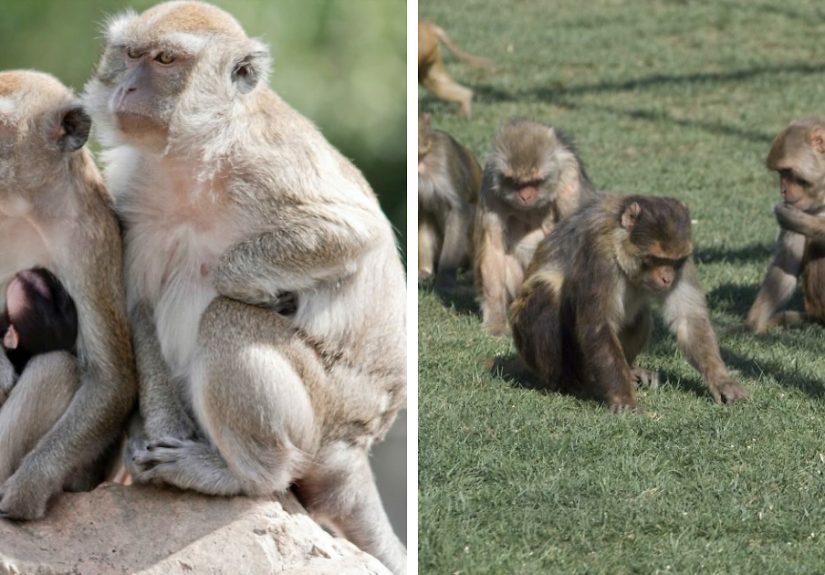
Forty-three. And not the mischievous zoo kind eitherthese were young rhesus macaques bred for biomedical research.
The story sounds like a movie trailer (“In a world where peanut butter and jelly sandwiches are law enforcement’s secret weapon…”),
but it was real life in Yemassee, South Carolina. Police had one message for curious locals and would-be “animal rescuers”:
don’t approach, don’t chase, and definitely don’t try to take one homebecause, as they bluntly put it,
“They don’t belong to you.”
The Night 43 Monkeys Went Missing
In early November 2024, 43 female rhesus macaques escaped from an enclosure at Alpha Genesis, a primate research facility
in Yemassee. Officials quickly said the animals were very young and relatively small, and the initial public guidance was simple:
keep your distance, secure doors and windows, and report sightings.
The internet did what it always doesturned a serious situation into a scrolling buffet of jokes, theories, and “I could totally befriend a monkey”
comments. And that’s exactly why the police warning got so direct. The concern wasn’t that the monkeys were forming a tiny jungle militia.
The concern was people doing people things: trying to get close, trying to film, trying to feed… or trying to “save” one by taking it.
Law enforcement stressed that interfering with the response would make it harder to recover the animals safely. Also, taking a research primate
isn’t “a quirky souvenir.” It’s illegal, and police were clear that anyone attempting it could face serious consequences.
Why Police Had to Get Blunt
The phrase “They don’t belong to you” wasn’t just a scoldingit was a preventative measure. When wildlife (or in this case, research animals)
are loose, the biggest wildcard is the public. Crowds can spook animals, push them farther into dangerous areas, and turn recovery into chaos.
There’s also a weird social-media phenomenon where “found animal” posts can accidentally create a black-market mindset:
people start thinking, If I find it, I keep it. That logic works for a stray tennis ball. It does not work for a macaque.
Police messaging in these moments is part safety, part crowd control, and part reality check. The goal is to reduce contact,
reduce panic, and reduce the number of DIY heroes wandering into the woods with snacks and confidence.
(Nature loves snacks. Nature also loves biting when stressed.)
Are Escaped Lab Monkeys Dangerous?
Officials emphasized there was little danger to the public as long as people didn’t interact with the animals.
That’s a key detail: rhesus macaques are intelligent, fast, and easily frightened. Cornering one is how you turn a nervous animal
into a defensive animal.
Bites, scratches, and why “just don’t touch them” is solid advice
Any primate bite or scratch can cause serious injury and infection risk. Public health guidance in the U.S. consistently warns people
not to touch or feed macaques. Even when disease transmission is rare, the safest policy is distancebecause you can’t un-bite yourself.
One of the reasons officials discourage contact is that macaques can carry pathogens that are dangerous to humans in certain situations.
For example, the CDC has long warned that people should avoid direct contact with macaques to reduce risk of bites and scratches.
That doesn’t mean every macaque encounter equals illnessfar from itbut it does mean there’s no upside to getting close.
Pets, kids, and curiosity
If you live in an area where animals are loose, your biggest practical move is surprisingly boring:
keep pets inside and supervise children outdoors. The point isn’t to be afraidit’s to keep a curious dog from turning a tense primate
into a stressed primate, which is the exact opposite of helpful.
How the Search Worked (And Why It Took Time)
Recovering primates isn’t a “run at it with a net” situation. Officials used humane trapping methods and leaned into what works best
with skittish animals: patience, bait, and quiet. Police updates described baited traps, technology like thermal imaging,
and careful efforts to avoid driving the animals deeper into the surrounding woods.
The recovery happened in phases. In the first days, officials confirmed sightings near the facility, which suggested the animals
hadn’t traveled far. Over the following week, the number recovered climbed steadily as traps did their job and the monkeys’ natural
caution slowly lost to hunger and curiosity.
The peanut-butter-and-jelly detail that made everyone pause
Yes, peanut butter and jelly sandwiches became part of the story. It sounds comedic, but it actually illustrates something important:
animal recovery isn’t about force; it’s about incentives. Comfort food, familiar food, and predictable routines help reduce stress
and increase the chances animals will enter traps safely.
The timeline (and the ending)
By mid-November, most of the monkeys had been recaptured, with only a small number still loose. Then winter hit with unhelpful flair,
including a rare snow event in the regionadding urgency and complexity. Ultimately, by January 24, 2025,
officials confirmed all 43 monkeys were back in the facility’s care and appeared to be in good health.
What This Escape Revealed About the Research-Primate Pipeline
This incident caught attention partly because it was dramatic, but also because it spotlighted an industry most people never think about
until it crashes into their timeline. Primate research facilities are often located in rural areas, and they can house large numbers of animals.
In Yemassee, locals have long been aware of the facility’s presencesome even refer to the area with a nickname tied to the primate operation.
Rhesus macaques are widely used in biomedical research because of biological similarities to humans. That research spans infectious disease,
neuroscience, and more. Supporters argue this work has contributed to medical advances; critics argue the welfare cost is too high
and that alternatives should be accelerated.
Containment is not optionalit’s the entire job
Whether you see primate research as necessary or unacceptable, one point is non-negotiable: secure containment matters.
Facilities in the U.S. are subject to federal standards under the Animal Welfare Act and related regulations.
When an escape happens because a door wasn’t properly secured, it triggers the most basic question imaginable:
If the simplest safety step failed, what else might?
That question fuels investigations, complaints, and calls for oversightespecially when a facility already has critics.
After the escape, coverage expanded beyond “where are the monkeys?” to include deeper scrutiny of operations, inspections,
and whether enforcement is strong enough to prevent repeat incidents.
The Ethics Debate (Without the All-Caps)
Monkey escapes are rare, but when they happen, they compress a big debate into one unavoidable headline.
On one side: researchers and institutions argue that nonhuman primate studies can be essential for certain questions,
especially when no alternative model can replicate complex immune or neurological systems.
On the other side: animal advocates argue that primates are too cognitively and emotionally complex to be used this way,
and that the scientific world should move faster toward non-animal methodsorganoids, advanced imaging, human-relevant computational models,
and other emerging tools.
The Yemassee escape didn’t “solve” that argument. It did, however, make one thing painfully clear:
public tolerance shrinks rapidly when a private or semi-private system creates a public safety event.
What Residents Can Learn From the “Monkey Farm” Moment
If you ever find yourself in a community dealing with escaped animalsresearch facility, private ownership situation, transport accident
the safest choices are also the least cinematic.
- Don’t approach. No selfies, no snacks, no “pspsps.”
- Secure entry points. Doors and windows closed means fewer surprises indoors.
- Keep pets inside. A dog’s curiosity can escalate a calm sighting into a chaotic chase.
- Report sightings promptly. Call local authorities so trained teams can respond.
- Don’t spread rumors. Sharing unverified claims can cause panic or lure crowds.
The police warning“They don’t belong to you”wasn’t just about ownership. It was about responsibility.
In a real incident, the best way to “help” is to get out of the way and let professionals recover the animals safely.
Experiences Related to the Escape (What It Felt Like on the Ground)
For people in and around Yemassee, the escape didn’t feel like an internet meme at first. It felt like uncertainty.
There’s a unique tension that comes with any “loose animal” situation: you don’t necessarily expect danger,
but you do expect unpredictability. Folks described checking doors twice, keeping kids closer than usual,
and treating the backyard like it had become part of a very strange community-wide scavenger huntexcept the prize was
“please don’t touch that.”
The experience also came in waves. Early on, there was the rush of alerts and updatespolice posts, neighborhood chatter,
and the kind of local phone calls that begin with “Did you hear?” and end with “Lock your windows.” People swapped sightings:
movement near the treeline, shapes in the distance, sounds that suddenly seemed louder at dusk. Even residents who never felt
personally threatened still felt the mental weight of watchfulness, the low-level vigilance you get during a storm warning
or a boil-water notice.
And then there was the social side: humor as a pressure valve. When officials mentioned bait and later the now-famous peanut butter
and jelly sandwiches, it became a shared reference pointsomething almost wholesome inside a stressful event. People joked about
lunchbox diplomacy, about monkeys with better snacks than they had at work, about whether the town should get a mascot. That humor
didn’t erase concern; it made it manageable. Communities often use laughter the way a kettle uses steam: it keeps the lid from rattling off.
Local routines shifted. Some residents reported keeping dogs on shorter leashes. Parents became “no, you may not go exploring”
machines. A few people avoided early-morning walks near wooded areas, not because they expected an attack, but because nobody wanted
the awkward moment of making eye contact with a startled primate and realizing they had brought exactly zero expertise to the situation.
Small changes, but noticeable oneslike living in a town where the normal rules were temporarily rewritten.
The escape also created a strange relationship with the news cycle. One minute, you’re driving past the same roads you always drive,
and the next minute, national coverage is describing your area to strangers. Residents saw their home reduced to a headline and a punchline,
even as they were still dealing with practical questions: Are the traps working? Are they close by? Should we keep the garage shut?
That mismatchbetween internet entertainment and real-world logisticscan feel isolating. It’s hard to laugh at jokes when you’re the one
reminding your neighbor to keep the back door latched.
When most of the monkeys were recovered, the mood changed again: relief mixed with lingering disbelief. People looked back and realized
they’d lived through something genuinely unusualan event that will probably show up in town stories for years. And when the final update
confirmed all 43 had been recaptured and were doing well, it offered closure that many animal-escape stories don’t get. The community had
the rare “everyone ends up okay” ending: no widespread injury, no mass panic, no tragic outcomejust a bizarre chapter that proved how quickly
normal life can be interrupted, and how much smarter it is to listen when authorities say, plainly, don’t interfere.
Conclusion
The “43 monkeys escape” story grabbed attention because it was strange, vivid, and easy to imagine as chaos.
But the real lesson is less dramatic and more important: containment failures ripple outward fastinto neighborhoods, newsfeeds,
and public trust. The police warning, “They don’t belong to you,” captured the moment perfectly.
It was a reminder that curiosity doesn’t equal competence, and that the safest path for people and animals is calm, professional recovery
not crowd-driven chaos.







 Close
Close