
Table of Contents >> Show >> Hide
- Quick Jump
- 1) The Systems That Make Organization Stick
- 2) Entryway & Mudroom: The Clutter Gate
- 3) Kitchen & Pantry: Where Chaos Gets Hungry
- 4) Bathroom: Tiny Room, Big Drama
- 5) Bedroom & Closet: Dress Faster, Lose Less
- 6) Living Room, Kids, and Shared Spaces
- 7) Laundry, Utility, Garage: The “How Do We Own This Much?” Zones
- Wrap-Up: The Home You See Is the System You Built
- Real-World Experiences: What These 56 Hacks Look Like in Actual Homes (About )
If your home feels “messy” even when you’ve cleaned, it’s usually not a cleaning problemit’s a
home organization problem. (Translation: your stuff is freelancing without a contract.)
The good news? You don’t need a Pinterest-worthy pantry or a label maker tattoo to feel sane.
You need a few organization hacks that create easy defaultsso your home starts
tidying itself (or at least stops actively fighting you).
Below are 56 practical home organization hacksroom-by-room and system-by-systembuilt
on methods professional organizers and major U.S. home publications keep repeating for one reason:
they work in real houses with real humans, real schedules, and real “Where did this come from?” piles.
1) The Systems That Make Organization Stick
The fastest way to “get organized” is to stop aiming for perfect and start building a system that
survives Tuesday. These are the backbone habits behind most long-term decluttering and
storage solutions.
- Use the “Core 4” flow: Clear out, Categorize, Cut out, Contain. It’s basically a
conveyor belt for clutterno “I’ll deal with it later” pile gets a seat on the ride. - Work in 25-minute sprints: Set a timer, pick one tiny zone, and stop when time’s up.
You’re training consistency, not auditioning for a home makeover show. - Organize by “frequency of use,” not vibes: Put daily items at arm level, weekly items
higher/lower, and “why do we own this?” items in the farthest corner of your life. - Give clutter a job description: Every item needs a “home” (bin, basket, drawer, hook).
If it doesn’t have an address, it will live on your counters like it pays rent. - Let containers set the limit: Don’t buy a bigger bin for more stuff. Pick a bin size
and let the bin decide how many backups, options, and “maybe someday” items stay employed. - Label for your future self (who is tired): Labels aren’t aestheticthey reduce decision
fatigue. If it takes two seconds to put away, it actually gets put away. - Make “reset time” non-negotiable: A 10-minute evening reset beats a 4-hour weekend
meltdown. Put on one song. When it ends, you’re done. - Adopt the “one in, one out” rule in problem categories: Mugs, water bottles, throw
pillows, and hair products are basically multiplying organisms. Keep the population stable.
2) Entryway & Mudroom: The Clutter Gate
Your entryway is where organization goes to either thrive… or faceplant. These hacks reduce the
“drop zone” chaos and make coming home feel like a win.
- Create a “launch pad”: One tray or bowl for keys/wallet, one hook row for bags and
leashes. If it’s not within three steps of the door, it will become a floor sculpture. - Go vertical with hooks (and add a kid row): Hooks beat hangers for daily life. Add a
lower row so kids can hang their own stuffyes, even if it’s sideways. Progress is progress. - Use slim shoe storage instead of a shoe mountain: Shoe cabinets, racks, or bins create
a hard limit. Extra shoes either relocateor face consequences. - Rotate seasonal gear: Keep “right now” coats and accessories accessible; move off-season
items to a closet top shelf or storage bin. Your hallway is not a year-round coat museum. - Install a mail triage station: Two slots: “Action” and “Recycle.” If you can’t decide,
it goes to “Action”but that tray gets emptied weekly, no exceptions. - Make a “grab-and-go” bin: Sunglasses, sunscreen, earbuds, dog treats, mini umbrella.
This is the bin that prevents six mini crises per week. - Add a small “wet zone”: A boot tray or washable mat catches rain, snow, and mystery
sidewalk goo before it tours your entire home. - Use a bench with baskets underneath: Sitting makes putting on shoes easier; baskets
make “put it away” easier. Comfort is an organizing tool. Science-ish.
3) Kitchen & Pantry: Where Chaos Gets Hungry
Kitchen organization isn’t about matching jarsit’s about flow. When your kitchen has zones, you cook
faster, waste less, and stop buying duplicate paprika like it’s a collectible.
- Do the pantry “empty-and-edit” reboot: Pull everything out, check expiration dates, then
group like with like. Seeing everything at once stops “hidden clutter” from running the show. - Decant smartly (not obsessively): Use clear containers for messy staples (flour, cereal,
snacks). Skip decanting items that behave fine in their original packaging. Your time matters. - Label shelves as zones: Snacks, breakfast, baking, weeknight dinners. Zone labels reduce
the “where does this go?” moment that causes countertop drift. - Use over-the-door storage: The pantry door is basically a vertical bonus room. Add racks
for spices, wraps, or small snacksespecially in tight kitchens. - Add under-shelf baskets: They turn wasted air into storage for napkins, sandwich bags,
or snacks. It’s like finding a secret drawer you already paid for. - Put lazy Susans where your arms can’t reach: Corners, deep cabinets, fridge shelves.
Spinning beats excavating. Your shoulder joints will send thank-you notes. - Build “task zones”: Coffee/tea supplies together. Cooking oils and spices near the stove.
Meal prep containers in one cabinet. You’re reducing steps, not decorating. - Store lids and trays vertically: Use a file organizer or rack for cutting boards, baking
sheets, and pot lids. Vertical storage turns a messy stack into a quick grab.
4) Bathroom: Tiny Room, Big Drama
Bathrooms get chaotic because they’re small and high-traffic. The goal: fewer duplicates, clearer categories,
and surfaces that don’t look like a product launch.
- Turn under-sink chaos into categories: Use bins or pull-out drawers for “skin,” “hair,”
“dental,” “first aid,” and “cleaning.” Labels keep the system from collapsing into a mystery pit. - Create a “travel-ready” kit: Keep a small toiletry bag stocked under the sink. When
travel happens, you pack in minuteswithout stealing your everyday toothpaste like a raccoon. - Color-code family basics: Different colors for toothbrushes, towels, or hair tools can
prevent mix-ups (and the silent panic of “Is this… mine?”). - Use one tray on the counter: Corral daily items (soap, moisturizer, hairbrush) in a tray.
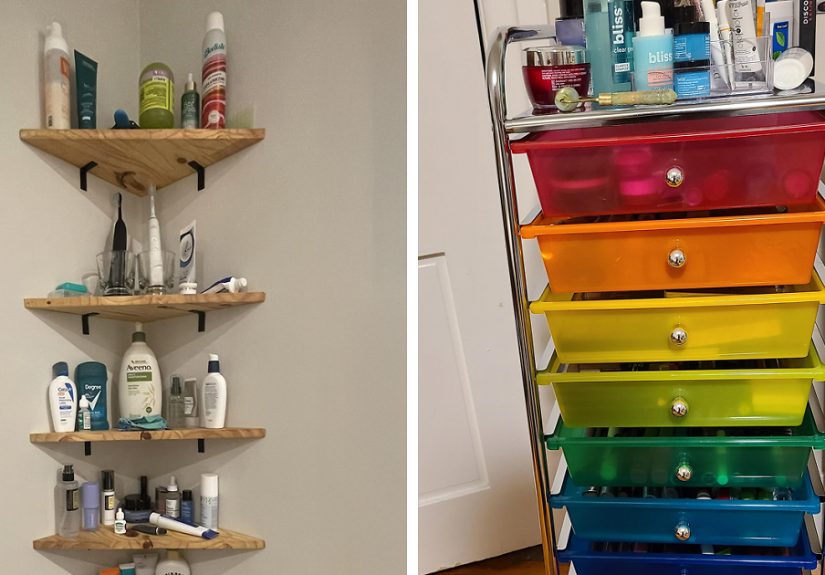
The tray is your boundary. If it doesn’t fit, it doesn’t live there. - Go vertical with wall space: Floating shelves, over-the-toilet storage, or renter-friendly
options add storage without eating floor space. - Use magnets for tiny metal chaos: Magnetic strips or a small magnetic dish inside a cabinet
can hold bobby pins, tweezers, nail clippersaka the items that disappear into alternate dimensions. - Micro-sort drawers: Small containers inside drawers stop “junk drawer syndrome.” Group by
type: hair ties, cotton pads, travel minis, etc. Tiny fences prevent tiny riots. - Schedule an “expiration sweep”: Once or twice a year, toss expired products and old meds.
Organization is easier when you’re not storing a museum of half-used lotions.
5) Bedroom & Closet: Dress Faster, Lose Less
Closet organization is less about owning fewer things and more about making what you own easy to find.
The real flex is getting dressed without a scavenger hunt.
- Double your hanging space: Add a second rod for shirts and pants, keeping longer items
(dresses, coats) on one side. Vertical space is prime real estate. - Switch to uniform slim hangers: They save space and keep clothes from sliding off.
Bonus: your closet suddenly looks like it has its life together. - Hang outfits together: Put coordinated pieces on one hanger or group them on a section
of the rod. Great for workweeks, kids’ school outfits, or anyone who hates mornings. - Put a small dresser inside the closet: Socks, underwear, gym clothes, accessories.
It’s a compact way to add drawers without buying a whole new closet system. - Use vacuum bags for off-season bulk: Store puffy coats, extra blankets, and seasonal
clothes in vacuum bags to reclaim shelf and floor space. - Organize bed sheets as sets: Store each set in a labeled bag or inside a matching
pillowcase. No more “Where did the fitted sheet go?” detective work. - Make shoes visible (or they don’t exist): Clear boxes, a shoe rack, or door storage
beats a pile. Visibility reduces overbuyingyes, even for “identical” black sneakers. - Create a “maybe” box: Not ready to donate that item? Put it in a dated box. If you
don’t open it within 30–90 days, your future self just voted.
6) Living Room, Kids, and Shared Spaces
Shared spaces work best when storage is easy, attractive, and fast. The goal is a room that can reset in
under five minutesbecause real life is happening in here.
- Choose furniture that stores stuff: Ottomans, coffee tables with shelves, media consoles
with doors. Hide the visual clutter, keep the comfort. - Use trays to “contain” the mess: Remotes, coasters, and candles look intentional on a tray.
Without a tray, they look like evidence. - Give games and puzzles a real home: Use magazine files, bins, or organizers to stop boxes
from collapsing. Bonus: game night becomes “grab and play,” not “dig and quit.” - Build a simple charging station: A box, a power strip, and labeled cords can turn “cord
spaghetti” into “cord lasagna,” which is somehow an improvement. - Try toy rotation: Keep a portion of toys accessible, store the rest. Rotate weekly or
monthly. Kids get “new” toys; you get fewer floor landmines. - Sort small toys by type: Use bins for LEGO, dolls, cars, art supplies. If a category
overflows, it’s telling you something (loudly). - Add a “return basket” per floor: One basket for items that belong elsewhere. When you
walk upstairs, carry it. This prevents the slow spread of random objects. - Adopt the 60-second reset: Stand in the room, set a timer for one minute, and do only
the high-impact stuff: toss trash, stack blankets, corral items into one bin. Done beats perfect.
7) Laundry, Utility, Garage: The “How Do We Own This Much?” Zones
These areas become clutter magnets because they hold backups, tools, and seasonal items. The trick is
using durable, visible storageand limits that prevent overflow.
- Make a portable cleaning caddy: Stock it with your essentials. Cleaning becomes a “grab
and go” task, not a scavenger hunt across three cabinets and a prayer. - Use a wall system or pegboard: Hang tools, brooms, and frequently used items. Floors are
for walking, not for leaning towers of stuff. - Use the back of doors: Over-the-door racks in a utility closet can store sprays, refills,
and cloths. It’s vertical storage with zero new square footage. - Label bins on multiple sides: Especially for garage totes. If you can’t read the label
when bins are stacked, you’ll open all of them like it’s a game show. - Standardize your storage bins: Same size, same style stacks better and looks calmer.
Heaviest bins go on the bottombecause gravity has opinions. - Keep an inventory list for seasonal bins: A simple note on your phone (or on the bin)
can stop you from buying a third string of lights you “couldn’t find.” - Use ceiling and high-wall storage: Store rarely used seasonal items up high. Keep daily
grab items at chest height. Accessibility is half the battle. - Maintain a donation box at all times: A labeled bin in the garage or closet makes
decluttering automatic. When it’s full, it leaves your house. No debates.
Wrap-Up: The Home You See Is the System You Built
The most powerful organization hack isn’t a productit’s a repeatable decision: everything gets a home,
and that home is easy to use. When your systems match your real life (not your fantasy life),
your home stops feeling like a constant chore and starts feeling supportive.
Try this: pick one problem area and apply just three ideascategories, a container limit,
and a label. If it feels easier tomorrow, you’re done. If not, tweak the system until it does.
Organization isn’t a personality trait. It’s a setup.
Real-World Experiences: What These 56 Hacks Look Like in Actual Homes (About )
Here’s the part people don’t say out loud: the first time someone tries to “get organized,” they usually
start in the worst possible wayby attempting to reorganize the entire house in one heroic weekend.
That’s how you end up surrounded by piles of stuff, whispering, “I made it worse,” while eating dinner
off a paper towel because the plates are in a sorting category called “???”.
In real homes, organization tends to stick when it starts small and solves a daily annoyance. The most
common “aha” moment happens at the front door. Someone adds a tray for keys, a hook for bags, and a shoe
limitand suddenly mornings run smoother. It’s not glamorous, but it’s life-changing in the way that
fewer frantic searches change your blood pressure. Next, they create a mail system that forces a decision
(action vs. recycle), and the entryway stops becoming a paper aquarium.
Kitchens usually go through the “container phase.” People try decanting everything, realize it takes a
full-time staff, then settle into the sweet spot: decant the messy, high-use staples and leave the
low-drama items alone. That’s when the pantry goes from “grocery store explosion” to “I can see what I have.”
The other real-world win is building zones: coffee stays with coffee, snacks stay with snacks, and cooking
oils stop wandering into the baking cabinet like they’re exploring.
Bathrooms are where duplicates go to multiply. Many households discover that under-sink bins and a
twice-a-year expiration sweep prevent the “Why do we have four half-used shampoos?” mystery. A travel kit
under the sink is another surprisingly emotional upgrade: when trips happen, packing gets easier, and
everyone feels a tiny bit more prepared for life.
Closets often trigger the biggest mindset shift. People expect a closet makeover to require expensive
systems, but the most consistent wins come from boring changes: uniform hangers, a second hanging rod,
and a real plan for off-season items. Once clothes are grouped by type and the overflow is contained
(vacuum bags, bins, a “maybe box”), getting dressed becomes fasterand mornings become less chaotic.
That’s when someone realizes organization isn’t about having less; it’s about making what you have
easier to use.
Shared spaces are where perfection dies and practicality wins. Families who succeed don’t eliminate
messthey make mess easy to reset. A “return basket” per floor, a dedicated game bin, and a one-minute
nightly reset often outperform any elaborate system. And the funniest, most predictable moment?
The label maker era. People label everything for a week, feel powerful, then calm down and label only
what truly needs clarity. That’s the sign a system is maturing: it’s not trying to impress anyone.
It’s trying to work.





 Close
Close