
Table of Contents >> Show >> Hide
If the word treasures makes you picture a gold chest, a jeweled crown, and one extremely stressed archaeologist shouting, “Nobody touch anything!” this discovery asks you to recalibrate. At the Huerto Raso site in Huesca, Spain, the real treasure is older, quieter, and arguably more important: flint tools, ceramics, mills, animal bones, plant remains, and traces of shelter use left behind by Neolithic people more than 7,000 years ago. No glitter. No dragon. Just the kind of evidence that makes prehistorians lose all composure in the most academic way possible.
That is precisely why this find matters. These newly documented remains do not just add another pin to the map of prehistoric Spain. They help sharpen the picture of how some of the earliest farming communities in the Iberian Peninsula actually lived. Were they fully settled farmers? Seasonal visitors? Hunters who were also experimenting with herding and cultivation? The answer, as usual in archaeology, is more interesting than a simple either-or. The discoveries at Huerto Raso suggest a world in transition, where people were not neatly boxed into “nomad” or “farmer,” but were adapting, improvising, and building a new way of life in the pre-Pyrenean landscape.
What Was Found at Huerto Raso?
Huerto Raso is a rock shelter in the Huesca area of northeastern Spain, in the foothills of the Pyrenees. The site was first identified decades ago, but the recent excavation campaign was the first large-scale effort to examine it in depth. That matters because archaeology is a little like reading a mystery novel through a keyhole: the wider the opening, the better the plot makes sense.
What archaeologists uncovered was a compact but revealing set of Neolithic materials:
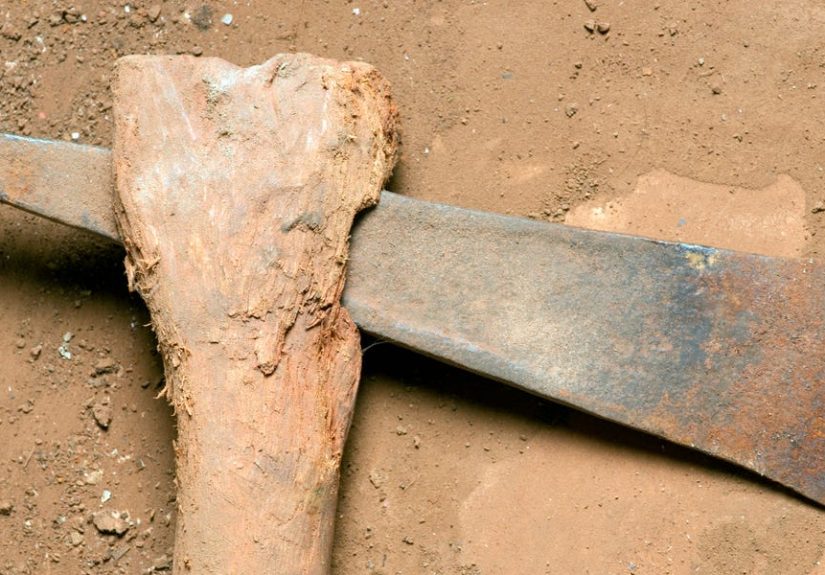
- flint tools used for cutting, scraping, and daily work,
- ceramic fragments that point to food preparation and storage,
- mills or grinding stones that signal plant processing,
- bone remains from consumed animals,
- abundant plant residues,
- and traces of built or organized habitation within the shelter.
That list may not sound flashy, but in archaeology this is the equivalent of finding someone’s kitchen, pantry, toolbox, and dinner leftovers all in one place. Everyday objects are the real VIPs of prehistoric research because they reveal routine behavior. And routine behavior is where human history actually lives.
One especially intriguing detail is that hunted animals appear to outnumber domestic ones among the recovered bones. That complicates any cartoon version of the Neolithic as the moment everybody instantly gave up hunting, built a farmhouse, and started naming goats. At Huerto Raso, the evidence points to a mixed economy: people were clearly part of the agricultural world, but wild resources still played a major role in subsistence.
Not Just “Farmers,” but Flexible Survivors
The Neolithic Revolution is often described as a clean break from hunting and gathering to agriculture and settlement. Real life, however, tends to laugh at clean breaks. Huerto Raso suggests seasonal occupation by groups who may have moved through the landscape strategically, using the shelter at particular times of year while combining herding, plant use, and hunting.
In other words, these communities were not primitive prototypes waiting to become “proper” villagers. They were already sophisticated decision-makers. They understood where resources were, when to use them, and how to make a living in a varied environment. If modern humans enjoy calling ourselves adaptable, these Neolithic groups would like a quiet word.
Why This Discovery Matters Beyond One Site
The importance of Huerto Raso is not simply that it is old. Spain has plenty of old things. Spain is practically a showroom for deep time. What makes this site valuable is that it captures the everyday mechanics of the Neolithic transition in inland and northern Iberia, an area that has not always been as visible in the public imagination as famous caves, tombs, or megalithic monuments.
For years, many big archaeological narratives focused on monumental remains: stone tombs, ritual architecture, collective burials, and spectacular cave art. Those sites are essential, but they can sometimes overshadow the places where life actually unfolded between ceremonies. Huerto Raso offers something more intimate. It gives researchers a chance to study work, food, mobility, and seasonal use of space. That is the kind of evidence that turns prehistory from a museum label into a lived reality.
The site also fits into a broader pattern emerging across the Iberian Peninsula. Research from other Spanish sites has shown that Neolithic communities were technically skilled, culturally diverse, and often regionally distinct. Preserved baskets and sandals from southern Spain, ancient bowstrings from Los Murciélagos, genetic studies of Iberian populations, and evidence from caves and megalithic monuments all point to one conclusion: Neolithic Iberia was not one story. It was many overlapping stories.
A Neolithic World Built on Experiment
The people who used Huerto Raso lived during a period when human societies were reorganizing themselves in major ways. Farming and herding were not just new food strategies. They transformed settlement, labor, social roles, ritual, and the relationship between people and the landscape.
Grinding stones, for example, are not just rocks with a résumé. They hint at cereal processing, repeated labor, planning, and a food system that increasingly relied on cultivated resources. Ceramics suggest storage, cooking, and more permanent patterns of household activity. Flint tools show continuity with older stone-working traditions, but also adaptation to new economic needs. When all these items appear together, they tell a story of communities living through a profound social shift rather than flipping a magical “civilization” switch overnight.
Spain’s Neolithic Puzzle Is Getting Sharper
Huerto Raso also matters because it helps connect local evidence with larger questions in European prehistory. How did farming spread into Iberia? How quickly did it change people’s diets and mobility? Did local hunter-gatherers mix with incoming farming groups? How were mountains, valleys, and river corridors used during this transition?
Archaeology in Spain keeps showing that the Neolithic was not a copy-and-paste process. In some places, early farmers built monumental structures that required serious planning and engineering. In others, communities used caves, shelters, and seasonal spaces in ways that blend older lifeways with newer ones. At nearby and related pre-Pyrenean sites, animal-bone studies have suggested that early shepherds were already making strategic use of local natural resources. Huerto Raso strengthens that broader picture.
It is also a reminder that inland and upland zones deserve more attention in the story of early agriculture. Coastal routes often dominate discussions of how farming entered southern Europe, and for good reason. But once those practices spread, mountain foothills and interior landscapes became laboratories of adaptation. Huerto Raso shows what that adaptation looked like on the ground, or rather, in the shelter.
The Discovery Helps Humanize the “Neolithic Revolution”
The phrase Neolithic Revolution is useful, but it can also sound a little too tidy, like everyone woke up one morning, invented farming, and immediately needed storage jars. Huerto Raso brings back the messiness. It suggests that people continued hunting even as they engaged with farming life. They may have moved seasonally while still participating in increasingly structured food production. They were neither “old world” foragers nor “new world” villagers in any simplistic sense. They were people making choices in a changing economy.
That nuance is important because it echoes what other studies across Europe have found: the spread of farming came with demographic growth, stress, adaptation, and regional variability. Some early farming populations flourished, some struggled, and many communities blended traditions rather than replacing one lifeway with another overnight. Huerto Raso belongs squarely in that richer, more believable story.
Why Archaeologists Call These Finds “Treasures”
Because archaeology has a different definition of treasure than Hollywood does. A millstone can be more valuable than a gold pendant if it explains how a community fed itself. A pile of butchered animal bones can matter more than a ceremonial object if it reveals a site’s seasonality. A ceramic fragment can tell you about cooking habits, social routine, and even residue chemistry. Archaeological treasure is whatever best preserves human behavior.
At Huerto Raso, the “treasure” is the combination of evidence. A single artifact is interesting. A cluster of artifacts, food remains, plant traces, and habitation clues from the same context is powerful. It allows archaeologists to reconstruct patterns instead of merely admiring objects. That is how a quiet shelter in Spain becomes a headline-worthy discovery.
And the work is not over. Researchers plan to use carbon dating, residue analysis, and further study of the faunal and botanical materials to refine the chronology and better understand subsistence strategies. That means the current discovery is not the final chapter. It is the first strong paragraph in what could become a very revealing case study of early farming life in the region.
What This Tells Us About Early Farmers in Iberia
If there is one big takeaway, it is this: early farmers in Spain were not living in a simplistic world. They were knowledgeable, mobile, practical, and deeply tied to place. They knew how to use local stone, how to process plants, how to exploit both wild and domestic animals, and how to occupy landscapes seasonally or repeatedly in ways that made ecological sense.
This matches a growing body of evidence from across the Iberian Peninsula. Genetic studies have traced deep population shifts over thousands of years. Research into megalithic architecture has shown serious engineering skill. Cave finds have preserved rare organic materials that demonstrate technical sophistication. Burial studies reveal social complexity and ritual behavior. Huerto Raso does not replace those discoveries. It complements them by focusing on the less glamorous but absolutely essential business of daily survival.
That is why this excavation deserves attention. It reminds us that civilization was not built only in temples, tombs, or giant stone monuments. It was also built in places where people sharpened tools, ground seeds, butchered animals, stored food, and returned season after season because the landscape worked for them. History is grand, yes. But it is also local, repetitive, and stubbornly practical.
Conclusion
The 7,000-year-old Neolithic treasures uncovered in Spain are not treasures because they sparkle. They are treasures because they speak. At Huerto Raso, flint, ceramics, mills, bones, and plant residues have begun telling a vivid story about early agricultural communities in the pre-Pyrenees: communities that hunted, processed plants, used shelters strategically, and lived through the long, uneven transformation of the Neolithic era.
For archaeologists, this is exactly the kind of discovery that reshapes bigger narratives. It adds detail where there was once blur. It reveals flexibility where older models preferred neat categories. And it shows that some of the most important clues to human history are hiding not in royal treasure rooms, but in the ordinary remains of ordinary people doing the extraordinary work of inventing a new way to live.
The Experience of Standing Near a Story Like This
Imagine walking through the pre-Pyrenean landscape of northern Spain with the knowledge that, more than 7,000 years ago, people were stopping in these same folds of terrain to cook, cut, grind, mend, and rest. The effect is strangely humbling. Modern travel often trains us to look for the dramatic skyline, the postcard church, the perfect overlook. A Neolithic shelter asks you to do the opposite. It asks you to notice the practical things: the angle of shade, the access to water, the visibility of animal routes, the shelter from wind, the reach of a valley path. Suddenly the land starts to read like a survival manual instead of scenery.
That is what makes discoveries like Huerto Raso so emotionally powerful. They collapse the distance between “prehistoric people” and “people.” You stop imagining anonymous Stone Age silhouettes and begin picturing a family group sorting tools at dusk, someone grinding grain while another person cleans game, a child learning where not to step near the hearth, a decision about whether to stay another night or move on with the season. The site becomes less of a ruin and more of an interrupted conversation.
There is also something wonderfully grounding about realizing how much of human life once depended on careful attention rather than convenience. No grocery store. No weather app. No backup battery. Just knowledge carried in memory, habit, and community. The people at Huerto Raso had to understand plants, animals, terrain, timing, and risk with a level of intimacy that most of us have outsourced to packaging and navigation systems. Standing near evidence of that kind of intelligence can make modern life feel both impressive and a little ridiculous. We can stream documentaries about prehistory while forgetting where we left our keys.
And then there is the silence. Archaeological sites often feel quiet in a way museums do not. In a museum, objects are already translated for you. At the landscape level, the translation is incomplete. A stone is still a stone until context gives it meaning. That gap between what you see and what once happened there creates a very specific kind of awe. It is not loud awe. It is the slower realization that time has depth, and that ordinary acts can echo for millennia if the ground is kind enough to keep them.
For readers, travelers, and history lovers, that may be the most lasting experience related to this discovery. Huerto Raso is not just about ancient tools or early farmers in Spain. It is about perspective. It reminds us that human life has always been shaped by adaptation, by shared labor, by changing food systems, and by the constant negotiation between mobility and settlement. Those Neolithic people were not waiting for history to begin. They were already living it. And more than 7,000 years later, their traces still have the power to make us slow down, look harder, and feel very small in the best possible way.






 Close
Close