
Table of Contents >> Show >> Hide
House styles are basically architecture’s way of saying, “Judge me by my roofline.” And honestly? Fair.
A home’s shape, materials, windows, and details can tell you a lotabout climate, history, regional taste,
and whether the builder had a serious relationship with decorative trim.
In this guide, we’ll break down 33 popular house styles you’ll commonly see across the United States,
with the defining characteristics that make each one recognizable. Use it to identify your own home, shop smarter,
plan a renovation that doesn’t fight the architecture, or win a neighborhood walk-and-point game you didn’t know you needed.
Classic & Traditional Favorites
These are the styles that show up in family photo albums, holiday movies, and your brain’s default “house drawing”
(you know: square-ish body, triangle roof, windows that look like they’re smiling).
1) Modern Scandinavian
Clean lines, big windows, and a strong connection to nature define this style. Exteriors often lean minimalist,
using natural materials like light-toned wood and stone, with calm, neutral palettes that feel cozy without trying too hard.
- Signature look: Minimal ornamentation, expansive glazing, warm natural textures
- Common vibe: “Sunlight is the main décor item.”
2) Neoclassical
If your house shows up looking like it has strong opinions about symmetry, it might be Neoclassical.
Expect grand scale, dramatic columns, pediments, and formal geometry borrowed from Greek and Roman traditions.
- Signature look: Tall columns, balanced façade, formal entry
- Design note: Updates look best when they stay “tailored,” not trendy.
3) Queen Anne
Ornate, expressive, and proudly asymmetrical. Queen Anne homes often feature turrets, decorative trim,
varied textures, and bold color potentialbecause subtlety simply wasn’t invited.
- Signature look: Turrets/towers, intricate woodwork, layered materials
- Quick ID tip: If the roofline looks like it has plot twists, you’re close.
4) Cape Cod
Compact, practical, and endlessly charming. Cape Cod houses typically have steep roofs, simple forms,
wood siding, multi-pane windows, and often dormers that add light and headroom.
- Signature look: Steep roof, symmetrical front, dormer windows
- Why people love it: Cozy proportions and timeless curb appeal.
5) Country French
Think old-world elegance with a lived-in feel: steeply pitched roofs, stucco walls, narrow windows,
and a “storybook, but make it sophisticated” vibe. Landscaping often does a lot of heavy lifting herein a good way.
- Signature look: Steep roof, shutters, romantic masonry and curves
- Common materials: Stucco, stone accents, sometimes half-timber details
6) Colonial
Colonial-style homes are famous for symmetry: centered front door, evenly spaced windows, and a tidy,
rectangular footprint. Many have two stories, traditional room layouts, and classic materials like brick or wood siding.
- Signature look: Center entry, balanced windows, simple geometry
- Layout clue: Traditional room separation vs. wide-open plans.
7) Victorian
“Victorian” is an era umbrella, not one single blueprint. These homes commonly share rich detailing,
decorative trims, ornate interiors, and a love of texture, pattern, and architectural drama.
- Signature look: Decorative details, complex shapes, expressive finishes
- Reality check: Gorgeous charm… and a higher “maintenance imagination” budget.
15) Colonial Revival
Colonial Revival reinterprets classic Colonial cues with more scale and ornamentationoften bigger windows,
grander entries, and more decorative trim. It’s traditional, but not shy about it.
- Signature look: Classic symmetry plus bolder detailing and presence
- Best updates: Historically inspired colors, refined lighting, crisp trim work
16) Georgian
Georgian style is symmetry turned up to “formal event.” Expect strict balance, brick or stone façades,
multi-pane windows, and a composed, rectangular shapeoften with a hipped roof and occasional dormers.
- Signature look: Highly symmetrical façade, brick/stone, restrained elegance
- Instant tell: Everything lines up. Everything.
17) Greek Revival
Greek Revival homes lean iconic: bright façades, prominent columns, and a strong temple-inspired entry.
You’ll often see wide porches and a stately, “I’ve hosted many important conversations” feel.
- Signature look: Columns, strong front porch, classical detailing
- Design tip: Keep additions simple so the front elevation stays the star.
25) Federal
Federal-style houses are typically rectangular, symmetrical, and often brick, with refined, understated detailing.
Compared to Georgian, Federal tends to look a bit lighter and more delicatelike it swapped a heavy coat for a tailored jacket.
- Signature look: Flat façade, balanced windows, restrained ornament
- Common regions: Especially recognizable along the East Coast.
Romantic & European-Inspired Looks
These styles bring old-world references, dramatic rooflines, arches, and handcrafted details.
They’re the reason shutters became a personality trait.
8) Tudor
Tudor homes are instantly recognizable: dark half-timber accents against light stucco, steep roofs,
and an overall “English storybook, but sturdier” presence. Brick detailing often adds even more texture.
- Signature look: Half-timbering, steep gables, textured masonry
- Climate note: The steep roof is great for shedding rain and snow.
10) Cottage
Cottage style is small-scale charm with whimsical details: steep roofs, cross gables,
arched doors, and cozy windows (often casement-style) that look like they belong next to a kettle always on.
- Signature look: Storybook proportions, steep roof, warm materials
- Best feature: Instant “welcome home” energy.
11) Mediterranean
Mediterranean-style homes often feature stucco exteriors, arches, decorative tile, wrought iron details,
and low-pitched red tile roofs. Many layouts emphasize indoor-outdoor living, sometimes organized around a courtyard.
- Signature look: Stucco, arches, clay tile roof, ironwork
- Common feel: Bright, airy spaces built for warm-weather flow.
14) Italianate
Italianate homes are known for overhanging eaves with decorative brackets, tall windows,
and ornate details around doors and porches. Many feature a boxy, vertical formand sometimes a cupola or tower.
- Signature look: Bracketed eaves, tall proportions, ornate window/door trim
- Quick ID tip: Look upItalianate loves dramatic rooflines and detailing.
19) Gothic Revival
Gothic Revival brings medieval inspiration home: pointed arches, steep roofs, decorative bargeboards,
and occasionally towers or spire-like elements. It’s romantic, dramatic, and unapologetically architectural.
- Signature look: Pointed arches, steep pitch, ornate trim
- Best approach: Don’t “modernize away” the characterhighlight it.
21) Mediterranean Revival
Mediterranean Revival echoes Mediterranean elements with a more symmetrical, streamlined approach.
Expect stucco walls, clay tile roofs, wrought iron fixtures, and balcony or tower accents that feel resort-adjacent.
- Signature look: Symmetry + stucco + clay tile + ironwork
- Design note: Warm, natural finishes keep it authentic.
30) Spanish Colonial
Spanish Colonial homes typically feature white stucco walls, red terra-cotta roofs, arches, and wrought iron details.
Windows may be fewer and smaller, and the overall form can be asymmetricalmore practical, less “palace.”
- Signature look: Stucco + terra-cotta roof + arches + iron details
- Where it shines: Warm, sunny climates and indoor-outdoor living.
Modern, Minimal, and Bold
These styles prioritize clean lines, function, and materialssometimes warmly minimalist, sometimes delightfully severe.
(Your reaction to exposed concrete will tell you which camp you’re in.)
9) Craftsman
Craftsman homes celebrate handcrafted detail and natural materials. Look for low-pitched roofs,
wide eaves, exposed rafters, substantial porch columns (often tapered), and a welcoming front porch that practically says,
“Come sitno shoes on the upholstery.”
- Signature look: Deep porch, tapered columns, exposed beams/rafters
- Best update: Respect the woodworkpaint is powerful, but so is restraint.
12) Ranch
Ranch style is America’s masterclass in easy living: typically single-story, simple floor plan,
large front windows, and often an attached garage. Built for practicalityand for carrying groceries without climbing stairs.
- Signature look: Single-story profile, wide frontage, straightforward layout
- Renovation sweet spot: Opening kitchens and improving natural light.
13) Contemporary
Contemporary homes are defined less by one historical rulebook and more by what’s current:
lots of glass, open layouts, mixed materials, and shapes that emphasize light and flow between indoors and outdoors.
- Signature look: Mixed textures, open plans, emphasis on daylight
- Common priority: Energy efficiency and modern building methods.
18) Midcentury Modern
Midcentury modern homes emphasize clean lines, large windows, open-concept interiors,
and strong indoor-outdoor connectionoften with flat or low-slope roofs and a long, horizontal profile.
- Signature look: Big glass, simple geometry, indoor-outdoor flow
- Easy win: Preserve original lines; modern upgrades should feel “invisible.”
20) Modern Architecture
Modern architecture (in the design-movement sense) favors function, minimal ornamentation,
and materials like glass, steel, concrete, and wood. Expect sharp lines, geometric shapes, and flat roofs more often than not.
- Signature look: Clean lines, industrial materials, minimal decoration
- Design tip: Let materials be the “ornament.”
22) Prairie
Prairie stylefamously associated with Frank Lloyd Wrightleans horizontal, with low-pitched roofs,
broad overhangs, and windows grouped into bands. The goal is harmony with the landscape, not dominance over it.
- Signature look: Strong horizontal lines, low roof, grouped windows
- Best feature: A calm, grounded presence that feels intentional.
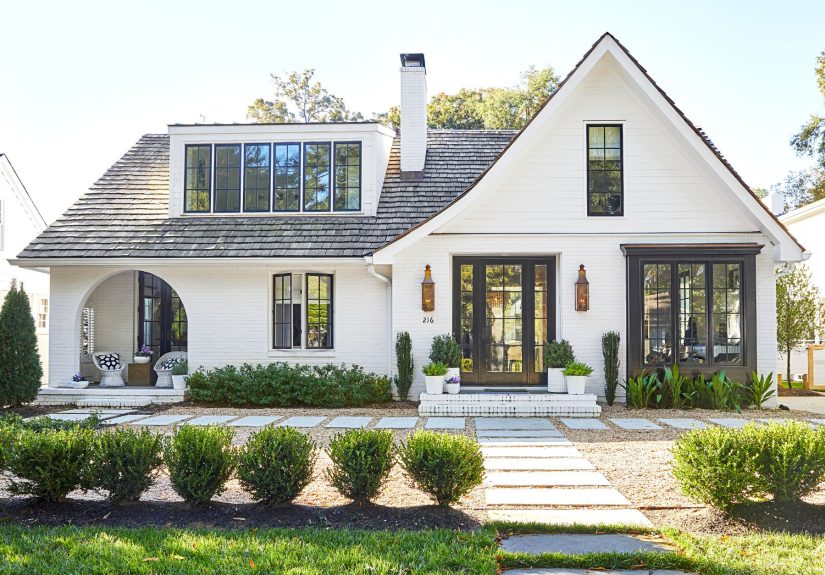
26) Modern Farmhouse
A contemporary twist on traditional farmhouse practicality: board-and-batten siding,
metal roofs, prominent gables, and usually a front porch that invites you to wave at neighbors (even if you don’t know them).
White exteriors with dark trim are common, but not mandatory.
- Signature look: Vertical siding, metal roof, crisp lines, welcoming porch
- Watch-out: Balance rustic elements so it doesn’t drift into “themed restaurant.”
27) Brutalist
Brutalist houses feature bold geometry, minimal ornamentation, and a lot of unapologetic concrete.
It’s more sculptural than cozy by defaultbut when done well, it’s striking, quiet, and timeless in its own way.
- Signature look: Exposed concrete, blocky forms, strong angles
- Best pairing: Warm wood interiors and strategic lighting soften the edges.
Urban & Regional Staples
These styles often reflect place, density, and lifestyle: coastal weather, city lots, rural land,
or the simple human desire for a porch and a view.
23) Rowhouse
Rowhouses are built side-by-side in uniform lines, often in dense urban areas where land is scarce.
They’re vertical, efficient, and usually have windows front and back (because the sides are busy being neighbors).
- Signature look: Repeating façades, shared side walls, tall narrow footprint
- Lifestyle note: Great walkabilityplus a healthy appreciation for soundproofing.
24) Antebellum
Commonly associated with the pre-Civil War South, Antebellum homes are known for grand scale,
symmetrical façades, and dramatic columnsoften paired with expansive porches and porticoes.
- Signature look: Large columns, formal symmetry, broad porches
- Design tip: Landscaping matters here; it frames the architecture like a stage set.
28) Saltbox
Saltbox houses have a distinctive long, sloped roofline that creates two stories in front and one in back.
Originally practical and simple, the form is instantly recognizable and still charmingly no-nonsense today.
- Signature look: Asymmetrical “one-sided” roof slope, central chimney often
- Why it exists: Practical expansion without complicated geometry.
29) A-Frame
A-frames are basically triangles you can live in. The steep roof becomes the walls,
and the front and back are often window-heavy. Popular for cabins and getaway homes, but also surprisingly practical.
- Signature look: Steep roof to ground, big glazing on the façade
- Space note: Interior walls can slopefurniture placement becomes a fun little puzzle.
31) Barndominium
Part barn, part home, part “wait, this is gorgeous.” Barndominiums often use steel frames and metal roofs/walls,
with large interiors and tons of flexibility for open layouts, lofts, and workshop-adjacent living.
- Signature look: Metal structure, big volume, modern-rustic blend
- Best perk: Huge design freedom inside a straightforward shell.
32) Cabin
Cabins lean rustic: timber, stone, simple gable or cross-gable roofs, exposed beams,
and an emphasis on warmth and shelter. They can be tiny and cozyor surprisingly grand while still feeling outdoorsy.
- Signature look: Natural materials, exposed structure, strong chimney presence
- Design tip: Layer lighting to keep wood-heavy interiors bright and inviting.
33) Shingle-Style
Shingle-style homes often feel coastal and relaxed, with wood shingles wrapping the exterior like a sweater.
They tend to be wide, asymmetrical, and porch-friendly, with multiple gables and fewer ornate embellishments than Queen Anne.
- Signature look: Shingle siding, sweeping forms, complex rooflines
- Common vibe: “Historic, but not fussy.”
How to Identify a House Style Without Becoming an Architecture Professor
If you only remember a few clues, make them these:
- Roofline: Steep and gabled (Tudor/Cape/Cottage) vs. flat/low (Modern/Midcentury/Ranch).
- Symmetry: Formal balance (Colonial/Georgian/Federal) vs. playful asymmetry (Queen Anne/Shingle).
- Materials: Stucco and tile (Mediterranean/Spanish Colonial) vs. wood and stone craftsmanship (Craftsman/Cabin).
- Entry drama: Columns and pediments (Neoclassical/Greek Revival/Antebellum) vs. simple porches (Ranch/Farmhouse).
One more helpful truth: many homes are blendsespecially remodeled ones. It’s completely normal to see a Colonial body,
a slightly more modern window package, and a porch that clearly arrived later with fresh opinions. The goal isn’t to label perfectly;
it’s to make choices (paint, windows, additions, landscaping) that look intentional with the home’s existing DNA.
Conclusion
The best house style isn’t the fanciest oneit’s the one that fits your climate, lifestyle, and tolerance for upkeep.
If you want easy single-level living, Ranch is hard to beat. If you want handcrafted charm, Craftsman delivers.
If you want bold architecture that makes people slow down on the sidewalk, Queen Anne and Gothic Revival will happily take the spotlight.
Whatever you’re working with, the “secret” to great curb appeal is matching updates to the style’s defining features.
When you collaborate with the architecture instead of arguing with it, your home looks more polishedwithout needing to shout.
Real-Life Experiences: Living With (and Loving) Different House Styles
Reading about architectural house styles is one thing. Living in them is anotherbecause every style comes with a
personality, a daily routine, and at least one quirky “this is why we can’t have nice things” moment.
Here are some common, real-world experiences homeowners often describe when they share life inside these popular home styles.
In a Ranch house, people frequently talk about how quickly it becomes a “grab-and-go” lifestyle.
You can get from the bedroom to the kitchen in seconds, carrying laundry doesn’t require a strategy meeting, and accessibility is naturally better.
The trade-off is that renovations often focus on creating dramaadding vaulted ceilings, bigger openings, or more architectural interest
because the original charm is practicality, not ornament.
Craftsman owners tend to form deep emotional bonds with details: the built-ins, the woodwork, the porch columns,
the little leaded-glass moments. The experience is often described as “warm” and “grounded,” like the house is quietly rooting for you.
The catch is the famous Craftsman dilemma: you want modern convenience, but you don’t want to erase the craftsmanship.
Many homeowners learn to update gentlybetter insulation, improved HVAC, smarter lightingwhile keeping the visible character intact.
Cape Cod and Cottage living is often reported as peak cozyespecially in cooler seasons.
People love the snug proportions and charming dormers, but they also discover the reality of sloped ceilings:
that one corner of the upstairs becomes either a reading nook or a place where tall friends apologize repeatedly.
Updates usually revolve around smarter storage, built-ins, and making small spaces feel bright (skylights, lighter finishes, reflective surfaces).
Victorian and Queen Anne homes are described like relationships: thrilling, beautiful, and occasionally expensive.
Owners often mention the joy of restoring original featurespocket doors, ornate trim, stained glass
and the satisfaction of seeing the home look “alive” again. But they also talk about the “charm tax”:
older systems, more upkeep, and the need to plan projects in phases. Many learn to prioritize: roof and mechanicals first,
then cosmetic details, then the fun stuff like color and decorative restoration.
Modern and Midcentury Modern houses frequently deliver an experience people describe as “calm” and “easy to breathe in.”
Natural light becomes a daily mood booster. Indoor-outdoor flow changes how families use spacepatios and decks become extensions of the living room.
The most common lesson? Minimalism is not the same as emptiness. Homeowners often add warmth with wood tones, texture, and lighting,
so the space feels inviting rather than like a beautifully designed waiting room.
Mediterranean and Spanish Colonial homes often feel like they were designed to host life:
courtyards, arched openings, shaded outdoor areas, and materials that look better with age. Owners frequently mention that the vibe is unmatched
but that materials (tile roofs, stucco, specialty ironwork) may require region-appropriate maintenance and skilled repairs.
People who love these homes tend to lean into the romance: lantern lighting, warm plaster textures, and landscaping that complements the architecture.
Rowhouse living is often described as community-forward and city-convenient.
You get walkability, charming streetscapes, and a sense of neighborhood rhythm. You also get shared walls, which can be totally fine
or a reason to become oddly knowledgeable about sound insulation. Many rowhouse owners focus updates on making narrow footprints feel expansive:
better lighting, lighter finishes, and smart sightlines from front to back.
And then there are the lifestyle-driven favorites. Cabins and A-frames commonly deliver the “escape” feeling people crave:
a strong connection to nature and interiors that encourage slowing down. Barndominiums often win for flexibility
people talk about the joy of finally having room for hobbies, workshops, and open living without fighting a complicated floor plan.
Across all styles, the most consistent experience is this: once you understand your home’s defining characteristics,
decisions get easierand the house starts to feel like it’s on your team.





 Close
Close