
Table of Contents >> Show >> Hide
- What “Famine” Really Means (and Why It’s Often Political)
- 10 Terrible Famines in History
- 1) The Great European Famine (1315–1317)
- 2) The Great Bengal Famine (1769–1770)
- 3) The Irish Great Famine (1845–1852)
- 4) The Great Famine in India (1876–1878)
- 5) The Russian Famine (1921–1922)
- 6) The Holodomor (Ukraine, 1932–1933)
- 7) The Bengal Famine (1943)
- 8) China’s Great Famine (1959–1961)
- 9) The Ethiopian Famine (1983–1985)
- 10) The North Korean Famine (Mid-to-Late 1990s)
- Patterns and Lessons: Why Famines Keep Happening
- Experiences: What It’s Like to Learn About Famines (and Why It Sticks With You)
- Conclusion
“Famine” sounds like an old-fashioned wordsomething that belongs in dusty textbooks next to “plague” and “how did anyone survive this?”
Unfortunately, famine is not a relic. Across history, it has repeatedly shown up when a society’s food system collides with bad weather,
war, policy failures, inequality, and the occasional “we’ll fix it later” attitude (spoiler: later is too late).
This article walks through ten of the most devastating famines in recorded history. You’ll notice a pattern: food shortages matter,
but the truly catastrophic outcomes usually depend on human choiceswho gets to eat, who doesn’t, and what leaders do when alarms start ringing.
Because estimates and records vary (especially for older events), numbers are presented as best-supported ranges rather than “one tidy statistic.”
What “Famine” Really Means (and Why It’s Often Political)
A famine is not just “a lot of people are hungry.” It’s a breakdownwidespread hunger and malnutrition, rising deaths, collapsing livelihoods,
and families making impossible decisions. Sometimes the trigger is environmental (drought, floods, crop disease). Sometimes it’s conflict.
Often it’s both, plus an economy that was fragile long before the first crop failed.
A key lesson from modern famine research is blunt: people can starve even when food exists. If prices explode, wages collapse, transport fails,
trade barriers go up, or governments confiscate grain, the result can be famine conditions without a total absence of food.
In other words: famine is as much about access as it is about agriculture.
10 Terrible Famines in History
1) The Great European Famine (1315–1317)
Northern Europe in the early 1300s didn’t need a villain with a mustache; it had nonstop rain, ruined harvests, and a food system with very little
slack. Starting in 1315, unusually wet and cold conditions hammered crops and made it difficult to dry grain or keep livestock healthy.
When harvests failed year after year, bread prices rose, substitutes got sketchier, and social strain spread from villages to cities.
What made this famine so destructive wasn’t only the weatherit was how close many communities already lived to the edge.
In much of medieval Europe, a bad harvest wasn’t an inconvenience; it was an existential threat. The Great European Famine weakened populations,
intensified poverty, and left societies more vulnerable to later crises. Think of it as history’s reminder that resilience isn’t a vibeit’s storage,
distribution, and the ability to survive a shock.
2) The Great Bengal Famine (1769–1770)
Bengal in the late 1700s faced drought and crop failure, but the disaster also unfolded during a period of major political and economic change
under the British East India Company. Revenue demands didn’t politely pause for a humanitarian emergency, and the region’s governance was shaped
by extractioncollecting wealthrather than protecting local food security.
Historical estimates of deaths vary widely, partly because reliable demographic data were limited and later writers sometimes repeated dramatic
figures. What’s not in dispute is the scale of suffering and disruption: villages were destabilized, agriculture struggled to recover, and the famine
became an early, grim example of how policy and profit incentives can amplify a climate shock. If you’re looking for a one-sentence takeaway:
drought can start a crisis, but institutions decide whether it becomes a catastrophe.
3) The Irish Great Famine (1845–1852)
Ireland’s Great Famine is one of the clearest examples of a biological trigger meeting a social powder keg. The trigger was potato blight
(the disease that wrecked potato crops). The powder keg was economic dependence: many families relied heavily on potatoes for calories, while
land and power were unequally distributed.
As potato harvests failed repeatedly, hunger escalated, disease spread, and mass displacement followed. Ireland’s population fell sharply,
and migrationespecially to the United Statesreshaped Irish communities for generations. The famine’s legacy is not only demographic; it’s political
and cultural, tied to debates about governance, relief, and what happens when a crisis response is too slow, too limited, or shaped by ideology.
It’s also a warning about monocultures: when “one crop feeds everyone,” a single plant disease can become national trauma.
4) The Great Famine in India (1876–1878)
The 1876–1878 famine struck large parts of India after severe drought linked to global climate patterns. Harvests collapsed across multiple regions,
but hunger didn’t spread evenly. Areas with weaker purchasing power, heavy debt burdens, and limited relief infrastructure were hit especially hard.
This famine is often discussed not only as a climate disaster but also as a policy case study: how colonial-era economic rules, market dependence,
and relief decisions shaped outcomes. One long-term consequence was administrative reformfamines pushed authorities to develop more formal systems
for identifying “scarcity” and organizing relief (famously, the Indian Famine Codes). The tragedy here is that the knowledge to prevent mass death
evolved alongside repeated mass death. Humanity does this a lot: we invent the seatbelt after the crash.
5) The Russian Famine (1921–1922)
After World War I, revolution, and civil war, Russia entered the early 1920s with deep economic disruption. Drought and crop failures then piled on,
and food distribution systems were badly strained. In a crisis like this, “there’s food somewhere” doesn’t help if transport networks, governance,
and local markets are in pieces.
The famine became one of the era’s largest humanitarian emergencies and spurred major international relief. The American Relief Administration,
led by Herbert Hoover, played a prominent role in food aid operations. It’s a revealing moment in famine history: even in a politically tense
environment, large-scale relief was possible when logistics, funding, and access aligned. It also shows how famine can force policy shifts,
both domestically and internationally, because starvation doesn’t care about ideological talking points.
6) The Holodomor (Ukraine, 1932–1933)
The Holodomoran engineered famine in Soviet Ukrainesits at the intersection of agriculture, coercion, and state power. During the early 1930s,
Soviet policies tied to forced collectivization and grain requisition contributed to catastrophic hunger. Crop issues mattered, but the central driver
was the extraction of food from rural communities combined with repression that blocked normal coping mechanisms.
Death toll estimates vary, and the event remains politically charged, but historians broadly agree it was a man-made disaster. The Holodomor is often
invoked to underline a hard truth: when governments control food and punish mobility, famine can become a weapon. It’s the extreme end of a pattern
seen elsewherewhere the disaster isn’t simply “not enough food,” but “food is being taken, withheld, or made unreachable.”
7) The Bengal Famine (1943)
Bengal’s 1943 famine occurred during World War II, when wartime disruptions, shifting trade flows, and policy decisions collided with existing
vulnerability. A region already living close to subsistence saw rice become scarce or unaffordable for many households. Shortages, price spikes,
and breakdowns in distribution turned chronic insecurity into mass crisis.
Many accounts emphasize that Bengal’s famine was not just a story of “missing grain,” but of markets and governance failing people at the worst moment.
The disaster triggered intense debate about the responsibilities of colonial administrations during wartime. It also helped shape later thinking about
famine prevention: monitoring prices, protecting purchasing power, and acting early can matter as much as delivering emergency calories.
8) China’s Great Famine (1959–1961)
China’s 1959–1961 famine is frequently described as the largest famine of the twentieth century. It occurred during the Great Leap Forward,
a period of rapid economic and social policies that reshaped agriculture and rural life. Multiple factors converged: poor weather in some regions,
unrealistic production targets, procurement pressures, and local reporting incentives that could reward optimism over accuracy.
Estimates of famine-related deaths vary widely, reflecting differences in methods and sources, but the scholarly consensus is that mortality was
immense. The broader lesson is not “central planning always fails” or “weather did it”it’s that when decision-making systems discourage honest data,
punish dissent, and prioritize targets over human welfare, a food crisis can expand with terrifying speed. In famine prevention, accurate information
is not a luxury; it’s life-saving infrastructure.
9) The Ethiopian Famine (1983–1985)
Ethiopia’s 1980s famine became globally iconicmany people first encountered it through news coverage and large-scale charity events. The drivers,
however, were complex: drought played a major role, but conflict and state policies also influenced who could access food, where aid could travel,
and how communities coped.
The humanitarian response helped reshape modern relief practices, including debates about neutrality, access in conflict zones, and how aid interacts
with politics. Ethiopia’s famine also influenced the development of early-warning systems designed to detect food crises sooner, because waiting for
visible catastrophe is a strategy that only works if your goal is tragedy.
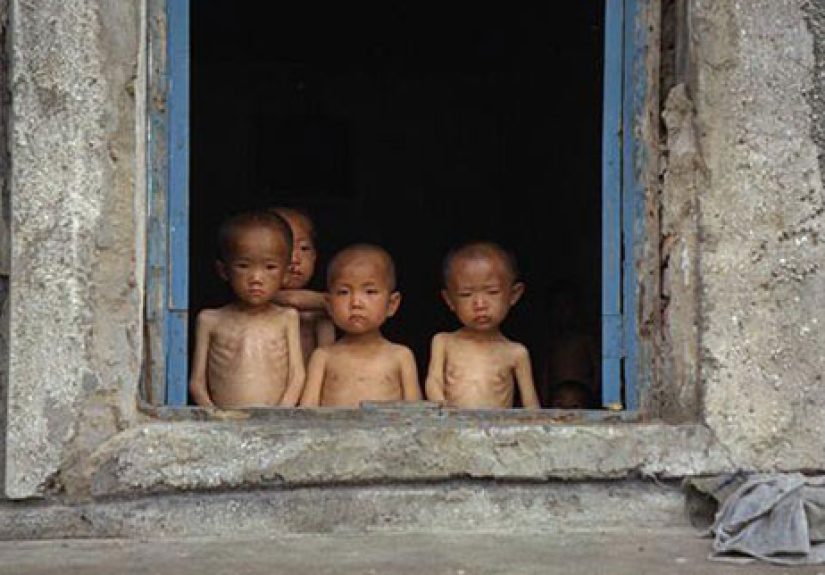
10) The North Korean Famine (Mid-to-Late 1990s)
North Korea’s 1990s famineoften referred to inside the country as the “Arduous March”unfolded after a cascade of shocks: economic isolation,
loss of external support following the collapse of the Soviet bloc, and severe floods that damaged crops and infrastructure. In tightly controlled
systems, a supply disruption can become a nationwide emergency when markets can’t compensate and information is constrained.
Mortality estimates vary widely because reliable data are scarce, but researchers agree the famine was devastating. It also produced long-term effects:
chronic malnutrition, health consequences, and social changes as households tried to survive through informal trade and adaptation. The North Korean
case highlights a modern famine reality: in closed political environments, the outside world may learn the full scale only years laterwhen the crisis
has already done its worst.
Patterns and Lessons: Why Famines Keep Happening
Put these ten events side by side and a few themes repeatwithout turning history into a boring spreadsheet (though history absolutely deserves a
spreadsheet sometimes):
Famine is usually a chain reaction, not a single cause.
Drought, flood, blight, or war may start the problem. The catastrophe arrives when incomes collapse, prices spike, transport breaks, or policy blocks
normal survival strategies like migration, trade, or community support.
Access beats “total supply” more often than people expect.
Households can starve even when food existsif they can’t afford it, can’t reach it, or aren’t allowed to obtain it. That’s why famine prevention
often focuses on early warnings, price stabilization, targeted assistance, and protecting livelihoods.
Information matterstruth is a famine-fighting tool.
In several famines, leaders received distorted reports or minimized bad news. A system that can’t tolerate honest data will keep making bad decisions,
just faster and with higher stakes.
Relief can workbut it must be early, large, and reachable.
Effective responses usually involve logistics, funding, and access. When any of these failespecially access in conflict areashunger spreads. The
difference between “food insecurity” and “famine” is often speed of action.
Experiences: What It’s Like to Learn About Famines (and Why It Sticks With You)
Most of us don’t “experience” historic famines directlythankfully. But many people do have experiences related to learning about them, and those
experiences can be unexpectedly personal. If you’ve ever gone down a history rabbit hole thinking, “I’ll read one quick thing,” and then looked up
an hour later feeling emotionally winded… yeah. Famines do that.
One common experience is encountering famine through voices that feel close: letters, diaries, ship records, aid reports, and oral histories.
Statistics can tell you scale, but personal accounts tell you what a crisis does to everyday lifehow families ration, how communities share (or can’t),
how people try to keep dignity in situations designed to grind it down. You start noticing small details: how often people mention prices, bread, seeds,
or the stress of uncertainty. Hunger isn’t only physical; it’s a constant mental drumbeat of “Will there be enough tomorrow?”
Another experience is visiting memorials and museums, where the presentation forces a different kind of attention. In exhibits on the Irish famine,
you may see migration records that connect directly to American family historiesnames, dates, ports, and the stark fact that “moving” sometimes meant
“surviving.” In sections on Soviet-era famines, you may be confronted with how policy language can sanitize crueltyhow bureaucratic phrases can hide
the reality that people are being cut off from food. It’s a lesson in reading critically: whenever you see euphemisms like “requisition,” “denial,”
or “reallocation,” you learn to ask, “What happened to the people?”
For many, the Ethiopia famine of the 1980s is tied to media memory. People recall seeing televised coverage, fundraising concerts, or school drives.
That experience can be complicated: on one hand, it shows how global empathy can mobilize quickly; on the other, it raises hard questions about how
crises get attention and what gets simplified along the way. Learning more laterabout conflict, access, and the politics of aidcan feel like going
from a black-and-white sketch to a full-color (and messier) picture.
A more modern experienceespecially when studying North Korea’s famineis the discomfort of uncertainty. Researchers work with partial data,
testimonies, and indirect indicators. You realize that some systems make human suffering harder to measure, and that “we don’t know the exact number”
is not the same as “it wasn’t severe.” It’s a reminder that the absence of clear data is sometimes part of the tragedy.
Finally, learning famine history changes how you see the present. You start noticing the early signals: crop failures, price spikes, disrupted trade,
conflict blocking roads, or policy decisions that treat food like leverage. You also notice resilience: communities that build storage, diversify crops,
strengthen safety nets, and create early-warning systems. The emotional arc of studying famines is often the same: grief at what happened, anger at the
preventable parts, and a stubborn hope that remembering these histories helps societies respond faster and better next time.
Conclusion
The most unsettling thing about famine history is how familiar the mechanics can look across centuries: a shock hits, vulnerability is exposed,
and decisions determine who gets protected. Weather and disease matter, but the deadliest famines are often the ones where power and policy turn
scarcity into disaster. If there’s any “good news” here, it’s that this means prevention is possiblebecause the worst outcomes are not inevitable.




 Close
Close