
Table of Contents >> Show >> Hide
- The Biggest Things That Would Shock Modern People in the 1990s
- 1. Being unreachable was completely normal
- 2. Getting lost was a full-body experience
- 3. The internet was not a lifestyle; it was an activity
- 4. Social media did not manage your identity
- 5. Entertainment required commitment, timing, and sometimes late fees
- 6. Photos were limited, expensive, and gloriously imperfect
- 7. Dating was more analog, more awkward, and somehow less optimized
- 8. Work and school involved more paper, more waiting, and more tiny acts of chaos
- 9. Public spaces felt smokier, louder, and less polished
- 10. Air travel and everyday security felt far less intense
- Why the 1990s Still Fascinate People Today
- What the Experience Would Actually Feel Like
- Conclusion
- SEO Metadata
If someone from today got tossed into the 1990s without warning, the first shock would not be the clothes, the sitcom hair, or the suspicious amount of denim. It would be the friction. Modern life runs on instant answers, constant connection, and the quiet assumption that your phone is basically a second brain with better navigation. The 1990s, by contrast, made people work for everything: communication, entertainment, directions, photos, and sometimes even basic proof that they were, in fact, running late.
That is what makes the idea of time travel to the 1990s so fascinating. On the surface, the decade looks familiar. It is close enough to feel modern, but far enough away to be weird in all the best ways. There were computers, cable TV, malls, pop culture obsessions, and the early internet. But there was no smartphone safety net, no social media spotlight, and no convenient little app waiting to rescue you from boredom, confusion, hunger, loneliness, or a wrong turn. If people from today traveled back to the 1990s, they would not just notice a different era. They would feel the missing infrastructure of modern life almost immediately.
The Biggest Things That Would Shock Modern People in the 1990s
1. Being unreachable was completely normal
Today, if someone texts and you do not answer for three hours, they may assume you are upset, kidnapped, or “taking space.” In the 1990s, none of that drama was necessary. People left the house and simply vanished for a while. You called the landline, maybe got the answering machine, and then moved on with your life like a healthy mammal.
This would be one of the biggest 1990s shocks for modern travelers: plans had to be made in advance and then honored like a blood pact. You could not send “running 8 mins late lol” from the back of a rideshare. If you got delayed, the other person just stood there wondering whether you were still coming or had been swallowed by fate. It sounds inconvenient because it was. It also meant people learned to be punctual, specific, and weirdly resilient.
2. Getting lost was a full-body experience
Modern people do not really “get lost” anymore. They have a tiny satellite-powered oracle in their pocket telling them to turn left at the next light and stop trusting their own instincts. In the 1990s, directions were a social skill. You wrote them down on paper, memorized landmarks, and prayed the gas station clerk had both local knowledge and decent handwriting.
If you traveled back to the 1990s, one of the most shocking things would be how much mental energy went into finding places. You would hear phrases like “go past the big blue church, turn where the old pizza place used to be, then look for a mailbox shaped like a fish.” That was navigation. It was half geography, half folklore. And once you were lost, there was no cheerful rerouting voice. There was only you, your pride, and maybe a folding map that opened like a cursed accordion.
3. The internet was not a lifestyle; it was an activity
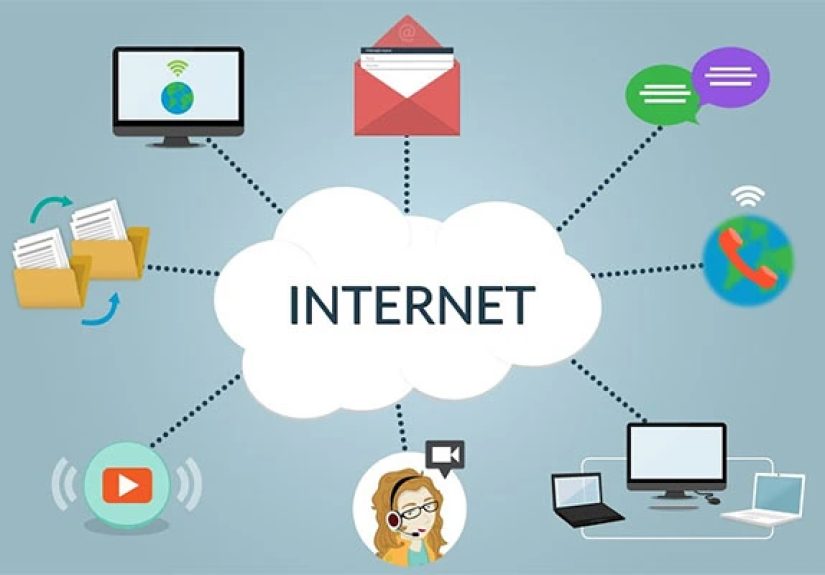
People today do not “go on the internet” so much as live inside it. In the 1990s, the internet was something you accessed on purpose. It made noises. It took time. It could tie up the phone line. It was less like oxygen and more like a machine you had to start with attitude and patience.
This difference is enormous. Modern users assume the web is always there, always fast, and always ready to serve up an answer in seconds. In the 1990s, getting online often felt like opening a creaky side door into the future. Pages loaded slowly. Images appeared line by line. If someone in the house picked up the phone, your glorious digital adventure could abruptly end. A person from today would be stunned by how limited and deliberate online life felt. The 1990s internet was exciting, but it was not invisible infrastructure yet. It was an event.
4. Social media did not manage your identity
Another thing that would shock people from today is the absence of an audience. No Instagram Stories. No TikTok updates. No group chat autopsies of every social interaction. If you did something embarrassing in the 1990s, the good news was that it usually disappeared into the air instead of living forever in someone’s camera roll.
That meant daily life had a different emotional texture. People were still self-conscious, obviously; human beings did not magically become chill just because the decade had better rock radio. But their awkward moments were local. Their opinions were not polished for public consumption every hour. Their lunch did not need lighting. Their vacation did not become content. A traveler from today would probably feel both relief and withdrawal. Relief because nobody is performing all the time. Withdrawal because nobody is performing all the time.
5. Entertainment required commitment, timing, and sometimes late fees
If your current routine involves opening three streaming apps, complaining that “there is nothing to watch,” and then rewatching the same comfort show, the 1990s would humble you. Movies and TV were not always available on demand. If you missed an episode, you missed it. If the video store was out of the movie you wanted, that was the end of the conversation. You picked something else and learned character.
Blockbuster-era life would be one of the funniest culture shocks for modern people in the 1990s. Friday night entertainment could involve driving to a store, wandering aisles, arguing over genres, and hoping the new release was still in stock. The upside was that choices felt more meaningful. The downside was, of course, late fees, which were basically a small financial punishment for optimism.
Music worked the same way. If you liked a song, you often had to wait for it to come on the radio, buy the album, or record it onto a cassette without the DJ talking over the intro like a villain. Convenience did not rule entertainment yet. Anticipation did.
6. Photos were limited, expensive, and gloriously imperfect
Modern people take hundreds of photos without thinking, delete 94 of them, edit three, and post one. In the 1990s, photos cost money, came in finite amounts, and contained real risk. You did not know whether a picture turned out until the film was developed. You could spend a week believing you had captured a magical birthday memory, only to discover a thumb, a blur, and one deeply alarming close-up of a paper plate.
That would absolutely shock travelers from today. There was no instant review, no filter rescue, and no tenth retake because your left eyebrow looked judgmental. The scarcity made people more selective, and the uncertainty made the final prints feel like tiny acts of destiny. The 1990s were not better because photos were harder. But memories felt more physical then. They sat in envelopes, albums, and shoeboxes instead of floating inside the cloud like polite ghosts.
7. Dating was more analog, more awkward, and somehow less optimized
If you are used to dating apps, algorithmic matching, profile prompts, and deciding someone’s romantic viability based on six photos and an opinion about tacos, the 1990s would feel wildly uncurated. People met through school, work, friends, churches, neighborhoods, parties, bars, and the occasional act of boldness that would make modern thumbs tremble: walking up to someone and speaking.
Yes, there were early digital forms of connection by the end of the decade. But dating was still mostly an offline sport. You could not screen ten people from the couch in sweatpants. You had to notice actual chemistry, interpret actual tone, and risk actual rejection in real time. Horrifying? A little. Human? Absolutely. One of the oddest things for modern travelers in the 1990s would be how much social life depended on presence rather than profiles.
8. Work and school involved more paper, more waiting, and more tiny acts of chaos
Cloud collaboration has spoiled everyone. In the 1990s, group work was a logistical obstacle course. Documents existed on floppy disks. Teachers collected printed pages. Offices ran on fax machines, file cabinets, Post-it notes, and the confident lie of “I sent it yesterday.” If someone forgot the one disk holding the project, everybody suffered together.
This is one of the most underappreciated differences between life today and life in the 1990s. Frustration was built into ordinary systems. You could not instantly share a deck, edit a doc, upload a backup, or search old messages in two seconds. You had to physically manage information. And if you were disorganized, the decade did not gently cushion you with autosave. It watched you fail in standard definition.
9. Public spaces felt smokier, louder, and less polished
People from today would also notice how differently public space felt. The 1990s sat in a transitional period. Smoking restrictions were expanding, but the culture was not fully where it is now. You still encountered ashtrays, smoking sections, and a more casual tolerance for things that would make modern lungs file a formal complaint.
It was not just smoke. The whole sensory environment was different. Stores were louder. Malls were social hubs, not just errand zones. TVs blared in waiting rooms. Neon signs worked overtime. Pay phones stood in public like sturdy little monuments to temporary panic. The world felt less frictionless and more tangible, which is another way of saying it had texture. Also germs. Probably many germs.
10. Air travel and everyday security felt far less intense
A traveler from today would be startled by how different pre-2001 air travel culture was. Airports felt less fortified. Security existed, of course, but it was not the same ritual of shoes, bins, liquids, laptops, and existential sighing. Friends and family could often accompany people much farther through the airport experience. Flying still felt stressful, but not in the same highly systematized way modern passengers know.
This would likely produce a strange emotional reaction in someone from today. Part of them would think, “Wow, this is easier.” Another part would immediately realize how profoundly history changed the design of public life. The 1990s were the last moment many Americans experienced major travel infrastructure without the security mindset that shaped the decades after it.
Why the 1990s Still Fascinate People Today
The reason this topic keeps pulling people in is simple: the 1990s were modern enough to be recognizable and old enough to be startling. They were close to now, but not too close. That makes the decade perfect for comparison. You can still see the roots of the world we live in: home computers, early internet culture, cable news, big-box stores, tech optimism, global pop culture. But you can also see how unfinished everything was.
That is why 1990s nostalgia hits so hard. It is not just about fashion, sitcoms, or the smell of a video rental store. It is about remembering a version of life that had more waiting built into it. Waiting for calls. Waiting for directions. Waiting for photos. Waiting for TV episodes. Waiting to find out things. Modern people often claim they want a simpler time, but what they usually mean is they want fewer notifications, not more inconvenience. The 1990s offered both.
In that sense, the decade would probably shock modern travelers in two opposite ways at once. First, it would feel frustratingly slow. Second, it would feel weirdly calming. You would lose convenience but gain silence. You would have fewer options but probably make decisions faster. You would be less informed in the moment and maybe a little more present inside it.
What the Experience Would Actually Feel Like
Now imagine you do not just visit the 1990s for an afternoon. Imagine you stay for a week. On day one, the novelty is charming. You laugh at the giant computer monitor, the squealing modem, the stack of CDs, and the heroic size of the family camcorder. You feel like you are inside a period drama for people who owned windbreakers. By day two, however, the missing conveniences start to poke at your sanity.
You wake up and instinctively reach for your phone, only to remember that your pocket rectangle does not run this universe. There is no weather app, no overnight delivery update, no algorithm telling you what happened while you slept. If you want to know something, you may have to wait for the newspaper, turn on the TV, call someone, or physically go somewhere. That sounds quaint until you need a quick answer and discover that “quick” had a different definition in the 1990s.
Then there is the social adjustment. In modern life, plans remain alive right up to the moment they happen. In the 1990s, plans are fixed earlier and edited less. If you are meeting friends at the mall at 6:00 p.m., you had better be there at 6:00 p.m. because there is no group chat to rescue the situation and no location sharing to prove you are “literally almost there.” If you are late, you are not a blue dot moving across a map. You are a mystery.
By the middle of the week, you begin to notice how physical everything feels. Music lives in actual objects. Photos live in actual prints. Directions live on scraps of paper in your pocket. Messages live on answering machines or handwritten notes stuck to the fridge. Entertainment requires travel. Information requires effort. Even boredom has weight. You cannot anesthetize every empty minute with a scroll. You stand in line and simply exist, which modern brains may interpret as both peaceful and suspicious.
And yet, something unexpected happens. Your attention span starts to repair itself a little. Conversations become less interrupted because no one is checking three apps at once. Meals feel longer. Errands feel more local. Time stretches. You begin to understand why people talk about the pre-smartphone era with a mixture of affection and disbelief. It was less efficient, yes, but it was also harder to fragment your own attention into confetti.
By the final day, the 1990s no longer feel like a joke or a museum. They feel like a functioning world with different trade-offs. You miss GPS, streaming, mobile payments, instant messaging, and the ability to look up any random fact at 2:13 a.m. But you also notice what is not pressing against you all the time: alerts, performance, speed, comparison, permanent documentation. The decade was not better in every way. It was simply built around different assumptions. Modern life assumes access. The 1990s assumed effort.
That is probably the real answer to the question. What would shock people from today if they traveled back to the 1990s? Not just the technology. Not just the pay phones, the film cameras, the paper maps, or the trip to Blockbuster. What would shock them most is how much of life once depended on patience, memory, planning, and showing up. In other words, the 1990s would not merely look old. They would feel like a world where convenience had not yet eaten everything.
Conclusion
If people from today landed in the 1990s, they would probably spend the first hour laughing, the second hour confused, and the third hour asking where they can charge a phone that no longer matters. The decade would feel familiar enough to navigate and strange enough to humble them. Life in the 1990s was not primitive. It was transitional, tactile, and wonderfully unfinished. It had the beginnings of the digital world without the full takeover.
That is what makes the thought experiment so fun. The 1990s remind us that many things we now treat as basic human rightsinstant messaging, live navigation, on-demand entertainment, cloud backups, endless photos, and algorithmic convenienceare actually very recent habits. Strip them away, and modern people would still survive. They would just have to plan better, wait longer, and maybe learn the ancient art of memorizing a phone number. Terrifying, yes. Character-building, also yes.





 Close
Close