
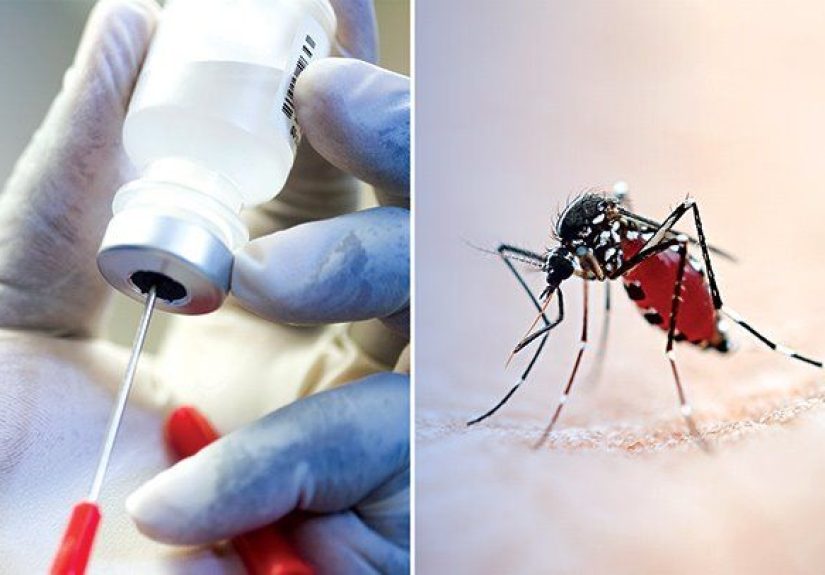
Table of Contents >> Show >> Hide
- Why a Malaria Vaccine Matters So Much
- How Malaria Vaccines Work (Without a PhD)
- The First Breakthrough: RTS,S/AS01 (Mosquirix)
- The Newcomer: R21/Matrix-M
- Global Rollout: Where Things Stand Now
- The Big Challenges Ahead
- What’s Next for Malaria Vaccines?
- Lived Experiences: What a Malaria Vaccine Means on the Ground
- Conclusion: A Turning Point, Not the Finish Line
For more than a century, scientists have chased a malaria vaccine the way
kids chase mosquitoes on a summer night: enthusiastically, but with limited
success. Malaria is caused by a tricky parasite, not a simple virus, and it
has evolved alongside humans for thousands of years. Yet in just the last
few years, something remarkable has happened: not one but two malaria
vaccines have been recommended by the World Health Organization (WHO), and
dozens of countries are starting to roll them out to children at highest
risk.
The story isn’t just about scientific triumph. It’s also about logistics,
funding, health systems, and the everyday realities of parents, nurses, and
communities living with malaria. There is real progress, but the challenges
are just as real. Let’s unpack both sidesminus the lab coat jargon.
Why a Malaria Vaccine Matters So Much
Malaria remains one of the world’s most devastating infectious diseases.
According to the WHO’s 2024 World Malaria Report, there were about
263 million malaria cases and 597,000 deaths in 2023, with
the vast majority occurring in the WHO African Region. Roughly
94% of cases and 95% of deaths were in Africa, and
children under 5 accounted for about three-quarters of those deaths.
Put simply: malaria kills a child somewhere in the world almost every
minute. That’s why a malaria vaccine is such a big deal. Bed nets,
insecticide spraying, and rapid diagnostic tests have saved millions of
lives, but progress has stalled in recent years. A new tool in the toolbox
was desperately needed.
How Malaria Vaccines Work (Without a PhD)
Meet the Parasite
Malaria vaccines primarily target Plasmodium falciparum, the most
deadly malaria parasite. It has a complicated life cycle: it starts in the
mosquito, then moves into the human liver, then into red blood cells. Each
stage looks different to the immune system, which is one reason making a
vaccine has been so hard.
Targeting the Right Stage
The first two WHO-recommended vaccinesRTS,S/AS01 (often called
Mosquirix) and R21/Matrix-Mfocus on the parasite’s
sporozoite stage, right after a mosquito bite. They teach
the immune system to recognize a protein on the parasite’s surface and
attack before it can fully invade the liver and multiply.
These vaccines don’t offer the near-sterilizing protection we see with some
childhood vaccines like measles. Instead, they reduce the risk of
infection and severe disease, especially in young children living
in areas with moderate to high malaria transmission. Think of them as
turning a raging wildfire into smaller, more manageable flare-ups.
The First Breakthrough: RTS,S/AS01 (Mosquirix)
RTS,S/AS01 is the first malaria vaccine to receive a WHO recommendation for
widespread use, which happened in October 2021 after decades of research
and pilot programs in Ghana, Kenya, and Malawi.
What the Evidence Shows
In large clinical trials, the RTS,S vaccine reduced clinical malaria cases
by around 30–40% over several years in children who received the full
four-dose series, and it significantly cut severe malaria and hospital
admissions. Those numbers might sound modest compared to vaccines that
offer 90–95% protection, but when you’re dealing with hundreds of millions
of cases, a 30–40% reduction is huge in terms of lives saved.
The recommended schedule is four doses starting around 5 months of
age, spaced over roughly two years. This requires a strong
connection to routine childhood immunization systems, which are not always
robust in the places where malaria hits hardest.
Rollout and Supply
Early on, the main challenge wasn’t just whether RTS,S workedit was
whether there would be enough doses. Between 2023 and 2025, about
18 million doses were allocated to 12 African countries,
based on a framework prioritizing areas with the highest burden.
The cost has also been a barrier. RTS,S originally cost around
$9 per dose, but a manufacturing partnership between GSK
and Bharat Biotech aims to reduce the price to below $5 per dose by 2028,
making it more accessible for low-income countries relying on donor
funding.
The Newcomer: R21/Matrix-M
In October 2023, the WHO recommended a second malaria vaccine,
R21/Matrix-M, for children living in areas of high
malaria transmission. This recommendation was
a game changer for one major reason: supply.
High Efficacy and Lower Cost
In clinical trials, R21/Matrix-M showed around 75% efficacy
against clinical malaria over one year when given before the rainy season,
with a booster dose the following year. While
real-world effectiveness will likely be lower than in tightly controlled
trials, the results are still very strong.
R21 is produced at scale by the Serum Institute of India, and doses are
expected to cost about $2–4 per dose, undercutting RTS,S
and dramatically increasing the number of children who can be protected for
a given budget.
Prequalification and Scale-Up
WHO prequalified R21/Matrix-M in late 2023, opening the door for global
procurement through agencies like UNICEF and Gavi.
This means R21 can now complement RTS,S in national immunization programs.
By early 2025, multiple African countriessuch as Nigeria, Cameroon, and
Burkina Fasohad begun introducing malaria vaccines at national or
subnational scale, often starting in the regions with the highest
transmission.
Global Rollout: Where Things Stand Now
With two WHO-recommended vaccines available, attention has shifted from
“Will we have a vaccine?” to “How fast can we get it to children who need
it?”
As of 2025, Gavi reports that more than
20–24 African countries have introduced malaria vaccines
into their routine childhood immunization programs, and that number is
expected to keep rising. Gavi’s
forecasts suggest that fully immunizing roughly 50 million children with
malaria vaccines between 2026 and 2030 could prevent more than 170,000
deaths.
Importantly, these vaccines are not currently aimed at tourists or
short-term travelers from non-endemic countries; they’re targeted at
children who live their whole lives in areas where malaria
is part of everyday reality.
The Big Challenges Ahead
If the malaria vaccine story ended here, it would be pure celebration. But
as always with global health, the details matterand they can be messy.
1. Matching Vaccine Supply to Massive Demand
Each year, tens of millions of African children are eligible for malaria
vaccination. Early analyses estimated that vaccinating just the highest
risk cohort could require hundreds of millions of doses
over a few years.
Even with two vaccines on the market, manufacturing must keep ramping up,
and supply needs to be predictable. Health ministries can’t plan nationwide
campaigns if they aren’t sure how many doses will arriveor when.
2. Cost, Funding, and Donor Fatigue
While $2–5 per dose may sound cheap, remember that children need
four doses, and malaria vaccines are just one piece of
already stretched health budgets. A 4-dose schedule at a few dollars per
shot adds up quickly when you are vaccinating millions of children.
At the same time, global health financing has grown more uncertain.
Analyses warn that cuts to malaria funding could cause a surge in cases and
deaths, undoing years of progress. Vaccines are
powerful, but they can’t reach their potential if the money runs out halfway
through the plan.
3. Getting Four Doses into Tiny Arms
These vaccines are not “one and done.” Children typically need three doses
in the first year of life and a fourth dose later on. That means:
- Parents must be informed and motivated to return multiple times.
- Clinics need reliable cold chain and staff.
- Health workers must juggle malaria vaccines with other routine shots.
In settings with transportation difficulties, seasonal flooding, or
conflict, keeping kids on schedule is hard. Some countries are testing
strategies like combining malaria vaccination with seasonal malaria
chemoprevention to maximize impact during high-risk months.
4. The Parasite Fights Back
Malaria parasites are genetically diverse and constantly evolving.
Researchers are closely watching whether widespread vaccination could shift
the types of parasites circulating or reduce vaccine effectiveness over
time. Strain variation, potential resistance, and changing mosquito
populations due to climate and environmental changes are all on the radar
for scientists and public health officials.
5. Safety, Trust, and Misinformation
Both RTS,S and R21 have gone through extensive safety testing and ongoing
monitoring, with side effects generally similar to other childhood
vaccinessuch as fever, irritability, and soreness at the injection
site. But safety data alone doesn’t
automatically build trust.
Communities may already be overloaded with health messages. Some people
fear that a new vaccine is being “experimented” on them. Others might
prefer familiar tools like bed nets. Clear communication, local leadership,
and transparency about side effects and benefits are crucial.
6. Vaccines Are a Tool, Not a Magic Bullet
Even the best malaria vaccine does not offer 100% protection. The WHO and
global partners stress that vaccines must be used
alongside other interventions: insecticide-treated bed
nets, indoor residual spraying, prompt diagnosis and treatment with
effective drugs, and targeted preventive therapies.
Think of malaria control as a multi-layered shield. Take away bed nets or
effective drugs, and vaccines alone won’t be enough to reach elimination
goals.
What’s Next for Malaria Vaccines?
Even while RTS,S and R21 roll out, researchers are planning the next
generation of vaccines. Some candidates target different stages of the
parasite (such as the blood-stage or sexual-stage), while others aim for
broader and longer-lasting immunity.
There is also intense interest in combination strategies:
- Pairing vaccines with seasonal chemoprevention.
- Using vaccines in targeted campaigns in high-burden districts.
- Combining malaria vaccination with other child-health initiatives.
The big-picture goal is not just fewer deaths, but eventually
elimination in many countries. With persistent funding,
continued research, and strong health systems, the mathematics of malaria
transmission can finally start to tilt in our favor.
Lived Experiences: What a Malaria Vaccine Means on the Ground
Global statistics tell one version of the story. Daily life in malaria
hotspots tells another. To understand the real impact of a malaria vaccine,
it helps to zoom in on the experiences of the people closest to the
front lines.
Picture a rural clinic in northern Ghana on immunization day. The waiting
area is crowded with mothers and grandmothers, each juggling a baby on her
lap and a dog-eared vaccination card. The nurse has been on her feet since
sunrise. Before malaria vaccines became available, she knew exactly what
the rainy season meant: the ward would fill up with children burning with
fever, breathing fast, sometimes too weak to cry.
Now, when she opens the fridge and takes out a vial of RTS,S or R21, she
knows she’s not just giving “another shot.” She’s giving a child a better
chance to sleep under that corrugated metal roof without waking up sick
from mosquito bites that slipped past the bed net. She still sends parents
home with reminders: “Use your net, come back if there’s fever, and don’t
skip the next dose.” The vaccine hasn’t made her job easy, but it has made
it just a little less heartbreaking.
For parents, the vaccine often becomes part of a broader emotional story.
Many have lost a child or know someone who has. A mother may remember
carrying a limp toddler to the clinic in the middle of the night, listening
to the sound of labored breathing and wondering if they’d make it in time.
When she hears that there is now a vaccine “against malaria,” she might
feel hope, relief, and skepticism all at once. Her questions are practical:
Will my child get sick from the shot? Will it really work? And will you
still treat my child if they catch malaria even after the vaccine?
Health workers, in turn, have had to become expert communicators. They
explain that the vaccine doesn’t replace bed nets or prompt treatment, but
it lowers the risk of severe illness. They use simple analogies: “This
won’t close every door to malaria, but it closes many, so it’s harder for
the disease to get in.” When parents return for the second, third, and
fourth doses, that’s a small victory for trust and continuity of care.
Researchers and policymakers experience the vaccine from a different angle.
Many have spent years pouring over trial data, mortality curves, and
cost-effectiveness models. For them, seeing crates of vaccine arrive at an
airport in West or Central Africa can feel surreal. What was once a line on
a grant proposal is now being injected into the arms of real children.
They’re proud, but also acutely aware of what still needs to happen:
consistent funding, stable supply, monitoring of safety and effectiveness,
and adaptation when the parasiteor the climatechanges.
And then there are the small, quiet shifts that don’t show up in global
dashboards. A schoolteacher notices that fewer students are absent during
the rainy season because of fever. A local pharmacist finds that the
frantic rush for antimalarial drugs somewhat eases. A grandmother counts
how many of her grandchildren reach their fifth birthday and realizes the
number is finally edging upward.
None of these experiences suggest that malaria has been defeated. Bed nets
still hang over mattresses, indoor spraying campaigns still roll through
villages, and health workers still race to treat severe cases. But the
vaccine adds another layer of protectionand another layer of hope. In
places where malaria has been a grim fact of life for generations, that
hope is not abstract. It sounds like a nurse calling the next child’s name,
a baby crying for a moment as the needle goes in, and a caregiver walking
home thinking, “Maybe this year will be different.”
Conclusion: A Turning Point, Not the Finish Line
The arrival of effective malaria vaccines marks a historic milestone. RTS,S
and R21 are already helping countries protect some of their most vulnerable
citizensyoung children in regions where malaria is a constant threat. The
science is remarkable, the early impact is encouraging, and the pace of
rollout is faster than many expected.
At the same time, serious challenges remain. Vaccines must be affordable,
available, and delivered on time; health systems must stay strong despite
funding uncertainties and competing priorities; and the parasite itself
continues to evolve. A malaria vaccine doesn’t replace nets, diagnostics,
and treatmentit works best when all these tools are used together.
If the world can sustain the momentumby backing countries with financing,
strengthening primary healthcare, and investing in next-generation
vaccinesthe phrase “malaria-free future” will sound less like a slogan and
more like a realistic goal. For millions of children who have never known a
world without malaria, that progress can’t come soon enough.
SEO Summary
meta_title:
A Malaria Vaccine: Progress and Challenges
meta_description:
Discover how new malaria vaccines like RTS,S and R21 are saving lives,
what challenges remain, and why they’re a turning pointnot a cure-all.
sapo:
Malaria still kills hundreds of thousands of people every year, most of
them young children in Africa. For decades, scientists triedand failedto
create a vaccine that could reliably protect those at highest risk. Now,
two WHO-recommended vaccines, RTS,S and R21, are finally changing the
picture. This in-depth guide explains how these malaria vaccines work,
where they’re being rolled out, and how they fit alongside bed nets,
insecticides, and rapid treatment. You’ll also explore the tough questions:
how to afford and supply enough doses, how to get four shots into every
eligible child, and how to stay ahead of an evolving parasite in a warming
world. Along the way, real-world experiences from clinics and communities
show what a malaria vaccine means on the groundand why this moment is a
turning point, not the end of the fight.
keywords:
malaria vaccine, RTS,S Mosquirix, R21 Matrix-M, malaria prevention,
global health challenges, childhood immunization, malaria in Africa






 Close
Close