
Table of Contents >> Show >> Hide
- Introduction: Why Albert Abraham Michelson Still Deserves a Front-Row Seat in Science History
- Who Was Albert Abraham Michelson?
- Ranking Michelson’s Greatest Scientific Achievements
- Modern Opinions About Albert Abraham Michelson
- How Michelson Ranks Among Great Physicists
- Why the Michelson-Morley Experiment Still Matters
- Michelson’s Personality as a Scientist
- Experience-Based Reflections on Studying Albert Abraham Michelson Rankings And Opinions
- Conclusion: Michelson’s Ranking Is Secure
Note: This article is written for web publication and synthesizes verified historical information about Albert Abraham Michelson, his scientific rankings, public legacy, and modern opinions about his impact on physics.
Introduction: Why Albert Abraham Michelson Still Deserves a Front-Row Seat in Science History
Albert Abraham Michelson is one of those scientific names that does not always get the pop-culture fireworks of Einstein, Newton, or Galileo, but he absolutely belongs in the VIP section of physics history. If science had a hall of fame with velvet ropes, laser beams, and a very strict “no sloppy measurements” policy, Michelson would be standing near the entrance holding a precision optical instrument and quietly judging everyone’s calibration.
Born in 1852 in Strelno, Prussia, and later raised in the United States, Michelson became one of the most important experimental physicists of the modern era. He is best known for his extraordinary work on the speed of light, the invention and refinement of interferometry, the Michelson-Morley experiment, and his role in transforming precision measurement into a scientific art form. In 1907, he became the first American scientist to receive a Nobel Prize, honored for his optical precision instruments and the spectroscopic and metrological investigations made possible by them.
The title “Albert Abraham Michelson Rankings And Opinions” may sound like the internet is about to rank physicists the way people rank pizza toppings, but the subject is serious. Michelson’s legacy can be evaluated through several lenses: scientific influence, experimental skill, historical importance, educational value, and modern relevance. Spoiler alert: he ranks extremely high in all of them. If physics were a group project, Michelson was the person who actually read the instructions, measured twice, and somehow improved the ruler.
Who Was Albert Abraham Michelson?
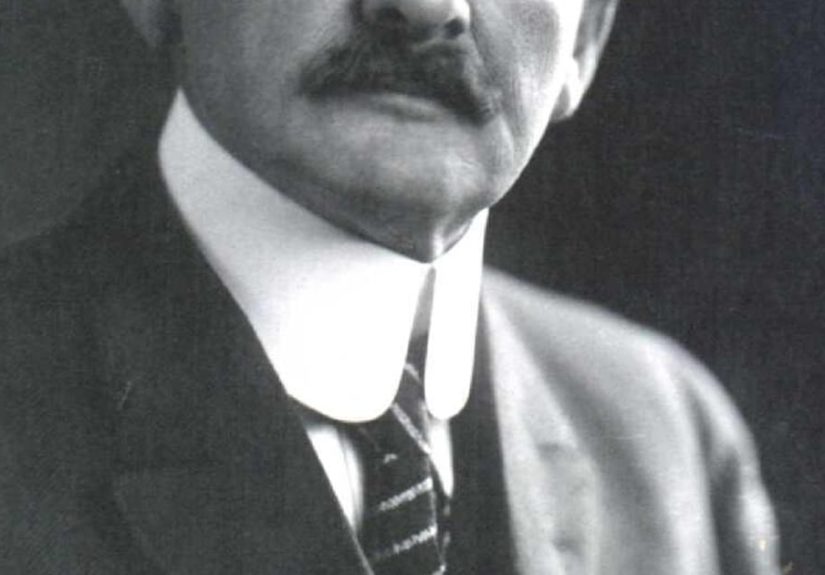
Albert Abraham Michelson was a German-born American physicist whose career unfolded during a period when science was shifting from classical assumptions to modern physics. He studied and later taught at the United States Naval Academy, continued his education in Europe, worked at Case School of Applied Science, Clark University, and the University of Chicago, and became a leading figure in American science.
Michelson’s work centered on light, measurement, and optical instruments. That may sound narrow until you remember that light is basically the universe’s favorite messenger. By measuring light with breathtaking precision, Michelson helped scientists ask deeper questions about space, time, motion, and the structure of reality itself.
His most famous collaboration, the Michelson-Morley experiment of 1887, attempted to detect Earth’s motion through the supposed “luminiferous ether,” a theoretical medium once believed necessary for light waves to travel. The experiment did not find the expected ether wind. That “nothing happened” result became one of the most productive non-events in scientific history, helping clear the path toward Einstein’s special relativity. In other words, Michelson helped science discover that the universe was not using the old operating system anymore.
Ranking Michelson’s Greatest Scientific Achievements
1. The Michelson-Morley Experiment
At the top of any ranking of Albert Abraham Michelson’s achievements is the Michelson-Morley experiment. Conducted with Edward W. Morley in Cleveland in 1887, the experiment tried to detect differences in the speed of light caused by Earth’s movement through ether. Using a highly sensitive interferometer, Michelson and Morley compared light traveling in perpendicular directions.
The expected shift did not appear. That result challenged the ether theory and created a major puzzle for classical physics. Later, Einstein’s special theory of relativity offered a new framework: the speed of light is constant in all inertial reference frames. The Michelson-Morley experiment did not single-handedly create relativity, but it became one of the most famous experimental foundations for the new physics. In scientific rankings, this is Michelson’s signature hit, his “chart-topping single,” except instead of guitars there were mirrors, beams of light, and a lot of patience.
2. Measuring the Speed of Light
Michelson’s lifelong fascination with the speed of light deserves a very close second place. In the late nineteenth century, he produced measurements of light’s speed that were remarkably accurate for his time. His methods involved rotating mirrors, long distances, careful timing, and the kind of experimental discipline that makes modern lab safety posters look emotionally underprepared.
Why does this matter? Because the speed of light became one of the central constants of physics. Today, the meter itself is defined through the speed of light in vacuum. Michelson did not create that modern definition, of course, but his work belongs to the long chain of precision measurement that made such definitions possible. He helped make light not just something we see by, but something we measure the universe with.
3. The Michelson Interferometer
The Michelson interferometer is one of the most influential instruments in the history of experimental physics. It splits a beam of light into two paths, reflects the beams back, and recombines them to produce interference patterns. Those patterns reveal tiny differences in distance, motion, wavelength, or optical behavior.
This instrument became important far beyond Michelson’s own experiments. Interferometry is now used in astronomy, metrology, engineering, spectroscopy, and even gravitational-wave detection. Modern instruments are vastly more advanced, but the basic idea remains connected to Michelson’s optical genius. The interferometer is proof that sometimes splitting up is actually healthy, at least for light beams.
4. Measuring the Diameter of Betelgeuse
Michelson also made history in astronomy. In 1920, working with Francis Pease and using an interferometric method at Mount Wilson Observatory, he helped measure the angular diameter of Betelgeuse, one of the brightest stars in the night sky. This was among the first accurate measurements of the size of a star beyond the Sun.
This achievement ranks highly because it extended Michelson’s precision methods from the laboratory to the stars. He showed that interferometry could turn distant points of light into measurable objects. That is a big deal. Before that, stars were visually dramatic but physically elusive. Michelson helped make them measurable neighbors, even if those neighbors are giant red supergiants with no interest in returning your lawn mower.
5. Building American Physics Prestige
Michelson was not only a scientist; he was also a symbol of American scientific maturity. He served in major leadership roles, including president of the American Physical Society and the National Academy of Sciences. His Nobel Prize in 1907 marked an important moment for science in the United States, showing that American laboratories could compete on the world stage.
In historical rankings, this institutional influence matters. Michelson helped establish experimental physics as a discipline of prestige, rigor, and ambition in America. He did not simply make measurements; he helped raise the standard for what measurements should be.
Modern Opinions About Albert Abraham Michelson
Opinion 1: Michelson Was a Master of Precision
The most common modern opinion about Michelson is that he was a master of precision measurement. His scientific personality was built around accuracy. He did not chase flashy theories or dramatic philosophical declarations. Instead, he built better instruments and let the evidence speak. Sometimes the evidence whispered, “Your ether theory has a problem.”
This makes Michelson especially valuable in an age when science communication often celebrates big ideas more than careful methods. His career reminds readers that breakthroughs are not always born from sudden inspiration. Sometimes they come from tightening screws, controlling vibrations, refining mirrors, and refusing to accept “close enough” as a lifestyle.
Opinion 2: His Greatest Result Was a Null Result
Another popular opinion is that Michelson’s most important result was the famous null result of the Michelson-Morley experiment. In everyday life, getting “nothing” usually feels disappointing. In science, however, nothing can be explosive. The failure to detect ether was not empty; it was meaningful. It told physicists that a major assumption about light and motion might be wrong.
This is one of the best lessons from Michelson’s career. A good experiment does not exist merely to confirm what people already believe. It exists to test reality. If reality refuses to cooperate with your theory, reality wins. Reality has an undefeated record.
Opinion 3: Michelson Is Underrated by the General Public
Among historians and physicists, Michelson is highly respected. Among the general public, however, he is often less recognized than theorists whose names appear in textbooks, documentaries, and inspirational coffee mugs. This imbalance is understandable but unfair. Without experimentalists like Michelson, theoretical physics would have fewer guardrails and more room for elegant but incorrect ideas to throw a parade.
Michelson deserves more public attention because he represents a different kind of genius: the genius of measurement. He shows that science advances not only through grand equations but also through instruments sensitive enough to catch nature in the act.
Opinion 4: His Work Still Feels Modern
Michelson’s legacy feels surprisingly modern because interferometry remains central to advanced science. From measuring tiny distances to studying stars and testing fundamental physics, the principles associated with his work continue to matter. Even when technology changes, the core idea remains powerful: use light against itself to reveal hidden information.
That is why Michelson does not feel like a dusty historical figure trapped in a museum case. His work has fingerprints on modern science. They are very precise fingerprints, naturally.
How Michelson Ranks Among Great Physicists
Ranking scientists is always tricky because discovery is not a sports league. Newton, Maxwell, Einstein, Curie, Faraday, Planck, Bohr, Feynman, and many others contributed in different ways. Michelson’s place is not mainly as a grand theorist but as one of the greatest experimental physicists in history.
If the ranking category is “most influential experimental physicists,” Michelson belongs very near the top. His work shaped optics, metrology, relativity, and astronomy. If the category is “scientists who changed physics by measuring carefully,” he is elite. If the category is “people you want checking your data before publication,” he is probably first team all-universe.
Michelson also ranks high in educational importance. Students learning about the speed of light, wave interference, relativity, or scientific method often encounter his work. The Michelson-Morley experiment is a textbook example of how experimental evidence can challenge deeply held assumptions. It teaches humility, skepticism, and the importance of designing experiments that are more reliable than our expectations.
Why the Michelson-Morley Experiment Still Matters
The Michelson-Morley experiment matters because it changed the conversation about light and motion. Before the experiment, many scientists believed light waves required ether in the same way sound waves require air. The experiment aimed to detect Earth’s movement through that ether. When the expected result failed to appear, the ether concept became increasingly difficult to defend.
The experiment did not instantly end all debate, but it became a landmark. It showed that the universe was stranger than classical intuition suggested. It also demonstrated how a carefully designed experiment can outlive the theory it was built to test. Michelson and Morley went looking for ether wind and instead helped open the door to spacetime.
This is why the experiment remains famous in physics education. It is dramatic not because something exploded, but because an idea quietly collapsed. Science does not always need fireworks. Sometimes it just needs a stubborn interference pattern refusing to behave.
Michelson’s Personality as a Scientist
Michelson’s scientific personality can be described as disciplined, exacting, and intensely focused. He was not content with vague approximations. He wanted better instruments, sharper values, and cleaner results. That mindset made him ideal for the age of precision physics.
Some historical accounts suggest that Michelson could be demanding, which is not shocking. A person who spends a lifetime chasing tiny measurement errors is unlikely to be relaxed about sloppy thinking. Still, that intensity served a purpose. His standards helped define what serious experimental physics could achieve.
In modern terms, Michelson was the scientist who would notice if your spreadsheet had a hidden rounding error in row 4,827. Annoying at lunch, perhaps. Essential in the laboratory, absolutely.
Experience-Based Reflections on Studying Albert Abraham Michelson Rankings And Opinions
When people first encounter Albert Abraham Michelson, the experience can feel surprisingly different from reading about more famous theoretical physicists. With Einstein, readers often expect mind-bending ideas about time, space, and relativity. With Newton, they expect apples, gravity, and equations that look like they have been lifting weights. With Michelson, the first impression may seem quieter: mirrors, light beams, instruments, and measurements. But that quietness is exactly where the fascination begins.
One useful experience for students is trying to understand the Michelson-Morley experiment not as a memorized textbook event, but as a real scientific challenge. Imagine believing that light needs a medium to travel through, just as sound needs air. Then imagine designing a machine sensitive enough to detect Earth’s motion through that medium. Now imagine the machine says, “Nope.” That moment is intellectually thrilling because it shows how science can surprise even the experts. The experiment becomes more than a historical date; it becomes a lesson in humility.
Teachers often find Michelson valuable because his work makes abstract ideas visible. Interference patterns can be demonstrated, sketched, simulated, and discussed. Students can see how waves overlap and how tiny differences in path length create measurable effects. This turns physics from a wall of formulas into something closer to detective work. The clues are made of light, the suspect is the universe, and the detective refuses to leave until every mirror is aligned.
For general readers, Michelson’s career also offers a refreshing opinion about success. Not every great scientist becomes famous by creating a dramatic theory. Some become great by making reality measurable. That is an important message in a culture that often celebrates bold claims more than careful verification. Michelson’s legacy says: before you announce a universe-changing idea, please check your instrument, check it again, and maybe check whether the floor is vibrating because a horse carriage just went by.
Another meaningful experience comes from ranking Michelson’s achievements. At first, the Michelson-Morley experiment seems like the obvious number one. But then his speed-of-light measurements demand attention. Then interferometry enters the conversation. Then the Betelgeuse measurement waves from the astronomy section like a giant red star with excellent timing. Ranking Michelson is difficult because his work branches into multiple fields. That difficulty is itself evidence of his importance.
Studying opinions about Michelson also helps readers appreciate the relationship between experiment and theory. Einstein’s relativity may be more famous, but Michelson’s work helped create the experimental pressure that made new thinking necessary. This does not mean Michelson was simply a supporting character. It means he played a different role: he tested the old worldview so carefully that its weaknesses could no longer hide.
The most rewarding experience is realizing that Michelson’s tools still echo in modern science. Interferometry today is used in advanced astronomy, precision engineering, and major physics experiments. A student who learns about Michelson is not merely visiting the past. They are seeing the roots of technologies and methods that continue to shape the future. That is why modern rankings and opinions should treat Michelson not as a footnote, but as a foundational figure.
In short, the experience of learning about Albert Abraham Michelson becomes richer the longer one spends with it. At first, he is “the Michelson-Morley guy.” Then he becomes the speed-of-light pioneer. Then the Nobel Prize winner. Then the instrument builder. Then the scientist whose careful “nothing” helped physics become something new. That is a pretty impressive career arc for a man armed with mirrors, mathematics, and a spectacular intolerance for bad measurements.
Conclusion: Michelson’s Ranking Is Secure
Albert Abraham Michelson ranks among the greatest experimental physicists in history. His work on the speed of light, interferometry, the Michelson-Morley experiment, and astronomical measurement helped reshape modern science. He proved that precision is not a minor technical detail; it is one of the engines of discovery.
Opinions about Michelson remain strongly positive because his legacy is both historically important and scientifically alive. He helped undermine the ether theory, contributed to the road toward relativity, advanced optical measurement, and raised the international status of American physics. His Nobel Prize was not just a personal honor. It was a signal that precision measurement had become one of the great powers of modern science.
If we rank scientists by cultural fame alone, Michelson may not always make the casual top ten. But if we rank them by experimental brilliance, long-term influence, and the ability to make the universe reveal its secrets through light, Michelson stands near the summit. He reminds us that sometimes the most powerful scientific statement is not a loud theory, but a carefully measured result that refuses to match expectations.







 Close
Close