
Table of Contents >> Show >> Hide
- The Amstrad PCW: A Word Processor That Was Secretly A Real Computer
- Why The PCW Mattered In The 1980s
- The Charm Of A Machine Built To A Price
- A Bit Of Love: Gotek Repair And RAM Upgrade
- Why Restoring A PCW Is Different From Restoring A Game Machine
- What Makes The PCW Still Interesting Today?
- The Serious Side: Safety And Preservation
- How The PCW Fits Into Today’s Retro-Computing Culture
- Why A Little Love Goes A Long Way
- Extra Experience: Spending Time With The Spirit Of An Amstrad PCW
- Conclusion
Every once in a while, a vintage computer appears that does not scream for attention. It does not arrive wearing neon graphics, arcade joysticks, or a soundtrack made of heroic bleeps. Instead, it sits there like a retired office manager: beige, sensible, faintly dusty, and absolutely convinced that it still has three letters, two invoices, and a stern memo to finish before lunch. That machine is the Amstrad PCW.
The title “An Amstrad PCW Receives A Bit Of Love” feels right because the PCW was never really designed to be adored like a Commodore Amiga or mythologized like an Apple II. It was built to work. It helped small offices, writers, students, clubs, and families move from typewriters to word processing without needing a second mortgage or a computer science degree. Today, when one receives a Gotek repair, a RAM upgrade, a careful clean, or simply a respectful power-on, it is more than a technical project. It is a small act of historical kindness toward a machine that quietly helped ordinary people become computer users.
The Amstrad PCW: A Word Processor That Was Secretly A Real Computer
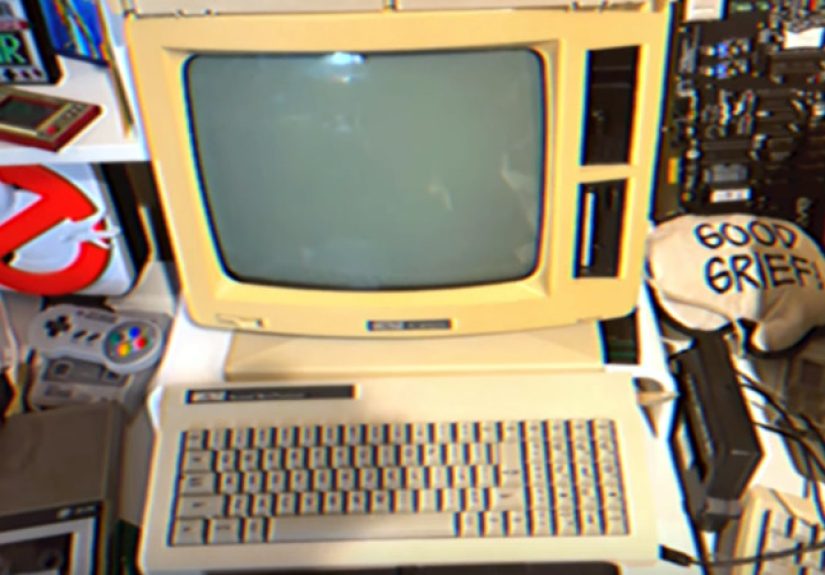
The Amstrad PCW 8256 launched in 1985 as a complete word-processing system. That “complete” part mattered. Buyers did not have to assemble a monitor, printer, software package, keyboard, operating system, and mysterious box of cables from different shelves. Amstrad sold the PCW as a package: green-screen monitor, keyboard, built-in 3-inch floppy drive, bundled printer, LocoScript word processor, CP/M Plus, Mallard BASIC, and other utilities. In the mid-1980s, that was not just convenient. It was borderline wizardry with a sales receipt.
At the heart of the early PCW line was a Zilog Z80-based design, a processor already familiar from earlier 8-bit systems. The PCW 8256 shipped with 256 KB of RAM, while the later PCW 8512 expanded that to 512 KB and added a second floppy drive. The monitor housed much more than a screen: it contained the system board, memory, disk drive, power supply, and connectors. It was not sleek by modern standards, unless your definition of sleek includes “large enough to intimidate a filing cabinet,” but it was practical, integrated, and affordable.
That affordability was the masterstroke. Amstrad positioned the PCW not as a toy and not as a luxury business computer, but as a machine for people who wanted to write, print, save, edit, and get on with their day. Compared with professional word-processing systems that cost several times more, the PCW looked like a miracle wearing beige plastic.
Why The PCW Mattered In The 1980s
The Amstrad PCW arrived at the perfect moment. Typewriters were still everywhere, but the advantages of digital writing were becoming impossible to ignore. The ability to delete a sentence without correction fluid, move paragraphs without retyping an entire page, and save documents to disk felt revolutionary. Today, dragging a paragraph around a screen seems normal. In 1985, it was the kind of thing that made office workers stare at the monitor as if it had just made tea.
LocoScript was central to that experience. It was not simply a text editor tossed into the box to make the package look generous. It was designed to make word processing approachable. Users could create letters, manage document groups, format text, and print without learning arcane command lines. Many PCW owners rarely touched CP/M because LocoScript did exactly what they needed. For journalists, students, church secretaries, small-business owners, and novelists with dangerous amounts of tea nearby, that was enough.
Yet the PCW was more capable than its reputation suggests. Because it could run CP/M Plus, it had access to a world of business and productivity software. Mallard BASIC gave hobbyists and learners a path into programming. The monochrome display could show 90 columns by 32 lines, making it well suited for full-page writing. It was not a gaming powerhouse, although games did exist. It was not a graphics workstation, although graphics software and even desktop-publishing tools appeared. It was a focused productivity machine, and that focus was its superpower.
The Charm Of A Machine Built To A Price
One of the most interesting things about the PCW is how clearly it reflects Amstrad’s design philosophy. The company was famous for delivering complete systems at aggressive prices. That meant clever cost control everywhere. The PCW used custom chips, an integrated monitor-based design, and bundled components to reduce complexity for the buyer and cost for the manufacturer.
The built-in 3-inch floppy drive is one of the machine’s most memorable features. Not 3.5-inch, not 5.25-inch, but 3-inch disks: chunky little rectangles that now look like they came from an alternate timeline where office supplies were designed by sci-fi prop departments. The format was used across several Amstrad systems, but it never became a universal standard. Decades later, that makes original drives and disks both charming and troublesome. Charm is nice; reliable storage is nicer.
That is where modern retro-computing upgrades come in. A Gotek floppy emulator can replace or supplement an old floppy drive by allowing disk images to be loaded from a USB stick. With FlashFloppy firmware, Gotek devices can support a broad range of retro machines, including Amstrad systems. For a PCW owner, this can mean booting CP/M or LocoScript from disk images instead of praying that a belt, head, disk, and 40-year-old mechanism all wake up in a good mood.
A Bit Of Love: Gotek Repair And RAM Upgrade
The restoration story behind “An Amstrad PCW Receives A Bit Of Love” centers on exactly the sort of repair that makes retro-computing feel rewarding. The machine is not being transformed into something unrecognizable. It is not being turned into a streaming box, a smart mirror, or a coffee machine that tweets. It is being helped to do what it was meant to do.
In the restoration coverage that inspired the discussion, the PCW receives attention through a Gotek drive repair and a RAM upgrade. The Gotek issue involved a failed OLED display on the emulator. That may sound small, but in practical use the display is a big convenience because it helps users choose disk images. Without it, the Gotek becomes a little like a vending machine with no labels: technically still present, but suddenly much more annoying.
The RAM upgrade is equally fitting. Moving a PCW 8256 closer to PCW 8512 territory gives the system more breathing room, especially because the PCW uses part of its memory as a RAM disk. In CP/M, that memory drive can make file operations quicker and more pleasant. In plain English: more RAM means the old word processor gets a bigger desk. And everyone knows a bigger desk makes paperwork feel 14 percent more official.
Why Restoring A PCW Is Different From Restoring A Game Machine
Many vintage computer restorations revolve around games. That is understandable. Games are visual, nostalgic, and easy to demonstrate. Load a classic title, hear the beeps, watch the sprites, and suddenly everyone in the room understands why the project matters. The Amstrad PCW asks for a slower kind of appreciation.
Restoring a PCW means valuing documents, workflows, and everyday computing. It means remembering that the personal computer revolution was not only about games, graphics, or Silicon Valley mythology. It was also about people writing invoices, school essays, club newsletters, manuscripts, recipes, meeting minutes, and family histories. The PCW lived in that world. It was a machine for doing.
That makes the restoration feel almost personal. A working PCW is not just a vintage object. It is a reminder of the moment when digital writing became accessible to people who did not think of themselves as “computer people.” The PCW invited them in through the side door labeled “word processor,” then quietly revealed that a real computer was hiding inside.
What Makes The PCW Still Interesting Today?
1. The All-In-One Design
The PCW’s monitor-based design feels unusual today, but it solved real problems in the 1980s. Fewer boxes meant less confusion. Fewer cables meant fewer opportunities to plug the printer into something that looked important but did absolutely nothing. The machine arrived as a system, not a puzzle.
2. LocoScript’s Practical Genius
LocoScript deserves respect because it understood its audience. It did not try to impress programmers first. It tried to help writers first. That distinction mattered. The PCW booted into a world where creating and printing a letter felt logical, not like negotiating with a robot in a basement.
3. CP/M Under The Hood
For users who wanted more, CP/M Plus made the PCW a legitimate general-purpose computer. It could run business software, utilities, programming tools, and more. The contrast is delightful: on the surface, it looked like an electronic typewriter; underneath, it was a compact CP/M workstation.
4. The Retro-Modding Potential
Modern upgrades such as Gotek floppy emulators, FlashFloppy firmware, RAM expansions, replacement belts, and careful cleaning can make a PCW much easier to use today. The goal is not to erase its vintage nature. The goal is to reduce the number of times the owner has to whisper, “Please work,” before pressing the power switch.
The Serious Side: Safety And Preservation
There is one important note for anyone tempted to open a PCW after watching a restoration video: vintage CRT machines can contain dangerous voltages, even after being unplugged. The monitor and power supply areas are not casual playgrounds for curiosity. Cleaning keycaps, inspecting cables, or researching disk images is one thing; poking around inside a CRT assembly is another. Sensible restoration means respecting both the machine and your fingers.
Preservation also means avoiding unnecessary destruction. Original floppy drives, printers, manuals, and disks are part of the PCW story. A Gotek upgrade can be incredibly useful, but many enthusiasts prefer reversible modifications where possible. Keeping removed parts labeled and stored is a small habit that future collectors will silently thank you for, possibly while drinking tea from a mug that says “I void warranties.”
How The PCW Fits Into Today’s Retro-Computing Culture
The modern retro-computing scene has matured. It is no longer just about finding old machines and making them power on. Enthusiasts now document repairs, design replacement parts, archive software, preserve manuals, create disk images, and share configuration knowledge. That community work is the reason machines like the Amstrad PCW can still be used rather than merely displayed.
The PCW benefits from that culture because its original storage media are aging, its printer mechanisms may be tired, and its disk format is unusual by modern standards. Online documentation, emulator projects, FlashFloppy notes, and user experiences help bridge the gap between 1985 hardware and 2026 expectations. Nobody expects a PCW to compete with a laptop. The joy is in making it function as itself.
Why A Little Love Goes A Long Way
There is something deeply satisfying about giving a modest old computer a second life. The Amstrad PCW does not need RGB lighting. It does not need a transparent case. It does not need to run a modern browser, which is good, because the experience would probably make both the machine and the internet cry.
What it needs is modest care: a working storage solution, clean connections, healthy memory, a safe power supply, and an owner patient enough to understand its quirks. In return, it offers a rare kind of focus. Turn on a PCW and you are not greeted by notifications, app updates, or seventeen tabs about things you forgot you were researching. You are greeted by a machine that says, in effect, “Shall we write something?”
That may be the PCW’s most modern lesson. In a world where computers can do everything, there is value in a computer that does one main thing beautifully. It gives you a keyboard, a screen, a document, and very few excuses. For writers, that sounds less like a limitation and more like a productivity spell in beige plastic.
Extra Experience: Spending Time With The Spirit Of An Amstrad PCW
Using or restoring an Amstrad PCW today feels less like operating a computer and more like visiting a preserved office from the mid-1980s. The first impression is physical. The machine has presence. It occupies desk space with the confidence of furniture. The keyboard feels purposeful, the monitor glows with that unmistakable green-screen seriousness, and the whole setup seems to expect proper posture. A modern laptop slouches into a backpack. A PCW arrives and applies for a desk nameplate.
The experience becomes even more interesting when you compare it with modern writing tools. Today, opening a blank document often means navigating cloud accounts, templates, sync warnings, font menus, and update prompts. On the PCW, the path is narrower and calmer. You boot the machine, enter the word-processing environment, and write. There is a ritual to it. Disk images or floppy disks must be chosen. Files must be named carefully. You become aware of storage. You become aware of saving. That awareness can feel old-fashioned, but it can also make the work feel more deliberate.
There is also a lovely comedy in the sound and pace of the system. A dot-matrix printer connected to a PCW does not “print” so much as announce a mechanical argument with paper. It chatters, buzzes, and marches across the page like a tiny office robot being paid by the character. The output may not impress anyone raised on laser printers, but it has personality. A printed page from a PCW feels earned.
Working with Gotek storage changes the experience in a helpful way. Instead of relying entirely on fragile old disks, you can organize software and document images on a USB stick, mount what you need, and keep the machine active without constantly hunting for rare media. It is a compromise between authenticity and sanity. Purists may prefer original disks, and that is understandable, but a Gotek can keep a machine usable rather than decorative. A living PCW with a modern storage aid is more exciting than a completely original PCW that cannot boot past a sad blank screen.
The RAM upgrade brings its own quiet satisfaction. It is not glamorous in the modern sense. Nobody is installing gigabytes. Nobody is benchmarking ray tracing. But adding memory to a PCW feels meaningful because the machine’s design makes that extra space visible in everyday use. The RAM disk becomes more useful. CP/M has more room to stretch. The system feels less boxed in. It is the vintage-computing equivalent of finding an extra drawer in an old writing desk.
The most memorable part, however, is emotional. Many retro machines are loved because they entertained people. The PCW is loved because it helped people produce things. It wrote letters, school assignments, newsletters, invoices, reports, and manuscripts. Somewhere, perhaps still tucked away on a disk in a drawer, are family histories, club minutes, early novels, and business records created on machines just like it. Restoring one is not only about electronics. It is about respecting the ordinary work that computers made easier.
That is why the phrase “receives a bit of love” fits so well. The Amstrad PCW does not demand worship. It asks for a clean keyboard, a readable disk, a safe power-up, and maybe a little patience when it behaves like a machine designed before half the internet was born. Give it that, and it rewards you with something rare: a direct, distraction-free encounter with the practical roots of personal computing.
Conclusion
The Amstrad PCW may not be the flashiest vintage computer, but it is one of the most meaningful. It represents a time when computers became tools for ordinary writers, workers, and households. A Gotek repair, RAM upgrade, or careful restoration is not merely technical maintenance. It is a way of keeping that history alive. The PCW was built to make word processing affordable, approachable, and useful. Decades later, with a bit of love, it can still remind us that good technology does not always need to shout. Sometimes it just needs to help you finish the letter.






 Close
Close