
Table of Contents >> Show >> Hide
- What Is an Angel Kiss Birthmark (Medically Speaking)?
- Angel Kiss vs. Stork Bite vs. Port-Wine Stain: A Quick, Non-Scary Guide
- Why People Call It an “Angel Kiss” (And Why That Name Stuck)
- Angel Kiss Birthmark Meaning: Spiritual Interpretations
- How to Hold the Spiritual Meaning Without Ignoring Reality
- When to Check With a Doctor (The Calm, Responsible Part)
- FAQ: Quick Answers About Angel Kiss Birthmarks
- Real-Life Moments: of “Angel Kiss” Experiences
- Conclusion: A Tiny Mark, A Big Story (If You Want It)
Your baby arrives, everyone is crying (the baby, your aunt, the family group chat), and then you notice it:
a soft pink little patch on the forehead or eyelidslike someone gently pressed a thumbprint of blush onto brand-new skin.
If you’ve heard people call it an “angel kiss” birthmark, you’ve also probably heard a few theories ranging from
“it means they’re protected forever” to “it means they’ll be good at math” (which… fingers crossed, but let’s not make promises).
Here’s the grounded truth with a little sparkle: an angel kiss is usually a very common, harmless newborn birthmark.
Medically, it’s most often called nevus simplex, and it tends to fade as your child grows. Spiritually and emotionally,
it’s become a sweet story families use to welcome a baby into the world with meaning, comfort, and a sense of wonder.
This article covers both sideswhat it is, what it isn’t, and why people love the “angel kiss” name so much.
What Is an Angel Kiss Birthmark (Medically Speaking)?
An “angel kiss” is typically a flat, pink-to-reddish patch that shows up on a newborn’s faceoften between the eyebrows,
on the eyelids, or on the forehead. It’s considered a type of vascular birthmark, meaning it involves small blood vessels
close to the surface of the skin. The common medical name you’ll see is nevus simplex.
Where You’ll Usually See It
- Face: forehead, eyelids, between the eyebrows (glabella), sometimes the nose or upper lip
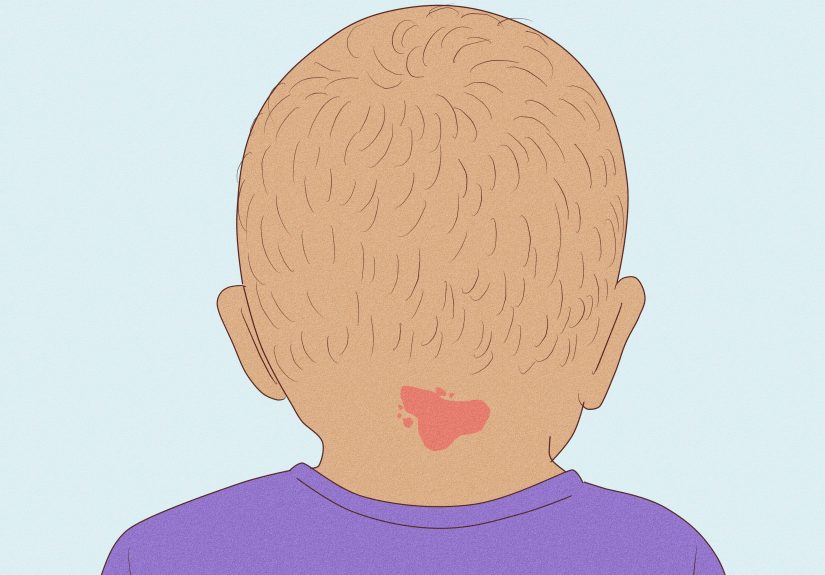
- Neck/scalp: a similar mark on the back of the neck is often nicknamed a “stork bite” (more on that in a second)
Why It Gets Brighter When Babies Cry (Or When They’re Toasty)
A classic angel-kiss feature is that it can look more noticeable when a baby cries, gets warm, or is otherwise worked upbasically,
when your newborn is doing newborn things. That happens because the tiny blood vessels are close to the skin and changes in blood flow
can make the color pop a bit more. It’s normal for this type of birthmark.
How Long It Lasts
Many angel kisses fade significantly in the first year or two of life, and a lot of them disappear entirely.
Some can linger faintly or show up again when the child is flushed (think: running around, a hot bath, big feelings, dramatic monologues).
Marks on the back of the neck tend to be more stubborn and may persist longer, sometimes into adulthoodstill typically harmless.
Angel Kiss vs. Stork Bite vs. Port-Wine Stain: A Quick, Non-Scary Guide
Birthmarks get confusing because people use cute names, medical names, and “my grandma called it this” names interchangeably.
Here’s an easy way to separate the usual suspects:
Angel Kiss (Usually Nevus Simplex)
- Look: flat, pink/red, often faint
- Where: forehead, eyelids, between eyebrows
- Typical course: often fades over months to a couple years
Stork Bite (Usually the Same Family: Nevus Simplex)
- Look: similar flat pink/red patch
- Where: back of the neck or scalp
- Typical course: may fade, but often lasts longer than facial patches
Port-Wine Stain (Different Type of Vascular Birthmark)
- Look: often darker red/purple and can become more noticeable over time
- Where: commonly on the face (can be elsewhere)
- Typical course: usually does not fade on its own the way nevus simplex often does
If you’re not sure which one you’re looking at, that’s exactly what pediatricians and dermatologists are for.
The point isn’t to panic; it’s to name it correctly so you know what to expect.
Why People Call It an “Angel Kiss” (And Why That Name Stuck)
Humans are storytelling creatures. When we see a tiny mark on a baby’s face, our brains immediately go:
“A medical explanation is fine, but could this also be a magical origin story?”
The phrase “angel kiss” is basically a linguistic hugsoftening the clinical reality (“a common capillary malformation”)
into something warmer (“a blessing”). In the same spirit, the neck version gets the nickname “stork bite”,
tied to old folklore about storks delivering babies. Is it medically accurate? No. Is it emotionally effective? Absolutely.
Angel Kiss Birthmark Meaning: Spiritual Interpretations
Let’s be clear and respectful: spiritual interpretations are beliefs, not medical facts.
They don’t need scientific proof to be meaningful to a family. Think of them like a poemtrue in the way poems are true:
they name feelings, hopes, and the way we want to love someone.
1) A Sign of Blessing or “Welcome”
One of the most common interpretations is simple: the baby is blessed. The mark becomes a symbolic “hello” from something loving and unseen
God, angels, the universe, or whatever framework a family uses. In this view, the angel kiss is a gentle welcome note:
You belong here.
2) Protection and a Guardian Presence
Another popular belief is that an angel kiss represents protectiona spiritual “seal” that the child is watched over.
Some families connect this to the idea of a guardian angel; others tie it to ancestors or loved ones who passed away,
imagining that love can still show up in the smallest ways.
Practical bonus: when you’re a sleep-deprived parent googling things at 3:17 a.m., “protected by angels” is a lot more comforting
than “vascular birthmark,” even if both can be true in their own lanes.
3) Sensitivity, Intuition, and “Old-Soul Energy”
Some spiritual traditions connect birthmarksespecially visible onesto personality traits. For angel kisses, the story often goes that the child
is especially intuitive, empathetic, or emotionally perceptive. Whether or not you buy that, it can become a family’s way of encouraging kindness:
“You notice people’s feelingsuse that superpower gently.”
4) A Reminder to Tell a Kinder Story About Appearance
Here’s a modern spiritual twist that’s actually very healthy: an angel kiss can be a reminder that bodies don’t need “fixing” to be beautiful.
It’s a mark with a story, not a flaw with a deadline. Even if it fades, the message can stay:
you were worthy from the beginning.
5) A Family Symbol (Because Every Family Has One)
Sometimes the “meaning” isn’t cosmic at allit’s relational. The angel kiss becomes the detail that shows up in baby books,
holiday letters, and later, embarrassing teen stories:
“When you were born, you had the tiniest mark right here, and Grandma swore it meant you’d be fearless.”
That kind of meaning matters. Not because it predicts the future, but because it builds belonging.
How to Hold the Spiritual Meaning Without Ignoring Reality
The sweet spot is “both/and.” You can honor the symbolism and still keep your feet on the ground.
Here are a few ways families do that without turning a birthmark into a prophecy:
Create a Keepsake Story (Not a Life Sentence)
- Write a short note in a baby journal: “Your angel kiss made us smile. We called it your welcome sign.”
- Include a newborn photo where it’s visiblejust as a time capsule of that moment.
- If it fades, celebrate the change as growth; if it stays, celebrate it as uniqueness.
Use Meaning as Comfort, Not Pressure
It’s tempting to attach big expectations to a tiny mark. Try to keep the “meaning” soft:
protection, love, belonging, hope. Avoid heavy narratives like “you’re destined to…” because kids deserve room
to become themselves without carrying a legend on their forehead.
When to Check With a Doctor (The Calm, Responsible Part)
An angel kiss (nevus simplex) is typically harmless and doesn’t need treatment.
Still, it’s smart to ask your child’s healthcare provider if you notice changes or you’re unsure what type of birthmark it is.
Consider checking in if the mark:
- rapidly changes in size or color
- becomes raised, swollen, or starts bleeding
- develops a very different look compared to typical flat pink patches
- comes with other symptoms or physical findings that concern you
This isn’t meant to scare youjust to give you a clear boundary between “cute nickname” and “get a professional opinion.”
FAQ: Quick Answers About Angel Kiss Birthmarks
Is an angel kiss birthmark rare?
Not usually. Estimates vary by source, but nevus simplex-type marks are commonly described as one of the most frequent vascular birthmarks in newborns.
Does it hurt the baby?
Typically, no. These marks are usually just a color change in the skin from small blood vessels close to the surface.
Will it go away?
Many fade significantly in infancy or early childhood, especially those on the face. Neck marks can linger longer.
Can it be removed?
Most don’t need treatment. In cases where a mark persists and someone wants it lightened for cosmetic reasons later,
clinicians may discuss options (such as laser treatment) depending on the situation.
Real-Life Moments: of “Angel Kiss” Experiences
If you ask parents what they remember from the first week after birth, you’ll hear the same themes: awe, exhaustion,
and a strange new talent for staring at a tiny human like they’re a miracle and a mystery at the same time.
Angel kiss birthmarks often become part of that early “getting to know you” ritualone more detail to memorize,
like the swirl of hair at the crown or the way the baby’s nose wrinkles before a sneeze that never arrives.
One common experience is the way the mark seems to “show up” during big feelings. Parents notice it deepening when the baby cries
or when bath time turns the bathroom into a tiny steam room. That visibility can make the mark feel expressive,
almost like a mood ringso families start narrating it: “Oh, your angel kiss is saying you’re not a fan of diaper changes.”
It becomes a gentle, funny bridge between caregiver and child, a way to speak kindly to a baby who can’t answer back yet.
As kids get older, the experience shifts from observation to storytelling. Some families give the birthmark a nickname
(“your little heart,” “your sunrise,” “your kiss spot”) and it becomes part of bedtime conversations. Not in a spooky way
more like an origin story that’s safe and warm. “When you were born, you had a tiny angel kiss right here.
It reminded us that you were loved the second you arrived.” Even if the mark fades, the story often stays because it’s really
about the family’s love, not the pigment (or lack of pigment) in the skin.
There’s also a surprisingly relatable moment when a child notices it in the mirroror in a photoand asks what it is.
The best experiences tend to come from answers that are both honest and kind: “It’s a common birthmark that lots of babies have,
and we called it an angel kiss because we thought it was sweet.” Kids usually accept that immediately. Adults are the ones who spiral.
Children are often far more interested in whether they can have a snack.
For some people, the angel kiss becomes an anchor during difficult times. A parent might look at it during a hospital visit
(even for something unrelated) and feel steadier, like the mark is a tiny reminder: “We’ve been carried through hard things before.”
The spirituality here isn’t about proving anything supernaturalit’s about making meaning when life feels uncertain.
And sometimes, the experience is simply this: the mark fades, nobody notices when it happens, and years later someone finds a baby photo
and says, “Waitdid I have that?” Everyone laughs, someone says, “Yep, you were born with a little angel kiss,” and the room feels warmer
for a moment. That’s the quiet power of these stories. They don’t have to predict anything. They just have to connect us.
Conclusion: A Tiny Mark, A Big Story (If You Want It)
An angel kiss birthmark is usually a common, harmless newborn mark (often nevus simplex) that frequently fades with time.
Spiritually, it’s become a beloved symbolof blessing, protection, sensitivity, and love at first sight. You don’t have to choose
between science and meaning. You can appreciate the medical reality and still let the nickname do what it does best:
remind you that your baby arrived already worthy of tenderness.






 Close
Close