
Table of Contents >> Show >> Hide
- Quick Verdict: Who AG1 Is (and Isn’t) For
- What Is Athletic Greens (AG1), Exactly?
- What’s In AG1? A Practical Ingredient Breakdown
- Nutrition Facts: What You’re Actually Drinking
- Taste and Mixability: The Part Nobody Wants to Talk About
- Price: The Big Question (and the Big Sigh)
- Quality, Testing, and Certifications: The “Trust” Section
- Does AG1 “Work”? What You Can Realistically Expect
- Who Should Be Careful (or Talk to a Clinician First)
- How to Use AG1 (So It’s Actually Pleasant)
- AG1 Alternatives (If You Want Similar Benefits for Less)
- FAQ: Athletic Greens Review Questions People Actually Ask
- Conclusion: A Balanced Athletic Greens Review
- Experiences With AG1: What Using It Can Feel Like (Realistic Scenarios)
- Scenario 1: The Busy Morning Person Who Needs One Simple Habit
- Scenario 2: The Sensitive Stomach (A.K.A. “My Gut Has Opinions”)
- Scenario 3: The Traveler Who Wants “Nutrition Insurance”
- Scenario 4: The Athlete Who Cares About Third-Party Certification
- Scenario 5: The “I Eat Pretty Well” Person Who Tries It Anyway
Updated for shoppers who want fewer “miracle” claims and more “does this actually make sense?”
If you’ve spent more than 12 minutes on the internet, you’ve probably met AG1 (formerly “Athletic Greens”),
the mossy-green powder that shows up in podcasts like an overly friendly neighbor who “just happened to bring you a smoothie.”
It’s marketed as a daily all-in-one: vitamins, minerals, probiotics, prebiotics, adaptogens, and superfoodsbasically a multivitamin
that learned how to swim.
This Athletic Greens review breaks down what AG1 is, what’s in it, what you can realistically expect, and where the
fine print lives (spoiler: it’s always doing yoga in the corner). We’ll also talk price, taste, testing, and who should absolutely
run this by their clinician first.
Quick Verdict: Who AG1 Is (and Isn’t) For
You’ll probably like AG1 if:
- You’re consistent with routines and want a “one scoop and done” daily habit.
- You travel, work long hours, or regularly forget vegetables exist until dinner is already over.
- You want a greens powder that’s third-party certified for sport and you care about banned-substance testing.
- You value convenience enough to pay a premium for it.
You’ll probably pass (or at least think hard) if:
- You’re on a tight budget and mainly want basic vitamin/mineral coverage.
- You prefer products that disclose exact dosages for every ingredient (AG1 uses blends).
- You’re sensitive to probiotic-heavy products and tend to bloat easily.
- You have medical conditions, take medications with known nutrient interactions, or you’re pregnant/breastfeeding.
What Is Athletic Greens (AG1), Exactly?
AG1 is a daily greens drink designed to support “foundational nutrition” with 75+ ingredients in one serving.
It’s positioned as a multitasker: a multivitamin + minerals + probiotics/prebiotics + phytonutrients + adaptogen-style botanicals.
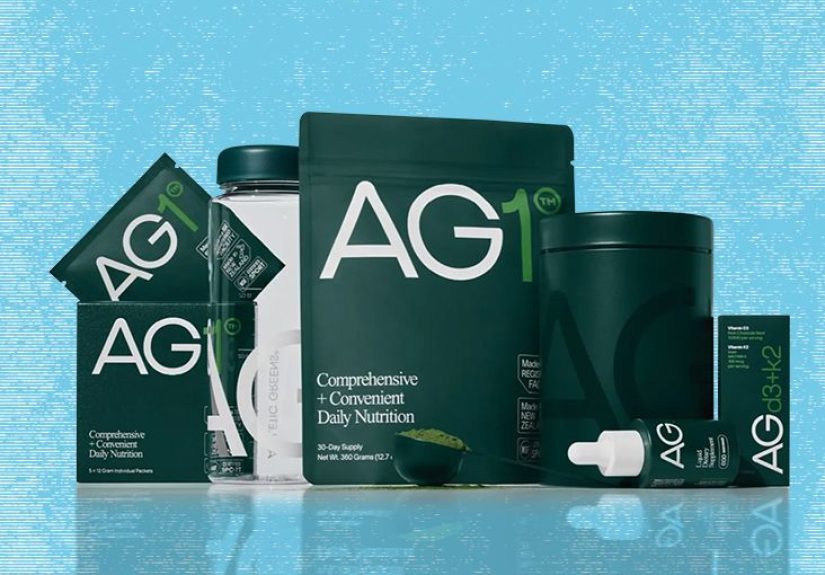
The company now markets a newer “Next Gen” formula and sells it as a pouch (monthly supply) and as travel packs (single-serve packets).
To be clear: AG1 is a dietary supplement. It’s not a replacement for eating produce, sleeping, moving your body,
or managing stress. It’s more like nutrition “insurance”helpful for some people, unnecessary for others, and not a get-out-of-salad-free card.
What’s In AG1? A Practical Ingredient Breakdown
The label is built around categories rather than a transparent “here’s exactly how much of each superfood you’re getting” approach.
That’s common in greens powders, but it matters because effectiveness often depends on dose and strain (especially for probiotics).
1) Vitamins and minerals (the “multivitamin” core)
Think of this as the foundational layer. AG1 includes a range of vitamins and minerals meant to support everyday metabolism, immune function,
and energy production. This is the part that overlaps most with a standard multivitamin.
If your main goal is “I just want a reliable multivitamin,” AG1 may be more product than you need. But if you want your multivitamin bundled
with gut-support ingredients and plant compounds, this is where AG1 starts to make its case.
2) Probiotics + prebiotics (the gut health angle)
The newest positioning heavily emphasizes digestion. The travel packs list 10 billion CFU of probiotics per serving,
alongside prebiotic ingredients. That sounds impressive, but here’s the nuance:
- Probiotic benefits are strain-specific. “10 billion CFU” is not automatically better if the strains don’t match your needs.
- Healthy people don’t have universal probiotic recommendations. Many experts note there aren’t formal across-the-board
recommendations for probiotics in healthy individuals; it depends on your situation. - Some people bloat at first. Adding probiotics/prebiotics can change gut fermentation and feel weird initially (not dangerous for most,
just annoying).
Bottom line: if you already do well with probiotic foods (yogurt, kefir, fermented veggies) and fiber, AG1 might not feel dramatic. If your diet is
low in fiber and fermented foods, you might notice more of a “digestive shift.”
3) “Greens,” superfoods, and phytonutrients
This is the part people buy greens powders for: a concentrated mix of plant ingredients meant to add phytonutrients (plant compounds)
you may miss on chaotic weeks. But “greens powder” is not the same as “green vegetables.”
Whole produce comes with structurewater, fiber, and a big variety of compounds that behave differently when eaten as food. Greens powders can be
a convenient supplement, but they’re still a supplement. If you’re hoping AG1 will replace vegetables entirely, it’s like expecting a playlist to
replace the concert. Nice, but not the same.
4) Digestive enzymes and adaptogen-style botanicals
AG1 includes digestive enzymes and botanicals often marketed for stress support or “resilience.” These ingredients can be appealing, but they’re also
where skeptics raise eyebrowsbecause the evidence for many botanicals depends on the specific ingredient, dose, and the person taking it.
Translation: you might feel a subtle “I’m doing something healthy” glow, or you might feel nothing at all. Both outcomes are normal.
Nutrition Facts: What You’re Actually Drinking
Greens powders can be deceptively “airy,” but AG1 isn’t calorie-free fairy dust. A serving is typically listed around:
- About 40–50 calories per serving
- Carbs: ~6g
- Protein: ~2g
- Fiber: ~2g (listed on the travel pack nutrition panel)
- Sugar: less than 1g, naturally occurring
That’s still light, but it’s not nothing. If you’re fasting and treat “zero calories” as sacred, you’ll want to decide how strict you are.
Taste and Mixability: The Part Nobody Wants to Talk About
Taste is subjective, but most people don’t describe greens powder as “dessert.” AG1 leans into a subtly sweet flavor profile
(often described as pineapple/vanilla-ish). It’s designed to be mixed with cold water and shaken, not whisked into a hot latte like a matcha fairy tale.
If you’re taste-sensitive, you have options:
- Use cold water (warm water makes “green” louder).
- Shake hard for 10–15 seconds (yes, it’s arm day).
- Blend with a small smoothie (banana + berries can make greens powders much more forgiving).
One warning: if you mix it into a thick smoothie with lots of fiber and protein, you might not know if AG1 “worked”… but you also won’t care,
because you won the taste battle.
Price: The Big Question (and the Big Sigh)
AG1 is priced like a premium, all-in-one routine. Common pricing patterns include:
Typical purchase options
- Subscription pouch: often marketed around $79/month for a 30-serving pouch (with member perks and a welcome kit).
- One-time pouch: commonly listed around $99 for 30 servings.
- Travel packs: roughly $89/month on subscription, or around $109 one-time.
That puts AG1 at about $2.60–$3.60 per serving depending on the purchase type and promotions. For context, some independent reviewers
point out you can cover basic vitamins/minerals for far less with a traditional multivitaminso the premium is really for the bundle:
probiotics, prebiotics, plant compounds, and the convenience of “one scoop.”
A simple value test
Ask yourself:
- Would I actually take separate supplements? If not, bundling may improve consistency.
- Do I notice a benefit within 30–60 days? If it’s just “vibes,” the price may sting.
- Could my budget get more impact from food? Sometimes $79/month buys a heroic amount of frozen berries and salad kits.
Quality, Testing, and Certifications: The “Trust” Section
NSF Certified for Sport
AG1 appears in the NSF Certified for Sport listing, which matters most for competitive athletes and anyone concerned about banned substances.
NSF’s certification is widely recognized in sports testing circles because it focuses on reducing contamination risk from banned substances.
Heavy metals and safety conversations
Here’s where things get real-world complicated. Plants can absorb heavy metals from soil and water. Many greens products address this with testing.
AG1 describes in-house and third-party testing and says results fall below certain guideline thresholds.
However, independent testing groups have raised cautions that some greens supplementsincluding popular onesmay contain noteworthy amounts of lead or other
contaminants depending on sourcing and batch variation. This doesn’t automatically mean “unsafe,” but it’s a reason to:
- Look for credible, up-to-date testing information
- Use extra caution if you’re pregnant, breastfeeding, or managing a condition where contaminant exposure matters more
- Consider rotating products rather than taking one greens powder forever like it’s a marriage license
Allergens and dietary fit
AG1 is positioned as compatible with common dietary preferences (vegan/vegetarian-friendly and popular lifestyle patterns like low-carb).
It’s also marketed as free from several major allergens and artificial additives. Still, always read the label and consider your sensitivity history.
Does AG1 “Work”? What You Can Realistically Expect
The most honest answer: it depends on your baseline.
If your diet is already strong (lots of produce, enough protein, adequate sleep, decent stress management), AG1 may feel subtle.
If your diet is inconsistent, you may notice improvements simply because you added a daily routine that nudges you toward better hydration and consistency.
Potential benefits people commonly report
- More consistent energy (often because they take it in the morning with water and food habits improve)
- Less “digestive drama” after the first couple weeks (though some feel more gas/bloating at first)
- Feeling “covered” nutritionally on busy or travel-heavy weeks
What AG1 probably won’t do
- Replace a produce-rich diet
- Cause weight loss on its own
- Fix chronic fatigue if the root cause is sleep debt, stress, medical conditions, or under-eating
If you try it, give it a fair runwaythink 30 days for routine consistency and 60–90 days for “do I actually notice anything?”
and track a few concrete markers (energy dips, digestion regularity, bloat frequency, and how often you hit protein/produce targets).
Who Should Be Careful (or Talk to a Clinician First)
AG1 is marketed for adults and the company’s guidance for “who it’s for” typically excludes pregnancy and breastfeeding. Beyond that, consider extra caution if:
- You’re pregnant, breastfeeding, or trying to conceive
- You take medications that interact with specific vitamins/minerals (for example, vitamin K considerations or other nutrient-drug interactions)
- You have a history of liver issues, kidney issues, or you’re under medical management for chronic conditions
- You’re sensitive to probiotics, high-fiber additions, or herbal/botanical blends
Supplements can be helpful, but they’re not “risk-free just because they’re green.” When in doubt, bring the label to your clinician or pharmacist.
How to Use AG1 (So It’s Actually Pleasant)
- Mix one serving with 8–10 ounces of cold water.
- Shake vigorously (your shaker bottle did not come here to be decorative).
- Drink it consistentlymorning is easiest for habit stacking.
If you’re new to greens powders, start with half a serving for a few days to see how your stomach reacts, then ramp up.
AG1 Alternatives (If You Want Similar Benefits for Less)
If you like the concept but not the price, consider these routes:
- Basic multivitamin + probiotic (often cheaper and more dosage-transparent)
- A simpler greens powder with third-party testing and fewer blends
- Food-first upgrades: frozen greens in smoothies, Greek yogurt/kefir, beans, oats, berries, and salad kits
The best alternative is the one you’ll actually stick with. Consistency beats perfectionand it definitely beats that half-used tub
of powder aging behind your coffee like a forgotten science experiment.
FAQ: Athletic Greens Review Questions People Actually Ask
Is AG1 the same as Athletic Greens?
AG1 is the current name of the product that many people still call “Athletic Greens.” You’ll still see both names in reviews and search results.
Is AG1 worth it?
It’s worth it if the convenience makes you consistent and you notice a real benefit you can name (energy stability, digestion, routine adherence).
If you want the cheapest way to cover vitamin/mineral basics, it’s probably not worth it.
Can I replace vegetables with AG1?
No. AG1 can complement a healthy diet, but it doesn’t replicate the full benefits of whole foods (fiber structure, chewing, volume, and variety).
Does AG1 have sugar or sweeteners?
It’s commonly described as having less than 1g of naturally occurring sugar and using a natural sweetener approach (check the latest label for details).
Conclusion: A Balanced Athletic Greens Review
AG1 (Athletic Greens) is a premium greens powder built for convenience: one scoop that bundles vitamins/minerals with gut support ingredients,
plant compounds, and “extras” like enzymes and botanicals. The upside is simplicity and consistency. The downside is price and the fact that blends make it
harder to evaluate exact dosing.
If you’re busy, travel often, or want a single daily habit that covers multiple categoriesAG1 can be a genuinely useful routine tool.
If you’re budget-focused or already eat a produce-forward diet, you may get more impact from a standard multivitamin and better grocery habits.
In other words: AG1 isn’t magic. But it can be a smart convenience purchaseif it fits your life and your wallet.
Experiences With AG1: What Using It Can Feel Like (Realistic Scenarios)
To make this review more practical, here are common experience patterns people report when they add AG1 to their routine. These are not medical claims
just realistic “what it’s like” scenarios that can help you decide if AG1 matches your lifestyle.
Scenario 1: The Busy Morning Person Who Needs One Simple Habit
You wake up, check your phone, and suddenly it’s 9:17 a.m. and breakfast has become “coffee + optimism.” For this person, AG1 often works best as a
habit anchor. They mix it with cold water first thing, and that simple act does two helpful things:
(1) it adds hydration early, and (2) it becomes a daily reminder that health exists outside the group chat.
The “benefit” they feel may not be fireworks. It might be fewer mid-morning crashes or less of that vague “I’m running on fumes” feeling.
But the real win is consistency: they actually do the thing every day because it’s fast, portable, and doesn’t require cooking skills.
Scenario 2: The Sensitive Stomach (A.K.A. “My Gut Has Opinions”)
If you’re prone to bloating, you might experience an adjustment periodespecially if your body isn’t used to probiotics, prebiotics, or concentrated plant blends.
A common experience is: days 1–3 feel fine, days 4–10 feel a little gassier, then things settle down (assuming you tolerate the formula).
Practical tip: starting with a half serving for a few days can make the transition smoother. Another helpful trick is taking it with breakfast
rather than on an empty stomach. If symptoms are intense or persistent, it’s a sign AG1 may not be your best match (or you should review it with a clinician).
Scenario 3: The Traveler Who Wants “Nutrition Insurance”
Travel is where supplements like AG1 become emotionally compelling. Hotel breakfasts can be… unpredictable. Airport food is often beige. And your usual
routine is gone. In this scenario, people tend to use the travel packs because they’re easy: add water, shake, go.
The experience here is less “I feel like a superhero” and more “I feel slightly more normal.” You’re still going to eat the vacation meals.
But you may feel better knowing you’re at least adding something green and consistent to your day. Mentally, that matters
especially for people who spiral into “welp, I ate one cinnamon roll, guess health is canceled.”
Scenario 4: The Athlete Who Cares About Third-Party Certification
Athletes often choose supplements based on trust and testing, not just ingredients. In that world, third-party certification can be the deciding factor.
The common “experience” isn’t necessarily a dramatic performance boostit’s peace of mind and a streamlined routine.
Many athletes already have a supplement stack (vitamin D, omega-3, magnesium, probiotics). AG1 can feel like a consolidation tool: fewer bottles,
less mental overhead, and one daily scoop that’s easy to keep consistent during training blocks. The trade-off is costAG1 is still premium-priced.
Scenario 5: The “I Eat Pretty Well” Person Who Tries It Anyway
This group is most likely to say, “It’s fine, but I’m not sure it changed my life.” If you already get plenty of produce, fiber, and fermented foods,
AG1 may feel like a subtle add-on rather than a noticeable shift. That doesn’t mean it’s uselessjust that your baseline is already strong.
For these users, the decision often comes down to whether they value the convenience and routine enough to justify the price. Some keep it for travel
and busy seasons, then pause their subscription when life is calmer. That’s arguably the most rational way to use an expensive convenience product:
as a tool, not a permanent identity.
The most consistent theme across experiences is this: AG1 tends to work best when you treat it as a supporting actor, not the main character.
Pair it with real food, movement, hydration, and sleepand you’re far more likely to feel a meaningful difference.







 Close
Close