
Table of Contents >> Show >> Hide
- Why Herringbone Floors + IKEA Vanities Are a Dream Team
- Planning Your Bathroom Makeover
- Designing a Herringbone Bathroom Floor That Works
- Getting the Most Out of Your IKEA Vanities
- Real-Life Style Inspiration
- Lessons and Experiences from Herringbone + IKEA Bathroom Projects
- Conclusion: A Boutique Bathroom on a Real-World Budget
If your bathroom currently looks like a beige cave with a wobbly pedestal sink, you’re not alone. The good news? You don’t need a custom millwork budget to give it boutique-hotel vibes. A herringbone tile floor paired with clean-lined IKEA vanities can completely change the feel of the spacethink Paris café meets smart Scandinavian storage.
This combo is popular for a reason: herringbone tile adds drama and movement underfoot, while IKEA bathroom vanities bring affordable storage, simple installation, and a surprisingly high-end look when styled well. Put them together, and you get a bathroom that feels custom without requiring a second mortgage.
Why Herringbone Floors + IKEA Vanities Are a Dream Team
The visual magic of a herringbone tile floor
Herringbone is simply a way of laying rectangular tiles so they meet at right angles, creating a zigzag pattern. It’s timelessused in European apartments, old townhomes, and now, modern remodels around the world. Designers love herringbone in bathrooms because it:
- Adds movement and interest to what would otherwise be a flat, plain floor.
- Makes small bathrooms look bigger by drawing your eye along the angled lines instead of just to the back wall.
- Works with many styles: industrial gray porcelain, rustic wood-look planks, crisp white marble, or warm terracotta each tell a different story.
Recent design guides also point out that diagonal patterns can visually stretch a room, especially when tiles run toward the longest wall or toward a focal point like a vanity or tub. That’s ideal if your bathroom is closer to “tiny powder room” than “spa retreat.”
Why IKEA bathroom vanities punch above their weight
IKEA bathroom vanities are popular with DIYers and designers because they hit the sweet spot of price, style, and function. Collections like HEMNES and GODMORGON offer:
- Soft-close drawers and full-extension glides, so you can actually reach the stuff in the back.
- Multiple sizes and finishes, from white and gray painted wood looks to sleek floating cabinets ideal for small bathrooms.
- Smart use of depth so you get storage without eating up too much floor space.
Home renovators frequently highlight how sturdy HEMNES vanities feel and how well GODMORGON’s wall-mounted design frees up floor area and makes cleaning easier. With the right handles, faucets, and countertop, they can look far more expensive than their price tag.
Planning Your Bathroom Makeover
Step 1: Start with a clear design direction
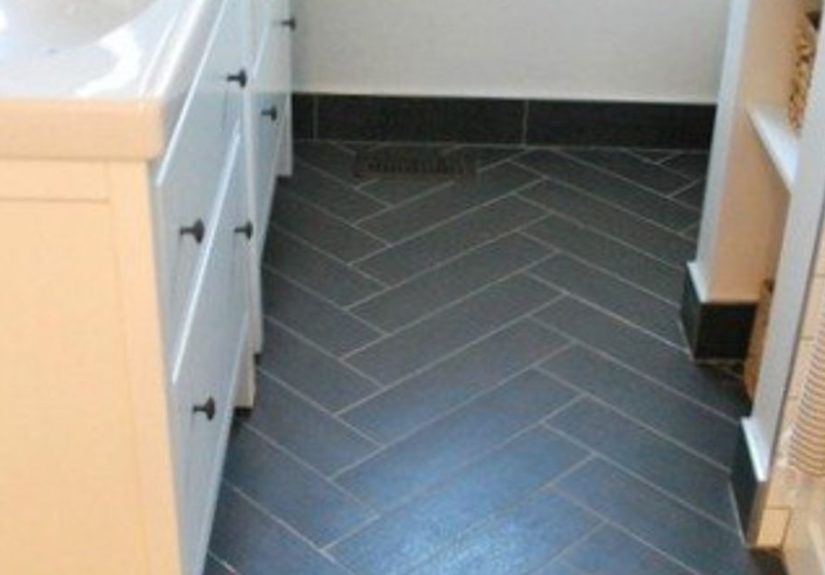
Before you buy a single tile, decide on the vibe. One popular look comes from a Paris-inspired bathroom makeover: dark gray herringbone floor tile, white vanities, simple chrome fixtures, and classic subway tile on the walls. The overall feel is light, tailored, and slightly vintagelike a chic hotel in the 8th arrondissement.
You might choose:
- Paris café: dark floor, white walls, black fixtures, and framed art.
- Soft Scandinavian: pale wood-look herringbone, warm white paint, and a light wood or white vanity.
- Modern spa: stone-look porcelain in a subtle herringbone, floating vanity, and minimal hardware.
Step 2: Measure like your budget depends on it (because it does)
Accurate measurements prevent half your tile sitting in the garage and your vanity blocking the door. Map out:
- Room dimensions (length, width, ceiling height).
- Plumbing locations for the sink and toilet.
- Door swing and window placement so you don’t wedge a vanity into a corner you can’t access.
Tile experts recommend ordering at least 10% extra tile to account for cuts and breakagemore if you’re doing complex patterns like herringbone, which requires more cutting and generates more off-cuts.
Step 3: Choose the right tile for a herringbone pattern
Herringbone is more about layout than tile type, but some choices will make your life easier:
- Size: Long, narrow rectangles (like 3×12 or 4×16 inches) create a sharp herringbone pattern with lots of movement. Shorter tiles give a tighter, more classic look.
- Material: Porcelain and ceramic are durable, water-resistant, and slip-resistant options for bathroom floors. Natural stone looks stunning but needs sealing and more maintenance.
- Finish: Matte or low-sheen is friendlier in wet areas. Highly polished surfaces can be slippery when wet.
- Grout color: High contrast (white grout with dark tile) highlights the zigzag pattern; low contrast is more subtle and forgiving on cleaning.
Tile retailers note that herringbone works well in both traditional and modern bathrooms and is especially striking with wood-look tiles or marble-effect porcelain.
Step 4: Pick an IKEA vanity that fits your space
IKEA’s lineup gives you a few great starting points:
- HEMNES: Classic, furniture-style vanity with legs. Great for traditional or cottage-inspired baths. Available in multiple widths and finishes.
- GODMORGON: Wall-mounted, flat-front vanity that feels modern and streamlined. Perfect when you want open floor under the cabinet to show off your herringbone pattern.
- LILLÅNGEN / ENHET: Compact options for small bathrooms and powder rooms, with modular storage possibilities.
Remember to factor in the sink and faucet you plan to usepre-matched combos from IKEA can simplify plumbing and avoid awkward overhangs or strange faucet placement.
Designing a Herringbone Bathroom Floor That Works
Layout: where the pattern starts matters
With a herringbone floor, where you start the pattern will determine how it feels in the room. Common strategies include:
- Centering on the vanity, so the “V” of the herringbone points toward or away from your main focal point.
- Running the pattern toward the door, making the bathroom feel longer as you walk in.
- Aligning with the longest wall in narrow bathrooms to visually widen the space.
Design pros recommend dry-laying a section of tile (without adhesive) to test how the pattern interacts with your walls and fixtures before committing. This is especially crucial in older homes where walls are not perfectly square.
Practical tips for a smooth installation
Even if you hire a pro, understanding the basics helps you make better decisions:
- Subfloor preparation: The floor should be level, clean, and stable. Any flex can cause tile or grout to crack over time.
- Underlayment: Cement board or appropriate tile underlayment adds stability and moisture resistance, especially around tubs and showers.
- Cutting: Herringbone means lots of angled cuts. A good-quality wet saw and patience are non-negotiable.
- Grout and sealing: Choose a grout designed for wet areas and follow recommendations for sealing, especially for natural stone or light-colored grout.
How the floor and vanity should work together
Think of your vanity and floor as a team, not two separate decisions. Some tried-and-true combos:
- Dark gray herringbone floor + white HEMNES vanity for a black-and-white Paris look.
- Warm wood-look herringbone + gray GODMORGON vanity for a modern, cozy feel.
- White or light beige herringbone + walnut-look vanity for a mid-century-inspired bathroom.
Imagine your vanity floating in a sea of patterned tile. If you choose a wall-mounted cabinet, your herringbone pattern will continue uninterrupted under it, which looks custom and shows off your tile investment.
Getting the Most Out of Your IKEA Vanities
Smart storage and organization
IKEA vanities are basically storage puzzles waiting to be solved. Use drawer organizers to separate hair tools, skincare, and cleaning supplies. Deep drawers in HEMNES, for example, can hide taller bottles, while GODMORGON’s drawer inserts keep small items from sliding around every time someone yanks open a drawer.
Many homeowners report that switching from a pedestal sink or tiny cabinet to a two-drawer vanity instantly declutters their countertop and makes everyday routines easier.
Plumbing and installation basics
Because IKEA vanities are designed to work with their own plumbing kits, double-check compatibility if you’re mixing brands. A few quick guidelines:
- Wall blocking: For wall-mounted vanities, make sure there’s solid blocking in the wall (not just drywall) where the mounting hardware attaches.
- P-trap location: Check where the drain and supply lines come out of the wall or floor; if they’re off-center, you may need extensions or minor rerouting.
- Countertop and sink: Some models come with integrated sinks; others require a separate top. Measure carefully so the faucet, sink, and vanity all line up properly.
Styling your vanity so it doesn’t scream “IKEA”
The trick to making an IKEA vanity look custom is in the details:
- Swap the hardware for brass, matte black, or brushed nickel handles that coordinate with your faucet and light fixtures.
- Add a framed mirror instead of a basic builder-grade mirror to anchor the vanity wall.
- Layer lighting with sconces on either side of the mirror or a statement fixture overhead.
- Use pretty storage on the countertopa tray for daily items, a small vase with greenery, or a candle to add warmth.
Real-Life Style Inspiration
One widely shared project features a white and gray bathroom with a dark gray herringbone porcelain floor and double white HEMNES vanities. The owner’s inspiration was classic Paris cafés: black and white color schemes, subway tile, and graphic floors. The result feels bright and elegant, but still family-friendly.
Elsewhere, designers showcase bathrooms with:
- White herringbone floors and floating vanities for a light, airy look that’s easy to clean underneath.
- Wood-look herringbone patterns paired with stone countertops and black faucets for a modern farmhouse feel.
- Full “tile-drenched” spaces where walls and floors are covered in coordinating tile, with a herringbone floor adding just enough contrast to keep things interesting.
Lessons and Experiences from Herringbone + IKEA Bathroom Projects
What homeowners love most about this combo
People who’ve actually lived with a herringbone tile floor and IKEA vanity tend to rave about a few specific things:
- The “wow” factor per dollar: Guests assume the bathroom is custom or designer-planned, even though a lot of the elements came flat-packed.
- Easier daily routines: Drawers instead of awkward under-sink cabinets mean you can grab your hairdryer, skincare, or shaving kit in one pull.
- Timeless pattern: Herringbone hasn’t gone out of style in centuries. It feels current, but you’re not locked into a trend that will scream “2025” in a few years.
Common mistakes people would avoid next time
Of course, no project is perfect. When homeowners look back, they often mention a few “wish I’d known” points:
- Skimping on planning the layout: Starting the herringbone pattern in the wrong place can leave you with tiny slivers of tile along one wall and big, bold shapes on the other. Taking the time to center the pattern on the vanity or doorway makes a big difference.
- Choosing overly light grout on the floor: White grout on a frequently used bathroom floor looks fantastic for… about a week. Many people say they would pick a slightly darker, stain-resistant grout next time.
- Not checking the wall structure for a floating vanity: A wall-mounted GODMORGON full of toiletry-filled drawers is heavy. If the wall doesn’t have proper blocking, the vanity can shift over time. Retrofitting blocking before finishing the walls saves headaches later.
- Underestimating the labor involved in herringbone: Even pros admit herringbone takes longer because of all the cuts and layout checks. If you’re DIYing, build in extra time and be honest about your comfort level with precision work.
How the design holds up in everyday life
In daily use, herringbone tile floors prove to be surprisingly practical when you choose the right materials. A matte porcelain tile with a slight texture offers good traction, even with wet feet. Many families note that patterned floors hide small bits of dust or water spots better than large, solid-colored tiles, meaning you’re not constantly chasing every splash.
IKEA vanities also tend to hold up well when installed correctly. Homeowners often comment that the drawers keep gliding smoothly years later, especially in HEMNES units that are not overloaded with heavy bottles. Floating GODMORGON cabinets make mopping easier and give the bathroom a more open feelhelpful in tiny spaces where every inch counts.
Tips from remodelers who’ve been there
Based on real-world bathroom makeovers, here are some experience-based tips for your own project:
- Mock up your design with painter’s tape on the floor to visualize vanity size and traffic flow before committing.
- Bring home tile samples and look at them under your actual bathroom lightingboth day and nightbefore ordering the full batch.
- Upgrade a few small details like the faucet, vanity hardware, and mirror. Those touches are what push the space from “nice” to “wow.”
- Think about cleaning: if you hate scrubbing grout, consider larger tiles in the shower and keep the herringbone to the floor only, or use herringbone mosaic sheets with narrower grout lines.
- Plan for storage from day one: count how many drawers you really need and whether you’ll want a tall cabinet or wall shelves nearby for towels.
Most people who’ve combined a herringbone tile floor with IKEA vanities say the same thing in the end: the project was more work than they expectedbut every time they step into their “new” bathroom, it feels like walking into a boutique hotel that they get to live in every single day. That’s a pretty solid return on your sweat equity.
Conclusion: A Boutique Bathroom on a Real-World Budget
Designing a bathroom around a herringbone tile floor and IKEA vanities gives you a high-end look without a high-end designer bill. The herringbone pattern brings energy, character, and a sense of craftsmanship, while IKEA’s well-designed vanities provide storage and clean lines that let the tile shine.
With thoughtful planningmeasuring carefully, choosing the right tile, and picking a vanity that suits your styleyou can create a bathroom that feels polished, timeless, and surprisingly luxurious. Add a few personal touches, like upgraded hardware, a beautiful mirror, and artwork you love, and your once-basic bathroom becomes a space you’re genuinely proud to show off.







 Close
Close