
Table of Contents >> Show >> Hide
- 1) Start With the Feeling, Not the Furniture
- 2) Nail the Layout: The Bed Is the Main Character
- 3) Choose a Color Scheme That Helps You Exhale
- 4) Layer Textiles Like a Pro (Even If You’re Not One)
- 5) Create a Lighting Plan (One Overhead Light Is a Crime)
- 6) Window Treatments: Privacy, Darkness, and Style
- 7) Walls and Headboards: Make the Bed Wall a Statement
- 8) Rugs: The Secret to a Warmer, More Finished Bedroom
- 9) Storage That Doesn’t Look Like Storage
- 10) Style the Small Stuff (Without Turning It Into a Museum)
- 11) Make It Sleep-Friendly: Design Ideas That Support Better Rest
- 12) Budget-Friendly Bedroom Decorating Ideas (Big Impact, Smaller Spend)
- Real-World Bedroom Makeover Experiences (Lessons People Actually Learn)
- Experience #1: The “I bought the rug… and it looks like a bathmat” moment
- Experience #2: The lighting wake-up call (pun absolutely intended)
- Experience #3: Small-bedroom reality: you can’t “decorate” your way out of bad layout
- Experience #4: The calm that comes from a tight color palette
- Experience #5: The “hotel feeling” is mostly textiles and tidiness
- Conclusion
Your bedroom has exactly one job: make your life easier. Sleep better, wake up calmer, and feel mildly impressed with yourself every time you walk in. (If it also happens to look like a magazine spread, great. If it looks like a magazine spread and you can still find your phone charger, even better.)
This guide pulls together practical, design-forward bedroom decorating and design ideaslayout tricks, color strategy, lighting plans, textile layering, storage solutions, and real examples you can copy. The goal is simple: a bedroom that feels like a retreat, not a “room where laundry goes to think about what it’s done.”
1) Start With the Feeling, Not the Furniture
Before you buy anything, decide what you want the room to feel like at 10:30 p.m. and at 7:00 a.m. That feeling becomes your filter for every decision.
Pick your “vibe words” (two is enough)
- Calm + Cozy (soft neutrals, warm lighting, layered bedding)
- Minimal + Airy (lighter palette, fewer objects, hidden storage)
- Moody + Luxe (deep color, dramatic lighting, rich textures)
- Playful + Patterned (statement wallpaper, bold bedding, mixed prints)
Once you have two vibe words, you’ll stop impulse-buying random decor that looks cute online but feels like it belongs in someone else’s life.
2) Nail the Layout: The Bed Is the Main Character
In most bedrooms, the bed is the largest objectso it should look intentionally placed. A solid layout makes even “basic” decor feel polished.
Easy layout wins that work in real homes
- Center the bed on the most natural focal wall (often the wall you see first when you enter).
- Balance both sides when possible: matching nightstands and lamps feel calm and hotel-like.
- Go asymmetrical on purpose in small rooms: one nightstand + wall sconce on the other side can save space without looking awkward.
- Keep pathways comfortable so you can move around without performing a sideways crab shuffle.
Specific example: a small bedroom with a queen bed
If your room is tight, try this setup:
- Queen bed centered on one wall
- One slim nightstand (or a floating shelf) on the tighter side
- Wall-mounted lighting to free up surface space
- Dresser across from the bed (or in the closet if space is truly limited)
Tip: when you’re unsure, use painter’s tape to outline the bed and key furniture on the floor. It’s like a rehearsal dinner for your furnitureno commitment, fewer regrets.
3) Choose a Color Scheme That Helps You Exhale
Color is mood. And in a bedroom, mood is everything. The easiest way to make a bedroom feel “designed” is to pick a tight palette and repeat it in a few places.
A simple formula that looks expensive
- Base color (60%): walls + large pieces (white, warm beige, soft gray, pale blue, muted green)
- Secondary color (30%): bedding, curtains, rug
- Accent (10%): pillows, art, a lamp, a throw, or one bold piece
Bedroom color scheme ideas you can steal
- Soft neutrals + black accents (clean, modern, easy to update)
- Warm white + tan + olive (calm, natural, looks great with wood)
- Dusty blue + cream + brass (classic, “quiet luxury” energy)
- Charcoal + linen + walnut (moody without feeling like a cave)
If you’re paint-shy, start with textiles: bedding and curtains can carry the color while walls stay neutral. If you’re paint-bold, consider an accent wall behind the bedor go all-in with color drenching (walls and trim the same shade) for a cocoon effect.
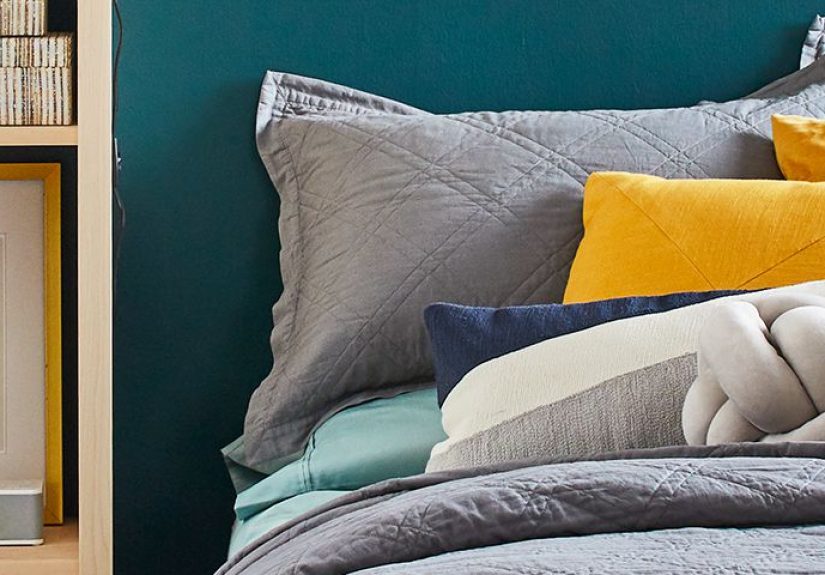
4) Layer Textiles Like a Pro (Even If You’re Not One)
Textiles are where bedrooms become cozy. You don’t need a hundred throw pillows; you need the right layers.
Start with the bed (the “3-layer rule”)
- Base: fitted sheet + flat sheet (or skip the top sheet if that’s your hill to die on)
- Middle: duvet or quilt for volume
- Top: a throw blanket folded at the foot for texture and color
Mix textures, not chaos
- Crisp cotton + chunky knit throw
- Linen duvet + velvet pillow
- Woven rug + smooth sateen sheets
The trick is contrast: smooth + nubby, matte + a hint of sheen, structured + soft. It’s the design equivalent of adding seasoning. (Nobody wants an unseasoned bedroom.)
5) Create a Lighting Plan (One Overhead Light Is a Crime)
Great bedroom lighting is layered: you want options for getting dressed, reading, relaxing, and not blinding yourself at 2 a.m. when you’re searching for water like a desert traveler.
The three types of lighting to include
- Ambient: overall light (ceiling fixture, recessed lights)
- Task: focused light (bedside reading lamp, swing-arm sconce, vanity light)
- Accent: mood and highlights (picture light, LED strip behind a headboard, a small table lamp on a dresser)
Bedside lighting: your fastest upgrade
Swap mismatched lamps for matching lamps, or go sleek with wall sconces. Pendant lights over nightstands can also free up surface space and look intentionally styled. Add dimmers wherever you candim lighting is basically an instant “spa” button.
6) Window Treatments: Privacy, Darkness, and Style
Bedroom curtains aren’t just decoration; they control sleep, temperature, and how finished the room looks.
Practical choices that still look good
- Blackout curtains for light control (especially if you have streetlights or early sun)
- Sheers + drapes layered for flexibility and softness
- Roman shades for small bedrooms (clean lines, less bulk)
Style tip: hang curtains higher and wider than the window to make ceilings feel taller and windows feel grander. It’s a visual illusion that’s cheaper than moving to a house with bigger windows.
7) Walls and Headboards: Make the Bed Wall a Statement
If your bedroom feels “unfinished,” it’s often because the wall behind the bed is doing absolutely nothing. And honestly, samesome walls need a purpose.
Easy, high-impact bedroom wall ideas
- Large-scale art (one big piece is usually calmer than five tiny ones)
- Wallpaper or a mural behind the bed to create instant personality
- Paneling or wainscoting for texture and architectural interest
- A statement headboard in wood, fabric, or a curved silhouette for softness
If you love pattern, keep the bedding simpler. If the bedding is bold, let the walls breathe. The goal is “intentional,” not “my algorithm bought this.”
8) Rugs: The Secret to a Warmer, More Finished Bedroom
A rug anchors the bed and instantly makes the room feel softervisually and literally. Cold feet are not the vibe.
Rug placement that works
- Under the bed: choose a rug large enough to extend beyond the sides and foot of the bed so you step onto something soft.
- Runners: if budget or space is tight, place runners along the sides of the bed.
- Layering: a larger neutral rug with a smaller patterned rug on top can add depth (and hide stains from real life).
9) Storage That Doesn’t Look Like Storage
Clutter is the fastest way to make a bedroom feel stressful. The best bedroom storage ideas are the ones you barely notice.
Smart storage moves (especially for small bedrooms)
- Under-bed storage with bins or drawers (great for off-season clothes and extra bedding)
- Bed frames with built-in drawers for serious storage upgrades
- Floating nightstands or wall shelves to free up floor space
- Behind-the-door hooks for bags, robes, or tomorrow’s outfit
- One beautiful tray on the dresser to corral small items (containment is self-care)
Design reality check: you don’t need “more bins.” You need fewer items in the open. If you can’t put it away, it becomes decor by accidentand accidental decor is rarely charming.
10) Style the Small Stuff (Without Turning It Into a Museum)
Once the big choices are setbed, layout, color, lightingstyling makes the room feel personal.
Nightstand styling that looks calm
- One lamp or sconce + one book + one small dish (for rings, earbuds, or tiny mysteries)
- A small plant or vase for softness
- A tray to keep things from visually spreading like glitter
Add life with a few “soft signals”
- A candle or diffuser (keep scents subtleyour nose lives here)
- A textured throw on a chair
- A framed photo that makes you smile
11) Make It Sleep-Friendly: Design Ideas That Support Better Rest
A beautiful bedroom is great. A beautiful bedroom that helps you sleep? Elite.
Sleep-supportive design moves
- Keep it dark: blackout curtains or shades help block disruptive light.
- Keep it cool: most experts recommend a cooler bedroom temperature for sleep (often in the 60–67°F range, with some guidance extending slightly higher).
- Keep it quiet: soft textiles reduce echo, and white noise can mask inconsistent sounds.
- Keep it low-clutter: visual mess can feel mentally loud.
Think of it as decorating for your nervous system. Your brain would like to stop producing spreadsheets at midnight, thanks.
12) Budget-Friendly Bedroom Decorating Ideas (Big Impact, Smaller Spend)
You can refresh a bedroom without a full renovation. Focus on the changes that your eyes and body notice most.
High-impact upgrades under “new furniture money”
- New bedding in a cohesive palette (instant transformation)
- Swap bulbs to warm, softer light and add dimmable options
- Paint (walls or even just trim/doors for a crisp refresh)
- Upgrade hardware on dressers (small change, big style payoff)
- Hang curtains properly (higher and wider for a designer look)
- One large art piece instead of many small ones
If you do only one thing: improve lighting and bedding. Those two changes can make a bedroom feel like a different homewithout the inconvenience of, you know, moving.
Real-World Bedroom Makeover Experiences (Lessons People Actually Learn)
To make this practical, here are experience-based patterns that show up again and again when people redesign bedroomsespecially when the Pinterest inspiration collides with real-life room sizes, budgets, and “why is this dresser shaped like a submarine?” furniture situations.
Experience #1: The “I bought the rug… and it looks like a bathmat” moment
One of the most common bedroom mistakes is choosing a rug that’s too small. People often pick a rug based on price or a cute pattern, then place it under the bed and realize it doesn’t extend far enough to step on. The fix is simple: either size up so the rug reaches beyond the bed’s sides and foot, or use runners along each side of the bed. When people finally get the scale right, the whole room instantly feels more grounded and “done.” It’s a classic example of spending a little more in one place to avoid replacing it later.
Experience #2: The lighting wake-up call (pun absolutely intended)
Many bedrooms start with a single overhead light that’s harsh, bright, and emotionally similar to being interrogated. People typically don’t realize how much lighting affects mood until they add a second and third sourcelike bedside lamps, wall sconces, or a small accent light on a dresser. The most dramatic before-and-after stories usually involve dimmers. With layered lighting, the same room can be energizing in the morning, practical when folding laundry, and calm at night. This is why designers obsess over lighting: it’s not just visibility; it’s atmosphere.
Experience #3: Small-bedroom reality: you can’t “decorate” your way out of bad layout
In compact rooms, people often try to solve a layout problem with decormore baskets, more shelves, more “solutions.” But the biggest breakthroughs tend to come from editing furniture and freeing floor space. Swapping bulky nightstands for floating shelves, choosing a dresser with better storage efficiency, or using a bed frame with drawers can change how the room functions day-to-day. Many people also discover that symmetry is optional: a small bedroom can still look intentional with one nightstand and a wall sconce, as long as the choices feel deliberate.
Experience #4: The calm that comes from a tight color palette
When people feel stuck, they often have “too many colors and none of them are friends.” A repeatable success story is choosing a base neutral, a secondary tone, and one accentand then repeating those colors across bedding, curtains, and a rug. Suddenly the room feels cohesive, even if the furniture is a mix of old and new. This is especially effective in bedrooms because cohesion reads as calm. It’s not about making everything match; it’s about making everything belong.
Experience #5: The “hotel feeling” is mostly textiles and tidiness
When someone says they want a hotel-inspired bedroom, they usually imagine expensive furniture. But in real makeovers, the hotel vibe comes from simpler upgrades: layered bedding with structure (not a pile of random blankets), curtains that frame the window properly, and a clear surface or twolike a styled nightstand tray or a mostly uncluttered dresser. People also learn that comfort is part of design: breathable sheets, supportive pillows, and a room that’s dark and cool at night can make the space feel luxurious without adding a single decorative object.
The best takeaway from these real-world experiences: the “pretty” choices work best when they solve everyday problems. If your bedroom looks great but annoys you, it won’t feel like a retreat. If it works beautifully, it will look better toobecause relaxed people are basically the best decor.
Conclusion
The best bedroom decorating and design ideas aren’t about chasing trendsthey’re about building a space that supports your life. Start with the feeling you want, lock in a smart layout, choose a calming palette, layer lighting and textiles, and add storage that keeps clutter under control. Finish with a few personal touches, and you’ll end up with a bedroom that feels both stylish and genuinely restful. That’s the sweet spot: a room that looks great in photos and feels even better when you actually live in it.







 Close
Close