
Table of Contents >> Show >> Hide
- What Is King Cake, Exactly?
- Why This Is the Best King Cake Recipe
- Best King Cake Recipe Ingredients
- How to Make King Cake Step by Step
- Expert Tips for the Best Homemade King Cake
- Easy Filling Variations
- Common King Cake Mistakes to Avoid
- How to Serve and Store King Cake
- The Experience of Making King Cake at Home
- Conclusion
If a cinnamon roll and a Mardi Gras parade had a delicious baby, it would be king cake. This iconic ring-shaped dessert is sweet, festive, and just dramatic enough to deserve its own entrance music. With its swirls of cinnamon, rich dough, glossy icing, and those unmistakable purple, green, and gold sugars, king cake is not the shy dessert in the room. It is the dessert in the room, wearing sequins, tossing beads, and asking why your coffee isn’t stronger.
But here is the good news: a homemade king cake is absolutely doable. Yes, it looks bakery-level impressive. Yes, it carries a little ceremonial pressure because people expect magic. But once you understand the dough, filling, and shaping, the whole thing becomes much less mysterious. In fact, making the best king cake recipe at home is more about patience than difficulty. It is a yeast dough, not a dragon.
This guide breaks down exactly how to make king cake from scratch with a soft, buttery dough, a creamy cinnamon filling, a simple vanilla glaze, and plenty of practical tips. You will also learn what makes a Mardi Gras king cake different from other festive cakes, how to avoid common mistakes, and how to get that classic New Orleans-style look without needing a bakery on speed dial.
What Is King Cake, Exactly?
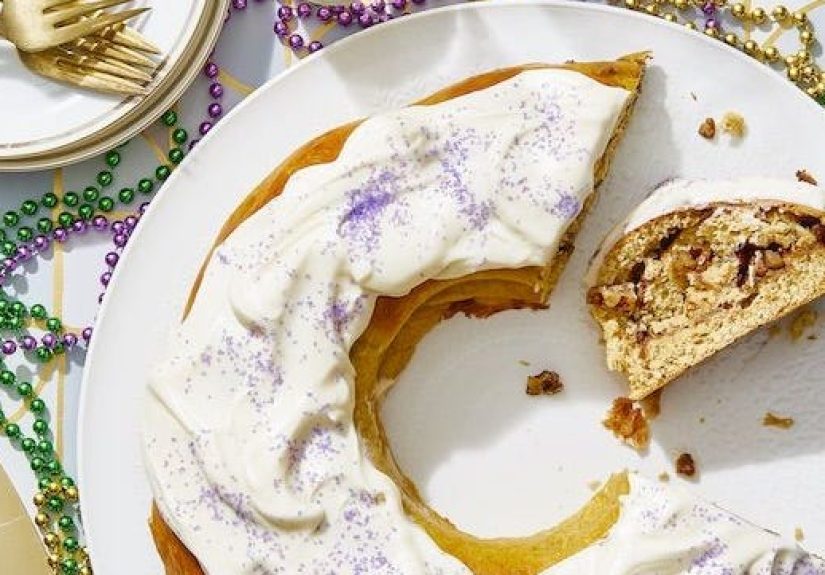
King cake is traditionally associated with the Carnival season, which begins on January 6 and runs through Mardi Gras. In the New Orleans style most Americans recognize, it is usually made from an enriched yeast dough that lands somewhere between brioche, coffee cake, and a cinnamon roll that got promoted. It is shaped into a ring, baked until golden, topped with icing, and finished with colored sugars in purple, green, and gold.
The flavor profile of a classic homemade king cake is warm and cozy: butter, cinnamon, vanilla, citrus zest, and just enough nutmeg to whisper, “Hello, I’m fancy now.” Some versions are plain inside, while others include fillings such as cream cheese, cinnamon sugar, fruit preserves, praline, or pecans. Traditionalists may battle over what belongs in the best king cake recipe, but one truth remains: if it is tender, flavorful, and covered in colorful sugar, people will line up with plates.
And yes, there is usually a tiny baby hidden inside. In many modern home kitchens, it is safest to tuck the plastic baby into the cake after baking and cooling from the underside, then warn your guests before slicing. Good fortune is nice. Unexpected dentistry bills are less festive.
Why This Is the Best King Cake Recipe
The best king cake recipe should do three things well. First, the dough should be soft and rich, not dry and bread-like. Second, the filling should actually taste like something, not just vaguely sweet wallpaper paste. Third, the cake should stay moist enough to enjoy the next day, because a good king cake deserves an encore.
This version checks every box. The dough gets richness from butter, eggs, and milk. A little citrus zest keeps the flavor bright. The cream cheese-cinnamon filling adds body and tang so the center feels luxurious instead of flat. The glaze is easy, the decoration is classic, and the whole cake looks like you have your life together, even if there are three mixing bowls in the sink and flour on your elbow.
Best King Cake Recipe Ingredients
For the Dough
- 3/4 cup whole milk, warmed to about 105 to 110 degrees Fahrenheit
- 2 1/4 teaspoons active dry yeast
- 1/3 cup granulated sugar
- 2 large eggs
- 1 large egg yolk
- 1 teaspoon vanilla extract
- 1 teaspoon finely grated lemon zest
- 1/2 teaspoon finely grated orange zest
- 1/2 teaspoon ground nutmeg
- 1 teaspoon kosher salt
- 6 tablespoons unsalted butter, softened
- 4 to 4 1/2 cups all-purpose flour
For the Filling
- 8 ounces cream cheese, softened
- 1/3 cup light brown sugar
- 1/4 cup granulated sugar
- 1 1/2 teaspoons ground cinnamon
- 1 teaspoon vanilla extract
- Pinch of salt
For the Glaze and Decoration
- 2 cups powdered sugar
- 3 to 4 tablespoons milk
- 1 teaspoon vanilla extract
- 1 teaspoon lemon juice, optional
- Purple sanding sugar
- Green sanding sugar
- Gold or yellow sanding sugar
- 1 plastic king cake baby, optional
How to Make King Cake Step by Step
1. Wake Up the Yeast
In the bowl of a stand mixer or a large mixing bowl, stir together the warm milk, yeast, and 1 tablespoon of the sugar. Let it sit for about 5 to 10 minutes, until it looks foamy. If it stays flat and sulky, your yeast may be old or your milk may have been too hot. Start over now and save yourself later heartbreak.
2. Build the Dough
Add the remaining sugar, eggs, egg yolk, vanilla, lemon zest, orange zest, nutmeg, salt, softened butter, and 3 1/2 cups of flour. Mix until a shaggy dough forms. Knead with a dough hook for 6 to 8 minutes, adding the remaining flour a little at a time until the dough is soft, smooth, and slightly tacky but not a sticky swamp.
If kneading by hand, expect 8 to 10 minutes of work. It is an excellent upper-body activity and far more rewarding than doom-scrolling.
3. Let It Rise
Transfer the dough to a lightly greased bowl, cover it, and let it rise in a warm place for 1 1/2 to 2 hours, or until doubled in size. Rich doughs can take their sweet time, which feels rude but is normal.
4. Make the Filling
While the dough rises, mix the cream cheese, brown sugar, granulated sugar, cinnamon, vanilla, and a pinch of salt until smooth. You want a spreadable filling, not a runny one. If it feels too loose, chill it for 10 to 15 minutes.
5. Roll and Fill
Punch down the risen dough and transfer it to a lightly floured surface. Roll it into a rectangle about 10 by 20 inches. Spread the filling evenly over the dough, leaving a 1-inch border along one long edge.
Starting from the filled long side, roll the dough into a log. Pinch the seam closed well. This is not the moment for casual sealing. A poorly sealed king cake will leak filling like it has secrets.
6. Shape the Ring
Place the log seam-side down on a parchment-lined baking sheet. Bring the ends together to form a ring and pinch them firmly to seal. If the ring looks slightly uneven, that is okay. Once it rises and bakes, it becomes much more graceful.
7. Rise Again
Cover the shaped ring loosely and let it rise for 30 to 45 minutes, until puffy. Meanwhile, preheat your oven to 350 degrees Fahrenheit.
8. Bake
Bake the cake for 25 to 30 minutes, or until golden brown. If it browns too quickly, tent it loosely with foil for the last 10 minutes. Let it cool on the baking sheet for about 10 minutes, then move it to a wire rack to cool completely.
9. Glaze and Decorate
Whisk together the powdered sugar, milk, vanilla, and lemon juice if using. Adjust the consistency so the glaze is thick but pourable. Spoon or drizzle it over the cooled cake.
Immediately scatter the colored sugars in wide stripes. The classic look is purple, green, and gold. If using a plastic baby, insert it into the underside of the cake after it has cooled. Then tell your guests. Repeatedly. Maybe with eye contact.
Expert Tips for the Best Homemade King Cake
Use Warm Milk, Not Hot Milk
Yeast likes warmth, not lava. Aim for milk that feels pleasantly warm to the touch. Too cold and your dough rises slowly. Too hot and the yeast gives up entirely.
Do Not Overflour the Dough
The most common path to a dry king cake is adding too much flour. The dough should feel soft and slightly tacky. If it feels stiff, your finished cake will too.
Let the Dough Rise Fully
Rushing the rise usually creates a dense cake. A proper rise gives you that tender, fluffy texture everyone wants in a Mardi Gras king cake recipe.
Cool Before Glazing
If you glaze the cake while it is hot, the icing will melt into a sad translucent puddle. Let the cake cool first so the glaze sits proudly on top where it belongs.
Flavor Matters
Nutmeg, cinnamon, citrus zest, and vanilla are not background extras. They are what turn sweet bread into something memorable. A bland king cake is basically colorful disappointment.
Easy Filling Variations
Once you know how to make king cake, it becomes dangerously easy to start improvising. Here are a few filling ideas that still respect the classic spirit while giving you room to play:
Classic Cinnamon Sugar
Skip the cream cheese and use softened butter, brown sugar, cinnamon, and a tiny pinch of nutmeg. This is simple, nostalgic, and excellent with coffee.
Cream Cheese and Pecan
Add 1/2 cup finely chopped toasted pecans to the filling for a little praline-style personality and crunch.
Fruit and Cream Cheese
Spread a thin layer of raspberry, strawberry, or apple filling over the cream cheese mixture. Keep it modest. Too much fruit turns your ring into a slippery situation.
Orange-Cinnamon
Increase the orange zest and add a few drops of orange extract for a bright, bakery-style variation that tastes especially festive.
Common King Cake Mistakes to Avoid
Making the Dough Too Dry
Flour is sneaky. Add only what you need. A soft dough bakes into a soft cake.
Overstuffing the Filling
More is not always better. Too much filling can cause leaks, uneven baking, and a center that never quite sets.
Underbaking the Center
Because king cake is shaped in a thick ring, the middle portion can take a little longer than the edges. Bake until the cake is deeply golden and set.
Forgetting the Occasion
Technically, king cake is dessert. Spiritually, it is an event. Serve it with coffee, music, friends, napkins, and a little ceremony. A king cake deserves at least one person saying, “Whoa, you made that?”
How to Serve and Store King Cake
Serve king cake at room temperature or very slightly warmed. It pairs beautifully with coffee, chicory coffee, café au lait, hot chocolate, or a brunch spread that has decided subtlety is overrated.
Store leftovers tightly covered at room temperature for up to 2 days or in the refrigerator for up to 4 days. Because of the cream cheese filling, refrigeration is the safest choice if your kitchen runs warm. To refresh slices, microwave them for 8 to 10 seconds. Suddenly yesterday’s cake feels brand new again.
You can also freeze the unglazed cake. Wrap it well, freeze for up to 1 month, thaw overnight in the refrigerator, then glaze and decorate before serving.
The Experience of Making King Cake at Home
There is something delightfully theatrical about making a king cake at home. It starts quietly enough with warm milk, yeast, flour, and butter. Very respectable. Very calm. Then the dough begins to rise, the kitchen starts smelling like cinnamon and citrus, and suddenly the whole house feels like it has been invited to a party. Even people who claimed they were “just walking through” the kitchen somehow appear again five minutes later to ask how long until the cake is done.
One of the best parts of making a homemade king cake is that it slows you down in a good way. You cannot bully yeast dough into greatness. You have to wait for it, shape it, and trust it. That rhythm is part of the charm. The process feels a little old-school and a little celebratory, like baking with intention instead of just trying to get dessert on the table before everyone notices you forgot dessert.
There is also a very specific joy in decorating the cake. The moment the glaze goes on and the colored sugars hit the surface, the whole thing transforms from “pleasant sweet bread ring” into “oh wow, this is actually king cake.” It becomes brighter, louder, and much more fun to look at. You do not have to be a professional baker to make it beautiful. In fact, a slightly imperfect king cake often looks more charming, like it has personality instead of a publicist.
For families, king cake can become one of those recipes that sneaks into tradition. Kids love helping with the colored sugars because, honestly, it is the edible version of craft time. Adults love the story, the seasonality, and the excuse to gather around something that feels special without requiring a five-course meal. Office parties love king cake because it comes with built-in conversation, bright colors, and the irresistible suspense of who gets the slice with the baby.
Then there is the first slice. That moment matters. You cut through the glaze, the sugar crackles softly, and the knife reveals the spiral of dough and filling inside. If you have done it right, the crumb is tender, the filling is creamy, and the whole thing smells like a bakery won a parade. Someone takes a bite and nods in that serious way people do when dessert has exceeded expectations. That nod is worth every minute of kneading.
Another thing people discover when learning how to make king cake is how customizable the experience can be. Some bakers want the classic cinnamon-and-icing version. Others lean into cream cheese, pecans, fruit, or even more extravagant fillings. Some keep the decoration neatly striped. Others go full glitter-carnival chaos. Both approaches are valid. King cake is one of those rare desserts that honors tradition while still making room for personality.
And maybe that is why the best king cake recipe feels bigger than the ingredients. It is not just about flour, sugar, and butter. It is about anticipation. It is about sharing. It is about making something that announces itself before anyone even tastes it. In a world full of beige snacks and forgettable desserts, king cake refuses to be subtle. It wants color. It wants company. It wants a little drama. Frankly, that is admirable.
So if you have been curious about making a Mardi Gras king cake from scratch, this is your sign. Tie on an apron, clear some counter space, and let the dough do its thing. The result is sweet, festive, and just a little ridiculous in the best possible way. Which, honestly, is exactly what a great celebration dessert should be.
Conclusion
The best king cake recipe is the one that delivers a soft, buttery crumb, a flavorful filling, and that unmistakable Carnival sparkle. This version keeps the classic spirit alive while staying practical for home bakers. It is rich without being heavy, festive without being fussy, and impressive without requiring advanced pastry-school wizardry.
If you have been wondering how to make king cake at home, now you know: start with a good dough, respect the rise, do not skimp on the filling, and let the colorful sugars do their joyful job. Whether you bake it for Mardi Gras, a themed brunch, a bake sale, or simply because your kitchen deserves more excitement, homemade king cake is always a good idea. Delicious? Absolutely. Memorable? Without question. Quiet and understated? Not even a little.





 Close
Close