
Table of Contents >> Show >> Hide
- What “storms from space” actually are
- Why trains and railroads are surprisingly vulnerable
- History already gave us some warning shots
- How a modern rail disruption from space weather could unfold
- Could a solar storm really “devastate” railroads?
- What railroads can do before the next big solar event
- Why this is an infrastructure story, not just a science story
- Additional Experiences: What a Space-Weather Rail Disruption Could Feel Like on the Ground
- Conclusion
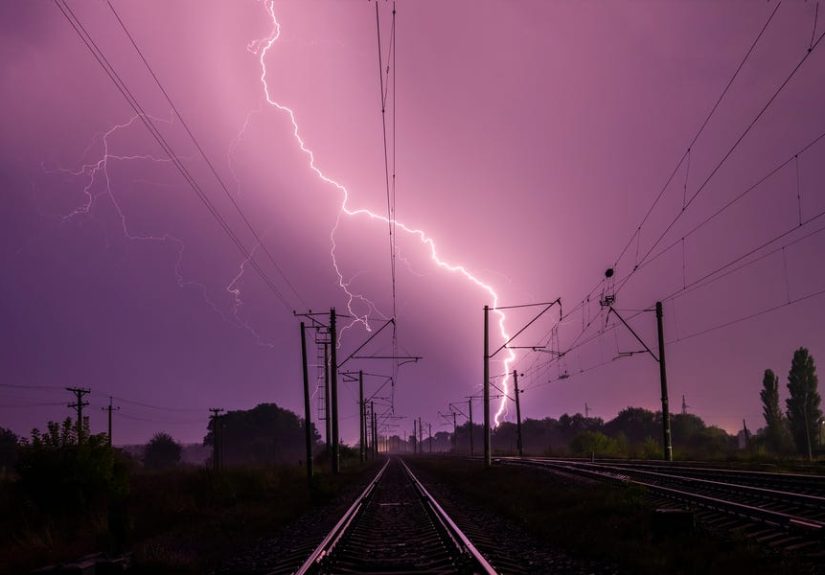
Most people hear the phrase storm from space and picture something straight out of a disaster movie: glowing skies, panicked scientists, a guy in mission control yelling, “We’re losing everything!” Real space weather is a little less cinematic and a lot more sneaky. It does not need to blow a locomotive off the tracks to cause chaos. All it has to do is scramble the invisible systems that keep trains moving safely and on time.
That is what makes this topic so unsettling. Modern railroads run on steel, yes, but they also run on signals, substations, communications, software, dispatching centers, timing systems, and a giant pile of electricity that nobody notices until it starts acting weird. Severe solar storms, also called geomagnetic storms, can interfere with those systems in ways that range from annoying to genuinely dangerous. In the mild version, commuters get delays and freight gets backed up. In the ugly version, operators lose trusted data, signals fail safe or misbehave, crossings malfunction, and regional power problems ripple across rail networks.
So no, the Sun is not personally plotting against your morning train. But a brutal burst of space weather could absolutely turn rail transportation into a headache with steel wheels. Here is why railroads are more exposed than they look, what history tells us, and how the industry can prepare before the next solar tantrum arrives.
What “storms from space” actually are
Space weather starts at the Sun. When the Sun releases huge eruptions of energy and plasma, those outbursts can race toward Earth. If conditions line up just wrong, Earth’s magnetic environment gets punched, stretched, and rattled. That disturbance can generate geomagnetically induced currents, often shortened to GICs. In plain English: the planet’s magnetic field wiggles, and those wiggles can create unwanted electric currents in long conductors on the ground.
That matters because modern infrastructure is full of long conductors. Power lines are the obvious example, which is why electric grids usually get top billing in any discussion of space weather. But rail systems also depend on long metallic paths, grounded networks, signal circuits, communications links, and power equipment. Even when a railroad does not look especially high-tech from a passenger seat, the hidden machinery behind it absolutely is.
The danger is not always dramatic equipment destruction. Sometimes the more realistic problem is confusion. Systems see the wrong thing. Operators lose confidence in their readings. Automated protections trip. Backup procedures kick in. Trains slow down, stack up, or stop. That kind of disruption may sound less flashy than a giant transformer exploding, but for freight corridors and commuter networks, it can still be enormously expensive and deeply disruptive.
Why this matters more now than it did decades ago
Because railroads are more connected than ever. Passenger and freight networks increasingly rely on digital dispatching, remote monitoring, telecommunications, satellite-based positioning and timing, centralized traffic control, and interdependent power systems. That efficiency is great on a normal day. On a bad day, it means one solar event can create problems across multiple layers at once. The timetable can unravel not because one track is damaged, but because the systems that tell everyone what the track is doing are suddenly less trustworthy.
Why trains and railroads are surprisingly vulnerable
The biggest vulnerability is not the train itself. It is the railroad’s nervous system.
Rail signaling often relies on track circuits, which detect whether a section of track is occupied. In very simple terms, the system uses electricity to tell whether a train is present. If outside currents seep into that setup, strange things can happen. A severe geomagnetic storm can induce currents that interfere with how the circuit behaves. That means the railroad may get a false reading, an equipment fault, or a precautionary shutdown.
That is where this gets uncomfortably specific. A railroad does not need a Hollywood-sized catastrophe to feel pain. A false occupancy indication can halt traffic. A suspicious reading can force crews into restricted operations. An unreliable grade-crossing circuit can create safety concerns at road intersections. A loss of stable power to signal houses, communications equipment, or dispatch infrastructure can create bottlenecks that spread far beyond the original trouble spot.
Electrified rail systems face an extra layer of risk because traction power, substations, and protective devices depend on stable electrical conditions. But non-electrified freight rail is not magically immune. Diesel locomotives still run inside a wider system built on signals, switches, crossings, communications, control centers, yards, and regional electric power. If the grid gets into trouble, the railroad feels it too.
Then there is the timing and navigation problem. Severe geomagnetic storms can degrade GPS and other GNSS services. Railroads do not use satellite signals for every function, but modern transportation systems increasingly depend on precise positioning, synchronization, and communications. When timing gets sloppy or satellite navigation becomes less reliable, transportation operators lose one more layer of confidence in a moment when confidence is already in short supply.
In other words, railroads are vulnerable for the same reason modern homes are vulnerable to a Wi-Fi outage. Technically, the walls are still standing. Practically, half your life has forgotten how to behave.
History already gave us some warning shots
The idea that solar storms can interfere with infrastructure is not speculation cooked up in a lab. History has been dropping hints for a very long time. One of the most often-cited events is the 1921 geomagnetic superstorm sometimes called the New York Railroad Storm. The nickname alone should make transportation planners sit up a little straighter.
That event is remembered because it disrupted communications and electrical systems in dramatic fashion. It also became associated with railroad infrastructure trouble, including fires in signal and control equipment. It was not a modern rail network by today’s standards, of course, but that is exactly the point: if earlier, simpler systems could be rattled so badly, a hyperconnected transportation network should not assume it gets a free pass.
The March 1989 geomagnetic storm delivered another warning through the power sector, most famously with the Hydro-Québec collapse. Railroads may not be identical to power grids, but they live downstream from them in many ways. If a major storm destabilizes regional electricity, rail service can be hammered by secondary effects even when tracks and trains themselves remain physically intact.
More recently, the May 2024 geomagnetic storm reached the highest NOAA storm category, G5, the first time that level had been observed at Earth in more than two decades. That event did not produce the nightmare scenario some people feared, but it was a sharp reminder that extreme space weather is not ancient history. Solar cycle activity rises and falls, and when the Sun gets lively, infrastructure operators need to pay attention.
How a modern rail disruption from space weather could unfold
Let’s walk through the realistic version, not the popcorn version.
First, space weather forecasters issue alerts as solar eruptions head toward Earth. Utilities, satellite operators, airlines, and other critical sectors begin watching conditions closely. Rail operators that actively monitor space weather would move into a heightened posture. The problem is that not every weak point shows up at once.
As geomagnetic activity intensifies, power quality issues may emerge in some areas. Protective devices can trip. Grid operators may need voltage corrections. At the same time, satellite navigation can become less reliable, high-frequency communications can degrade, and strange electrical behavior can show up in long grounded systems. That is when rail networks start asking uncomfortable questions: Are the signals trustworthy? Are the crossings behaving normally? Are communications and timing stable? Do we need to slow traffic as a precaution?
Once a railroad starts operating in “we no longer fully trust the electronics” mode, capacity falls fast. Trains may need wider spacing. Manual verification takes longer. Dispatchers become more conservative. Crews wait for authority. Yards clog up. Passenger lines start missing slots. Freight connections slip. A delay in one corridor spills into another. The network turns from a moving machine into a rolling traffic jam.
And then the real economic damage starts. Commuters miss work. Intermodal freight misses transfer windows. Manufacturers wait on parts. Retailers wait on shipments. Perishable goods do not care that the Sun had a magnetic mood swing. Coal, grain, chemicals, autos, and consumer products all keep their own clocks, and none of them are impressed by aurora photos on social media.
That is why the most serious rail risk from space weather may be cascading disruption rather than a single spectacular failure. The danger is death by a thousand operational paper cuts, and every paper cut is made of steel.
Could a solar storm really “devastate” railroads?
In the worst case, yes, though devastation would likely look less like twisted tracks and more like systemic paralysis.
If a truly severe geomagnetic event triggered large power disturbances, widespread communications issues, and persistent signal anomalies across key corridors, rail service could degrade so badly that major regions would struggle to move passengers and freight normally. Some systems would fail safe, which is good for safety but terrible for throughput. Other components might require inspections, resets, or manual workarounds. Recovery could be uneven, especially if railroads were competing with every other critical sector for crews, replacement equipment, and reliable power.
The most vulnerable areas would likely be places where dependence on electrification, digital control, centralized operations, or fragile power support is highest. But even resilient systems would feel secondary impacts. Rail is a network business. When one part freezes, the rest starts limping.
So the word devastate is not automatically an exaggeration. It just should be understood correctly. Space weather is more likely to devastate railroad operations than railroad hardware. And for customers, passengers, and supply chains, that distinction may not feel very comforting.
What railroads can do before the next big solar event
The good news is that space weather is not completely unpredictable. Unlike earthquakes, severe solar storms often come with at least some warning. That makes preparation far more useful than shrugging and hoping the Sun behaves.
1. Treat space weather like a real operating hazard
If a railroad has playbooks for hurricanes, floods, and winter storms, it should also have procedures for major geomagnetic storms. Monitoring NOAA alerts should be routine, not exotic.
2. Identify signaling and power weak points
Rail operators need to know which signaling circuits, substations, crossings, and communications nodes are most vulnerable to abnormal currents or power disturbances. You cannot protect what you have not mapped.
3. Build redundancy into timing, communications, and control
When satellite navigation or timing gets noisy, systems should have backups. That does not mean replacing everything tomorrow morning. It means designing operations so one degraded input does not become one giant national headache.
4. Plan for graceful degradation
There is a huge difference between “the system is stressed” and “the system is chaos soup.” Railroads need procedures that allow safe, slower operations when confidence in automation drops. Manual fallback should be practiced, not rediscovered in a panic at 3 a.m.
5. Coordinate with utilities and government agencies
Railroads do not face this threat alone. Power companies, federal agencies, and infrastructure planners are already studying geomagnetic disturbance risk. The smartest rail strategy is to plug directly into that wider preparedness effort, not act like every signal bungalow is its own tiny kingdom.
Why this is an infrastructure story, not just a science story
Space weather can sound abstract because nobody sees it roll in like a thunderstorm. There is no dark cloud over the station, no weather app showing a little angry Sun emoji over your commute. But the threat is real precisely because it works through the hidden systems modern life depends on.
Railroads are an ideal example. They are physical, visible, and old-school enough to feel sturdy. Yet their reliability depends on a modern web of electricity, electronics, and timing. That means a severe solar storm is not just an astronomy story. It is a logistics story, a safety story, an economic story, and yes, a transportation story.
The next time someone says space weather is only relevant to astronauts and satellite nerds, remind them that their groceries, fuel, packages, and commuter train may have opinions on that subject.
Additional Experiences: What a Space-Weather Rail Disruption Could Feel Like on the Ground
Imagine you are a commuter waiting on a platform just after sunrise. The departure board keeps changing. First it says five minutes late. Then ten. Then “delayed.” Nobody on the platform knows what that really means, which is the special kind of transit misery that makes strangers suddenly become philosophers. The train is not broken. The weather is clear. The tracks look normal. But somewhere inside the network, signals are behaving oddly, communications are being double-checked, and dispatchers are slowing everything down because bad information is more dangerous than no information.
Now picture a freight crew in the middle of a long run. They have authority to move, then they do not. A signal issue pops up ahead. Maintenance has to verify a section of track. A crossing circuit in another territory is acting strange, so traffic starts bunching up behind it. Hours pass. Containers that were supposed to make a terminal connection miss their window. A manufacturer waiting on parts loses half a shift. A warehouse manager starts making phone calls that get more colorful every ten minutes.
For dispatchers, the experience would be even worse. Their whole job depends on confidence: confidence in occupancy data, switch positions, track status, communications, and the timing of movement authorities. Strip away that confidence and every decision gets slower. Every clearance becomes a small moral drama. Nobody wants to be the person who trusted a flaky indication on a day when the system was already misbehaving.
Passengers would experience the disruption as confusion first and inconvenience second. They would hear phrases like “signal issue,” “power irregularity,” or “network-wide delays,” which are technically correct and emotionally unhelpful. Some would laugh it off. Some would panic. Some would miss flights, interviews, medical appointments, and school pickups. The public rarely sees the hidden choreography that keeps railroads running, so when that choreography stumbles, the disruption can feel weirdly surreal. Everything looks normal until it absolutely does not.
Small towns and businesses along freight corridors would feel it too. Grain shipments could be held. Retail deliveries could be late. Yard congestion could spill into trucking schedules. The economic effects would not arrive with a dramatic boom; they would arrive as a chain of missed handoffs. And that is probably the most important human experience in this whole story: a brutal solar storm would not have to destroy the railroad to make people feel the damage. It would just have to make the railroad hesitate.
That hesitation is what turns a scientific event into a lived experience. The Sun flares. Earth’s magnetic field reacts. Electronics get noisy. Operators become cautious. Trains slow. Supply chains stumble. Commutes unravel. And suddenly something happening 93 million miles away feels very personal, very local, and very late.
Conclusion
Brutal storms from space could devastate trains and railroads not because solar plasma is going to karate-chop a locomotive, but because modern rail depends on electrical and digital systems that can be disturbed by severe geomagnetic storms. Signals can become unreliable. Power can wobble. Communications and timing can degrade. And once railroad operators lose trust in the data, the whole network slows down in a hurry.
The smartest response is not panic. It is preparation. Space weather belongs on the same resilience checklist as floods, extreme heat, cyber threats, and grid failures. Railroads that monitor alerts, harden critical systems, build redundancy, and rehearse fallback procedures will be far better positioned when the next major solar storm arrives.
Because when the Sun gets rowdy, the question is not whether steel tracks are tough. The question is whether the hidden brains of the railroad are tough enough too.






 Close
Close