
Table of Contents >> Show >> Hide
- Why This Dressing Works So Well
- The Flavor Build: Simple Ingredients, Big Payoff
- How to Make Challah-Apple-Walnut Dressing
- Common Mistakes That Can Wreck a Good Dressing
- Variations Worth Trying
- What to Serve with Challah-Apple-Walnut Dressing
- Make-Ahead Tips and Storage
- The Experience of Making and Serving It
- Final Thoughts
There are side dishes that politely wait their turn, and then there is dressing. Dressing kicks open the holiday dining room door, smells like butter and sage, and somehow becomes the first empty pan on the table. This Challah-Apple-Walnut Dressing belongs firmly in that second category. It is golden on top, tender in the middle, packed with sweet-savory fall flavor, and dramatic enough to make people “just taste one bite” four times before dinner officially starts.
What makes this version special is balance. Challah brings richness and a soft, almost custardy interior. Apples add brightness and gentle sweetness without turning the dish into dessert cosplay. Walnuts bring the toasty crunch that keeps every forkful interesting. Add the usual suspectsonion, celery, butter, broth, and fresh herbsand you get a dressing that tastes classic, but not boring. It is cozy, but with a little personality. Like a sweater that also knows how to host.
If you are looking for a holiday side that feels traditional and a little elevated, this is it. It works beautifully for Thanksgiving, Friendsgiving, Sunday roast dinners, or any cold-weather meal where people show up hungry and hopeful. Best of all, it is flexible. You can make it vegetarian, add sausage if your crowd insists on extra swagger, or prep parts of it ahead so you are not frantically cubing bread while the turkey judges you from across the kitchen.
Why This Dressing Works So Well
The magic starts with challah, an enriched egg bread that bakes up with a tender crumb and buttery flavor. In dressing, that richness matters. Plain sandwich bread can be perfectly good, but challah adds a deeper, softer texture that feels a little more luxurious without becoming fussy. When it is dried properly before mixing, challah soaks up broth and butter like a champion while still holding its shape.
Then come the apples. A good apple in dressing should not disappear into mush or punch everyone in the face with sugary sweetness. Choose a firm, tart-sweet variety such as Honeycrisp, Pink Lady, Braeburn, or Granny Smith. These apples keep some structure as they bake, which means you get little pops of fruit rather than mystery softness. That contrast matters because dressing can go heavy if every ingredient lands in the same soft, savory zone.
Walnuts pull the whole thing together. Their earthy flavor plays especially well with sage, thyme, and browned butter notes, while their crunch keeps the dressing from feeling one-note. Toast them lightly first, and they become even more aromatic. Untoasted walnuts are fine. Toasted walnuts are the overachievers your casserole deserves.
The Flavor Build: Simple Ingredients, Big Payoff
1. Challah brings richness without being too dense
Challah has enough body to absorb flavorful liquid, but it is still airy enough to stay pleasant instead of brick-like. That makes it ideal for a baked dressing where you want crispy edges and a plush interior. Cut the bread into medium cubes so the texture stays rustic. Tiny cubes can turn mushy. Huge chunks can feel like a bread obstacle course.
2. Apples add brightness and balance
Dressing needs contrast. Without something lively, all that butter, broth, and bread can feel too heavy. Apples fix that beautifully. They bring acidity, freshness, and natural sweetness. A tart apple also complements rich main dishes like roast turkey, chicken, or pork. It is the culinary version of opening a window in a warm kitchen.
3. Walnuts create crunch and depth
Texture is the difference between “good” and “who made this?” Walnuts bring a savory nuttiness that makes the dressing feel layered and intentional. They also pair naturally with apples, which is why the combination shows up in so many fall dishes. It is familiar, reliable, and just fancy enough to sound like you planned ahead.
4. Aromatics do the heavy lifting
Onion and celery are the quiet heroes of nearly every great dressing. They provide moisture, sweetness, and that unmistakable holiday aroma when sautéed in butter. Add garlic if you want a little extra depth, but do not let it dominate. This dish is about warmth and harmony, not garlic breath that can clear a dining room.
5. Herbs make it smell like the holidays
Fresh sage is the headline herb here, supported by thyme and parsley. Rosemary can join the party, but use it with a light hand because it can quickly steal the microphone. Poultry seasoning can help in a pinch, but fresh herbs make the flavor brighter and more layered.
How to Make Challah-Apple-Walnut Dressing
This is not a difficult recipe, but it rewards a little attention to detail. Think of it less as “throwing stuff in a pan” and more as building a casserole with excellent manners.
Ingredients
For a generous pan that serves about 8 to 10 people, use:
1 large loaf challah, cut into cubes; 2 to 3 medium apples, diced; 1 cup chopped walnuts; 1 large onion, finely chopped; 3 to 4 celery stalks, sliced; 6 to 8 tablespoons unsalted butter; 2 to 2 1/2 cups chicken or vegetable broth; 2 eggs, lightly beaten; 2 tablespoons chopped fresh sage; 1 tablespoon chopped fresh thyme; 1/4 cup chopped parsley; salt; black pepper; and an optional splash of apple cider for extra autumn energy.
Step 1: Dry the bread
Spread the challah cubes on baking sheets and dry them in a low oven until the outside feels firm and the centers are no longer soft. This step matters more than people think. If the bread is too fresh, it absorbs liquid unevenly and can turn gummy. You want dry cubes that are ready to drink in the broth without collapsing like a tired sponge.
Step 2: Toast the walnuts
Toast the walnuts briefly until fragrant. Watch them closely. Walnuts go from “beautifully nutty” to “why does the kitchen smell like regret?” in record time. Roughly chop them once cool.
Step 3: Build the flavor base
Melt the butter in a large skillet and cook the onion and celery until softened and lightly golden. Add the apples and cook just until they begin to soften but still hold their shape. Stir in the sage, thyme, and parsley at the end so the herbs stay aromatic rather than dull.
Step 4: Combine everything gently
Place the dried challah cubes in a large bowl with the walnuts. Add the warm vegetable mixture and toss gently. Whisk the broth with the eggs, then pour it over the bread mixture a little at a time. The goal is moist, not soupy. The bread should look hydrated and glossy, but not like it is preparing for a swim meet.
Step 5: Let it rest before baking
Give the mixture 10 to 15 minutes to absorb the liquid. This small pause makes a big difference. It helps the challah soak up flavor evenly, which means fewer dry patches and fewer soggy ones.
Step 6: Bake until crisp and fragrant
Transfer the mixture to a buttered baking dish. Cover for the first part of baking so the center stays tender, then uncover near the end to develop a golden, crisp top. The finished dressing should be moist inside, crisp around the edges, and smell like you absolutely know what you are doing.
Common Mistakes That Can Wreck a Good Dressing
Using bread that is too fresh
This is the big one. Fresh challah is wonderful for French toast and sandwiches, but for dressing it needs to be dried first. Skipping that step often leads to a soft, pasty interior.
Adding too much liquid too fast
Dressing is not soup with bread cubes. Broth should be added gradually because breads absorb differently. Challah can take a lot, but you still want control. Stop when the mixture looks moist and cohesive. If you can hear it sloshing, you have gone too far.
Overcooking the apples
Apples should soften during baking, not vanish before they even hit the oven. Cook them briefly with the aromatics, then let the oven finish the job.
Forgetting seasoning at each stage
Bread needs seasoning. Broth may be salty or low-sodium, butter is rich but not enough on its own, and apples mute savory flavors if the dish is under-seasoned. Taste the vegetable mixture before combining everything and season with intention.
Variations Worth Trying
If you want to make the dressing heartier, browned sausage is an easy addition. If you want a sweeter edge, fold in a handful of dried cranberries. For more savory depth, sauté mushrooms with the onions and celery. A splash of apple cider or a spoonful of Dijon mustard can sharpen the flavor nicely. And if you love a sweet-savory contrast, a little orange zest can make the whole dish smell incredibly festive.
For a vegetarian version, use vegetable broth and lean into mushrooms for extra umami. For a richer version, drizzle melted butter over the top before the final uncovered bake. This is not a low-drama dish, and that is part of its charm.
What to Serve with Challah-Apple-Walnut Dressing
This dressing was practically born to sit next to roast turkey, but it also works beautifully with roast chicken, pork tenderloin, glazed ham, or even a holiday vegetable main. It plays especially well with gravy, cranberry sauce, green beans, Brussels sprouts, and roasted carrots. The apples echo sweet side dishes, while the herbs keep it grounded with savory mains.
It also makes excellent leftovers. Warm it in the oven until crisp again, then top it with a fried egg for breakfast or serve it beside leftover turkey sandwiches if you enjoy living better than most people. A spoonful tucked into a bowl of roasted squash soup is also unexpectedly excellent.
Make-Ahead Tips and Storage
Holiday cooking is easier when one dish is not demanding attention at the same time as six others. The good news is that this dressing is make-ahead friendly. You can cube and dry the challah a day or two in advance. You can also toast the walnuts and chop the vegetables ahead. Some cooks even assemble the full casserole, refrigerate it, and bake it the next day.
If refrigerating before baking, let the dish sit at room temperature briefly while the oven heats so it bakes more evenly. Leftovers should be cooled and refrigerated promptly, then reheated until hot throughout. The top may lose some crispness in the fridge, but a few extra minutes in the oven fixes that nicely.
The Experience of Making and Serving It
There is something deeply satisfying about making Challah-Apple-Walnut Dressing because it feels like a recipe with a built-in mood. The minute you start cubing challah, the kitchen already hints that something comforting is coming. Then the butter hits the pan, the onions soften, the celery turns glossy, and suddenly the room smells like the holidays arrived early and brought good stories. Even before the dish is baked, it has a way of making a kitchen feel busy in the best possible waywarm, social, lightly chaotic, and full of people pretending they are “just helping” while secretly stealing walnuts off the cutting board.
One of the best experiences connected to this dish is how forgiving it feels once you understand its rhythm. Unlike fragile desserts or fussy entrées, dressing lets you cook with instinct. Need a little more broth? Add it. Want more sage? Go for it. Prefer extra apples because your family loves that sweet-savory balance? Absolutely. It is the kind of recipe that makes people feel like better cooks than they were an hour ago, and that is no small gift during a high-pressure holiday meal.
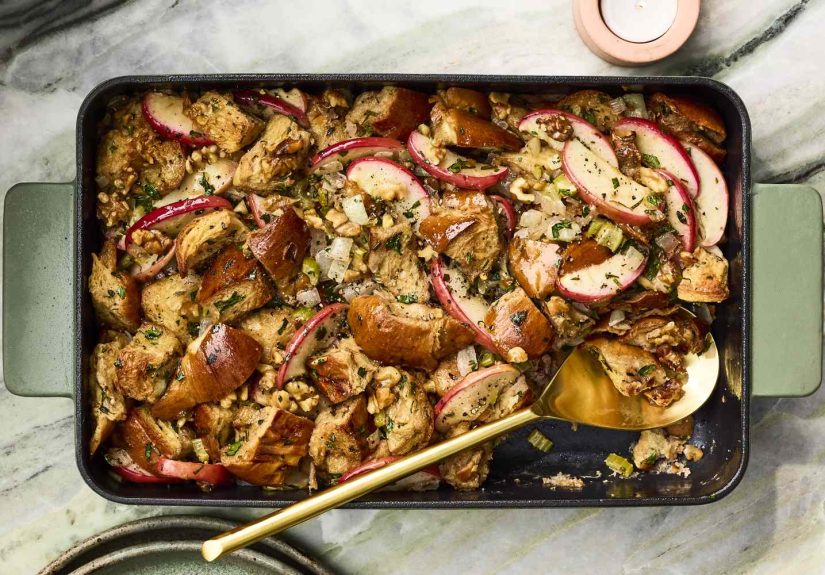
It is also a dish with great table personality. Mashed potatoes are lovable, but they rarely surprise anyone. This dressing gets attention. Guests notice the bronzed top, the visible chunks of apple, the toasted walnuts peeking through, and the unmistakable aroma of butter and herbs. It often becomes the side dish people ask about first. Someone usually wants the recipe. Someone else says it tastes “like Thanksgiving, but better.” And there is almost always one person who claims they are only taking a small spoonful, then returns for a second helping that is mysteriously much larger.
There is also a nostalgic quality to it, even for people who did not grow up eating challah. Apples and walnuts are such classic fall ingredients that they trigger a kind of instant seasonal memory. The dressing tastes familiar without being ordinary. It feels rooted in tradition, but still special enough to earn a little praise. That balance is part of why it works so well for gatherings. It does not alienate traditionalists, but it still gives adventurous eaters something a little more nuanced than standard boxed-style stuffing.
Another memorable part of the experience is the texture contrast. When the top is crisp and the center stays soft, each bite feels complete. You get the buttery bread, the gentle sweetness from the apples, the earthy crunch from the walnuts, and the savory backbone of onion, celery, and herbs. That contrast keeps the dish interesting from first bite to last. It never feels flat. It is comfort food, yes, but comfort food with some very good ideas.
And then there are the leftovers, which may honestly be the dish’s secret second life. Cold-weather mornings are improved dramatically by reheated dressing with a fried egg on top. The edges crisp back up, the center stays tender, and the apples somehow taste even more integrated the next day. Tucked beside leftover turkey, it becomes less of a side dish and more of an event. That is the beauty of a great holiday recipe: it is not just dinner. It is part of the whole experiencecooking, gathering, serving, laughing, reheating, and quietly scraping the last excellent bits from the pan when nobody is looking.
Final Thoughts
Challah-Apple-Walnut Dressing is the kind of side dish that earns repeat invitations. It has the richness people want from holiday comfort food, the brightness that keeps it lively, and enough texture to stay interesting all the way through the meal. It feels classic, but it does not taste sleepy. It is warm, crisp, savory, slightly sweet, and exactly the sort of thing that makes a crowded table feel complete.
If you want one dish that delivers seasonal flavor, real texture, and a little holiday magic without becoming overly complicated, this is a strong candidate. Bake it in a casserole dish, serve it hot, and be prepared for the pan to come back looking suspiciously clean.







 Close
Close