
Table of Contents >> Show >> Hide
- The Moment That Made the World Blink
- How Facial Recognition Finds One Face in a Sea of Fans
- Why This Is Impressive (and Why It’s Not Magic)
- The Trade-Off: Public Safety vs. Always-On Surveillance
- Accuracy, Bias, and the “Computer Said So” Problem
- What This Story Signals About China’s Tech Trajectory
- What It Means in the United States (Yes, This Is Not Just a “China Thing”)
- So… Is This the Future of Big Events?
- Real-World Experiences Related to “Recognized in a Crowd” (Extra 500+ Words)
- Conclusion
Imagine you’re one tiny speck in a stadium packed with tens of thousands of people. The lights dim, the crowd roars, and your brain politely assumes you’re anonymous.
Now imagine a camera politely disagrees.
In a headline-making case out of China, police reportedly used facial recognition to identify and arrest a wanted man who had attended a major concert with an estimated
60,000 fans. It’s the kind of story that sounds like sci-fiuntil you remember your phone can recognize you half-awake, in bad lighting, with questionable hair choices.
Scale that up, connect it to a database, and suddenly “blending in” becomes more of a vibe than a strategy.
The Moment That Made the World Blink
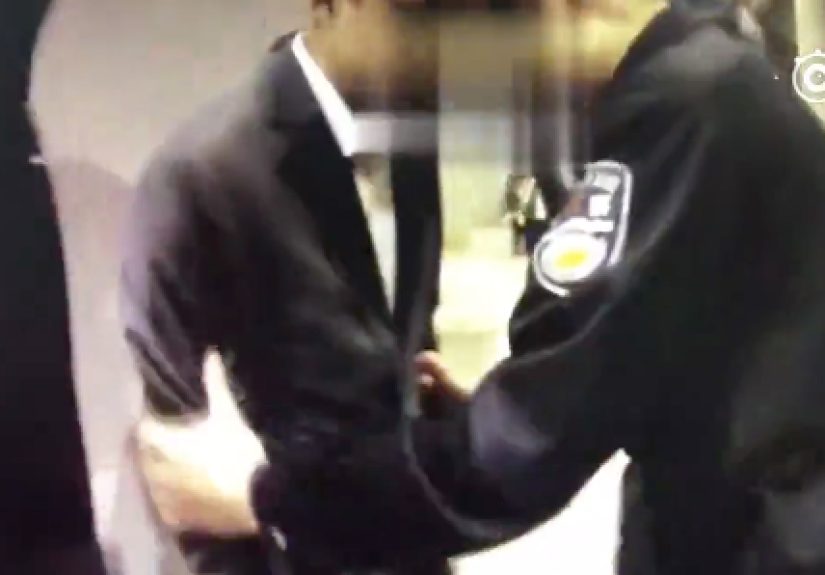
Reports from 2018 described a concert in the city of Nanchang where security cameras equipped with facial recognition flagged a suspect in the crowd.
Police then approached and detained him during the event. The man was identified publicly only by surname in coverage, and the allegations described at the time were framed as
“economic crimes” or an “economic dispute”the kind of label that can cover a wide range of non-violent offenses, depending on the system and the reporting.
The eye-catching detail wasn’t just the arrestit was the scale: a single person picked out from a sea of faces. It was also not an isolated “one-and-done” headline.
In the weeks that followed, additional reports noted other arrests at concerts by the same performer, turning the pop-culture side of the story into an unexpected running joke:
fans came for the music, but apparently some people came for the… dramatic plot twist.
How Facial Recognition Finds One Face in a Sea of Fans
Let’s demystify what “recognized in a crowd of 60,000” usually means in real operational terms. It doesn’t necessarily mean a camera zoomed across the stadium,
instantly identifying a random face from 200 feet away like a superhero. In many real deployments, the system works best at choke pointsthink entrances, ticket gates,
or security checkpointswhere:
- Lighting is more predictable (goodbye, moody concert shadows).
- Faces are more front-facing (less “I’m wearing a scarf for fashion,” more “please look at the camera”).
- The camera gets a cleaner image (the difference between “movie-quality” and “blurry convenience-store footage”).
The typical flow looks like this:
1) Capture a face image (the “probe”)
A camera grabs a frame where a face is visible. Modern systems automatically detect faces in the image, crop to the face region, and normalize itadjusting for angle,
lighting, and scale as much as possible.
2) Convert the face into a mathematical “signature”
Deep-learning models convert the face into a vector (a dense set of numbers) representing facial features. It’s not a photo anymoreit’s a compact, comparable representation.
Two images of the same person should produce vectors that are “close” to each other in a mathematical sense.
3) Compare against a database (one-to-many matching)
If police are searching a “watchlist” or wanted-person database, the system compares the probe vector against many enrolled vectors. This is one-to-many identification.
The system produces candidates and confidence scores.
4) Trigger an alert and verify (the step everyone argues about)
A mature process treats the algorithm as a lead, not a verdict. That means trained staff review matches, confirm identity with additional information,
and follow policies designed to prevent misidentification. In the real world, this is also where shortcuts happensometimes with serious consequences.
Why This Is Impressive (and Why It’s Not Magic)
Identifying someone among tens of thousands of attendees is impressive primarily because it combines coverage and speed.
Humans are not built to scan a stadium crowd and cross-reference it with a database of wanted persons. Computers are.
But there’s an important nuance: systems don’t “search the crowd” the way we imagine. They search the people who pass through camera view in usable conditions
and then compare those faces to a database. When a venue has multiple entrances and thousands of people funnel through, that becomes a high-volume identification pipeline.
So yes“one person among 60,000” is a legitimate scale story. But the success depends on a whole stack of operational ingredients:
good camera placement, good lighting, a decent face angle, a database photo that matches reality, and a threshold that balances catching the right person without
flagging innocent people.
The Trade-Off: Public Safety vs. Always-On Surveillance
The strongest pro argument is straightforward: if someone is wanted for a serious offense, society benefits from locating them without a dangerous chase or a risky confrontation.
Stadiums and transit hubs are complicated security environments, and tools that reduce uncertainty can be appealing to officials and the public.
The strongest con argument is also straightforward: a system powerful enough to identify a wanted person in a stadium is powerful enough to identify
everyone in a stadium. And once you have that capability, the question becomes less “Can it catch a suspect?” and more “Who decides what counts as suspicious?”
In other words, the technology doesn’t only scale up enforcementit scales up monitoring. That’s why the same headline can read like:
- A victory for safety (criminals can’t hide in crowds), or
- A warning about privacy (crowds no longer provide anonymity).
Accuracy, Bias, and the “Computer Said So” Problem
Facial recognition performance has improved dramatically over the last decade, but two truths can coexist:
it can be accurate enough to be useful, and it can still be risky enough to cause harmespecially in one-to-many scenarios.
False positives scale with watchlists
If you compare one face against one stored face (one-to-one), you might keep error rates low.
But if you compare one face against thousands or millions of stored faces (one-to-many), the chance of a false match can rise unless thresholds and safeguards are carefully set.
It’s not just about whether an algorithm is “good.” It’s about how it’s used, how big the database is, and what error rate a system can tolerate.
Demographic performance differences
Independent testingincluding major U.S. benchmarking effortshas shown demographic effects in many systems, meaning error rates can differ by age, sex, and race.
In plain English: some groups are more likely to be misidentified than others in certain deployments. That’s not a minor technical footnote when the output can influence
police decisions, access control, or financial transactions.
Automation bias: when a match “feels” like proof
Even when policies say “this is only an investigative lead,” humans can treat algorithmic outputs as definitive.
The risk is highest when the system produces a confident-looking candidate listespecially if staff are under time pressure or trained to trust the tool.
The uncomfortable takeaway is that the technology can be most dangerous when it’s almost right. A wrong match doesn’t look wrong.
It looks like a neat answer delivered by a machine that doesn’t sound uncertain.
What This Story Signals About China’s Tech Trajectory
China has been widely reported as a leader in large-scale surveillance deployment: dense camera networks, rapid adoption, and integration across public spaces.
In that environment, it’s easier to connect cameras, databases, and real-time alerting into a single operational system.
The concert case became symbolic because it compressed the whole debate into one vivid image:
a person surrounded by thousands of innocent people, yet still individually identifiable.
It also highlighted a cultural reality about technology adoption: once systems become normalized in daily lifeentering buildings, commuting, attending events
people can stop thinking of them as “special surveillance” and start thinking of them as infrastructure, like metal detectors or ID checks.
That shift matters, because infrastructure tends to expand quietly.
What It Means in the United States (Yes, This Is Not Just a “China Thing”)
Americans often read stories like this as if they’re happening on another planet. But facial recognition is already used in a variety of U.S. contexts,
from unlocking phones to verifying identity in certain controlled settingsand some law enforcement agencies have used it in investigations.
U.S. debates tend to focus on:
- Standards and oversight: Who approves deployments, and who audits outcomes?
- Transparency: Are people told when and where face recognition is used?
- Evidence rules: Is a match allowed to drive stops, searches, or arrests?
- Bias and wrongful arrest risk: What safeguards exist when the system is wrong?
Investigative reporting and civil liberties advocacy in the U.S. have pointed to cases where facial recognition contributed to wrongful arrests
when agencies treated matches as stronger evidence than they really were. That’s not a hypothetical danger; it’s a real governance problem:
tools that perform “pretty well” can still produce life-altering errors when used without strict procedures.
So… Is This the Future of Big Events?
Large events already involve layered security: ticketing data, bag checks, metal detectors, ID checks, and crowd monitoring.
Facial recognition fits naturally into that ecosystem because it promises a single, seductive benefit: speed.
Faster entry lines, faster identification of threats, faster resolution of “who is this person?”
But the more a venue relies on biometric identification, the more it raises questions:
- What database is being usedcriminal warrants, banned patrons, missing persons, something else?
- How often is it wrong, and what happens when it’s wrong?
- Is there an alternative for people who don’t want their face scanned?
- How long is biometric data stored, and who can access it?
The “60,000 crowd” headline is memorable because it’s dramatic. The more important question is less dramatic:
what everyday policies quietly come with the cameras once the headlines fade?
Real-World Experiences Related to “Recognized in a Crowd” (Extra 500+ Words)
To understand why this topic hits a nerve, it helps to look beyond the viral headline and into the kinds of experiences people describe when facial recognition becomes
part of daily life. Not “movie villain” life. Normal lifecommuting, shopping, attending events, entering buildings. The big change isn’t that everyone is being chased.
It’s that identity verification becomes ambient.
One commonly reported experience in high-camera environments is the feeling that public spaces have “memory.”
When you walk into a venue, you might not see anything more threatening than a ticket scanneryet the system behind it can be doing more than checking seat numbers.
People describe it as a subtle mental shift: you stop thinking of entry points as neutral and start thinking of them as decision gates.
Not in a panic waymore like the mild unease of realizing the store already knows what you want before you say it out loud.
Another experience is how quickly convenience can normalize the idea. If a building lobby uses facial recognition to open the door for authorized visitors,
it can feel slick: no badge to lose, no code to forget, no fumbling at the worst possible moment (like when your hands are full of coffee and regret).
When systems work smoothly, they teach people to accept the trade-off by rewarding them with speed.
The problem is that “smooth” doesn’t automatically mean “fair,” “transparent,” or “well governed.”
At big events, the emotional texture is different. Stadiums and concerts already have heavy security, so added cameras don’t always feel like a big leap.
Fans often focus on the show, the crowd energy, and the logistics of getting in and out. That’s part of why the “recognized in a crowd” story lands:
crowds are supposed to be noisy, chaotic places where individual identity blurs into collective excitement. Facial recognition reverses that logic.
A crowd becomes not only a mass of people, but also a mass of indexable peopleeach face potentially a searchable entry.
Some people react with a shrug: “If it catches criminals, fine.” Others react with immediate concern: “Who defines ‘criminal,’ and what prevents misuse?”
Both reactions often come from lived experience. If someone has strong trust in institutions, they may see the cameras as safety infrastructure.
If someone has seen institutions make mistakesor has been on the wrong end of a bureaucratic errorthey may see the cameras as a risk multiplier.
The same technology can feel protective or threatening depending on whether you believe you can challenge it when it gets things wrong.
A final experience worth mentioning is the “invisible paperwork” feeling. Traditional identification moments are obvious:
you show an ID, someone checks it, you move on. Biometric identification can happen without that clear handshake.
People often say the unsettling part isn’t just being identifiedit’s not knowing when identification is happening, which systems are involved,
or how long the data lasts. That uncertainty is where anxiety grows.
The concert arrest story is a dramatic example, but the emotional core is everyday: when identity becomes something the environment can read automatically,
it changes how privacy, anonymity, and trust feel in public spaces. And that’s why a single arrest in a stadium can start a global conversation.
Conclusion
“Chinese facial recognition recognizes wanted man in crowd of 60,000” is a headline built for amazementand it earns that reaction.
Technically, it showcases how far computer vision has come: fast matching, large-scale databases, and real-world deployment in complex environments.
But it also showcases the real debate: the same capability that can identify a suspect can identify everyone.
The question isn’t whether the technology is powerful. It’s whether the rules around it are equally strong:
clear limits, transparent notice, meaningful oversight, and safeguards that treat algorithmic matches as leadsnot instant truth.







 Close
Close