
Table of Contents >> Show >> Hide
- Why the Classic Tin Cup Still Matters
- A Brief History of the American Tin Cup
- Jacob Bromwell and the Modern “Classic Tin Cup”
- Design Details That Give the Cup Its Character
- How the Classic Tin Cup Fits Into Modern Life
- What Buyers Should Know Before Choosing One
- The Classic Tin Cup as an American Icon
- Experiences Related to the Classic Tin Cup
- Conclusion
Some objects try very hard to impress you. They arrive with twelve features, five finishes, and marketing copy that sounds like it got an MBA and a beard oil subscription. The classic tin cup is not that object. It is simpler, older, and far more interesting. It belongs to a family of American camp cups that earned their reputation the unfashionable way: by being useful. Whether carried in military mess kits, packed for rough travel, or clipped to a wanderer’s gear, the tin cup became a quiet symbol of practicality, mobility, and a certain kind of no-nonsense American style.
Today, the phrase Classic Tin Cup is closely tied to Jacob Bromwell, the heritage brand founded in 1819. The company presents its cup as a continuation of a Civil War-era design, and that is a big part of why the object still attracts attention. It is not just drinkware. It is a story you can hold in one hand and fill with coffee in the other. And yes, that may sound dramatic for a cup, but history has a funny way of making small things feel larger than life.
Why the Classic Tin Cup Still Matters
The enduring appeal of a classic tin cup comes down to three things: function, symbolism, and design. Functionally, a camp cup is easy to carry, easy to clean, and tough enough for everyday use. Symbolically, it represents self-reliance. Design-wise, it has the kind of plain honesty that modern shoppers call “timeless” when they want to justify buying something old-fashioned and good-looking.
That mix of utility and nostalgia matters because modern consumers are tired of disposable stuff. A classic tin cup feels like a protest against flimsy mugs, overdesigned tumblers, and anything that requires a battery just to keep your drink warm. It reminds people that the best gear is often the gear that does not beg for attention.
There is also a tactile pleasure to it. A camp-style metal cup feels different from ceramic, glass, or insulated steel. It feels direct. You pick it up and immediately understand what it was made to do. This is one reason the classic tin cup has survived as both a practical object and a lifestyle object. It works, and it looks like it works. That may be the purest form of good design.
A Brief History of the American Tin Cup
The American relationship with camp cups stretches back well before the Civil War. During the Revolutionary War, even elite military field life included portable drinking vessels; surviving camp cups linked to George Washington show that compact, transportable drinkware was an important part of life on the move. By the nineteenth century, metal cups had become deeply associated with military camps, frontier travel, and outdoor living.
By the Civil War, tin cups were common pieces of a soldier’s mess kit. Museum collections show just how ordinary and essential they were. Some surviving examples are simple, ingenious, and even improvised, including cups fashioned from repurposed metal containers. That detail says a lot. The classic camp cup was never about decoration first. It was about getting through the day with something dependable.
Later in the nineteenth century, the cup’s identity expanded beyond military use. The National Park Service preserves John Muir’s tin cup, a wonderfully humble artifact that captures the backcountry spirit better than any polished monument ever could. A tin cup in the wilderness is not glamorous. It is better than glamorous. It is believable. It tells us that outdoor life, at its most meaningful, is built around ordinary tools that do extraordinary emotional work.
Jacob Bromwell and the Modern “Classic Tin Cup”
No modern discussion of the Classic Tin Cup is complete without Jacob Bromwell. Founded in Cincinnati in 1819, the company built its reputation on household metalware and later turned heritage craftsmanship into part of its brand identity. Its official history links the company directly to Civil War tin cups supplied to both Union and Confederate soldiers, and its current product line still treats the cup as one of its signature heritage items.
What makes the modern Jacob Bromwell version interesting is that it balances historic storytelling with contemporary product expectations. Current product pages describe the cup as a 12-ounce vessel with a classic silhouette, made in small batches and formed without welding or soldering. The brand leans hard into authenticity, and that positioning is exactly why the item stands out in a market full of trendy outdoor accessories that look like they were designed by committee and caffeine.
There is an intriguing twist, though. Despite the name “tin cup,” current listings identify the material as 304 stainless steel. In other words, the phrase now functions as much as a style and historical reference as a literal material description. That is not really a contradiction; it is a reminder that heritage products often preserve form, ritual, and cultural meaning even when materials evolve.
Design Details That Give the Cup Its Character
1. The uncomplicated shape
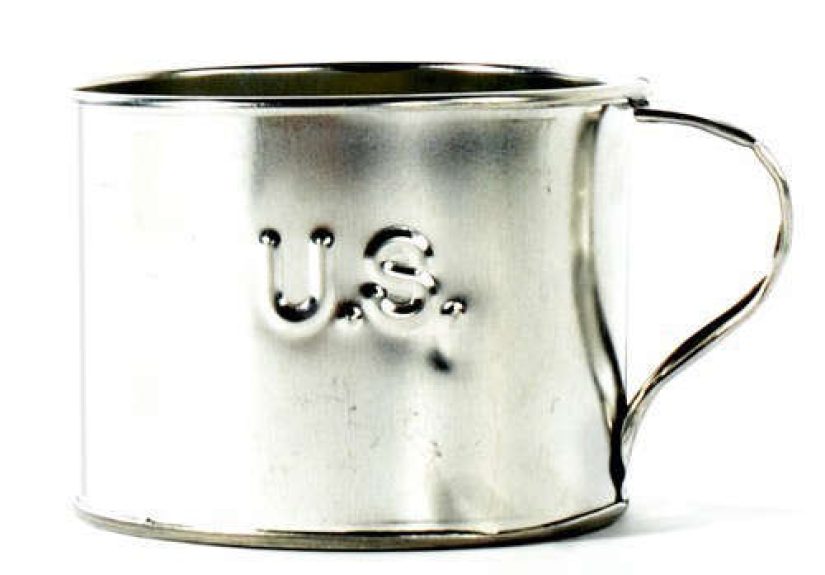
The classic tin cup shape is almost aggressively straightforward: rounded body, sturdy base, practical handle, no unnecessary drama. This is the kind of silhouette that does not need redesigning every spring just because a trend report said curves are “back.” It was already here. It never left.
2. The historical associations
Few everyday objects connect so neatly to multiple American narratives: the military camp, the frontier journey, the wilderness trek, the campfire, the early road trip, and the collector’s shelf. The cup carries those associations without needing a speech. Put one on a table and it instantly suggests stories.
3. The patina of use
Part of the charm is that a classic tin cup is not supposed to stay perfect forever. Small marks, wear, and signs of handling can actually improve its character. That is the opposite of disposable consumer culture. Instead of looking ruined after real life touches it, the cup looks more convincing.
4. The emotional scale
It is a small object, but it creates a surprisingly large emotional response. That is because the best heritage goods feel portable in more ways than one. They carry liquid, sure, but they also carry memory, ritual, and mood.
How the Classic Tin Cup Fits Into Modern Life
The modern owner of a classic tin cup is not necessarily reenacting the Civil War, joining a wagon train, or setting off to live on tea and transcendentalism. Usually, they are making coffee on a campsite, pouring bourbon by a fire pit, styling a kitchen shelf, or buying a gift for someone who thinks “overbuilt” is the highest possible compliment.
That flexibility is a big reason the cup remains relevant. It works in several lanes at once:
Outdoor gear
For camping, fishing, cabins, and casual outdoor use, the cup has obvious appeal. It feels rugged, looks right at home outside, and avoids the visual fussiness of modern drinkware that often seems designed for social media before actual weather.
Home decor and Americana style
In rustic kitchens, farmhouse interiors, Western-inspired spaces, and heritage collections, the classic tin cup works as an object of display. It signals authenticity, or at least a strong desire to appear authentic while enjoying very good lighting.
Gift culture
Because it feels specific and storied, it makes a memorable gift. A ceramic mug says, “I stopped somewhere on the way.” A classic tin cup says, “I selected an heirloom-adjacent object for your coffee and your personal mythology.”
Slow-living rituals
The cup also fits the broader movement toward slower, more intentional consumption. It encourages ritual: morning coffee on a porch, evening tea outdoors, or a simple pour of whiskey after a long day. It does not improve the beverage through technology. It improves the moment through atmosphere.
What Buyers Should Know Before Choosing One
If you are shopping for a classic tin cup, it helps to understand what you are actually buying. Sometimes you are buying a true heritage-inspired piece. Sometimes you are buying a mass-produced camp cup with retro styling. Both can be fine, but they are not the same experience.
Look at the material, size, construction method, and brand story. Some shoppers want historical accuracy or collector appeal. Others just want a durable camp cup with old-school charm. There is no wrong answer, but there is a wrong expectation. If you think you are buying museum-adjacent craftsmanship and end up with bargain-bin cosplay drinkware, disappointment will arrive before your coffee cools.
Also, think about use. A classic tin cup is fantastic for atmosphere and casual sipping, but it is not always the best choice for every beverage scenario. Metal transfers temperature differently than ceramic. That is part of the appeal, but it is also part of the reality. Heritage style is wonderful right up until your fingers learn what thermal conductivity feels like.
The Classic Tin Cup as an American Icon
The best way to understand the classic tin cup is to see it as more than a product and less than a myth. It is an everyday object that happened to show up in important places: military camps, early travel, wilderness exploration, and the continuing American fascination with rugged simplicity. That gives it unusual range. It belongs to history, but it also belongs to the present.
In a culture that constantly invents the next must-have thing, the classic tin cup makes a subtler argument. Maybe we do not always need something newer. Maybe sometimes we need something older, clearer, and more honest. A cup like this does not flatter us with convenience or distract us with gimmicks. It just does its job and lets us decide what the moment means.
That is why the classic tin cup endures. It is useful. It is evocative. It is rooted in real American material culture. And it has the rare ability to make a simple drink feel slightly more memorable, which is more than can be said for a surprising number of expensive modern objects pretending to improve our lives.
Experiences Related to the Classic Tin Cup
There is something almost theatrical about the first time you use a classic tin cup, even if you are doing nothing more dramatic than standing in your kitchen half-awake, waiting for coffee to become personality. The cup changes the mood of the moment. Suddenly the scene feels less like weekday routine and more like the opening chapter of a memoir written by someone who knows how to split wood and quote Walt Whitman, even if your actual skill set tops out at reheating leftovers and finding missing charging cables.
Outdoors, the effect is even stronger. A classic tin cup has a way of making ordinary camping rituals feel richer. Coffee tastes a little smokier by association. Tea feels less polite and more earned. Water feels like frontier water, even if it came from a suspiciously advanced filtration bottle two minutes earlier. The cup does not create the experience by itself, of course, but it frames it beautifully. It is a prop in the best sense: an object that helps the scene make emotional sense.
People also tend to remember these cups because they age alongside experiences. A scratch from being packed next to tools, a faint dent from a clumsy camp setup, a little dulling from regular handling, these details become part of the object’s biography. A glossy mug often looks worse as it wears down. A classic tin cup usually looks more believable. It starts to feel less purchased and more accumulated, as though it wandered into your life with a little history already attached and then stayed to collect some more.
At home, the cup has a different kind of usefulness. It turns quiet habits into rituals. Morning coffee on the back steps feels less rushed. An evening drink on the porch feels more intentional. Even sitting at a desk, a classic tin cup can serve as a tiny visual rebellion against disposable modern clutter. It says that not everything needs to be optimized, insulated, app-connected, or blessed by a startup founder in expensive sneakers. Some things can simply be sturdy and satisfying.
It also sparks conversation in a way many household objects do not. Guests ask about it. Someone always wants to know if it is actually old. Someone else says it reminds them of a grandparent, a camping trip, a museum visit, or a movie scene from a life they are not sure they actually lived. That is part of the pleasure. The cup invites stories, and stories are often what people are really buying when they choose heritage goods.
Perhaps the most appealing experience connected to a classic tin cup is the feeling of continuity. You are not literally stepping back into the nineteenth century, and nobody sensible should pretend otherwise. But the object gently collapses time. It connects modern routines to older forms of travel, work, leisure, and survival. That connection can feel grounding. In a fast-moving world, using something with historical shape and purpose can be oddly calming. It reminds you that daily life has always been made up of little acts: carrying water, pouring coffee, gathering around a fire, taking a brief pause. The cup endures because those moments endure. It is humble, yes, but that is exactly the point. The classic tin cup does not need to dominate an experience. It just needs to be there, in your hand, quietly doing what it has always done.
Conclusion
The classic tin cup remains compelling because it sits at the crossroads of American history, practical design, and modern nostalgia. From military camps and wilderness trails to curated kitchens and thoughtful gift boxes, it continues to prove that an honest object can outlast generations of flashy replacements. Whether you admire it for its heritage, its visual simplicity, or the small rituals it improves, the classic tin cup earns its place the old-fashioned way: by being useful, memorable, and unexpectedly full of character.







 Close
Close