
Table of Contents >> Show >> Hide
- The Quick Case File: What Is the Moooi Random Light?
- Where the Story Starts: An Experiment, Not a Marketing Meeting
- Why It Looks So Good: The Beauty of Controlled Chaos
- Material Matters: Fiberglass, Epoxy, and a Little Bit of Nerve
- Random Light vs. Random Light II: What Changed?
- How Designers Use It in Real Rooms
- What Makes It an Icon Instead of Just a Pretty Pendant?
- Styling Tips for People Who Want the Look Without the Drama
- Who Should Buy It?
- Experience Section: What Living With a Moooi Random Light Actually Feels Like
- Final Verdict
- SEO Tags
If you have ever walked into a room and immediately looked up like a raccoon spotting a shiny object, there is a good chance a Moooi Random Light was involved. This pendant has been turning heads for years, and for good reason. It is airy but dramatic, sculptural but approachable, and somehow manages to look both handmade and futuristic at the same time. In a design world packed with glass globes, metal cones, and fixtures that insist on being “minimal,” the Random Light enters the room like a glorious little rebel made of thread, light, and nerve.
Designed by Bertjan Pot, the Random Light has become one of Moooi’s most recognizable pieces. Its appeal is not just about shape. It is about process, personality, and that rare design magic where the method of making the object becomes part of the object’s charm. This is not a lamp that hides its construction. It practically brags about it. And honestly, it has earned the right.
In this design sleuth deep dive, we are unpacking what the Moooi Random Light is, where it came from, how it is made, why it still feels fresh, and how to use it without making your room look like it is trying too hard. Because great lighting should be a conversation starter, not a cry for help.
The Quick Case File: What Is the Moooi Random Light?
The Moooi Random Light is a globe-like pendant with a loose, webbed shell made from fiberglass soaked in epoxy resin and wrapped around an inflatable form. Once the structure dries, the inner mold is removed, leaving behind a lightweight sphere that looks spontaneous, delicate, and almost impossible. The result is a lamp that diffuses light softly while also letting the bulb glow visibly at the center. It is part sculpture, part lantern, part design flex.
Available in black and white and typically offered in small, medium, and large sizes, the Random Light works in everything from compact dining nooks to lofty entry halls. In U.S. retail listings, the sizes land at roughly 19.75 inches, 31.5 inches, and 41 inches in diameter, which means the large version is not here to blend in politely. It is here to make an entrance.
That sense of scale is part of the product’s genius. Even when it is large, the open structure keeps it from feeling bulky. The light occupies visual space without turning into a giant opaque bowling ball hanging over your table. It is dramatic, yes, but it still lets a room breathe.
Where the Story Starts: An Experiment, Not a Marketing Meeting
One of the best things about the Random Light is that it did not begin as a committee-approved attempt to “capture market share in the premium pendant category.” Blessedly, it started as a material experiment. Bertjan Pot has long been associated with curiosity-driven design, and the Random Light grew out of that spirit. Official brand history and retailer descriptions consistently point back to Pot’s experiments with fiberglass and structure in the late 1990s and early 2000s, before the design joined the Moooi collection and took off.
That origin story matters because you can see it in the final object. The Random Light does not look overdesigned. It looks discovered. It has the personality of a breakthrough rather than a trend report. That helps explain why it still feels relevant after more than two decades. It was not built to chase a design moment; it came from a process, and process ages better than hype.
There is also something wonderfully human about the early lore surrounding the light. Moooi’s own story about Bertjan Pot personally transporting early versions of the fixture makes the piece feel less like an abstract design icon and more like a beloved invention that had to be physically wrestled into the world. Good design history should have at least one mildly inconvenient train ride. This one delivers.
Why It Looks So Good: The Beauty of Controlled Chaos
The word “random” can be dangerous in design. Sometimes it means carefree and organic. Sometimes it means “we gave up halfway through.” The Moooi Random Light lands firmly in the first category. Its irregular network of lines creates variation, but the overall form still reads as intentional. That balance is the whole show.
Because the shell is created by winding resin-coated fibers around an inflatable mold, no two shades are exactly alike. The sphere is never perfectly spherical, and that slight irregularity is part of the appeal. A machine-perfect globe would feel colder and more anonymous. The Random Light has tiny inconsistencies that give it character. It looks handcrafted without becoming rustic, and it feels contemporary without becoming sterile.
When lit, the effect gets even better. The open structure allows the bulb to remain visually present while the network around it softens the glare and throws subtle shadow play into the room. In daylight, the fixture reads as a textural object. At night, it becomes atmospheric. That dual personality is one reason designers keep coming back to it.
Material Matters: Fiberglass, Epoxy, and a Little Bit of Nerve
Let us give proper credit to the material story, because this is where the Random Light separates itself from the sea of pretty pendants. The outer shell is formed from fiberglass with epoxy resin, creating a surprisingly strong but visually light structure. On paper, that combination might not sound romantic. In person, it is the design equivalent of a good plot twist.
Fiberglass gives the light its thread-like texture and tensile quality, while the epoxy helps set the shape. Together, they make possible that barely-there, cage-like globe that looks fragile but is engineered to hold itself together. The chromed steel hardware and centered bulb arrangement add a clean, polished contrast to the organic outer form.
This is also why the Random Light became such a memorable object in the first place. It is not only beautiful; it teaches you how it is made just by existing. You look at it and instantly start reverse-engineering the process in your head. Balloon? Resin? Thread? Witchcraft? That moment of curiosity is part of the design experience.
Random Light vs. Random Light II: What Changed?
If you have noticed the name Random Light II, that is not just a dramatic sequel title. Moooi updated the product with refinements aimed at improving installation, usability, and longevity while preserving the original look. Retail and manufacturer descriptions note several tweaks, including easier installation, improved bulb positioning, updated canopies for UL-certified versions, and a branded LED bulb in the newer iteration.
In other words, the company did something refreshingly sensible: it kept the soul of the design and upgraded the practical bits. The bulb sits more precisely in the center, installation is less fussy, and the overall user experience is more polished. That might not sound glamorous, but anyone who has ever tried to hang a designer pendant while balancing on a ladder and questioning their life choices knows this matters deeply.
The updated version also reinforces a broader point about enduring design. Icons survive not because they are frozen in time, but because they can be respectfully improved. Random Light II proves that good evolution does not require a total personality transplant.
How Designers Use It in Real Rooms
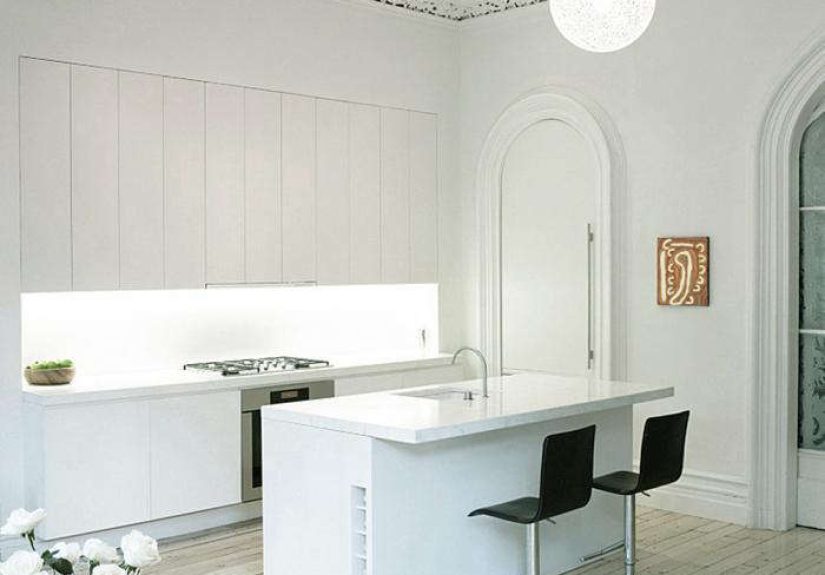
One reason the Moooi Random Light keeps showing up in editorial interiors and design retail inspiration is its range. It can work as a focal point in an entryway, float above a dining table, soften a living area, or appear in multiples for a more theatrical installation. U.S. retailers regularly describe it as a strong option for dining spaces, entry vignettes, lounge areas, and other indoor rooms where you want ambient light with sculptural presence.
The small size is great when you want the texture and personality without overwhelming the room. The medium often hits the sweet spot over round dining tables or in bedrooms with high ceilings. The large is the showboat. Hang one in a double-height foyer and suddenly everyone who enters your home behaves like they are at a private gallery opening, which is fun until someone asks if the canapé selection is locally sourced.
Clustered installations are especially effective because the irregular texture creates a layered cloud effect. A trio in different sizes can look airy and dramatic instead of heavy and repetitive. Black versions feel moodier and more graphic; white versions feel softer, cloud-like, and a touch more ethereal.
What Makes It an Icon Instead of Just a Pretty Pendant?
It has a recognizable silhouette
You can spot a Random Light from across a room. That matters. Design icons do not need labels. They introduce themselves.
It turns process into poetry
The construction method is not hidden. The making is the aesthetic. That gives the piece conceptual depth without making it feel academic or self-important.
It balances softness and edge
The globe shape is familiar and comforting, but the random lines keep it slightly unpredictable. It is neither too polite nor too aggressive. It knows how to work a room.
It survives trends
The Random Light has lived through many design eras: glossy minimalism, industrial everything, Scandinavian restraint, curved contemporary, and the current obsession with sculptural lighting. It still works because it is not pinned to one aesthetic camp.
Styling Tips for People Who Want the Look Without the Drama
If you are using a Moooi Random Light, let it do its job. Do not crowd it with five other “statement” pieces all screaming for attention at once. This fixture already brings texture, shape, and personality. It pairs especially well with restrained furniture, natural woods, matte surfaces, soft textiles, and rooms that benefit from one airy focal point overhead.
For a cleaner modern look, choose white and keep the surrounding palette calm. For a bolder or more graphic interior, black adds instant contrast. Over a dining table, give it enough breathing room so the irregular form reads clearly. In a tall entry, go bigger than you think you should. The open construction can handle scale better than solid fixtures can.
Also, do not ignore maintenance. Several retailers recommend feather-dusting the fixture regularly because of its intricate surface. This is not a dealbreaker. It is simply the tax you pay for owning something more interesting than a beige drum shade.
Who Should Buy It?
The Moooi Random Light is for people who want lighting to be part of the architecture of a room, not an afterthought. It suits homeowners, decorators, and design enthusiasts who appreciate pieces with a clear story and visible material intelligence. It is especially strong for interiors that need softness without sentimentality, and sculpture without visual heaviness.
It is probably not the fixture for someone who wants a lamp to disappear completely. The Random Light is not shy. Even when it is white, even when it is delicate, it has a point of view. That is the appeal. It does not just provide illumination. It provides identity.
Experience Section: What Living With a Moooi Random Light Actually Feels Like
The experience of living with a Moooi Random Light is different from living with a standard pendant because the fixture keeps changing depending on where you are standing, what time of day it is, and how the room is being used. In the morning, especially with a white version, it can read almost like a floating sketch in the air. Sunlight catches the texture, and the lamp looks delicate, graphic, and surprisingly light for something that occupies so much visual space. It feels less like a heavy fixture and more like a suspended drawing.
At night, the mood shifts. When the bulb is on, the fixture becomes warmer and more intimate. The web of fiberglass softens the light just enough to make the room feel comfortable without flattening it. You still see the bulb at the center, which gives the lamp a kind of glowing core. That is a big part of its charm. Instead of hiding the source of light, the Random Light makes the bulb part of the composition. The effect is cozy, sculptural, and just a little theatrical.
In a dining room, the experience is especially strong. The lamp helps define the table area even when there are no walls separating the space. It creates a visual “ceiling” over meals, conversations, and late-night takeout that somehow became a two-hour life discussion. In an entryway, it works differently. There, it functions like a first impression machine. People notice it immediately, and because the form is unusual, it tends to invite comments. It is one of those rare pieces that makes guests look up before they look around.
There is also a tactile experience, even though you are mostly enjoying it with your eyes. The open texture gives the fixture a sense of handmade depth that flat, smooth shades do not have. It feels personal. Not rustic, not crafty, not precious. Just human. That matters more than many people realize. Rooms often feel more welcoming when at least one object in them shows evidence of process and imperfection.
Of course, ownership is not entirely cinematic. Dust exists. Feather dusters exist. These two facts will eventually meet. But even that maintenance ritual reinforces the idea that this is a design object with texture and presence, not just a sealed appliance bolted to the ceiling. Over time, many fixtures fade into the background. The Moooi Random Light tends not to. It keeps participating in the room. It still catches your eye when you walk past. It still changes with the light. It still feels clever. And in a home full of things competing for attention, that kind of lasting fascination is rare.
Final Verdict
The Moooi Random Light earns its status the old-fashioned way: by being genuinely original, beautifully made, and stubbornly memorable. It began as an experiment, evolved into a modern classic, and remains one of those pieces that can make a room feel more thoughtful without making it feel overdesigned. That is a difficult balance, and Bertjan Pot nailed it.
If you love lighting that feels sculptural, airy, and just a little witty, this pendant deserves a place on your shortlist. It is a conversation piece, yes, but it is also a remarkably useful one. The best design objects do both. They charm the eye and improve the room. The Random Light still does that, which is why it remains a design sleuth favorite instead of a one-hit wonder from the early 2000s.





 Close
Close