
Table of Contents >> Show >> Hide
- What the DeWalt Atomic 20V Multi-Head Drill Actually Is
- Specs That Matter in Real Life
- Why the Multi-Head System Is the Whole Story
- Design and Build Quality
- Performance: Better Than a Niche Tool Has Any Right to Be
- Recommended Uses and Best-Fit Buyers
- Pros and Cons
- Price and Value
- Final Verdict
- Extended Real-World Experience: What Living With This Drill Feels Like
If you have ever tried to drive a screw inside a cabinet corner with a full-size drill, you already know the feeling: your wrist bends, the chuck hits the wall, your patience packs its bags, and the screw stares back at you like it pays rent there. That is exactly the kind of nonsense the DeWalt Atomic 20V Multi-Head Drill is built to solve.
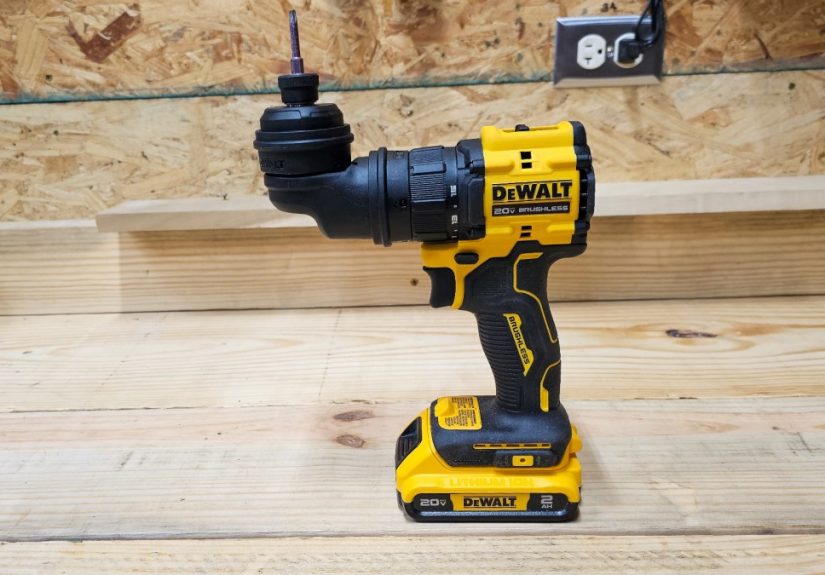
Officially sold as the DeWalt DCD803B, this compact 20V MAX Atomic drill/driver uses interchangeable heads to tackle awkward drilling and fastening jobs without forcing you to carry a separate right-angle drill, offset driver, compact driver, and standard drill. DeWalt gives you four attachments, so the marketing shorthand “4 tools in one” is fair enough. If you count the base tool, you could even call it a 5-in-1 setup. Either way, the point is the same: this thing is trying to do a lot with one motor and one battery platform.
And surprisingly, it mostly pulls it off.
What the DeWalt Atomic 20V Multi-Head Drill Actually Is
The DCD803 belongs to DeWalt’s Atomic line, which focuses on compact tools that still deliver meaningful power. Instead of being a plain vanilla drill/driver, this model is designed around interchangeable heads. In the box, you get a 1/2-inch metal chuck attachment, a 1/4-inch hex quick-release attachment, a 1/4-inch hex right-angle attachment, and a 1/4-inch hex offset attachment. There is also an organizer, which sounds boring until you realize that tiny attachments have a supernatural ability to disappear the minute your shop gets busy.
On paper, the tool is appealing because it combines compact size with real 20V platform compatibility. That means it is not just a cute little installer driver for featherweight jobs. It is still part of the DeWalt 20V MAX ecosystem, which matters if you already own DeWalt batteries and would rather not start a second battery family just because one cabinet screw is being dramatic.
Specs That Matter in Real Life
Let’s skip the brochure fog and go straight to the numbers that actually tell the story.
- Max power: 569 MWO
- No-load speed: 0-450 / 0-1650 RPM
- Tool weight without attachments: 2.15 pounds
- Head length without attachments: 4.91 inches
- Tool width: 2.48 inches
- Two-speed transmission
- 15 clutch settings plus drill mode
- LED work light
Those numbers tell you two important things. First, this is not a toy. Second, it is not pretending to be a heavy-duty framing or masonry monster either. The DeWalt Atomic multi-head drill lives in the sweet spot between access and everyday capability. It is more about precision, control, and fitting where normal drills refuse to fit than about blasting through concrete like it is auditioning for an action movie.
Why the Multi-Head System Is the Whole Story
1. The 1/2-Inch Metal Chuck Attachment
This is the head that makes the DCD803 feel most like a traditional drill/driver. For general drilling and standard fastening, this will be the attachment many users leave on most of the time. It is the most versatile option for twist bits, paddle bits, and general workshop duty.
If you are assembling shelving, drilling pilot holes for wood screws, boring through studs for light-duty runs, or doing punch-list work, this chuck makes the tool feel familiar. It is the “business as usual” face of the system.
2. The Right-Angle Attachment
This is where the tool starts earning its keep. Tight cabinet interiors, framing intersections, weird mechanical chases, and “who designed this gap?” situations are exactly why right-angle attachments exist. With the DCD803, the right-angle head is one of the biggest reasons to buy the tool in the first place.
For electricians, HVAC techs, finish carpenters, and remodelers, access is money. A tool that saves a few minutes on every awkward fastener stops being a novelty and starts becoming a daily habit.
3. The Offset Attachment
The offset head is the quiet genius of the kit. A lot of people understand the value of a right-angle drill. Fewer appreciate the offset head until they actually use one. It lets you drive or remove fasteners close to edges, corners, and surfaces where even a compact drill body gets in the way.
Installing hinges, cabinet hardware, drawer slides, and trim-related fasteners suddenly becomes much less theatrical. Instead of contorting yourself into a human paperclip, you just snap on the offset head and finish the job.
4. The 1/4-Inch Hex Quick-Release Attachment
This head turns the tool into a quick-change driver for bits. It is ideal for fast-moving screwdriving tasks when you do not want to fuss with a chuck. If you are bouncing between pilot drilling and fastener driving, the ability to swap heads quickly is genuinely useful. It makes the tool feel less like a gimmick and more like a compact system.
Design and Build Quality
One of the best things about this drill is that DeWalt did not just throw a few attachments into a box and call it innovation. The system feels like it was designed by people who have actually been annoyed by real jobsites. The drop-in load mechanism is fast, secure, and easy to understand. That sounds like faint praise until you remember how many clever-looking tool systems become a puzzle the minute your hands are dusty.
The compact body is another major win. At under 5 inches front to back without attachments, the base tool is unusually short for a 20V platform drill. That matters more than spec sheets sometimes admit. In real use, shorter tools are easier to position, easier to brace, and far less likely to bonk a wall, shelf, stud, or your own knuckles.
The LED light is also not just a decorative sparkle. When you are working in a cabinet box, under a sink, behind a utility panel, or inside a half-finished closet, good visibility matters. A compact tool with a decent work light is simply more pleasant to use, and yes, pleasant tools get grabbed more often.
Performance: Better Than a Niche Tool Has Any Right to Be
The big question with any multi-head tool is whether it is actually good, or just very interesting. In the DeWalt’s case, the answer leans comfortably toward good.
For wood drilling and everyday fastening, it has enough power for the kind of work most tradespeople and serious DIYers do constantly. Pilot holes, wood screws, cabinet installs, fixture work, light framing tasks, punch-list jobs, finish carpentry, and repairs are all squarely in its comfort zone.
It is especially convincing because it does not feel flimsy. Some installer-style tools are wonderful until you ask them to do anything remotely stubborn, and then they respond like a Victorian poet fainting onto a chaise lounge. The DCD803 feels more substantial than that. It has enough muscle to avoid feeling precious.
That said, there are limits. This is not the drill you buy as your one-and-only answer for constant large-hole boring, repeated self-feed abuse, thick metal drilling, or masonry-heavy workloads. It can handle a lot, but it is still a compact access-focused platform. Think “versatile specialist,” not “replacement for every big drill you own.”
Recommended Uses and Best-Fit Buyers
Best for Pros Who Live in Tight Spaces
If you install cabinets, work in remodeling, handle HVAC, run electrical, do finish carpentry, or spend your days fastening things in places that architects forgot humans would need to reach, this tool makes a lot of sense. It saves bag space, reduces tool swapping, and solves access issues elegantly.
Great for Serious DIYers
For advanced homeowners who do more than hang one picture frame every autumn, the DCD803 is a smart buy. If your weekends often involve built-ins, garage storage systems, closet retrofits, shelving, trim work, deck repairs, or kitchen updates, you will appreciate what the attachments do.
Probably Overkill for Casual Users
If your idea of a “big project” is tightening a cabinet knob and occasionally assembling flat-pack furniture, you probably do not need this. A regular compact drill/driver will cost less and still handle your needs. The DeWalt Atomic multi-head drill is best when awkward access is a frequent problem, not a once-a-year nuisance.
Pros and Cons
What I Like
- Excellent compact size for a 20V platform tool
- Four genuinely useful attachments
- Great for cabinets, corners, closets, and overhead fastening
- Solid power for light- to medium-duty drilling and driving
- Fast, smart head-swapping system
- Works with DeWalt 20V MAX batteries
- Organizer helps keep the whole system together
What Could Be Better
- Price is higher than a standard compact drill
- Not a replacement for heavy-duty drill applications
- Attachments add complexity if you only need a basic driver
- Best value depends on whether you will truly use the specialty heads
Price and Value
The DeWalt Atomic 20V Multi-Head Drill is not bargain-bin material, and that is the first thing many buyers will notice. Depending on retailer timing, promos, and whether you are looking at a bare tool or a kit bundle, the price usually lands in the low-to-mid $200 range. That is enough money to make people pause, especially when ordinary compact drills can cost much less.
But value depends on what problem you are solving. If you are comparing this tool to a plain drill, it can seem expensive. If you compare it to buying a compact drill, a right-angle solution, a close-quarters fastening option, and a quicker install-friendly setup, the math starts looking more reasonable. Convenience is not free, but neither is losing time every day to bad access.
Final Verdict
The DeWalt Atomic 20V Multi-Head Drill is one of those tools that makes perfect sense the second you imagine real work instead of showroom posing. It is compact, clever, fast to reconfigure, and genuinely useful in places where a normal drill becomes a nuisance. More importantly, it avoids the biggest sin of “multi-function” products: it does not feel like a compromise machine pretending to be several tools while being bad at all of them.
No, it will not replace a full-size heavy-duty drill for every demanding application. And no, it is not the cheapest path to drilling holes and driving screws. But for cabinet installs, remodeling, punch-list work, electrical and HVAC access tasks, finish carpentry, and serious DIY projects, it is one of the more compelling compact specialty tools DeWalt has put out in recent years.
In plain American English: if awkward spaces are part of your weekly life, this drill is smart. If awkward spaces are a once-a-year inconvenience, you can probably save your money. But if your work regularly involves corners, cabinets, edges, and muttering under your breath, the DCD803 has a very good chance of becoming your favorite problem-solver.
Extended Real-World Experience: What Living With This Drill Feels Like
The most interesting thing about the DeWalt Atomic 20V Multi-Head Drill is that its value shows up in little moments, not just dramatic ones. On day one, you notice the attachments and think, “Nice, this is clever.” By week three, you stop thinking about the cleverness and start noticing that you are simply finishing irritating tasks faster. That is the real ownership experience.
Imagine a cabinet install. You pilot a hole with the chuck attachment, switch to the hex quick-release for the screw, then snap on the right-angle head because the last fastener sits where the cabinet side panel and wall leave almost no room. On a normal day with a normal drill, that sequence often means walking back to the bag, hunting for another tool, or trying to force one drill into a space it has no business entering. Here, the workflow stays compact and calm. That matters more than a flashy spec ever will.
The offset attachment becomes especially valuable in places where hardware sits annoyingly close to a side wall or face frame. Anyone who has installed drawer slides, adjusted European hinges, or mounted accessories inside a tight enclosure knows that one impossible screw always shows up. The DeWalt does not magically make those screws fun, but it does turn them from “this is ridiculous” into “fine, let’s get this over with.” Sometimes that is the highest form of tool praise.
There is also a less glamorous advantage: fatigue. Compact tools are easier to hold overhead, easier to steady one-handed for brief moments, and easier to fit into your body mechanics without twisting yourself into weird positions. Over the course of a full day, that adds up. You may not buy the DCD803 thinking about shoulder strain or wrist comfort, but after enough repetitive tasks, you will notice the difference.
The organizer is another thing that sounds minor until you actually live with the tool. Multi-head systems fail fast when attachments get separated, tossed into random drawers, or buried under extension cords and old hole saws. Keeping the heads together on a mount or bench makes the whole system feel intentional. Without that, any multi-head drill risks becoming “the tool with missing parts.”
There are trade-offs, of course. If you are doing rough, repetitive heavy-duty drilling all day, you may eventually decide a dedicated larger drill is still the better primary weapon. The Atomic is better as a precision utility player than as a nonstop brute. But that does not feel like a disappointment. It feels like using the right tool for the right job. And frankly, that is a healthier relationship than expecting one drill to be your therapist, gym coach, and demolition crew all at once.
Over time, this drill starts to earn trust in a very practical way. It becomes the tool you grab when you suspect a job might get awkward. Not because it looks futuristic, and not because it has a pile of attachments to show off, but because it solves the tiny spatial problems that slow real work down. That is the kind of experience that turns a specialty purchase into a favorite.







 Close
Close