
Table of Contents >> Show >> Hide
- Quick refresher: what the movie is (and why people still argue about it)
- The “numbers” that power most rankings
- My ranking method (so you know I’m not just vibing)
- Driving Miss Daisy: the ranking scorecard
- Opinions you’ll hear from the “love it” camp
- Opinions you’ll hear from the “side-eye” camp
- Where it lands on Best Picture winner rankings
- Five elements that most rankings agree on (even when opinions clash)
- How it compares to the other 1989 Best Picture nominees
- If you’re making your own ranking, try one of these (non-terrible) frameworks
- So… is it overrated or underrated?
- Viewer Experiences (): how people actually encounter “Driving Miss Daisy” today
- Final Take
“Driving Miss Daisy” is one of those movies that can start an argument faster than a group text about where to eat.
Some people remember it as a warm, funny, quietly moving story about friendship. Others see it as a “feel-good” Best Picture winner
that looks a little too comfortable sitting next to the messy realities of race, class, and power.
Both reactions can be truewhich is exactly why this film keeps showing up in rankings, debates, and late-night “Wait… THAT won Best Picture?” conversations.
This article breaks down the movie’s reputation using a rankings-and-opinions approach: the “hard numbers” people cite,
the craft elements that consistently score high, and the cultural criticisms that tend to drag it down on modern lists.
If you’re building your own rankingof Best Picture winners, late-’80s classics, Morgan Freeman performances, or movies that make your family cry
you’ll leave with a fair (and occasionally snarky) framework to do it.
Quick refresher: what the movie is (and why people still argue about it)
Released in 1989, “Driving Miss Daisy” follows Daisy Werthan, an older Jewish widow in Atlanta, and Hoke Colburn,
the Black chauffeur her son hires after Daisy’s driving becomes unsafe. The story spans about 25 years, landing across the Civil Rights era
while focusing on the evolving relationship between the two leadsoften in small moments that feel almost “slice of life” rather than big, speechy drama.
The film is adapted from Alfred Uhry’s play, which won the Pulitzer Prize for Drama (1988). That “prestige DNA” matters:
people often rank “Daisy” as a stage-to-screen success story with awards baked in.
But adaptation also shapes the criticismbecause what plays as intimate and contained on stage can read as “too gentle” on screen,
especially when viewers want sharper social commentary.
The “numbers” that power most rankings
Rankings are usually a mix of art, memory, and receipts. Here are the receipts people reach for when defending (or dunking on) “Driving Miss Daisy.”
- Release date: December 15, 1989 (U.S.).
- Runtime & rating: 99 minutes; rated PG.
- Academy Awards: 9 nominations, 4 wins (including Best Picture and Best Actress for Jessica Tandy).
- Domestic box office: $106,593,296 (U.S./Canada domestic gross as reported by Box Office Mojo).
- Critics & audiences: Rotten Tomatoes score and “Critics Consensus” remain broadly positive; Metacritic shows strong critical reception.
- Audience satisfaction: Frequently cited as an A+ CinemaScore title (rare territory).
- AFI placement: Included in AFI’s “100 Years…100 Cheers” at #77.
Those metrics help explain why the film stays visible. Even when critics rank it low among Best Picture winners, the movie still carries
major award legitimacy, strong audience sentiment signals, and pop-culture familiarity.
My ranking method (so you know I’m not just vibing)
When people say “this movie is overrated” or “this movie is a classic,” they’re usually talking past each other.
One person is ranking craft. Another is ranking cultural impact. Another is ranking how hard it hits emotionally on a random Tuesday.
So here’s the method I use for a fair “Driving Miss Daisy rankings and opinions” breakdown:
- Craft score: acting, writing, direction, pacing, production craft (makeup matters here), and overall cohesion.
- Impact score: awards history, influence, rewatchability, and whether it still gets discussed.
- Context score: how it holds up culturally; what modern audiences critique; how it compares to peers and competitors.
A movie can be great in one bucket and wobbly in another. “Daisy” is a textbook case.
Driving Miss Daisy: the ranking scorecard
Below is a category ranking (10-point scale) that reflects how the film typically performs across the “craft / impact / context” mix
plus my editorial opinion on why it lands there.
1) Performances 10/10
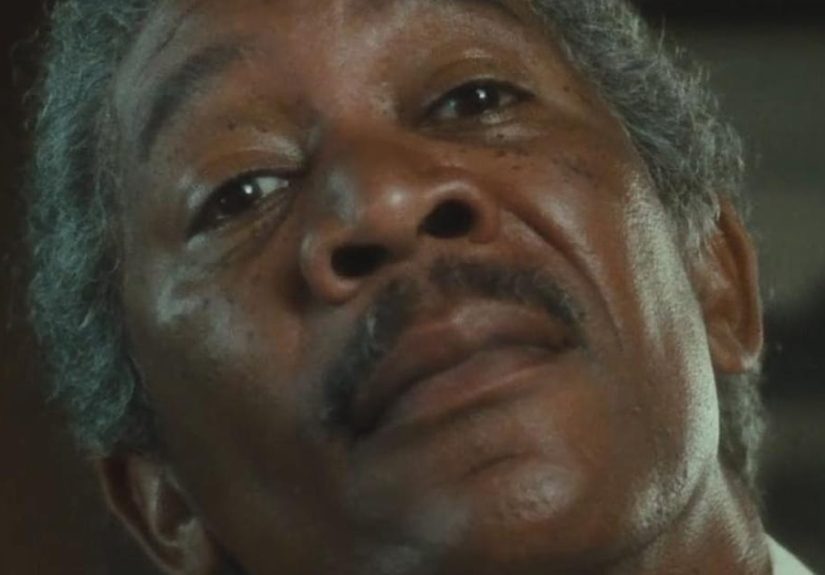
Jessica Tandy and Morgan Freeman are the engine, the steering wheel, and the entire vehicle. Tandy’s Daisy is stubborn, proud, funny, and prickly
without turning into a cartoon. Freeman’s Hoke is warm and disciplined, with a performance style that quietly accumulates meaning over time.
Rankings that emphasize acting almost always treat “Driving Miss Daisy” kindly, even when they critique the movie’s bigger message.
2) Screenplay & dialogue 9/10
Uhry’s writing is precise: short scenes, sharp rhythms, and the kind of dialogue that sounds simple until you realize it’s doing
character work in half a sentence. The screenplay is built for performanceslike a well-tailored suit that looks effortless because it fits.
If you’re ranking best stage-to-screen adaptations, this is a frequent contender.
3) Direction & storytelling clarity 8/10
Bruce Beresford directs with restraint. Nothing screams “Look at me, I’m directing!”which is either the highest compliment or
exactly why some viewers feel it plays “safe.” The storytelling is crystal clear, the tonal shifts are gentle, and the pacing stays steady.
Rankings that reward subtlety score it high; rankings that want cinematic boldness rank it lower.
4) Emotional pull / rewatchability 9/10
Many viewers revisit this movie the way they revisit comfort food: familiar, warm, and reliably satisfying.
It’s also short (under 100 minutes), which is basically a miracle in modern movie-time. If your ranking system includes “Would I watch this again?”
“Daisy” gets a boost.
5) Cultural “holds up?” factor 6/10
Here’s where rankings get spicy. Modern criticism often focuses on whether the film treats race as a backdrop rather than the point,
and whether its central relationship is framed in a way that feels too reassuring to white audiences.
Some viewers argue it humanizes people across differences; others argue it softens structural realities into personal niceness.
If your ranking prioritizes cultural sharpness and complexity, this score drops.
Overall score: 8.4/10 (Craft classic, context debate magnet)
In plain English: it’s excellent filmmaking in a “quiet drama” lane, and it’s also a film that invites disagreement about what the story chooses to emphasize.
Opinions you’ll hear from the “love it” camp
It’s a masterclass in acting restraint
Fans often describe “Driving Miss Daisy” as “small moments done perfectly.” There aren’t many fireworks, and that’s the point.
The relationship changes in glances, pauses, tiny negotiations, and routine. If you rank films by performance craft,
this movie can outrun flashier nominees because it’s so controlled.
It’s funny in a human, not punchline-y way
Daisy is stubborn enough to be hilarious, and the movie doesn’t force jokes; it lets character do the work.
That’s a huge reason the film has such broad appeal across age groups. It’s the rare prestige movie that doesn’t act like it hates the audience.
It’s emotionally satisfying without being manipulative (most of the time)
The film’s emotional trajectory is gentle and cumulative. If you cry at the end, you feel like the movie earned itlike the story walked the long road
instead of sprinting into a sad montage with a piano cover of something you didn’t ask for.
Opinions you’ll hear from the “side-eye” camp
It’s a “cozy” take on uncomfortable history
Critics in this camp argue that the Civil Rights era is present but muted: the film stays primarily inside Daisy’s world and her personal growth,
which can make the social context feel like background scenery instead of lived reality. In other words: the movie is about race,
but it also tries very hard to be polite about it. And “polite” is not always what history deserves.
It can feel like a “personal kindness solves everything” story
Some viewers read the central relationship as leaning into a comforting message:
if individuals treat each other well, everything improves. That message can feel incomplete when you’re thinking about systems,
power, and the broader reality beyond two people. Rankings that penalize “simplified social storytelling” often dock “Daisy” here.
Its Best Picture win is still a lightning rod
Even people who like the movie sometimes question its Oscar victory in a stacked era.
It beat heavier, more visibly “cinematic” contenders that year (and it’s frequently invoked in discussions about controversial Oscar outcomes).
That doesn’t automatically make it “bad”it makes it famous in a very specific way: “the winner people keep litigating.”
Where it lands on Best Picture winner rankings
If you look at modern “Best Picture winners, ranked” lists, “Driving Miss Daisy” often sits in the lower half.
Rotten Tomatoes’ Best Picture winners ranking places it well below many winners that are considered more formally daring or culturally influential.
Other outlets’ retrospective lists have similarly placed it near the bottom, often because of how its social themes read in hindsight.
But here’s the twist: low ranking doesn’t equal “unwatchable.” It often means the ranking criteria favor
cinematic innovation, cultural impact, and historical weight over warmth and performance-driven intimacy.
“Daisy” is built to win the “human-scale drama” category, not the “redefine the medium” category.
Five elements that most rankings agree on (even when opinions clash)
1) Jessica Tandy’s Daisy is a top-tier character portrait
She’s difficult, proud, funny, anxious, and contradictory. A weaker film would turn her into “the cranky old lady.”
Tandy turns her into a whole person. If you rank performances by “how much life is in the character,” she’s near the top.
2) Morgan Freeman’s calm authority anchors the story
Freeman’s performance has that rare quality where “quiet” doesn’t mean “empty.”
The movie relies on his steadiness; the audience does too.
3) The film’s structure (time jumps) is unusually clean
Covering decades in 99 minutes could have been chaotic. Instead, it feels naturaleach scene is a small tile,
and together they make the mosaic. Rankings that reward storytelling efficiency give the film points here.
4) Makeup and aging work are part of the storytelling
This is one of those films where the aging makeup isn’t just “technical.” It’s the visual proof that time passed,
that life happened, and that relationships can change slowlysometimes too slowly for our impatient modern brains.
5) The debate is part of the legacy
Whether you defend the film or critique it, you’re still talking about it. Rankings often track “staying power,”
and controversy is a type of staying power. Not always the cutest type, but it pays the rent.
How it compares to the other 1989 Best Picture nominees
The 1989 Best Picture lineup is a great case study in what the Academy tends to reward:
a war-tinged political biography (“Born on the Fourth of July”), a poetic coming-of-age classroom story (“Dead Poets Society”),
a baseball-and-dreams Americana fable (“Field of Dreams”), a fierce disability-centered performance showcase (“My Left Foot”),
and a relationship-driven period drama (“Driving Miss Daisy”).
Against “Born on the Fourth of July”
Stone’s film is more confrontational and overtly political. If you rank by intensity and historical confrontation, it usually outranks “Daisy.”
If you rank by warmth, accessibility, and rewatch comfort, “Daisy” often wins.
Against “Dead Poets Society”
“Dead Poets” has bigger emotional crescendos and a more youth-oriented cultural footprint.
“Daisy” is subtler and more adult in its pacing. Rankings often split by age: people who met “Dead Poets” in adolescence tend to rank it higher,
while people who love performance-driven chamber pieces champion “Daisy.”
Against “Field of Dreams”
“Field of Dreams” is mythic Americana; “Daisy” is lived-in Americana. One is a baseball-fantasy poem; the other is a character duet across decades.
Rankings depend on whether you reward imagination or intimacy.
Against “My Left Foot”
“My Left Foot” is often ranked higher for raw performance intensity and tonal seriousness.
“Daisy” is more emotionally quiet and broadly “crowd-pleasing.” Rankings that prioritize audacity and dramatic extremity tend to favor “My Left Foot.”
Rankings that reward gentle storytelling and wide accessibility give “Daisy” the edge.
If you’re making your own ranking, try one of these (non-terrible) frameworks
Framework A: The “Craft First” ranking
Score acting, writing, direction, editing, and production craft. Under this system, “Driving Miss Daisy” usually ranks high,
because it’s efficient, well-performed, and emotionally coherent.
Framework B: The “Cultural Impact” ranking
Score influence, historical relevance, and how boldly the film engages its themes. Under this system, “Daisy” often slides,
because its approach is gentle and its perspective is frequently critiqued as limited.
Framework C: The “Rewatch & Recommend” ranking
Score how often you’d rewatch it, who you’d recommend it to, and how likely it is to work on different audiences.
“Daisy” tends to do very well here, because it’s short, clear, emotionally satisfying, and performance-led.
So… is it overrated or underrated?
If “Driving Miss Daisy” is overrated, it’s overrated as a symbol: people treat it as shorthand for “safe Oscars” and “cozy social commentary.”
If it’s underrated, it’s underrated as craftsmanship: a tight, performance-driven film that does what it sets out to do with precision.
Most rankings get heated because they’re trying to answer two different questions with one number:
“How good is this movie?” versus “How good is this movie as a cultural statement?”
My opinion: it’s a strong movie with a complicated legacy. In craft terms, it’s excellent. In context terms, it’s debatable.
And in “movie night” terms? It still worksespecially if you watch it with enough honesty to talk about what it does well
and what it avoids.
Viewer Experiences (): how people actually encounter “Driving Miss Daisy” today
Most people don’t discover “Driving Miss Daisy” by randomly waking up and thinking, “You know what I need? A 99-minute meditation on time, aging,
and Atlanta social history.” They meet it through lists. A parent recommends it. A teacher assigns it. A streaming algorithm shoves it into your face
right after you watch something entirely unrelatedlike a true-crime documentary or a baking showbecause algorithms enjoy chaos.
A common first-time experience goes like this: you start expecting a “classic” that’s going to feel old. Then you realize it’s surprisingly watchable.
The pacing is calm, not slow. The humor is dry and character-based. And the performances do that rare thing where you forget you’re watching “acting”
and start watching “people.” Viewers often notice they’re smiling at moments they didn’t predict, because Daisy’s stubbornness can be funny in a way that
feels recognizablelike a relative who refuses help while simultaneously demanding it.
Then comes the second layer experience: the conversation after. Plenty of viewers finish the film and immediately start debating the “point.”
Some talk about friendship, dignity, and the way relationships can change over decades. Others zoom in on what feels left unsaid:
how the film frames race, who gets the emotional spotlight, and whether the story turns history into a backdrop for personal growth.
In group settingsfilm clubs, classrooms, family watchesthis is where the movie becomes “sticky.” You can’t just rate it and move on,
because the movie invites moral interpretation the way a pop quiz invites panic.
Rewatch experiences also tend to shift with age. Younger viewers often respond to the pacing and wonder when the “big scene” is coming.
Older viewers frequently connect to the aging storyline more intensely: the loss of independence, the indignities of getting help,
the pride that makes change feel like defeat. Many people report that the film hits differently once you’ve watched someone you love
struggle with driving, mobility, or autonomy. Suddenly the movie’s quiet conflicts feel loud.
Another real-world pattern: people use “Driving Miss Daisy” as a comparison point. If a newer movie about race and friendship feels too tidy,
someone will inevitably say, “It’s giving Miss Daisy.” If a Best Picture winner sparks debate, “Daisy” gets mentioned as a historical reference:
not always as a punchline, but as a reminder that awards reflect a moment in the industry, not permanent truth carved into marble.
In that sense, the movie’s modern “experience” is bigger than the movie itselfit’s become a cultural yardstick, for better or worse.
Final Take
If you’re ranking “Driving Miss Daisy,” decide what you’re ranking for. If it’s performance, structure, and emotional clarity,
it deserves a high slot. If it’s cultural sharpness and historical confrontation, it probably won’t crack your top tier.
The most honest opinion is usually a two-part sentence: “This is a beautifully made film… and it’s also a film with limits.”
That’s not a cop-out. That’s adulthood.





 Close
Close