
Table of Contents >> Show >> Hide
- Why Your PlayStation Plus Expiration Date Matters
- Easy Ways to Check a PlayStation Plus Expiration Date: 9 Steps
- Step 1: Sign in to the correct PlayStation Network account
- Step 2: Check the expiration date on a PS5
- Step 3: Review the plan details instead of just glancing at the label
- Step 4: Check your PlayStation Plus expiration date on a PS4
- Step 5: Use a web browser if your console is not nearby
- Step 6: Check through the PlayStation App on your phone
- Step 7: Check whether auto-renew is turned on or off
- Step 8: Use transaction history or email receipts as a backup check
- Step 9: Turn off auto-renew if you want a fixed end date
- What Happens When PlayStation Plus Expires?
- Common Mistakes Players Make
- Best Tip for Avoiding a Last-Minute Surprise
- Experience-Based Scenarios: What This Looks Like in Real Life
- Final Thoughts
- SEO Tags
If you have ever stared at your PlayStation screen wondering, “Do I still have PS Plus, or am I one click away from getting kicked out of online multiplayer like a confused bouncer victim?” you are not alone. PlayStation Plus is one of those subscriptions that quietly works in the background until the exact moment you need it most. Usually that moment happens right before a weekend gaming session, a cloud save restore, or a last-minute squad invite.
The good news is that checking your PlayStation Plus expiration date is easy. The even better news is that you can do it from a PS5, a PS4, a web browser, or the PlayStation App. In other words, Sony did not hide this info in a secret boss room behind a fake wall. You just need to know where to look.
In this guide, you will learn nine easy steps to check your PlayStation Plus expiration date, understand what the date actually means, and avoid common mistakes that make players think their membership has vanished into the digital void. Along the way, we will also cover what happens when auto-renew is on, how to confirm your next billing date, and what to do if your subscription details look weird.
Why Your PlayStation Plus Expiration Date Matters
Before jumping into the steps, it helps to know why this date matters in the first place. Your PlayStation Plus membership controls access to several major perks, including online multiplayer for most paid games, cloud storage for saves, monthly games, exclusive discounts, and depending on your plan, access to the Game Catalog, Classics Catalog, cloud streaming, and game trials.
That means your expiration date is not just a boring billing detail. It is the line between “let’s play tonight” and “sorry, your membership benefits are unavailable.” If auto-renew is enabled, the date you see is usually the next payment date. If auto-renew is turned off, that same date effectively becomes the day your current membership period ends. That distinction matters, because many players confuse a renewal date with a cancellation date and assume their account is already dead when it is actually still alive and very much ready to party.
Easy Ways to Check a PlayStation Plus Expiration Date: 9 Steps
Step 1: Sign in to the correct PlayStation Network account
This sounds painfully obvious, but it is the kind of detail that trips people up all the time. If your household has more than one PlayStation account, make sure you are checking the account that actually purchased PlayStation Plus. A family member may be sharing certain benefits on the console, while the paid subscription itself belongs to a different account.
If you check the wrong account, the subscription menu can look empty, which is a fast way to create panic for no reason. Always confirm the user profile first before chasing down expiration details like a detective in a headset.
Step 2: Check the expiration date on a PS5
If you use a PlayStation 5, this is one of the fastest ways to find your PlayStation Plus details. From the home screen, open Settings, go to Users and Accounts, then select Account. From there, open Payment and Subscriptions, then choose Subscriptions.
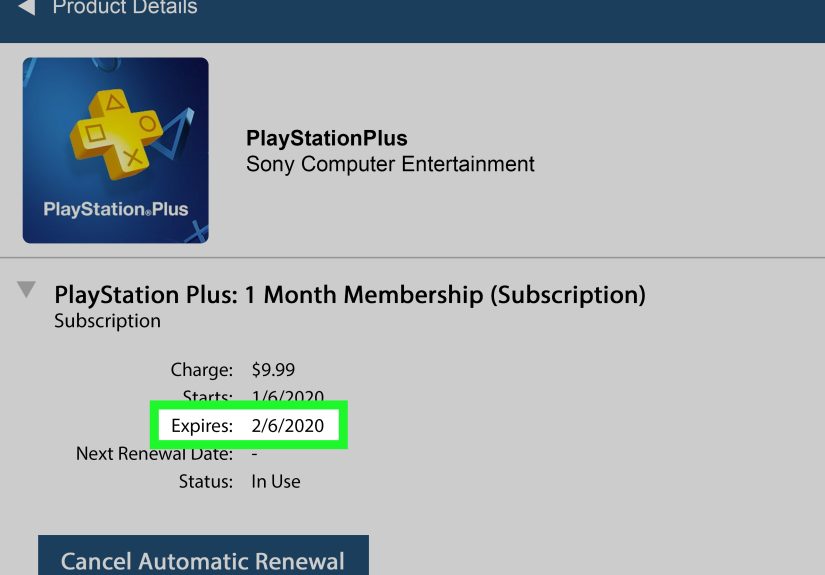
Once you are in the subscription list, select PlayStation Plus. You should be able to see the next payment date and the current plan tied to the account. If auto-renew is still on, think of this as your renewal date. If you already canceled auto-renew, think of it as your expiration date. Same screen, very different emotional reaction.
Step 3: Review the plan details instead of just glancing at the label
Do not stop at “Yep, I have PS Plus.” Open the membership details and read the full information. Look for your plan tier, billing frequency, renewal status, and next payment date. Many players only verify that the subscription exists, but they do not actually confirm whether it is monthly, quarterly, or annual.
This matters because a player with a one-month membership may assume they are safe for a long time, while an annual subscriber may forget the renewal is about to hit and get surprised by the charge. The date is useful, but the context around the date is what saves you from subscription chaos.
Step 4: Check your PlayStation Plus expiration date on a PS4
Still loyal to the PS4? No problem. The process is slightly different, but still easy. On your PS4, go to Settings, then Account Management, then Account Information, and then Subscriptions.
From there, select your PlayStation Plus membership. You should see the next payment date or the remaining membership period. On some older interface flows, you may also find this through the PlayStation Plus area and the membership management screen. Either way, the goal is the same: open the subscription details and read the date attached to your current plan.
Step 5: Use a web browser if your console is not nearby
One of the easiest ways to check a PlayStation Plus expiration date is through your browser. This is perfect when you are at work pretending to think about spreadsheets while actually thinking about whether your squad can run co-op tonight.
Sign in to your PlayStation account through Account Management, then open the Subscription section from the sidebar. There you can see your active subscriptions, including PlayStation Plus. Select the membership details to view your next payment date, current tier, and management options.
The browser route is especially useful because it is clean, fast, and available even when your console is off. It is also a good fallback if your console menus are acting moody.
Step 6: Check through the PlayStation App on your phone
If your phone is already in your hand, which it probably is, the PlayStation App gives you another quick way to confirm your subscription. Open the app, tap the PlayStation Store icon, then tap the menu icon in the upper-right area and choose Subscriptions Management.
From there, tap PlayStation Plus to see the subscription details. This option is handy for people who manage most of their digital life from mobile. It also feels oddly satisfying to verify your subscription while waiting in line for coffee, as though you are a productivity wizard instead of a person making sure a game service has not quietly expired.
Step 7: Check whether auto-renew is turned on or off
This is the step many people skip, and it is exactly why confusion happens. If auto-renew is turned on, the date you see is typically the next billing date. Your membership is scheduled to continue unless payment fails or you turn renewal off. If auto-renew is turned off, the next payment date becomes the effective end of the current paid period.
In plain English: a renewal date and an expiration date can look almost identical on screen, but they do not mean the same thing. So if you are trying to figure out whether your membership will actually end, always confirm the renewal setting. Otherwise, you may celebrate “canceling in time” while your account is still set to charge you later. Sneaky little detail, huge real-world difference.
Step 8: Use transaction history or email receipts as a backup check
If your subscription screen looks unclear, check your transaction history. On PlayStation, your account can show past purchases, including subscription charges. That helps you confirm when you last paid and what billing cycle you are on.
You can also search your email for PlayStation purchase receipts, renewal notices, or plan change confirmations. These messages are useful when you upgraded from Essential to Extra or Premium and now cannot remember whether your expiration date moved. Your inbox is not glamorous, but it can be surprisingly honest.
Step 9: Turn off auto-renew if you want a fixed end date
If your goal is to know the exact day your PlayStation Plus membership will end, the easiest way to create certainty is to turn off auto-renew. Once it is off, the next payment date becomes the date your current access period ends. You can still use the benefits until that date, but the subscription should not continue charging after it expires.
This is also the cleanest method for players who want to take a break, compare tiers, or avoid surprise billing. Just remember that canceling renewal usually does not mean your benefits vanish instantly. You normally keep access until the end of the already-paid term. So no, your monthly games do not disappear in a dramatic puff of smoke the second you tap the cancel button.
What Happens When PlayStation Plus Expires?
When your PlayStation Plus membership finally reaches the end of its paid period, several benefits stop. Online multiplayer access for most paid games goes away, cloud-storage-related benefits are affected, and claimed monthly games are no longer playable unless you resubscribe. That said, discounted purchases you bought while subscribed remain yours, and certain redeemed add-ons, packs, or avatars are usually still yours to keep.
This is why many players like to check their expiration date before a long weekend, a tournament, or a major download session. It is much easier to confirm the date ahead of time than to troubleshoot a service issue at the exact moment you wanted to unwind.
Common Mistakes Players Make
The biggest mistake is assuming the PlayStation Plus icon alone proves the subscription is active. It does not always tell you whether the plan is about to renew, already canceled, or attached to a different account. Another common mistake is checking a shared console and forgetting that the paying account may belong to another family member.
Players also tend to confuse “Cancel Subscription” with “Lose access immediately.” In most cases, that is not how it works. Canceling usually stops future billing while letting you keep benefits until the current paid term ends. That is why the next payment date matters so much: it often doubles as your expiration marker when renewal is off.
Best Tip for Avoiding a Last-Minute Surprise
If you want one simple habit that saves headaches, check your PlayStation Plus details right after any of these events: you redeem a code, change plans, accept a trial, cancel auto-renew, or receive a renewal receipt. Those are the moments when billing dates can shift, and people most often assume the system will “probably sort itself out.” Sometimes it does. Sometimes it absolutely does not.
A 20-second check now can prevent a 20-minute rant later. And that is a pretty solid trade.
Experience-Based Scenarios: What This Looks Like in Real Life
Checking a PlayStation Plus expiration date sounds like a tiny task, but in real life it tends to show up at the most inconvenient moments. One of the most common experiences is the classic Friday-night surprise. A player boots up the console, joins voice chat, launches an online game, and suddenly gets told a PlayStation Plus membership is required. The immediate reaction is usually confusion, followed by a slightly offended stare at the screen, followed by a frantic journey through settings. In that situation, knowing the exact subscription path on PS5 or PS4 feels less like trivia and more like emergency survival knowledge.
Another common experience happens with annual plans. A person buys a 12-month membership, forgets about it for eleven and a half months, then gets blindsided by the renewal. That is not because PlayStation hid the details in a cave guarded by dragons. It is because annual subscriptions are easy to ignore when everything is working. Checking the next payment date once in a while helps avoid that “Wait, why was I charged today?” moment that can sour an otherwise good morning.
Then there is the shared-household scenario. A teenager, sibling, or roommate sees that online multiplayer works on the console and assumes their own account has PlayStation Plus. Later, they sign in on another system and discover the subscription is actually attached to someone else’s account. That can create pure chaos, especially when nobody remembers who originally paid for the membership. In homes with multiple users, checking the exact account and subscription screen is not optional. It is the only way to know who owns what.
Travel creates another very real example. Plenty of players bring a console to a friend’s house, a dorm, or a family trip and only then realize they are unsure whether the account is still active. At that point, the web browser method or the PlayStation App becomes a hero. You do not need to sit directly in front of the console to check the status, which is great because nothing kills gaming momentum faster than a subscription mystery in a place with weak Wi-Fi and too many opinions.
Some players also have the experience of canceling auto-renew and then second-guessing everything. They wonder whether they canceled correctly, whether the membership ended right away, or whether the system is still planning to charge them. That uncertainty is exactly why the next payment date and renewal status matter so much. When you see the date and confirm auto-renew is off, the picture becomes much clearer. You can stop guessing and go back to doing literally anything more enjoyable.
In short, the experience around PlayStation Plus expiration dates is usually not dramatic until it suddenly is. That is why these nine steps matter. They turn a mildly annoying subscription question into a quick answer, and that is the kind of low-stress victory every gamer deserves.







 Close
Close