
Table of Contents >> Show >> Hide
- Why Hair Loss During Cancer Treatment Feels So Personal
- What Is a Henna Crown, Exactly?
- How Henna Crowns Help Cancer Patients Cope With Hair Loss
- The Real-World Movement Behind Henna Crowns
- Henna Crowns and Other Hair Loss Coping Options Can Coexist
- Why the Visual Impact Is So Powerful
- Important Safety Considerations Before Getting a Henna Crown
- More Than Decoration: The Emotional Meaning of Being Crowned
- Reported Experiences: What Henna Crowns Often Feel Like for Patients
- Conclusion
Hair loss during cancer treatment is one of those side effects that sounds simple on paper and feels anything but simple in real life. Doctors may call it alopecia. Patients may call it a lot of other things, many of them not printable in a family-friendly article. Whether hair falls out gradually, all at once, or in those cruel little handfuls that turn a shower drain into a drama scene, the experience can hit hard. Hair is not just hair. It is identity, routine, privacy, femininity, masculinity, comfort, control, and, for many people, the part of the mirror that still feels familiar.
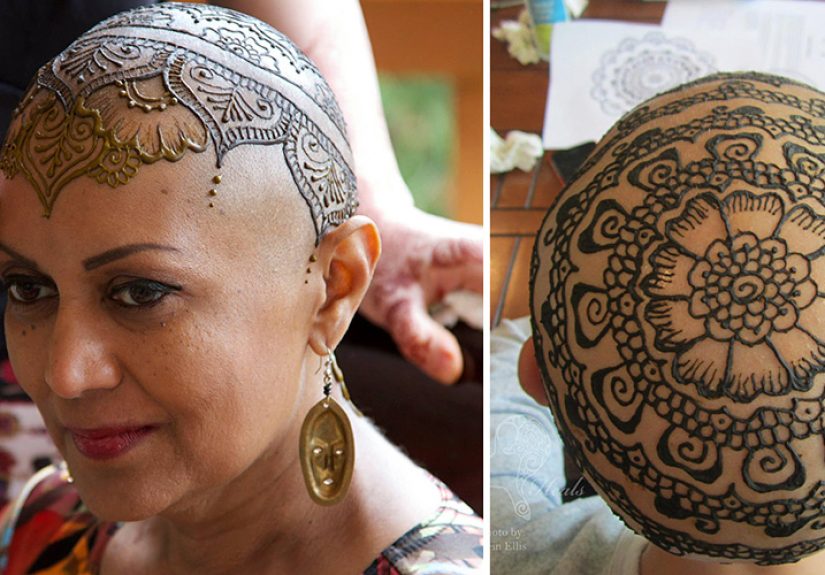
That is exactly why elegant henna tattoo crowns have become such a moving form of support for cancer patients coping with treatment-related hair loss. These intricate temporary designs are painted directly onto the scalp, transforming baldness from something people feel pressured to hide into something that can be honored, personalized, and even celebrated. Instead of trying to “fix” the moment, henna crowns reframe it. The message is not, “Pretend this is not happening.” The message is, “This is happening, and you are still beautiful.”
In the world of cancer care, that shift matters more than most people realize. Henna crowns do not replace medical treatment. They do not cure anxiety, erase fatigue, or magically make chemo days feel like spa days. But they can create something powerful: dignity with flair, courage with detail, and a reminder that beauty does not vanish just because hair does.
Why Hair Loss During Cancer Treatment Feels So Personal
Hair loss is often described as a cosmetic issue, which is a little like calling a hurricane “some wind.” For many patients, treatment-related hair loss is one of the most emotionally difficult parts of cancer because it is public. Nausea can stay private. Fear can stay private. Baldness often cannot. The world sees it, interprets it, and sometimes stares at it. That visibility can make people feel exposed before they have even figured out how they want to talk about their diagnosis.
It also changes how patients see themselves. A person may feel strong, capable, and determined one minute, then catch a reflection the next and feel like their body has become a stranger. This is why supportive care around appearance matters. Wigs, scarves, turbans, hats, scalp cooling systems, makeup consultations, and peer support all exist for a reason: they help people recover a sense of choice.
Henna crowns fit beautifully into that conversation because they offer another option. Not everyone wants to hide hair loss. Not everyone wants to wear a wig in July and feel like their scalp has entered a private sauna. Some patients want an alternative that feels artistic, meaningful, and deeply their own. Henna crowns provide exactly that kind of personalized self-expression.
What Is a Henna Crown, Exactly?
A henna crown is a temporary decorative design applied to the scalp using henna-based body art techniques. The patterns can be floral, geometric, symbolic, minimalist, elaborate, or gloriously over-the-top in the best possible way. Think less “medical coping device” and more “regal headpiece created by someone with steady hands and excellent taste.”
These crowns are often customized to reflect the patient’s personality, story, faith, favorite imagery, or emotional goals. Some designs include mandalas, vines, lace-like detail, lotus motifs, feathers, suns, or empowering words. Others are intentionally simple. The point is not to follow a template. The point is to create a crown that feels personal.
Organizations and artists who offer henna crowns often treat the session as more than an art appointment. It can be a ritual. It can be a ceremony. It can be a pause in the middle of a brutal treatment schedule where the patient is not being scanned, infused, poked, or instructed. They are being adorned.
How Henna Crowns Help Cancer Patients Cope With Hair Loss
They turn loss into intention
One of the hardest parts of losing hair is that it can feel passive. It happens to you. Henna crowns reverse that dynamic. Suddenly the scalp is not just bare; it is chosen, styled, and transformed. Patients go from feeling like something was taken to feeling like something was created.
They make beauty feel available again
Cancer treatment can make patients feel like the ordinary tools of self-expression are slipping away. Hairstyles disappear. Brows may thin. Skin changes. Energy drops. A henna crown offers beauty without pretending nothing has changed. It says, very clearly, that elegance is still on the table.
They create a sense of ceremony
There is something powerful about marking a difficult moment with intention. For some people, a henna crown session becomes a turning point: the day they stop avoiding mirrors, the day they finally take photos, or the day they decide that bald does not have to mean diminished. Ritual matters because cancer care can feel relentless and mechanical. A crown introduces meaning back into the process.
They invite connection instead of pity
People tend to respond differently to visible hair loss when it is framed through art. A bare scalp may attract sympathy. A beautifully crowned scalp often attracts admiration, curiosity, and conversation on the patient’s own terms. That shift can be emotionally liberating. Instead of being reduced to illness, the person is seen as creative, bold, and fully present.
They support confidence without forcing one “right” way to cope
Henna crowns are not better than wigs or scarves. They are not morally superior to baseball caps, silk wraps, or staying home in fuzzy socks while refusing to answer texts. They are simply another empowering option. And in cancer care, options are precious.
The Real-World Movement Behind Henna Crowns
The idea of scalp henna for people with hair loss gained broader attention through artists and advocacy groups who recognized that baldness could be approached not only as a loss to be managed, but as a canvas for healing art. Public reporting and nonprofit work in North America have helped bring these sessions into wider view, especially through community-based projects that serve patients dealing with chemotherapy-related hair loss and alopecia.
Some of the most visible initiatives have treated the henna crown experience as a full act of care, not just decoration. Sessions may include consultation, intentional design, makeup, photography, and storytelling. That matters because the emotional impact is not only in the finished pattern. It is also in the time, attention, and affirmation built into the process.
In practical terms, a crown session can take hours. That might sound intense until you remember that cancer treatment has already taught patients the fine art of sitting still while strange things happen around them. The difference here is that the time is spent on something affirming. The patient is no longer the object of treatment; they are the center of an artistic experience.
Henna Crowns and Other Hair Loss Coping Options Can Coexist
The smartest conversation about cancer-related hair loss is never “this or that.” It is “what helps this person today?” Some patients use scalp cooling to reduce hair loss during chemotherapy. Some shave their heads early because waiting feels worse. Some buy wigs in advance so they can match their natural style. Some fall in love with scarves. Some decide they do not want any covering at all.
Henna crowns belong in that menu of choices. A patient might wear a wig to work, a soft cap at home, and book a henna crown for a family photo session or a milestone day. Another might use a crown as a bridge between shaving their head and feeling comfortable in public. Someone else may choose a crown simply because they are tired of the assumption that baldness must always be concealed.
That flexibility is part of the appeal. Henna crowns are not a replacement for supportive cancer care resources. They are one more way patients can regain autonomy and decide how they want to show up in the world.
Why the Visual Impact Is So Powerful
There is a reason henna crowns stop people in their tracks. The scalp, when adorned with detailed pattern work, resembles a jewel-toned fabric, a lace veil, a ceremonial headdress, or a hand-drawn crown. The effect can be delicate, fierce, or both at once. And that duality fits cancer survivorship surprisingly well. Patients are often expected to be either brave warriors or fragile sufferers, when in reality they are usually both exhausted and astonishing at the same time.
Henna crowns capture that complexity. They are soft but not weak. Decorative but not trivial. Beautiful without being superficial. For patients who feel their appearance has been reduced to a symptom list, that kind of visual richness can be deeply restorative.
Important Safety Considerations Before Getting a Henna Crown
This is the part where the grown-up voice enters the room, clears its throat, and says: artistry is wonderful, but safety matters. Patients interested in a henna crown should check with their oncology team first, especially if they have skin irritation, wounds, a very sensitive scalp, active rashes, or treatment-related skin changes.
It is also important to ask artists exactly what product they use. “Black henna” is a major red flag. Products sold under that name can contain additives linked to serious skin reactions. A reputable artist should be able to explain their ingredients clearly and avoid anything sketchy, mystery-colored, or suspiciously fast-drying. This is not the moment for bargain-bin scalp chemistry.
Patients should also think about timing. A scalp that is freshly shaved, tender, sunburned, or irritated may not be the best canvas. Gentle communication between patient, care team, and artist can help make the experience both safer and more comfortable.
More Than Decoration: The Emotional Meaning of Being Crowned
At the heart of this trend is a simple truth: people undergoing cancer treatment still want moments that feel human, expressive, and beautiful. They want choice. They want joy that does not require pretending everything is fine. They want a reason to recognize themselves again.
Henna crowns offer that in a form that is visually striking and emotionally intelligent. They meet patients where they are, not where a brochure thinks they should be. They do not demand confidence before the session starts. In many cases, confidence is the thing that arrives later, quietly, after the mirror moment.
And perhaps that is why these crowns resonate so deeply. They do not deny the reality of cancer. They answer it with care, symbolism, beauty, and a little defiant sparkle.
Reported Experiences: What Henna Crowns Often Feel Like for Patients
In public stories about henna crowns, patients often describe the experience in ways that go far beyond “it looked nice.” Many say the session changed how they felt in their bodies. Before the appointment, there is often hesitation. Some are nervous about being seen bald. Some have already tried wigs and scarves and still feel emotionally unsteady. Some are tired of looking “like a patient” every time they pass a mirror. Walking into a henna crown session, they may still be carrying all of that discomfort.
Then the process starts, and something shifts. The atmosphere is usually slower and calmer than the rest of treatment life. There is conversation, careful design planning, sometimes makeup, sometimes music, sometimes photography, and often a surprising amount of laughter. Patients who have spent weeks being handled clinically are now being attended to artistically. That distinction may sound small, but emotionally it is huge.
People interviewed in news coverage and nonprofit storytelling frequently describe feeling seen rather than managed. The scalp is no longer treated as evidence of illness; it becomes a place for beauty, symbolism, and self-expression. Some patients say the design helped them stop focusing on what was missing and start noticing what was still entirely theirs: their eyes, their bone structure, their resilience, their style, their sense of humor, their face without apology.
There is also a social dimension to the experience. A henna crown can change how friends, family members, and even strangers respond. Instead of awkward sympathy, patients may receive genuine admiration. Instead of hearing only “I’m sorry,” they hear “You look incredible.” That is not a cure, of course, but it can be a real emotional lift at a time when encouragement is often mixed with fear.
Some reported experiences are especially striking because they show how a crown affects self-acceptance. Women who had long hidden hair loss have described feeling more comfortable going out uncovered after being crowned. Others have said the experience made them feel powerful, glamorous, or unexpectedly fierce. A few stories describe the moment in almost ceremonial language, as if the crown helped mark a transition from passive suffering to active presence. Not cured. Not untouched. But present, visible, and still fully themselves.
Another recurring theme is memory. Because many crown sessions include photographs, patients leave with more than a temporary design. They leave with images of themselves that do not center on illness alone. That matters. Cancer can flatten personal identity into appointments, lab values, and treatment plans. A portrait taken after a crowning session says something else entirely: this person is still radiant, still expressive, still worthy of being documented beautifully.
Perhaps the most moving part of these shared experiences is that the confidence they create is often not loud or theatrical. It can be quiet. It can look like finally posting a photo. Going to dinner without a wig. Letting a child see baldness framed as strength instead of shame. Looking in the mirror and thinking, maybe for the first time in weeks, “There you are.”
Conclusion
Elegant henna tattoo crowns help cancer patients cope with hair loss because they do something rare and necessary: they make room for beauty without ignoring reality. In a season of life shaped by uncertainty, side effects, and emotional fatigue, a crown offers choice, artistry, and a renewed sense of self. It is not about pretending hair loss is easy. It is about proving that even in the middle of treatment, dignity can still be detailed, visible, and stunning.







 Close
Close