
Table of Contents >> Show >> Hide
Some titles practically wink at you from the streaming menu. Anything with the word
“Hurt” in it isn’t pretending to be light, breezy background noise. Whether it’s
emotional damage, physical pain, or the kind of existential ache that shows up at 3 a.m., “hurt”
is shorthand for, “Yeah, this might sting a little.”
Over the last few decades, filmmakers and showrunners have turned that one small word into
powerful war dramas, tender relationship stories, gritty horror, and even medical comedy.
Below, we’ll walk through the most notable films and TV shows with “Hurt” in the
title, what they’re about, and what kind of emotional bruises you can expect.
Why “Hurt” Makes Such A Strong Title
From a storytelling and marketing perspective, “hurt” does three big things at once:
- Signals high stakes. Pain means risk, and risk is interesting. Viewers expect
something intense, whether it’s a war zone or a messy breakup. - Promises vulnerability. “Hurt” suggests people are emotionally exposed:
relationships under pressure, secrets coming out, or bodies pushed to the limit. - Leaves genre wide open. Pain can be physical (boxing, war, horror) or
emotional (marriage, work, family). That flexibility is catnip for creators.
You’ll see that range in the titles belowfrom Oscar-winning war films to indie comedies, Thai
docudramas, and cult horror favorites.
Major Movies With “Hurt” In The Title
The Hurt Locker (2008)
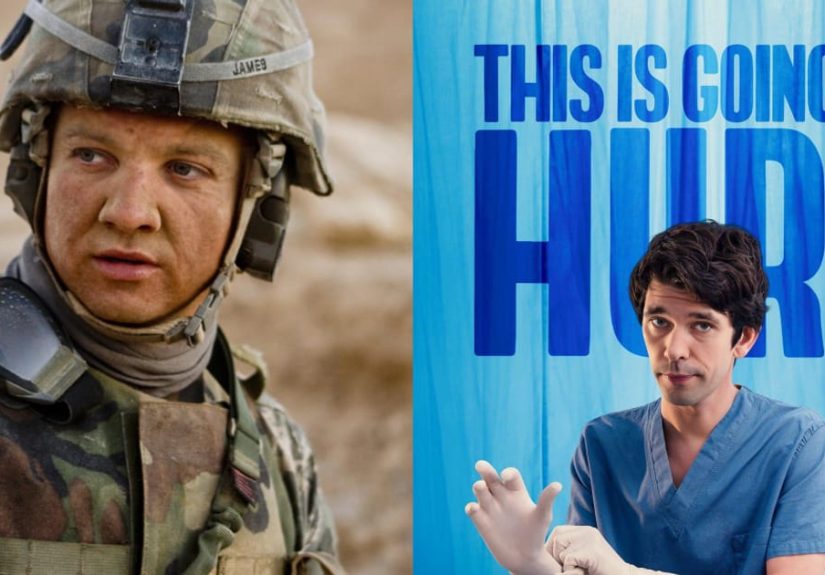
Let’s start with the elephant in the room: The Hurt Locker, Kathryn Bigelow’s Iraq War
thriller about an Explosive Ordnance Disposal (EOD) team, is the most famous “Hurt” title by a
mile. The film follows bomb technician William James (Jeremy Renner) as he repeatedly walks into
situations where one wrong move could shred him and everyone around him.
Praised for its nerve-shredding suspense, grounded performances, and immersive sound design, the
movie went on to win six Oscars, including Best Picture and Best Directormaking Bigelow the
first woman ever to win that award. It doesn’t just use “hurt” as a catchy
word; it explores how combat rewires a person’s relationship with danger, adrenaline, and even
home.
If you want a film where “hurt” means physical risk, psychological strain, and moral ambiguity
all at once, this is your first stop.
You Hurt My Feelings (2023)
On the opposite end of the spectrum, You Hurt My Feelings takes a very modern, very
urban problemwhite lies between spousesand builds a whole story around it. The film follows
Beth (Julia Louis-Dreyfus), a writer who accidentally discovers that her supportive husband has
been politely lying about how much he likes her work.
Writer-director Nicole Holofcener leans into awkward conversations, wounded egos, and the way
tiny lies can feel like betrayal when you’ve built your whole identity on someone’s opinion.
Critics praised the film’s sharp script and understated performances; it’s not about screaming
matches so much as that slow, sinking feeling when your emotional bubble pops.
Here, “hurt” isn’t about bullets or bloodit’s about the kind of emotional bruise that flares up
when you realize the people you love don’t see you the way you thought they did.
Love Hurts (1990)
Before “hurt” became the word of choice for indie dramas, there was Love Hurts, a
1990 American comedy-drama directed by Bud Yorkin. Jeff Daniels plays Paul Weaver, a serial
adulterer who returns to his Pennsylvania hometown for a family wedding and finds himself
face-to-face with his ex, his kids, and the fallout of his choices.
The film mixes family conflict with romance, midlife crisis energy, and a generous amount of
regret. It’s very “late-’80s/early-’90s grown-up drama” in tone, with supporting performances
from John Mahoney and Cloris Leachman adding texture.
Compared to newer titles, it feels smaller and more conventional, but it’s an early example of
how “hurt” in a title signals emotional fallout rather than just physical injury.
Love Hurts (2025)
Fast-forward to 2025 and the phrase “Love Hurts” gets a very different spin in the action-comedy
of the same name, starring Ke Huy Quan and Ariana DeBose. The movie follows Marvin Gable, a
former hitman trying to reinvent himself as a real estate agent; surprise, surprise, his old
life doesn’t want to stay in the past.
Critics largely panned the film for chaotic plotting and uneven humor, but audiences have been
more forgiving, embracing it as a short, violent, slightly chaotic piece of popcorn entertainment
with stylish fight choreography. Here, “hurt” is literalbloody
action set piecesbut also nods to the emotional toll of leaving (or failing to leave) a violent
lifestyle behind.
Hurt (2009)
The 2009 film Hurt is a dark drama-horror hybrid about a recently widowed mother and her
children who move in with a reclusive uncle on his desert salvage yard. Their fragile new
normal is disrupted when a mysterious foster girl arrives, bringing secrets and danger with
her.
Shot in California and blending family drama with thriller elements, the movie leans on slow,
creeping dread rather than nonstop jump scares. It treats
grief as both an emotional wound and a vulnerability that lets something much darker in.
Hurt (2018)
Another horror entry, the 2018 film Hurt (released more widely in 2021) shifts the
action to a rural setting and a Halloween backdrop. Rose moves closer to her sister while her
boyfriend is deployed, only for Halloween night to spiral into something far more sinister.
Critics noted that the film plays like a psychological drama first and a slasher second, with a
slow-burn structure that pays off in brutal, disturbing moments later on.
In other words, this “Hurt” wants you to stew in unease before it really swings the knife.
Big Star: Nothing Can Hurt Me (2012)
The documentary Big Star: Nothing Can Hurt Me chronicles the story of cult-favorite rock
band Big Starcommercially unsuccessful in their time, but massively influential in the decades
since.
Critics praised the film for capturing both the band’s shimmering, power-pop sound and the
sadness of unrealized mainstream potential. On Rotten Tomatoes, it holds a strong approval
rating and a consensus that it’s a passionate tribute to an underappreciated group.
Here, “Nothing Can Hurt Me” is almost sarcastic: emotionally, the band went through plenty of
disappointment. The title reads like an attempt at armorwith the documentary gently proving
that hurt is part of what shaped their enduring legacy.
TV & Streaming Series With “Hurt” In The Title
This Is Going to Hurt (2022)
If you’ve ever wondered what medical training really feels like behind the heroic TV
clichés, This Is Going to Hurt has answers. The British miniseries, based on Adam Kay’s
memoir, follows junior doctor Adam (Ben Whishaw) on a busy obstetrics and gynecology ward in the
U.K. National Health Service.
The show mixes blackout humor with gut-punch emotional beats: traumatic births, staff burnout,
and the bureaucratic grind of public healthcare. Critics widely acclaimed the series, praising
its honesty and Whishaw’s live-wire performance; review aggregators show it with extremely high
scores and “universal acclaim.”
The title works on multiple levels: procedures hurt, patients hurt, and the doctors themselves
hurtemotionally, morally, and sometimes physically.
Love Hurts (TV Series, 1992–1994)
The British series Love Hurts stars Zoë Wanamaker and Adam Faith as two forty-somethings
with clashing views on work, relationships, and what “having it all” even means.
Over three seasons, it blends romance, career drama, and midlife reinvention, earning Wanamaker
a BAFTA nomination along the way. The tone sits in that uniquely
British space where you’re never sure whether you should be laughing, cringing, or quietly
devastated.
Hurts Like Hell (2022)
Hurts Like Hell is a Thai four-part series that digs into corruption in the Muay Thai
worldillegal gambling, match-fixing, and the human cost behind the sport’s legendary toughness.
It blends dramatized stories with documentary-style interviews from real insiders, including
referees, gamblers, fighters, and doctors.
Streaming on Netflix in many regions, the show has been praised for its gritty realism and its
willingness to expose the underbelly of a national sport.
The “hurt” in the title covers both the physical beating fighters take and the emotional/financial
damage corruption inflicts on everyone around the ring.
Hurt (TV Series, 2022–2024)
The series simply titled Hurt focuses on a young man, Stone Scriven, who is planning his
own death until he meets another young man carrying his own emotional weight.
Reviews highlight how the show explores different levels and types of relationshipsromantic,
platonic, and familythrough themes of depression, isolation, and fragile connection.
While it doesn’t have the global reach of some other titles on this list, it’s a notable
example of small-scale, emotionally focused storytelling built around the concept of hurt.
What These “Hurt” Titles Have In Common
Even though they span genres and continents, the big “Hurt” films and shows tend to share some
core DNA:
- They’re about consequences. Whether it’s a bomb squad taking risky shortcuts
or a spouse telling a “kind” lie, actions come with fallout. - They lean into discomfort. None of these stories are about easy answers.
War, medicine, marriage, or combat sportsall are portrayed as fundamentally messy. - They mix pain with insight. The best entries (“The Hurt Locker,”
“This Is Going to Hurt,” “You Hurt My Feelings”) use hurt as a way to
explore identity, morality, or systems that aren’t working.
In other words, “hurt” isn’t just a marketing hookit’s a promise that the story will poke at
something raw, whether it’s a body, a system, or a relationship.
How To Choose Your Next “Hurt” Watch
Not all pain is created equal, so here’s a quick guide:
- In the mood for high-stakes intensity? Go with
The Hurt Locker or Hurts Like Hell for war-zone tension or sports corruption
drama. - Want emotionally awkward laughs? Try You Hurt My Feelings or
This Is Going to Hurtboth balance humor with painful honesty. - Craving horror with a slow burn? Either version of Hurt (2009 or
2018) delivers dread and bleakness more than cheap jump scares. - Interested in music history? Big Star: Nothing Can Hurt Me is a
must if you care about how influential bands quietly shape entire genres. - Up for character-driven romance or midlife drama? Check out either version
of Love Hurts, depending on whether you want ’90s family drama or modern
action-comedy chaos.
Watching “Hurt” Titles: Experiences & Takeaways
Spend a few weeks intentionally watching only film and TV projects with “Hurt” in the title and
you start to notice patternsnot just in storytelling, but in how these titles feel as viewing
experiences.
First, they tend to linger. A movie like The Hurt Locker doesn’t end
when the credits roll; you keep replaying the bomb-disposal sequences in your head and thinking
about why someone might choose to stay in a job built entirely around mortal danger.
Similarly, This Is Going to Hurt sticks with you because it captures the way hospital
staff can be both deeply compassionate and emotionally numb in the same shift.
Second, they often change how you see everyday situations. After
You Hurt My Feelings, it’s hard not to think about the little lies we tell to be
“supportive”and whether those lies are kindness or cowardice.
Watching Hurts Like Hell can permanently alter how you view combat sports, reminding
you that glamour and grit often sit on top of systemic exploitation.
Third, “hurt” titles tend to attract nuanced performances. Ben Whishaw in
This Is Going to Hurt flips from razor-sharp sarcasm to devastated vulnerability in
seconds. Julia Louis-Dreyfus in You Hurt My Feelings uses her comedy
timing to underline how absurd and heartbreaking it is to tie your self-worth to another person’s
reaction. Even in lower-budget horror like the 2018
Hurt, the slower pacing gives actors room to show how fear builds long before the blood
actually starts to flow.
There’s also an interesting emotional rhythm to bingeing these titles. You
might watch Big Star: Nothing Can Hurt Me and feel the bittersweet glow of a band
finally getting its critical due years too late.
Follow that with Love Hurts (1990) and you’re in small-town wedding territory, watching
people hurt each other in quieter, more personal ways. Throw in
the 2025 Love Hurts action-comedy and the same word suddenly feels playful, almost
cheekypain as entertainment, stylized and choreographed.
Finally, focusing on “hurt” titles is a reminder that good stories don’t avoid pain;
they organize it. Whether the subject is war, medicine, marriage, sports, or
Halloween horror, each of these projects takes chaotic, messy experiences and shapes them into
something we can watch, think about, and maybe even learn from. The word “hurt” in the title is
a kind of warning labelbut it’s also a promise that the story is going to probe a little deeper
than surface-level comfort viewing.
So if you’re scrolling and you see “hurt” staring back at you, don’t automatically skip it.
Yes, it might sting. But some of the most memorable screen experiences live right on that edge
where entertainment and empathy meet.
Conclusion
From The Hurt Locker and This Is Going to Hurt to multiple versions of
Love Hurts, a pair of bleak horrors simply titled Hurt, and the music doc
Big Star: Nothing Can Hurt Me, “hurt” has become a surprisingly rich little keyword in
film and TV. It signals high stakes, emotional honesty, and a willingness to sit with the parts
of life that don’t come with neat resolutions.
Whether you’re in the mood for war drama, comedy about creative insecurity, gritty sports
docudrama, or Halloween horror, there’s a “Hurt” title ready to scratch that itchand maybe
leave a small emotional bruise in the best possible way.





 Close
Close