
Table of Contents >> Show >> Hide
- What Is a Barrel Hinge?
- Why Barrel Hinges Are Popular
- Main Types of Barrel Hinges
- Best Uses for Barrel Hinges
- How Barrel Hinges Work
- Choosing the Right Barrel Hinge
- How to Install Concealed Barrel Hinges in Wood
- How to Install Weld-On Barrel Hinges
- Common Barrel Hinge Mistakes
- Barrel Hinges vs. Other Hinges
- Maintenance and Troubleshooting
- Practical Buying Tips
- Conclusion: Are Barrel Hinges Worth It?
- Hands-On Experience Notes: What Barrel Hinges Teach You in Real Projects
- SEO Tags
Barrel hinges are the quiet little overachievers of the hardware world. They do not beg for attention, they do not show off with decorative leaves, and in many cases, they disappear completely once the door, lid, or panel is closed. Yet when you open a fine jewelry box, swing a clean-lined cabinet door, or inspect a heavy metal gate, there is a good chance a barrel-style hinge is doing the hard work behind the scenes.
The term “barrel hinge” can describe two related but different pieces of hardware. In woodworking and cabinetry, it usually refers to a small cylindrical concealed hinge that fits into drilled holes and remains hidden when closed. In metalworking and gate hardware, it often refers to a larger weld-on hinge with a round barrel body, a pin, and sometimes a grease fitting. Both versions share the same basic idea: a cylindrical hinge body that allows controlled rotation in a compact form.
This guide explains what barrel hinges are, where they work best, how to choose the right type, and how to install them without turning a beautiful project into a tiny hardware crime scene. Whether you are building a keepsake box, upgrading furniture, designing a hidden cabinet panel, or hanging a metal gate, barrel hinges reward patience, accurate layout, and the kind of measuring that makes your future self say, “Good job, past me.”
What Is a Barrel Hinge?
A barrel hinge is a hinge built around a cylindrical body, or “barrel,” that houses a pivoting mechanism. Unlike a standard butt hinge, which has two flat leaves joined by a visible pin, many barrel hinges are designed to fit into round holes. Once installed, they can be nearly invisible from the outside of the project.
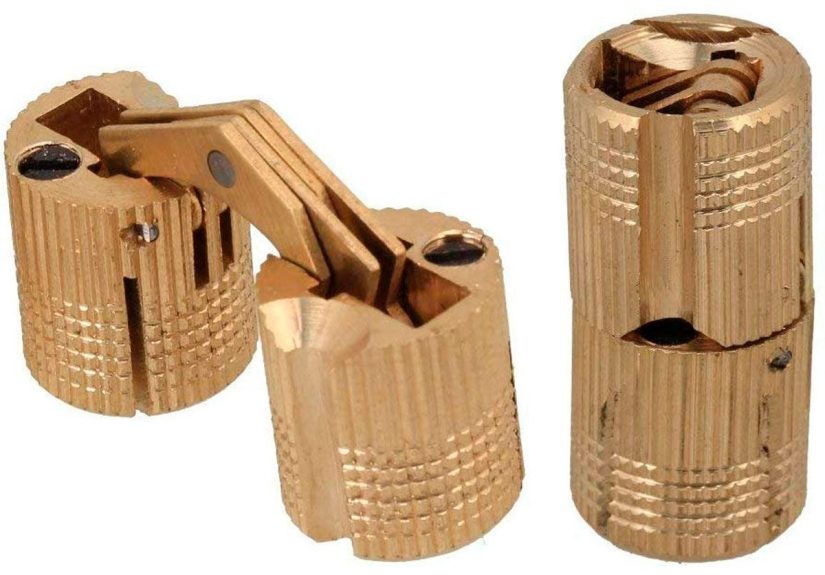
In fine woodworking, a concealed barrel hinge usually has two small cylindrical halves connected by internal links. One half installs into the door or lid, and the other installs into the frame, case, or box body. A small set screw or wedge mechanism helps lock the hinge in place. When the lid or door closes, the hinge disappears into the material, leaving the surface clean and uninterrupted.
In metal gate and industrial applications, a barrel hinge is often a welded hinge made from steel, stainless steel, or aluminum. These hinges may include a fixed pin, ball bearing, bushing, or lubrication point. They are common on gates, utility doors, equipment enclosures, and security panels where strength matters more than invisibility.
Why Barrel Hinges Are Popular
The biggest attraction of barrel hinges is their clean appearance. A concealed barrel hinge lets wood grain, cabinet lines, or a minimalist design take center stage. No shiny plates. No visible knuckles. No “hello, I am a hinge” announcement every time someone looks at your project.
They are also compact. Since the hinge body sits inside drilled holes, it does not require a long mortise like many traditional hinges. That makes it useful for small doors, box lids, jewelry cases, display cabinets, and specialty furniture. For builders who enjoy precision, barrel hinges can create a sleek, professional result.
Heavy-duty barrel hinges are popular for a different reason: strength in a simple shape. A weld-on barrel hinge can handle outdoor gates, metal frames, and high-use panels when correctly sized and aligned. The round shape is durable, easy to weld around, and well suited for pivoting loads.
Main Types of Barrel Hinges
1. Concealed Barrel Hinges for Woodworking
These are the small hidden hinges most people mean when discussing barrel hinges for cabinets or furniture. They are commonly used on boxes, small cabinet doors, secret compartments, clock cases, and decorative panels. Many open to about 180 degrees, depending on the design and installation clearance.
Concealed barrel hinges are often made from brass, stainless steel, or plated metal. Brass models are especially common in fine woodworking because they pair nicely with hardwoods and provide a classic, smooth feel. These hinges are best for light-duty applications, not full-size entry doors or heavy vertical loads unless the manufacturer specifically rates them for that purpose.
2. Weld-On Barrel Hinges
Weld-on barrel hinges are used for metal gates, steel doors, trailers, equipment panels, and industrial enclosures. Instead of being drilled into wood, they are welded to a frame and moving panel. Some are lift-off designs, meaning the door or gate can be removed by lifting it off the pin. Others are arranged to prevent removal by opposing the pin directions.
These hinges may include stainless pins, ball bearings, bushings, or grease fittings. Proper alignment is crucial. A poorly aligned weld-on hinge can bind, squeak, wear unevenly, or make a gate sag like it just received bad news.
3. Bullet Hinges
Bullet hinges are close cousins of weld-on barrel hinges. They have a compact cylindrical body and are frequently used on metal doors, toolboxes, trailer ramps, and gates. Some include removable pins, grease fittings, or sealed bearings. They are usually chosen for strength, weldability, and a clean industrial look.
4. Specialty Concealed Hinges
Some concealed hinges are not technically small barrel hinges, but they serve a similar design goal: hiding the hardware when the door closes. European cabinet hinges, invisible door hinges, and multi-link concealed hinges can all create a hinge-free appearance. The right choice depends on door size, overlay, inset style, desired adjustment, and load requirements.
Best Uses for Barrel Hinges
Barrel hinges shine when the design calls for hidden hardware or compact pivoting. In woodworking, they are excellent for small furniture doors, keepsake boxes, jewelry boxes, display cases, humidors, decorative chests, and custom cabinets. They are especially helpful when visible hinge leaves would interrupt the look of highly figured wood, painted minimalist panels, or modern furniture lines.
For metalwork, barrel hinges are common on driveway gates, pedestrian gates, steel cabinet doors, utility boxes, trailers, and equipment access panels. Their cylindrical shape gives them a tough, simple profile that works well in welded construction.
They are not always the best choice, though. If you need easy adjustment, a European concealed cabinet hinge may be better. If you are hanging a full-size interior door, a rated butt hinge or full-size invisible hinge is usually more appropriate. If you are building a heavy lid that needs to stay open, a stay hinge, torsion hinge, or soft-close support may be safer.
How Barrel Hinges Work
A small concealed barrel hinge works by placing two cylindrical hinge bodies into matching holes. Internal links connect the two halves and allow the door or lid to rotate. When closed, the hinge folds into the gap between the door and frame. Because the hinge is buried in the material, accurate drilling is everything.
Most concealed barrel hinges require a hole diameter that matches the hinge barrel. The hole depth must also be correct so the hinge sits flush or slightly recessed. If the hole is too shallow, the hinge may prevent the door from closing. If the hole is too deep, the hinge may sit too far inside and create alignment issues.
Weld-on barrel hinges work more like heavy pivot hinges. One barrel section carries the pin, while the other rotates around it. In lift-off versions, the moving side rests on the fixed pin and can be removed. In non-removable arrangements, the hinges may be installed with opposing pin directions so the gate cannot simply be lifted away.
Choosing the Right Barrel Hinge
Match the Hinge to the Project Weight
The first rule is simple: the hinge must be strong enough for the job. A tiny brass barrel hinge may be perfect for a jewelry box lid but completely wrong for a heavy cabinet door. Likewise, a large weld-on barrel hinge would look hilarious on a small wooden keepsake box, like putting tractor tires on a skateboard.
Check manufacturer recommendations for door thickness, minimum material depth, hinge size, and load capacity. If no load rating is provided, treat the hinge as light-duty. For heavy or frequently used doors, choose hardware with a clear rating and use enough hinges to distribute the load.
Consider Door Thickness
Concealed barrel hinges need enough material around the drilled holes. If the door or box wall is too thin, the hole may weaken the wood or break through the surface. Many small barrel hinges list a minimum door thickness. Respect that number. It is not a casual suggestion; it is the hinge politely warning you before things get ugly.
Choose the Right Material
Brass is popular for fine furniture and small wooden projects. Stainless steel resists corrosion and is better for damp environments. Low-carbon steel is strong and weldable but needs proper finishing to resist rust. Aluminum is lighter than steel and may be useful where weight matters, but it is not always suitable for high-load applications.
Think About the Opening Angle
Many concealed barrel hinges open around 180 degrees, but actual movement depends on the hinge model, door thickness, reveal, and clearance. If a cabinet door must swing completely out of the way, confirm the hinge geometry before drilling. For gates or metal panels, check whether the hinge allows 180, 270, or 360 degrees of rotation.
Plan for Maintenance
Small concealed hinges usually need little maintenance once installed correctly. Outdoor weld-on barrel hinges are different. They may need lubrication, rust prevention, and periodic inspection. If the hinge has a grease fitting, use it according to the manufacturer’s guidance. A dry, gritty hinge is basically a tiny metal argument waiting to happen.
How to Install Concealed Barrel Hinges in Wood
Step 1: Read the Instructions First
Before drilling, read the hinge instructions and measure the actual hinge you received. Small hardware can vary slightly, and a tiny difference can affect fit. Barrel hinges are not especially forgiving after installation, so this is not the moment to “eyeball it with confidence.”
Step 2: Mark the Hinge Locations
Decide where the hinges will sit. For a small box lid, two hinges are usually enough. For a taller cabinet door, you may need more support, but remember that small concealed barrel hinges are often intended for light-duty use. Mark matching center points on the door and frame. The marks must line up precisely so the hinge barrels share the same axis.
Step 3: Drill Straight, Clean Holes
Use the correct bit size and drill to the recommended depth. A drill press is ideal because it keeps holes square and consistent. If using a handheld drill, use a guide block to help maintain alignment. Clean holes help the hinge seat properly and reduce the chance of splitting the wood.
Step 4: Test Fit Before Tightening
Insert the hinge halves and test the movement before locking anything down. Confirm that the door closes, the reveal looks even, and the hinge does not bind. Make small corrections before tightening the set screws or retaining screws.
Step 5: Lock the Hinges in Place
Most concealed barrel hinges use a set screw or wedge action to grip the wood. Tighten carefully. Too loose, and the hinge may slip. Too aggressive, and you may damage the wood or hardware. The goal is snug and secure, not “I am tightening a submarine hatch.”
How to Install Weld-On Barrel Hinges
Weld-on hinges require more than good layout; they require safe metalworking skills and proper welding equipment. If you are not trained to weld, hire a qualified professional. A gate hinge failure can damage property or injure someone, and no DIY bragging rights are worth that.
The basic process starts with choosing hinges rated for the gate or door weight. The gate must be supported in its final position before the hinges are tacked in place. Use spacers to maintain the correct gap between the post and gate. Align the hinge barrels carefully so the pins share the same vertical axis. Tack weld first, test the swing, then complete the welds only after confirming smooth movement.
After welding, clean and finish the metal to prevent corrosion. Lubricate hinges if required, especially those with grease fittings. Recheck alignment after the gate has settled. Heavy gates can reveal small installation mistakes quickly, usually by sagging, rubbing, or refusing to close just when guests are watching.
Common Barrel Hinge Mistakes
Drilling Without a Test Piece
Always practice on scrap material that matches your project thickness. A test piece shows whether the bit size, depth, and alignment are correct. It is much better to ruin a scrap block than the lid of the walnut box you spent three evenings sanding.
Ignoring the Door Gap
Concealed hinges need clearance to move. If the reveal is too tight, the door may bind. If the gap is too large, the finished project may look sloppy. Follow the hinge instructions and test the swing before final assembly.
Using Barrel Hinges for Heavy Loads
Small concealed barrel hinges are elegant, but they are not magic. They are not the right choice for every vertical cabinet door, heavy lid, or high-traffic application. When in doubt, choose a stronger hinge style or add mechanical support.
Misaligning the Hinge Axis
Both hinge barrels must line up along the same pivot axis. If they do not, the hinge will fight itself. The result may be stiffness, uneven gaps, cracked wood, or a door that opens with the grace of a shopping cart with one bad wheel.
Barrel Hinges vs. Other Hinges
Compared with butt hinges, concealed barrel hinges offer a cleaner look but less adjustability. Butt hinges are easier to mortise, easier to replace, and better for many standard doors. Barrel hinges are better when appearance matters and the load is modest.
Compared with European cabinet hinges, barrel hinges are simpler and smaller, but they usually lack three-way adjustment and soft-close options. European hinges are excellent for modern cabinets, especially when overlay, inset, and door alignment need fine tuning.
Compared with piano hinges, barrel hinges are compact and hidden, while piano hinges distribute support along the full length of a lid or panel. For long lids or tool chests, a piano hinge may provide better support. For a small decorative lid, a barrel hinge may look far cleaner.
Maintenance and Troubleshooting
If a concealed barrel hinge feels stiff, first check for binding caused by poor alignment or inadequate clearance. Do not force the door. Remove the hinge if possible, inspect the holes, and confirm that the hinge sits squarely. A tiny amount of appropriate lubricant may help, but lubricant will not fix bad geometry.
If a hinge slips in wood, the hole may be oversized or the set screw may not be gripping. Depending on the project, you may be able to repair the hole with a hardwood plug and redrill. Avoid filling a structural hinge hole with soft filler and hoping for the best. Hope is not a fastener.
For weld-on barrel hinges, squeaking, grinding, or sagging can indicate lack of lubrication, worn pins, poor alignment, or gate movement. Inspect welds, pins, bushings, and surrounding metal. Outdoor hinges should be protected from rust with suitable coatings and maintained before corrosion becomes serious.
Practical Buying Tips
Before buying barrel hinges, write down the project type, door or lid dimensions, material thickness, estimated weight, opening angle, and environment. Indoor jewelry box? Outdoor steel gate? Painted cabinet panel? These are very different hinge conversations.
For woodworking, buy one extra hinge if your budget allows. It gives you a test piece and a backup in case a set screw disappears into the mysterious black hole under your workbench. For metal gates, choose hinges with clear specifications and enough capacity for the real-world load, including wind, leverage, and frequent use.
Also consider finish. Brass looks warm and traditional. Stainless steel feels modern and resists corrosion. Black or zinc finishes may suit utility projects. On concealed hinges, finish matters less visually, but it still affects durability and compatibility with the surrounding material.
Conclusion: Are Barrel Hinges Worth It?
Barrel hinges are absolutely worth considering when you want compact hardware, a clean look, or a strong cylindrical hinge for metalwork. They are not universal problem-solvers, but in the right project, they create a polished result that ordinary hinges cannot match.
For small woodworking projects, concealed barrel hinges deliver that satisfying “how does it open?” effect. For gates and metal panels, weld-on barrel hinges provide strength and practical serviceability when properly aligned and maintained. The secret is choosing the right hinge for the load, drilling or welding with precision, and testing movement before committing to the final installation.
In short, barrel hinges are small pieces of hardware with big design potential. Treat them with patience, measure like a careful craftsperson, and they will reward you with smooth movement, hidden elegance, and fewer late-night hardware regrets.
Hands-On Experience Notes: What Barrel Hinges Teach You in Real Projects
The first thing barrel hinges teach you is humility. They look simple in the package: two tiny cylinders, a moving joint, maybe a set screw. You hold one in your hand and think, “How hard could this be?” Then you discover that a barrel hinge cares deeply about alignment. A standard hinge may tolerate a little layout laziness, but a concealed barrel hinge notices everything. If one hole is slightly angled or the hinge axis is off by a hair, the door may bind, spring open, or refuse to close cleanly.
On small boxes, the best experience usually comes from building a test sample before touching the real project. Drill two matching holes in scrap wood, install the hinge, and study how it moves. This one step can save the final piece. It also helps you understand how much reveal the hinge needs, how deep the hole should be, and how the set screw behaves in that particular wood species. Hard maple grips differently from walnut, and soft pine can compress more easily than expected.
Another lesson is that sharp tools matter. A clean drill bit produces a clean hinge pocket. A dull bit can wander, burn the wood, or leave a rough hole that prevents the hinge from seating squarely. If the project is small and precise, a drill press feels like cheating in the best possible way. It keeps the holes straight, repeatable, and much less stressful.
Barrel hinges also remind you to think about the entire door movement, not just the hinge location. A lid may need space behind it to swing open. A cabinet door may need a consistent reveal so it does not rub the frame. A hidden hinge can be beautiful, but it still obeys geometry. Woodworkers who plan the swing path before drilling usually get better results than those who install first and negotiate with physics later.
With weld-on barrel hinges, the experience is more about support and patience. A heavy gate must be held exactly where it belongs before the hinge is welded. Tack welds are your friend because they allow testing before everything becomes permanent. If the gate swings smoothly after tack welding, you can finish the welds with more confidence. If it binds, you still have a chance to correct the alignment.
The most satisfying part of using barrel hinges is the final reveal. On a wooden box, the lid opens smoothly with no visible hardware competing with the grain. On a metal gate, the swing feels strong and controlled. In both cases, the hinge almost disappears into the function of the object. That is the charm of barrel hinges: when installed well, nobody thinks about them at all. They simply work, quietly and cleanly, which is exactly what great hardware should do.







 Close
Close