
Table of Contents >> Show >> Hide
- What Counts as a “Garden Pest” (and Why They Show Up)
- The IPM Mindset: How to Win Without Going Full Supervillain
- Fast Pest Detective Work: What Your Plants Are Telling You
- Common Garden Pests and What to Do About Them
- Aphids: The Tiny Juice Thieves
- Whiteflies: The “Poof!” Cloud Under Your Leaves
- Spider Mites: Thriving in Hot, Dry “Plant Stress Season”
- Thrips: The “Why Are My Flowers Sad?” Pest
- Slugs and Snails: Nighttime Leaf Scrapers
- Cutworms: The Seedling Guillotine
- Squash Bugs: The Heavy Hitters on Squash and Pumpkins
- Cucumber Beetles: Small Bug, Big Consequences
- Japanese Beetles: Shiny, Social, and Very Rude
- Tomato Hornworms: The Leaf-Eating Legend
- Cabbageworms and Loopers: The Brassica Buffet Crew
- Earwigs: Surprisingly Helpful… Until They Aren’t
- Row Covers, Barriers, and “Keep Out” Signs That Actually Work
- When You Do Need to Spray: Keep It Targeted and Pollinator-Smart
- A Simple Prevention Plan That Beats “Emergency Pest Week”
- Conclusion: A Healthy Garden Isn’t Pest-FreeIt’s Resilient
- Real-World Garden Pest Experiences (Case Studies You’ll Recognize)
Garden pests are basically tiny, determined interns with one job: find your best-looking plant and ruin its vibe.
The good news? You don’t need to “scorch the earth” (or your backyard) to get control. Most healthy gardens can handle
a little nibbling, and you can handle the rest with smart, targeted moves that protect your plants, your pollinators,
and your sanity.
This guide covers the most common garden pests (insects, mites, and the occasional slimy night-shift worker), how to
diagnose what’s happening, and how to fix it using an Integrated Pest Management (IPM) approachmeaning prevention first,
gentle tactics second, and sprays only when you truly need them.
What Counts as a “Garden Pest” (and Why They Show Up)
A pest is any organism that causes damage you consider unacceptableperiod. That “unacceptable” part matters: one chewed
leaf on a kale plant is a shrug; a whole bed of seedlings clipped overnight is a tiny tragedy.
Pests usually explode when conditions favor them: warm weather, stressed plants, crowded foliage, weedy edges, or a lack
of natural predators. Your goal isn’t a bug-free garden (that’s a myth). Your goal is a balanced garden
where damage stays below “this is ruining my life.”
The IPM Mindset: How to Win Without Going Full Supervillain
Integrated Pest Management (IPM) is a practical strategy that combines prevention, monitoring, and multiple control
methodsusing the least risky option that still works. Think of it as “garden pest decisions made with your brain,
not your panic.”
Step 1: Identify the Pest (Because Treating the Wrong Thing Is a Hobby)
Before you do anything dramatic, confirm what you’re dealing with. Many pests leave distinct “clues,” and different
pests need different fixes. If you don’t identify first, you might spray something that does nothing except annoy
beneficial insects.
Step 2: Monitor and Decide Your Threshold
Check plants weekly (more often in peak summer). Look under leaves, around stems, and at new growth. Then decide:
is the damage cosmetic, or is the plant losing vigor, flowers, or fruit? If your tomatoes are producing and only a few
leaves look rough, you may not need intervention.
Step 3: Use the “Least Intense Fix That Actually Works”
- Cultural controls: plant spacing, watering, cleanup, crop rotation, healthy soil
- Mechanical controls: hand-picking, pruning, spraying with water, barriers, traps
- Biological controls: encourage natural enemies (lady beetles, lacewings, parasitoid wasps)
- Targeted pesticides: soaps, oils, Bt, spinosadused carefully and correctly
Fast Pest Detective Work: What Your Plants Are Telling You
You don’t need a lab coatjust a flashlight and the willingness to look under a leaf like you’re searching for a lost
AirPod. These signs can narrow things down quickly:
Sticky Leaves or Black “Sooty” Coating
Often caused by sap-sucking pests (like aphids or whiteflies) that produce honeydew. Ants may show up to “farm” them
like tiny livestock managers.
Fine Speckling or “Stippled” Leaves
Common with spider mites. Leaves can look dusty, pale, or bronzed. You may also see delicate webbing in heavier
infestations.
Holes, Ragged Edges, or Missing Leaf Sections
Chewers: caterpillars, beetles, earwigs, grasshoppers. Look for frass (insect poop) and check at dusk or early morning.
Seedlings “Cut Off” at Soil Level
Classic cutworm behavior. Your plant looks like it was attacked by a tiny lawnmower with anger issues.
Slime Trails and Shallow Scraping
Slugs and snails. Usually worse in damp areas, thick mulch, or shady beds.
Common Garden Pests and What to Do About Them
Aphids: The Tiny Juice Thieves
Aphids cluster on tender growthnew leaves, stems, buds. They can distort growth, attract ants, and create sticky
honeydew that leads to sooty mold.
Best fixes:
- Blast with water: a firm spray can knock them off and reduce numbers fast.
- Encourage beneficial insects: lady beetles and lacewings love aphids like a buffet.
- Use low-risk sprays only if needed: insecticidal soap, horticultural oil, or neemaim for
coverage on pests (especially undersides).
Example: Aphids on rose buds or pepper tips often collapse with two rounds of water-spraying
plus pruning badly infested tips.
Whiteflies: The “Poof!” Cloud Under Your Leaves
If you touch the plant and a little white cloud flutters up, you’ve likely found whiteflies. They suck plant juices,
weaken plants, and can cause yellowing and sticky honeydew.
Best fixes:
- Yellow sticky cards: helpful for monitoring and reducing adults (not a complete solution).
- Wash and repeat: water sprays can reduce populations on the underside of leaves.
- Soaps and oils: often the most garden-appropriate choices; broad-spectrum sprays can backfire by
killing natural enemies and encouraging resistance.
Spider Mites: Thriving in Hot, Dry “Plant Stress Season”
Spider mites are tiny (sometimes you’ll see damage before you see the mites). They love heat and dryness, and stressed
plants are easier targets. Look for stippling, yellowing, and fine webbing.
Best fixes:
- Reduce stress: consistent watering and less dust on foliage helps.
- Hose plants off: a forceful spray can physically remove many mites (and disrupt webbing).
- Targeted products: insecticidal soaps or oils can help, but thorough coverage is essential.
Thrips: The “Why Are My Flowers Sad?” Pest
Thrips are small and sneaky; they feed on buds, flowers, and tender leaves. Damage can look like streaking, scarring,
distorted new growth, or buds that never open properly.
Best fixes:
- Remove heavily damaged blooms: it lowers thrips habitat and improves plant appearance.
- Keep weeds down: many thrips use weedy areas as a home base.
- Use gentle controls carefully: soaps/oils can help on contact; focus on early detection.
Slugs and Snails: Nighttime Leaf Scrapers
Slugs and snails chew irregular holes, often on seedlings and leafy greens. You’ll see slime trails and damage that
mysteriously worsens after wet nights.
Best fixes:
- Remove hiding spots: boards, dense debris, and clutter near beds.
- Water in the morning: so the surface dries by evening.
- Iron phosphate bait: commonly considered a lower-risk option than some older baits; follow label
directions and keep all baits properly stored. - Simple traps: boards or overturned pots can be checked in the morningthen relocate or dispose.
Cutworms: The Seedling Guillotine
Cutworms are caterpillars that feed at night and can clip young transplants right at the soil line. You’ll often find
them curled in the soil near the damage.
Best fixes:
- Use collars: cardboard or similar barriers pushed slightly into soil can protect stems.
- Clear weeds and debris: reduces egg-laying and hiding sites.
- Night checks: if damage is fresh, inspect after dark with a flashlight and hand-remove.
Squash Bugs: The Heavy Hitters on Squash and Pumpkins
Squash bugs can seriously stress squash and pumpkins. You may see wilting, yellowing, or patches of damaged foliage.
Eggs are often laid in clusters on the underside of leaves.
Best fixes:
- Scout early: crush egg clusters when you spot them.
- Hand-pick nymphs: early stages are easier to manage than adults.
- Sanitation matters: remove plant debris at season’s end to reduce overwintering sites.
Cucumber Beetles: Small Bug, Big Consequences
Cucumber beetles chew leaves, flowers, and fruit on cucurbits (cucumbers, squash, melons). Beyond feeding damage,
they can contribute to plant decline in some situations.
Best fixes:
- Floating row covers early: protect seedlings and young plantsremove covers when plants begin to
flower so pollination can happen. - Keep plants vigorous: healthy plants tolerate more feeding.
- Hand removal: on small plantings, knocking beetles into soapy water can help.
Japanese Beetles: Shiny, Social, and Very Rude
Japanese beetles often feed in groups and can skeletonize leaves (especially on ornamentals). Damaged leaves can attract
more beetles, so early removal can reduce the “party invite” effect.
Best fixes:
- Hand-pick when cool: early morning or evening when beetles are sluggish; drop them into soapy water.
- Focus on high-value plants: you don’t have to defend every leaf in the county.
- Be cautious with traps: they can attract more beetles into the area if placed poorly.
Tomato Hornworms: The Leaf-Eating Legend
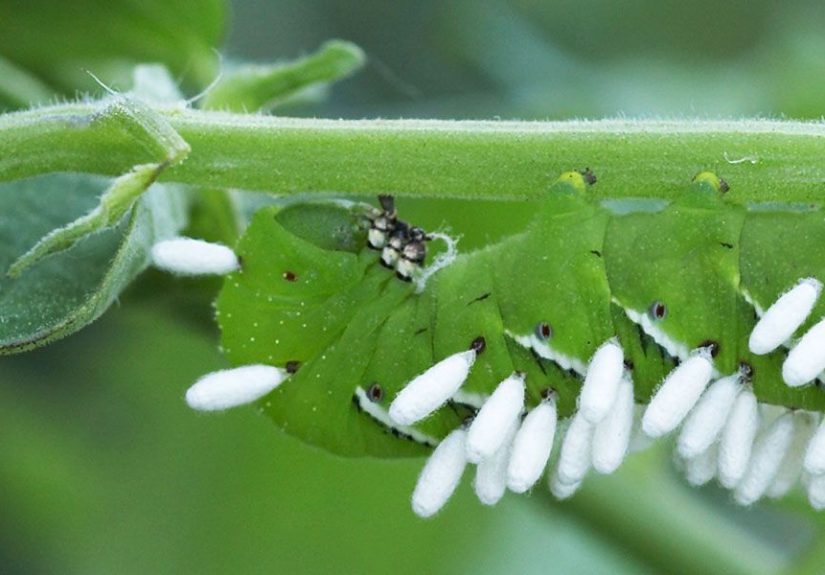
Hornworms can defoliate tomatoes quickly. The upside is they’re big enough to spotand satisfying to remove (no judgment).
Sometimes you’ll see hornworms with white cocoons; those are signs of beneficial parasitoids at work.
Best fixes:
- Hand-pick: check at dusk; look for stripped stems and dark droppings.
- Let natural enemies work: if you see parasitoid cocoons, consider leaving that hornworm in place
so beneficials can complete their life cycle.
Cabbageworms and Loopers: The Brassica Buffet Crew
If you grow kale, cabbage, broccoli, or collards, you’ve likely met these green caterpillars. Damage ranges from “lace
doily leaves” to “where did my plant go?”
Best fixes:
- Row covers: prevent egg-laying by moths and butterflies, especially early.
- Hand-pick: check undersides for eggs and small larvae.
- Bt (Bacillus thuringiensis): a targeted option that works best on younger caterpillars.
Earwigs: Surprisingly Helpful… Until They Aren’t
Earwigs can act as scavengers and even eat some pests, but they may also chew seedlings, flowers, and soft fruits.
If you suspect earwigs, you can confirm with simple traps.
Best fixes:
- Trap with rolled newspaper: set it out at night; in the morning, shake captured earwigs into soapy water.
- Reduce hiding places: dense mulch against stems and cluttered garden edges are earwig hotels.
Row Covers, Barriers, and “Keep Out” Signs That Actually Work
Physical exclusion is one of the most effective (and least dramatic) pest strategies. Floating row covers are lightweight
fabrics that let light and water through while blocking insects from landing, laying eggs, and snacking.
- Use them early: especially for cucurbits and brassicas.
- Seal the edges: weigh down with soil, boards, or pins.
- Remove at flowering: for crops that need pollinators (like squash and cucumbers).
For soil-level pests like cutworms, collars are an underrated superherosimple, cheap, and weirdly satisfying.
When You Do Need to Spray: Keep It Targeted and Pollinator-Smart
Sprays aren’t automatically “bad,” but random spraying is a fast way to create new problems. If you choose a product,
use the one that fits the pest and the plant, and apply it in the safest way possible.
Common Lower-Risk Options (Used Correctly)
- Insecticidal soap: works on contact for soft-bodied pests; needs direct coverage.
- Horticultural oils: can smother certain pests; avoid use on drought-stressed plants and during high heat.
- Neem-based products: can reduce feeding and growth in some pests (often slower acting).
- Bt: targeted for caterpillars, best on small/young larvae.
- Spinosad: can be effective for certain chewing pests; use carefully to reduce non-target impacts.
Pollinator Protection: Don’t Turn Your Garden Into a “No Bees Allowed” Zone
Many plants in home gardens rely on pollinators, and beneficial insects help keep pests in check. To protect them:
- Avoid spraying open blooms: treat when flowers are not present or when pollinators aren’t active.
- Spray in late evening (when appropriate): reduces exposure to active bees and other pollinators.
- Spot-treat: target the affected plant area instead of blanket spraying the whole garden.
- Follow the label: it’s not just legal language; it’s the real instruction manual.
A Simple Prevention Plan That Beats “Emergency Pest Week”
Early Season
- Start with healthy transplants and give plants space for airflow.
- Use collars for vulnerable seedlings and row covers for pest-prone crops.
- Keep weeds downmany pests build populations in weedy areas first.
Midseason
- Scout weekly: underside of leaves, new growth, and around stems.
- Water consistently to reduce plant stress (especially during heat waves).
- Encourage beneficials with diverse flowering plants nearby.
Late Season
- Remove heavily infested plant material (don’t let pests “graduate” into next year).
- Clean up debris after harvest to reduce overwintering sites.
- Make notes: what hit, when it hit, and what actually worked.
Conclusion: A Healthy Garden Isn’t Pest-FreeIt’s Resilient
Garden pests are inevitable, but a full-blown infestation is not. When you identify the pest, watch your plants closely,
and respond with the least intense fix that works, you’ll get better results with fewer side effects. You’ll also spend
less time doom-scrolling “WHAT IS EATING MY ZUCCHINI??” at midnight. (No judgment. We’ve all been there.)
Real-World Garden Pest Experiences (Case Studies You’ll Recognize)
The most useful garden pest lessons tend to come from the moments you didn’t plan forlike when your seedlings look
perfect at sunset and then, by breakfast, they’re lying on the soil like they fainted from shock. One common scenario:
a gardener plants a row of young peppers and zinnias, waters well, and feels smugly competent. The next morning, several
stems are neatly “snipped” at the base. That’s when cutworms reveal their special talent for overnight sabotage. The fix
that usually sticks is surprisingly low-tech: collars made from cardboard, paper cups, or similar material, pushed slightly
into the soil. Add a quick evening flashlight check for a few nights, and the problem often drops from “catastrophe” to
“mild annoyance.”
Another classic: the “mysterious leaf fade” that shows up right when summer heat gets serious. You notice pale stippling
on bean leaves or a dusty, tired look on cucumbers. You might suspect nutrient deficiency, but a closer look (especially
on the underside) reveals tiny mites and sometimes delicate webbing. The lesson here is that plant stress invites pests.
When gardeners switch from occasional deep watering to consistent moisture (without waterlogging), and add periodic hosing
to knock mites off, plants often rebound. It’s not glamorous, but it’s effectiveand it avoids the trap of spraying harsh
products that can wipe out the natural predators that would’ve helped long-term.
Then there’s the aphid surge that hits tender new growthoften right after a flush of nitrogen-rich fertilizer or a period
of rapid growth. The first clue is curled leaves on a rose shoot, or pepper tips that look crinkled and sticky. Gardeners
sometimes panic and reach for the strongest product they can find. But the “experience-based” move is to start with a firm
spray of water, repeat a couple times over a week, and only escalate if plants are still suffering. The funny part is how
often nature shows up late to the party: once aphids are visible, beneficial insects frequently follow. Many gardeners
notice that if they stop broad spraying and let the system work, lady beetle larvae and lacewing larvae eventually make
aphids significantly less dramatic.
Summer brings the “shiny villain” phase: Japanese beetles appear, skeletonize leaves, and gather in groups like they got
the memo. Gardeners who’ve been through it learn two things. First, early removal mattersknocking beetles into soapy water
while they’re sluggish can reduce the “attraction effect” that makes the problem snowball. Second, defending every plant
equally is exhausting. People get better results by choosing priorities: protect young fruit trees, roses, and high-value
ornamentals, while accepting minor damage elsewhere.
Finally, one of the most oddly satisfying experiences is spotting a tomato hornworm with white cocoons attached. The first
impulse is to remove it immediately (understandablehornworms are impressive eaters). But gardeners who’ve learned the
ecosystem approach often pause: those cocoons are evidence that beneficial parasitoids are already controlling the pest.
In many gardens, letting that natural control cycle complete can reduce future hornworm pressure. The big takeaway across
all these experiences is consistent: the best pest control strategy is usually a combination of observation, prevention,
and targeted actionnot a single “magic spray.”





 Close
Close