
Table of Contents >> Show >> Hide
- Meet the F-11 Tiger: A Supersonic Cat Built for the Boat
- The Day the Tiger Bit Its Own Tail
- How Can a Jet Catch Its Own Bullets?
- A Gorgeous Jet with a Tough Problem: Timing
- The Tiger’s Second Life: Trainers and the Blue Angels
- The “What If?” Chapter: The Super Tiger and an Altitude Record
- What the Tiger Still Teaches (Besides “Don’t Shoot Yourself”)
- Quick FAQ: The Stuff Everyone Asks About the F-11 Tiger
- Conclusion: A Legend Built from Speed, Style, and One Impossible Mistake
- Bonus Experiences: of Tiger-Inspired Aviation Joy
Aviation history is full of dramatic “you won’t believe this” moments. The Grumman F-11 Tiger has one of the
bestand by “best,” I mean “the kind you only admit after the accident report is filed and everyone has stopped
sweating.” In 1956, a Tiger pilot fired the jet’s cannons during a test and thenthanks to speed, gravity, drag,
and some extremely rude physicsflew into his own gunfire.
The Tiger’s self-inflicted takedown turned it into a legend, but it also distracts from what the airplane really was:
a sleek, ambitious leap into supersonic carrier aviation in the 1950s. Let’s meet the jet, revisit the incident
(without turning it into a cartoon), and pull out the lessons engineers and aviation fans still love to argue about.
Meet the F-11 Tiger: A Supersonic Cat Built for the Boat
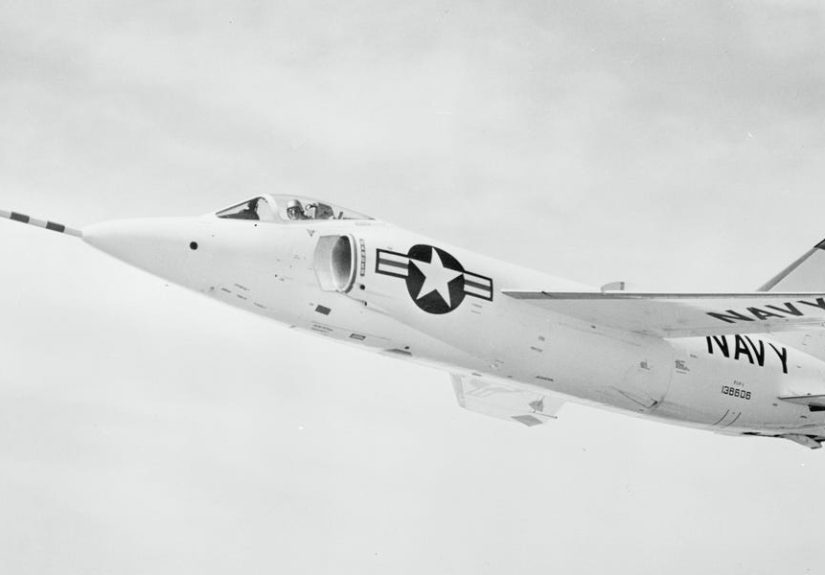
Grumman designed the F11F-1 Tiger as a lightweight, carrier-based fighter for the U.S. Navyfast, agile,
and modern enough to push into the supersonic era. The prototype flew in 1954, and the aircraft entered Navy
service in the mid-1950s, with initial production deliveries reaching the fleet in 1957.
The Tiger looked like the future because it was built around the future. It used a “coke-bottle” fuselage shape
that squeezed in around the wing roots to reduce drag at high speedan application of the area rule that helped
jets behave better as they muscled through the transonic zone. In the air, that translated to a cleaner run toward
Mach 1exactly what a Navy fighter needed when “going faster” was the whole point.
What made it distinctive?
- Supersonic capability: A Navy fighter designed to push past Mach 1 in level flight.
- Carrier practicality: Wings that could fold for storage aboard aircraft carriers.
- High-speed shaping: The “coke-bottle” fuselage for reduced drag at transonic/supersonic speeds.
- Serious teeth: Four 20mm cannonsgreat for tests, training, and (normally) not hitting yourself.
In short: it was a sharp tool built for a sharp job. Unfortunately, sharp tools don’t care if your job includes
“don’t intersect the ballistic trajectory of your own ammunition.”
The Day the Tiger Bit Its Own Tail
The famous incident happened on September 21, 1956, during a weapons test off the U.S. East Coast.
The pilot, test aviator Thomas W. “Tom” Attridge Jr., launched from Grumman’s Long Island facility
in an F-11 Tiger with a straightforward assignment: fire the guns in a test profile and bring the jet home.
A very bad timeline (with very normal intentions)
Attridge climbed to altitude, set up for a dive, and fired a first burst from the Tiger’s four 20mm cannons.
Later in the run, he lit the afterburner, steepened the dive, and fired again to empty the remaining ammunition.
Moments after that second burst, the aircraft started taking damageenough to buckle the windshield area and
compromise the right side of the aircraft’s intake/engine system. At first, it looked like a bird strike,
because “I flew into my own bullets” is not the brain’s first suggestion when you’re busy flying a jet.
Attridge turned back toward the runway. The Tiger was losing power and behaving like a jet that had opinions
about continuing to be a jet. He tried to nurse it in, but the aircraft came down short and was destroyed in the crash.
Attridge survived and eventually returned to flyingproof that luck sometimes shows up late, out of breath,
and holding a clipboard labeled “SECOND CHANCE.”
The investigation’s conclusion was both horrifying and oddly elegant: the Tiger had caught up to its own cannon fire.
The rounds, slowed by aerodynamic drag after leaving the barrels, remained on a trajectory the aircraft later
intersected as it accelerated and changed dive geometry. In other words, the jet was so fast it ran into the
consequences of something it had done a short time earlierlike a group chat message, but with more aluminum.
How Can a Jet Catch Its Own Bullets?
This story sounds impossible until you treat it like two moving objects sharing the same airspace: the airplane and
the projectiles. When the Tiger fired its cannons, the rounds didn’t stop being “fast.” They just started losing
speed quickly compared with the aircraftbecause bullets are small, draggy, and not equipped with afterburners.
The physics (no PhD required)
-
Bullets slow down. Once the shells leave the gun, air resistance starts stealing energy immediately.
They decelerate much faster than the aircraft does. -
The airplane can accelerate. In a diveespecially with afterburneran aircraft can gain speed quickly,
aided by gravity and thrust. -
Paths can cross. If the aircraft’s later flight path intersects the earlier ballistic arc, the jet can
literally arrive where its rounds still are.
Think of it like tossing a ball forward while you’re driving. The ball doesn’t keep accelerating just because your car can.
If you speed up and the ball’s arc drops into your lane, you can catch up to it. Now replace “car” with “supersonic
Navy fighter” and “ball” with “20mm cannon rounds,” and the metaphor gets dramatic very quickly.
Some accounts also mention debris ingestionsuch as spent casings or fragmentsbeing pulled into the intake and damaging
the engine. Regardless of the exact mix of impacts and ingestion, the core idea holds: the Tiger entered the same
neighborhood as its own fired ammunition, and that neighborhood was not zoned for safe operations.
A Gorgeous Jet with a Tough Problem: Timing
The Tiger was not a failure, but it was a victim of the 1950s jet age’s brutal speed of progress. Even if you were good,
you could be obsolete before your paint fully cured.
Why the frontline career was short
-
Engine headaches: The Wright J65 powerplant proved to be a continuing source of trouble, and performance
didn’t always match the airframe’s ambition. -
Operational limitations: The Tiger’s capability set and evolving requirements (especially as missiles and
better interceptors arrived) meant it was quickly outclassed. -
Bad luck in competition: The Tiger’s era overlapped with icons like the Vought F-8 Crusader and later the
F-4 Phantom, aircraft that defined Navy fighter aviation for years.
In practice, many Tigers shifted away from frontline carrier duty relatively early, with the aircraft finding a steadier
home in training and demonstration roles. That’s not a demotionit’s an honest job description: stable handling and
supersonic performance make a jet useful for teaching students what “fast” feels like before they move on to newer fighters.
The Tiger’s Second Life: Trainers and the Blue Angels
If you only remember one “career” for the F-11 Tiger besides its accidental self-shootdown, make it this:
the jet became a star in front of crowds.
The U.S. Navy Flight Demonstration Squadron, the Blue Angels, transitioned to the F11F-1 Tiger in 1957 and
flew it until 1969. For more than a decade, the Tiger delivered tight formations, crisp rolls, and that unmistakable
jet-age silhouettean airplane that looked like speed even when parked.
Museum notes and preserved aircraft histories reinforce how closely the Tiger and the Blue Angels are linked. One
prominently displayed Tiger served in air shows late into the 1960s as the team’s lead aircraftmeaning that even
after frontline fighter service shrank, the Tiger kept doing what it did best: flying beautifully.
The “What If?” Chapter: The Super Tiger and an Altitude Record
Engineers didn’t stop dreaming just because the standard Tiger had limits. Continuing problems with the J65 helped push
development toward an upgraded concept: a Tiger variant fitted with a much more powerful engine. The result was the
F11F-1F Super Tiger, built in tiny numbers and intended to unlock the airframe’s full potential.
In April 1958, a Super Tiger set a world altitude record of roughly 76,800 feeta reminder that the
underlying design had plenty of aerodynamic talent. Still, the Super Tiger didn’t enter production. By then, the Navy’s
priorities were shifting, and other fighters were arriving that better matched the future of fleet defense.
The Tiger’s story, then, isn’t “great jet, dumb accident.” It’s “great jet, one legendary accident, and a textbook case
of how quickly technology sprints can outrun procurement reality.”
What the Tiger Still Teaches (Besides “Don’t Shoot Yourself”)
1) Test profiles are real life, not a vibe
Attridge’s incident is a reminder that a “simple” weapons test is still a carefully engineered event. Speed changes,
dive angles, firing durationtiny differences can put objects into the same place at the same time. Aviation’s safety
culture is built on assuming physics will show up to every flight, uninvited.
2) The airplane is a system, not a collection of parts
The Tiger didn’t just get “hit.” Damage propagatedstructure, intake airflow, engine integrity, controllability.
Jet aircraft don’t fail politely. A small event can cascade quickly when you’re moving hundreds of miles per hour.
3) Great designs can have short careers
The Tiger’s brief frontline window wasn’t proof it was bad. It was proof that the 1950s were a technology blender.
If you weren’t the best answer to next year’s threats, you didn’t get to be the hero for long.
Quick FAQ: The Stuff Everyone Asks About the F-11 Tiger
Was the F-11 Tiger really the only plane to shoot itself down?
It’s often described as the only jet to do it in this specific “caught my own cannon fire” way. Whether it’s truly
unique depends on how narrowly you define the scenario, but the Tiger is unquestionably the most famousand best documented.
Did the pilot survive?
Yes. Attridge was badly injured in the crash but survived and later returned to work, eventually contributing to other
major aerospace programs.
Did the Tiger fight in combat?
The Tiger’s operational story is more about fleet service, training, and demonstration flying than combat fame. Its
best-known public “mission” was with the Blue Angels.
What replaced it?
In the fleet, aircraft like the F-8 Crusader and later the F-4 Phantom took over key fighter roles. In the Blue Angels,
the Tiger’s era ended in 1969 when the team transitioned to the F-4.
Conclusion: A Legend Built from Speed, Style, and One Impossible Mistake
The Grumman F-11 Tiger deserves to be remembered for more than the day it “shot itself down.”
It was a clean, forward-looking carrier fighter that helped the Navy move into the supersonic era, a jet that became a
beloved Blue Angels performer, and a reminder that the sky always keeps receipts.
And yesthe Tiger’s infamous incident is still the headline act, because it compresses aviation’s whole personality into
one story: brilliant engineering, bold testing, humbling physics, and the occasional moment when reality says,
“Nice afterburner. Watch this.”
Bonus Experiences: of Tiger-Inspired Aviation Joy
If you want to “experience” the F-11 Tiger today, you don’t need a flight suit or a carrier deck (though those would
definitely improve your Instagram). Start with the most human version: seeing one in person.
Museums that display 1950s Navy jets tend to place them where you can appreciate the linesnose slightly down, wings
swept, fuselage pinched in just enough to look like it’s cheating the air. Standing underneath a Tiger is a quick lesson
in scale: it’s smaller than the later, chunkier fleet defenders, but it still feels like a serious machine. You can
almost imagine the carrier deck crew looking at it and thinking, “Yep. That’s going to be loud.”
The second experience is the one aviation nerds accidentally turn into a hobby: the Tiger rabbit hole.
You read the self-shootdown story once and think, “No way.” Then you find the flight profile details and realize it’s
not magicit’s the world’s most dramatic math problem. That’s when you start doodling dive angles in the margins of
your notebook like you’re preparing for a test you will never take. (Congratulations: you are now an honorary member of
the “I swear this is interesting” club.)
Then there’s the Blue Angels connection, which is basically the Tiger’s redemption arc in public.
Watch footage of tight formation flying and notice how the airplane looks “honest” in the airclean rolls, smooth
transitions, a shape that reads clearly even from far away. You don’t need to know every spec to feel the appeal.
The Tiger was built in an era when jets still had a certain elegance, and demonstration flying amplifies that elegance
into something almost theatrical. It’s hard not to grin when you realize the same aircraft family known for a freak
accident also spent years making crowds cheer.
For hands-on types, the Tiger is a gift to model builders and artists. The paint schemes alonefleet gray,
high-visibility markings, Blue Angels blue and yellowmake it a satisfying subject. And because the Tiger’s story has
both glamour and caution, it gives your build a narrative. You’re not just assembling plastic; you’re assembling a
moment in the jet age when engineers were sprinting, pilots were testing the edge of possible, and the rules of flight
were still being negotiated at high speed.
Finally, there’s a quiet, modern experience: the Tiger as a lesson in humility.
The self-shootdown isn’t funny because someone got hurt (they did), or because the airplane was “dumb” (it wasn’t).
It’s memorable because it reveals how thin the margin can be at high performance. The Tiger reminds you that aviation
is not just courage and horsepowerit’s planning, procedures, and respect for physics. If you walk away from the story
thinking, “Wow, the sky is complicated,” you’ve had the correct Tiger experience.






 Close
Close