
Table of Contents >> Show >> Hide
- Why We’re So Obsessed with Colorized History
- Inside “History In Color”: 30 Photos That Bring the Past to Life
- How Photo Colorization Actually Works
- The Big Question: Do Colorized Photos Distort History?
- How to Enjoy “History In Color” Without Getting Misled
- What It’s Like to Fall Down the “History In Color” Rabbit Hole (Experience and Reflections)
- Conclusion: Why “History In Color” Keeps Going Viral
Scroll through Bored Panda for more than five minutes and you’ll probably run into one of the internet’s favorite visual rabbit holes:
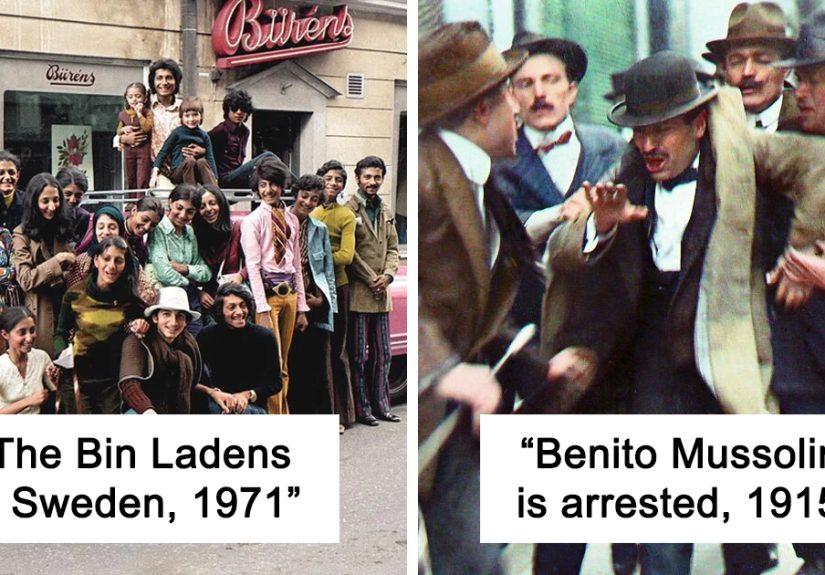
colorized historical photographs. The viral series “History In Color: 30 Beautifully Colorized Historical Photographs” takes old
black-and-white images and breathes new life into them with carefully researched, digitally added color. Suddenly, the past doesn’t feel like a distant,
sepia-toned myth anymore. It looks alarmingly real like it could’ve happened last Tuesday.
In this article, we’ll unpack why these images are so addictive, what makes “History In Color” stand out, how photo colorization actually works, and
how to enjoy these striking pictures without forgetting that they’re interpretations of history, not perfect time machines.
Why We’re So Obsessed with Colorized History
The Past Was Never Really Black and White
When we think of early 20th-century life, our brains tend to default to shades of gray. That’s not because the world lacked color, of course,
but because film technology couldn’t capture it. Early photography primarily used monochrome processes, which turned the riot of real-world
color into a spectrum of light and dark tones on paper.
Pretty early on, people tried to fix that. Photographers and artists in the 19th and early 20th centuries hand-tinted prints with dyes and paints,
adding rosy cheeks, blue skies, and green uniforms one brushstroke at a time. It was slow, expensive, and highly dependent on the artist’s patience
(and eyesight), but the impulse was the same as today’s: we want the past to look as alive as it really was.
From Darkroom Brushes to Digital Layers
Fast-forward to the digital age and the tools have changed, but the goal is strikingly familiar. Modern colorization artists use high-resolution scans
of historical photos and layer color digitally, often in Photoshop or similar programs. Instead of tiny paintbrushes, they use digital brushes,
blending modes, and a frankly scary number of layers.
What’s changed is accessibility. You no longer need a studio and rare pigments to colorize photos. With a powerful computer, research skills,
and a willingness to zoom in to 800% for hours, passionate artists can transform a single black-and-white photo into a full-color scene that
feels like a movie still.
Why “History In Color” Hits So Hard
The “History In Color” projects featured on Bored Panda and social media lean into this emotional impact. They focus on:
- Recognizable historical moments – World Wars, iconic city streets, major social movements.
- Famous faces – political leaders, artists, musicians, activists.
- Ordinary people – kids playing, workers on the street, families posing stiffly for the camera.
Put together, these colorized historical photographs make history feel less like a textbook and more like a Netflix documentary screenshot.
You’re not just “looking at the 1940s” you’re reading the color of someone’s dress, the rust on a car, the ads in a shop window. Your brain
instantly starts filling in sound, temperature, and emotion.
Inside “History In Color”: 30 Photos That Bring the Past to Life
The exact selection in Bored Panda’s “History In Color” features may change over time, but the vibe is consistent:
a curated mix of images that cover everything from war and politics to everyday life and quiet human moments.
Think of the collection less as a list and more as a mood board of the 19th and 20th centuries.
1. Everyday Life in Vivid Detail
Some of the most powerful colorized photos aren’t of presidents or battles they’re of ordinary people doing ordinary things:
- Street vendors in early 1900s cities, surrounded by colorful produce and hand-painted signs.
- Children in patched clothes, their bright eyes and scuffed shoes telling a story the original grayscale couldn’t fully convey.
- Couples at beaches or parks, with blue skies and patterned dresses turning what once looked “old” into something almost contemporary.
In black and white, these scenes can feel distant. In color, they look like photos from your grandparents’ album,
or even from a trendy retro filter on your phone familiar enough to spark instant empathy.
2. War and Conflict, Seen in Human Terms
Colorized images of World War I and World War II often form the emotional backbone of “History In Color” collections. Uniforms gain their true
shades of olive and navy; rusted helmets and muddy fields feel suddenly tactile. The bright red of a medic’s cross or the faint blue of distant
mountains can make the scene all too real.
When you see soldiers not as flat gray silhouettes but as young people with sunburned faces and tired eyes, it becomes harder to mentally file
them away as “just history.” That’s the quiet power of colorization: it gently insists that these were real humans standing in those trenches
or boarding those ships.
3. Famous Faces, Reintroduced
These collections also love revisiting well-known figures. Colorized portraits of historical icons authors, civil rights leaders, monarchs,
scientists, movie stars give them a surprising freshness.
Suddenly you’re noticing:
- The specific shade of a leader’s suit or tie.
- The warm light reflecting off a musician’s instrument.
- The exact color of a writer’s eyes as they stare down the camera.
We’re used to thinking of many of these people as “statues in a park” or “faces in our history textbook.” In color, they revert to being
real people who once chose that outfit, sat in that chair, and maybe felt awkward about their hair that day just like the rest of us.
4. Cities and Technology Coming Alive
Colorization also transforms landscapes and city scenes. The dusty streets of early 1900s New York or London suddenly feature red-bricked buildings,
bright storefronts, and hand-painted billboards. Old cars shift from generic gray blobs to specific shades of burgundy, navy, or cream.
Even small details matter: green copper roofs, yellow trolley cars, blue uniforms on police officers. The result is a sense that the past wasn’t
just “old-timey” it was dynamic, loud, and full of competing textures and colors.
5. Quiet Human Moments You Can’t Unsee
Finally, some of the most haunting images in these sets are small, intimate scenes: a nurse adjusting a child’s blanket, a worker taking a smoke break,
a family sitting on a porch after a long day. The subtle colors in their clothes and surroundings make these moments feel intrusively close, as if
you’ve accidentally opened the wrong door and glimpsed a private memory.
That’s the heart of “History In Color”: it invites you to step into someone else’s yesterday and look around long enough to care.
How Photo Colorization Actually Works
Step 1: Finding and Restoring the Original
Before any color gets added, the original photo has to be digitized, cleaned up, and stabilized. That usually means:
- Scanning the original at a very high resolution.
- Removing dust, scratches, stains, and wrinkles.
- Fixing contrast and exposure so details are visible.
In many ways, this restoration phase is just as important as the color itself if you don’t start with a clear base,
your final result will look muddy or fake.
Step 2: Research, Research, and More Research
Good colorizers are part artist, part detective. They look up:
- Historical uniforms and insignia to match exact shades.
- Old catalogs and ads for period-accurate clothing colors.
- Architecture references, regional foliage, and even local weather patterns.
When they can’t find exact documentation, they make educated guesses but ethical colorizers are usually open about that,
noting that some colors are hypothetical rather than documented.
Step 3: Painting with Light Digitally
Once the research is done, it’s time for the long, patient work:
- Creating separate layers for skin, hair, clothing, sky, buildings, and background elements.
- Using soft brushes and layer blending modes to “glaze” color without destroying the original light and shadow.
- Adjusting hues, saturation, and contrast so the scene looks natural, not like a neon cartoon.
For complex images think huge crowd scenes, battlefields, or city streets this process can take dozens of hours.
Some artists estimate spending over a hundred hours on a single photograph, especially when the image is historically important.
What About AI Colorization?
There are now AI tools that can colorize black-and-white photos automatically. They’re fun for quick experiments and family snapshots,
but they struggle with accuracy and nuance. AI may, for example, guess skin tones poorly, get uniforms wrong, or give every building
roughly the same color. That’s why for serious historical work, human-guided colorization is still the gold standard.
The Big Question: Do Colorized Photos Distort History?
The Case for Color
Fans of “History In Color” argue that colorized historical photographs:
- Increase engagement – People who would never read a dense history book might spend 20 minutes scrolling a colorized photo thread.
- Boost empathy – Seeing real skin tones, eye colors, and environmental hues can make events feel more immediate and human.
- Help education – Teachers use colorized photos to help students “feel” a time period instead of just memorizing dates.
Used transparently and respectfully, colorization can act as a gateway drug to deeper historical curiosity:
you come for the pretty pictures and stay to learn about the people in them.
The Case for Caution
Critics point out that every color choice is an interpretation. If the original photographer never specified the color of a dress or a building,
then the colorizer is inevitably guessing even if that guess is informed by careful research.
Potential problems include:
- Unintentional bias – Skin tones and cultural dress can be misrepresented, especially by automated tools.
- False certainty – Viewers might assume the colors are “exact” rather than approximate.
- Overshadowing the original – Colorized versions can go viral while the original, historically important black-and-white photo is forgotten.
Some historians argue that black-and-white photos are honest about their limitations: they show you clearly what the technology could and couldn’t capture.
Once you add color, you risk blurring the line between document and illustration.
Finding a Healthy Middle Ground
The best colorized history projects walk a careful line:
- They always credit the original photographer or archive where possible.
- They make it clear that the colors are interpretations, not official corrections.
- They often show before-and-after comparisons, so you can see the original image and decide for yourself.
When “History In Color” style collections are viewed with that understanding, they can be both emotionally powerful and intellectually honest.
How to Enjoy “History In Color” Without Getting Misled
1. Remember You’re Looking at an Artwork and a Document
A colorized historical photograph sits in a strange in-between category. It’s part historical artifact, part modern digital artwork.
Appreciate the craftsmanship, but don’t forget that some choices are subjective.
2. Use Colorized Photos as a Starting Point, Not the Final Word
See a photo that intrigues you? Look up the story behind it. Search for the original black-and-white version.
Check if the artist or publisher included notes about the subject, location, and date. Let curiosity pull you deeper than just “Wow, cool picture.”
3. Notice What Color Changes Emotionally
Pay attention to how your feelings shift when you see a scene in color versus black and white. Does a battlefield feel more chaotic?
Does a portrait feel more intimate? That emotional difference is part of the power and the responsibility of colorization.
4. Support Artists Who Are Transparent
Many of the creators whose work ends up on Bored Panda, Instagram, X (Twitter), or other platforms openly describe their process and research.
Follow those accounts, share their posts, and engage with the context they provide, not just the aesthetics.
What It’s Like to Fall Down the “History In Color” Rabbit Hole (Experience and Reflections)
If you’ve ever opened a “History In Color” gallery thinking, “I’ll just look at a couple of photos,” you already know how this goes.
Ten minutes later, you’re zooming in on the reflection in someone’s glasses in a 1920s street scene, trying to see what shop sign is behind them.
Colorized historical photographs have a way of grabbing your attention and refusing to let go.
Part of the experience is emotional whiplash. One moment you’re looking at a cozy family portrait from the 1910s, with kids in pastel outfits and a dog
that somehow looks exactly like someone’s dog today. The next image is a soldier in a muddy trench, his uniform stained and his expression so vivid
you feel like you shouldn’t be intruding. Color doesn’t just decorate these images; it sharpens their emotional edges.
People often describe their first deep dive into colorized history as “like time travel, but in scroll form.” You jump from decade to decade with your thumb,
but each scene feels like a place you could step into. The green of a field, the chipped red of a doorframe, the patterned wallpaper behind a subject’s head
all of those details invite your imagination to fill in smells, sounds, and stories.
There’s also a strange sense of recognition. You might see a teenager from 1915 with messy hair and a suspiciously modern-looking smirk and think,
“I went to school with that guy.” You notice relationships: hands on shoulders, shared glances, the way people lean toward each other.
In black and white, those details can feel abstract. In color, they become universal human language.
For educators and history buffs, the experience goes even deeper. Many teachers report that students who normally “don’t care about history” perk up
when they see colorized photos. Suddenly, a lesson about World War II or the Great Depression isn’t just a list of dates it’s a series of faces and places
that look like snapshots from someone’s family album. That emotional connection can be the spark that leads a student to read more, ask better questions,
or understand why an event still matters today.
Of course, part of the experience is learning to keep your critical thinking hat on while your heart is busy reacting. After a while, you start to wonder:
“Was that dress really that shade of blue?” or “Did the artist choose those tones for symbolic reasons?” This isn’t a bad thing. In fact, it’s healthy.
Becoming aware of the interpretive layer in colorized photos makes you a better consumer of all visual media, not just historical images.
If you decide to try colorizing photos yourself maybe starting with your own family archives you’ll gain an even deeper appreciation for the craft.
You quickly discover that skin tones are tricky, shadows are unforgiving, and nothing looks right until you’ve adjusted it ten times.
You also discover how powerful color can be: shift it slightly cooler and a scene feels somber; warm it up and suddenly it feels nostalgic.
In the end, falling into the “History In Color” world is a mix of enjoyment and education. You get the dopamine hit of beautiful visuals and the quiet,
satisfying feeling of understanding the past a little better. The best way to experience it is with both curiosity and humility:
appreciating the artistry, respecting the original sources, and remembering that every splash of color is also a reminder that real people once stood in those very spots.
Conclusion: Why “History In Color” Keeps Going Viral
“History In Color: 30 Beautifully Colorized Historical Photographs” and similar collections keep circling the internet for a reason.
They hit a rare sweet spot where art, technology, and history meet. Colorized historical photographs make the past feel close enough to touch,
while also reminding us how much we don’t know and how much there still is to learn.
View them as conversation starters, not final answers. Let them surprise you, move you, and push you to dig deeper.
If they make you see historical figures as real people, or inspire you to ask “What’s the story behind this image?”,
then they’ve done more than just look pretty in your feed. They’ve made history feel alive again in color.





 Close
Close