
Table of Contents >> Show >> Hide
- What “Ground Fault” Actually Means (Without the Engineering Headache)
- How a GFCI Receptacle Protects You
- Where GFCI Receptacles Matter Most
- GFCI Outlet vs. GFCI Breaker: What’s the Difference?
- “LINE” and “LOAD”: The Two Words That Decide Whether It Works
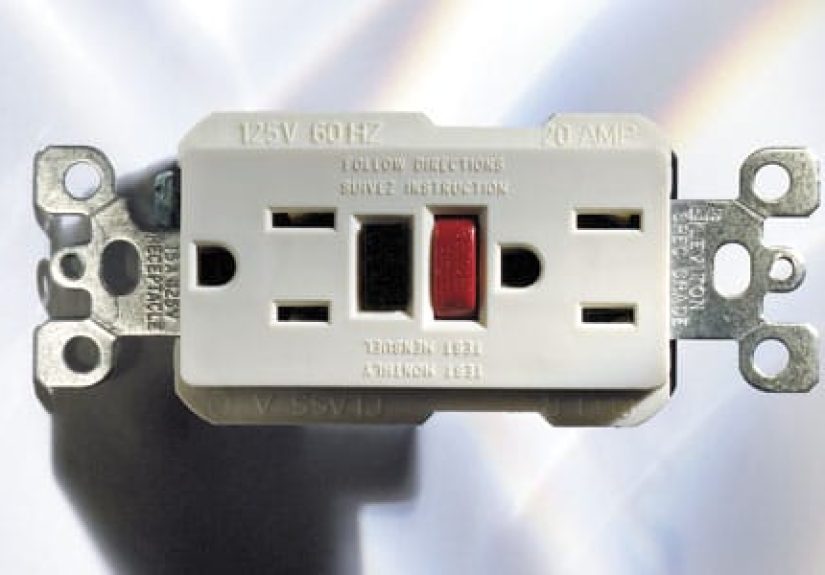
- What the “TEST” and “RESET” Buttons Really Do
- Specific Examples of How GFCIs Save the Day
- GFCI vs. AFCI: Not Rivals, More Like a Safety Duo
- What Causes “Nuisance” Tripping (And When It’s Not Nuisance at All)
- How to Live Happily With GFCI Outlets
- Why GFCI Receptacles Are One of the Best Safety Upgrades
- Experiences That Show GFCI Safety in Real Life (About )
- Conclusion
If electricity had a personality, it would be the friend who’s fun at parties but absolutely cannot be trusted near a pool.
It’s incredibly useful, but when it goes looking for the “easiest path,” it can pick you. That’s exactly the kind of
problem a GFCI receptacle is built to stopfast.
GFCI stands for Ground-Fault Circuit Interrupter. In plain English: it’s a safety outlet that can detect when
electricity is leaking where it shouldn’t (like through wet hands, a damp floor, or a cracked tool cord) and it shuts the power off
in a fraction of a second. Think of it as a bouncer for your outlets: the moment a sketchy current tries to sneak out the side door,
it’s escorted outimmediately.
What “Ground Fault” Actually Means (Without the Engineering Headache)
In a normal circuit, electricity leaves the power source on the hot wire and returns on the neutral wire.
The outgoing and returning current should match closelylike a perfectly balanced checkbook (or at least the version we pretend we keep).
A ground fault happens when electricity takes an unintended path to ground. That path might be a metal sink, a wet countertop,
a damaged extension cord, or a power tool casing. And yes, sometimes that path can be a human bodyespecially when moisture lowers resistance.
Because your body contains water and electrolytes, it can become an excellent conductor at the worst possible time.
How a GFCI Receptacle Protects You
1) It constantly compares “out” vs. “back” electricity
Inside a GFCI outlet is a sensing system that monitors the current leaving on hot and returning on neutral. If there’s even a small difference
typically around 5 milliamps (a tiny amount that can still be dangerous)the GFCI assumes the “missing” current is going somewhere
it shouldn’t and trips, cutting power.
2) It trips incredibly fast
Speed matters because electric shock risk increases with both current level and time. A GFCI is designed to interrupt power
within a fraction of a second when it detects a ground-fault level imbalance. That rapid shutoff can prevent a painful shock from
becoming a life-threatening situation.
3) It doesn’t need a ground wire to work (but grounding still matters)
Many people assume GFCI equals “grounding.” Not exactly. A grounding conductor is a separate safety path that helps clear faults by carrying
current safely back to the panel. A GFCI, on the other hand, works by measuring imbalance. That means a GFCI can still add protection in older
homes with two-prong outlets (when installed correctly and labeled appropriately), even if a ground wire isn’t present. Grounding is still a good idea,
but the GFCI’s superpower is detecting leakagenot providing the grounding path.
Where GFCI Receptacles Matter Most
Electricity and water have a long-running, toxic relationship. So GFCI protection is especially important anywhere moisture is likely, anywhere you’re
barefoot on concrete, or anywhere tools and cords take a beating.
Common high-risk locations
- Bathrooms (sinks + water + hair tools = chaos)
- Kitchens (countertop appliances near sinks and wet surfaces)
- Laundry areas (washing machines, utility sinks, damp floors)
- Garages and workshops (power tools, concrete floors, extension cords)
- Basements and crawl spaces (humidity and concrete)
- Outdoor receptacles (rain, sprinklers, dew, and that one hose that always leaks)
- Pool, spa, and hot tub areas (the highest-stakes “water + electricity” zone)
Electrical codes in the U.S. have expanded GFCI requirements over the years because the safety benefit is so clear. If you’re upgrading outlets,
remodeling, or adding circuits, it’s smart to assume that wet and utility areas will need GFCI protectionand then verify the exact requirements
for your location with a licensed electrician or local building department.
GFCI Outlet vs. GFCI Breaker: What’s the Difference?
Both do the same core job: they detect ground-fault leakage and shut off power. The difference is where they do it.
GFCI receptacle (outlet)
- Installs at a specific location (like a bathroom or kitchen outlet).
- Can protect itself and, if wired correctly, can protect additional outlets “downstream.”
- Great for targeted upgrades or when you only need protection in one area.
GFCI circuit breaker
- Installs in the electrical panel.
- Protects the entire circuit (every outlet/light on that circuit).
- Useful when multiple outlets need protection or when receptacle access is limited.
Either option can be safe and effective. The right choice depends on your wiring layout, the location, and what else is on the circuit.
“LINE” and “LOAD”: The Two Words That Decide Whether It Works
On the back of most GFCI receptacles you’ll see terminals labeled LINE and LOAD. Here’s the simplest way to remember it:
- LINE = the power coming in from the panel.
- LOAD = power going out to protect other outlets downstream.
If you mix them up, the outlet might still provide power but won’t provide proper protection, or it may not reset at all. This is why DIY
electrical work should be handled with extreme care. If you’re not 100% confident, this is one of those moments where hiring a licensed electrician
is cheaper than learning electrical theory the “hands-on” way.
What the “TEST” and “RESET” Buttons Really Do
The buttons aren’t decoration. They’re how you confirm the safety feature actually functions.
TEST
Pressing TEST simulates a ground fault inside the device. A working GFCI should trip immediately and cut power to the receptacle (and
anything it protects downstream). If it doesn’t trip, it’s not protecting you.
RESET
After tripping, pressing RESET restores powerassuming the fault is gone and the device is functioning properly.
If it won’t reset, the problem may still exist (moisture intrusion, a damaged appliance, miswiring, or a failed receptacle).
Many modern GFCI receptacles include self-testing features and indicator lights. That’s great, but it’s still smart to test periodically because
safety devices aren’t immune to age, heat, dust, or life happening.
Specific Examples of How GFCIs Save the Day
Example 1: The hair dryer “oops” moment
A hair dryer near a sink is basically a high-wattage mistake waiting for a plot twist. If water contacts the appliance or cord, electricity may try
to travel through the wet surface (and potentially through a person). A GFCI can detect that leakage and cut power fast enough to prevent a severe shock.
It won’t make risky behavior “safe,” but it can turn a disaster into a close call.
Example 2: Outdoor cords and morning dew
Plugging holiday lights or yard tools into an exterior outlet seems harmlessuntil the connection gets damp. Moisture can create leakage paths and
increase shock risk. A GFCI-protected outdoor receptacle can trip when leakage occurs, reducing the chance that someone becomes part of the circuit.
Example 3: Garage workbench with concrete floors
Concrete floors can conduct electricity better than you’d expect, and you’re often holding metal tools. Add worn cords, vibration, and dustand you’ve got
a prime environment for faults. GFCI protection in garages and workshops is one of those “boring” upgrades that becomes very exciting the day it saves you.
GFCI vs. AFCI: Not Rivals, More Like a Safety Duo
People often confuse GFCI with AFCI because the acronyms look like they came from the same secret society.
- GFCI protects people from shock by detecting current leaking to ground.
- AFCI (Arc-Fault Circuit Interrupter) helps prevent fires by detecting dangerous arcing in wiring and cords.
In many modern homes, you’ll see circuits that require both types of protection depending on location and use. Think of it this way:
GFCI is the “don’t let electricity go through people” hero, while AFCI is the “don’t let electricity start a fire inside the walls” hero.
Different villains, different capes.
What Causes “Nuisance” Tripping (And When It’s Not Nuisance at All)
A GFCI trips for a reason: it senses imbalance. Sometimes, though, the reason is subtle or annoying. Here are common causes:
Moisture and weather
Outdoor outlets, damp basements, and even humid bathrooms can allow tiny leakage currents. A wet cover, condensation, or water infiltration can trigger trips.
Appliances with heating elements or motors
Older refrigerators, freezers, sump pumps, washing machines, and power tools can develop small leakage over timeespecially when insulation degrades.
If the GFCI trips when a certain appliance runs, don’t ignore it. That appliance may need service or replacement.
Shared neutrals or wiring issues
In some wiring setups (especially older ones), circuits may share neutrals or have connections that aren’t ideal for GFCI protection. Miswiring can cause
persistent tripping or failure to reset.
It’s worn out
Like any protective device, a GFCI receptacle can fail with age. If it won’t test correctly, won’t reset reliably, or trips randomly without a clear cause,
replacement is often the safest move.
How to Live Happily With GFCI Outlets
Test regularly
Periodic testing is simple: press TEST (power should shut off), then press RESET (power returns). If it doesn’t behave that way, treat it as a safety issue.
Use weather-resistant (WR) and tamper-resistant (TR) where appropriate
Outdoor and damp locations should use weather-resistant devices and proper covers. Homes with kids benefit from tamper-resistant
receptacles that help prevent objects from being pushed into slots. These features are separate from GFCI, but they stack nicely in the “please don’t let anyone get hurt” department.
Don’t ignore repeated trips
If a GFCI trips repeatedly, it’s giving you information. It may be alerting you to moisture, a failing appliance, or wiring issues. Resetting it over and over
without investigating is like covering your car’s check-engine light with tape and calling it “problem solved.”
Know when to call a pro
Electrical troubleshooting can be hazardous. If you’re dealing with persistent trips, warm outlets, burning smells, buzzing, visible damage, or confusing wiring,
contact a licensed electrician. Safety devices are amazing, but they’re not a substitute for correct wiring and sound electrical systems.
Why GFCI Receptacles Are One of the Best Safety Upgrades
Some home upgrades are glamorous. A GFCI receptacle is not glamorous. Nobody takes selfies next to a newly installed outlet and captions it, “Living my best life.”
But it’s one of the most practical safety improvements you can make because it’s always on guardquietly measuring, comparing, and ready to shut down power when it detects danger.
In homes, the biggest shock risks tend to happen during everyday routines: making coffee, blow-drying hair, running a pressure washer, plugging in a space heater in the garage,
or using tools in a damp basement. GFCI protection targets those real-life moments. It’s not about being paranoidit’s about acknowledging that humans spill things, cords age,
and water shows up uninvited.
Experiences That Show GFCI Safety in Real Life (About )
Ask a few electricians about GFCI receptacles and you’ll notice a pattern: they don’t talk about them like “optional upgrades.” They talk about them like seatbeltssimple,
unglamorous, and shockingly (pun intended) important. One homeowner story you hear often is the “kitchen blender surprise.” Someone is making a smoothie, the countertop is damp,
and a worn appliance cord finally decides to act up. The GFCI trips instantly. The person might feel startled, maybe even annoyed that breakfast got interrupted, but that sudden silence
is the point. The outlet did its job before anyone had time to become the path to ground.
Outdoor experiences are even more dramatic. Picture someone setting up string lights, plugging in a cord that’s been stored in a garage for years, and discovering the insulation has tiny cracks.
It works fineuntil a little moisture gets involved. A GFCI-protected outdoor receptacle may trip as soon as leakage starts, preventing someone from grabbing a damp plug and learning a lesson the hard way.
Many people describe the moment as “it just shut off,” followed by the realization that “it shut off for a reason.” The best safety devices don’t wait for you to notice danger; they notice it first.
Garages and basements have their own greatest hits. A common one: a shop vacuum or power tool trips a GFCI repeatedly. At first, it feels like a nuisance. Then the tool gets inspected andsurprise
there’s a damaged cord, a loose connection, or internal wear that’s letting current leak. In that sense, a GFCI doesn’t just protect people; it can also act like an early-warning system for equipment that’s
on its way to becoming hazardous. It’s like the smoke detector that tells you dinner is burning before the kitchen becomes a campfire.
Then there’s the bathroom reality check. People use electricity in bathrooms daily: razors, curling irons, hair dryers, toothbrush chargers. Add water, tile, and bare feet, and you’ve got conditions that
increase shock risk. Many homeowners only appreciate a GFCI after the first time they press TEST and see power cut off instantlybecause it proves the device is awake and watching.
Some even make it a routine when daylight savings time hits: change the clocks, test the GFCIs. It’s not a bad tradition.
The most telling experiences are the quiet ones: the “nothing happened” moments that never become stories. A GFCI trips so fast that the dangerous situation ends before it becomes an emergency,
and life moves on. That’s the whole goal. In home safety, the best outcome is boring. And GFCI receptacles? They’re boring in exactly the right way.
Conclusion
GFCI receptacles keep you safe by doing three things extremely well: they detect tiny imbalances that suggest electricity is leaking, they shut power off quickly, and they focus protection where real-world
hazards are most likelywet, damp, outdoor, utility, and tool-heavy areas. If you’re improving home safety, upgrading outlets in high-risk locations is one of the smartest moves you can make.
Test them, respect them, and if they keep tripping, treat it like a cluenot an inconvenience.






 Close
Close