
Table of Contents >> Show >> Hide
- The two rules that matter more than any “minutes per pound” myth
- Why stuffing changes the timeline (and can dry out your bird)
- Stuffed turkey cooking time chart (325°F oven)
- Step-by-step: how to cook a stuffed turkey safely and keep it juicy
- How to keep a stuffed turkey juicy (without playing food-safety roulette)
- Common stuffed-turkey timing mistakes (and how to dodge them)
- FAQ: quick answers you’ll actually use
- Real-world experiences and lessons from the “stuffed turkey timeline” (extra notes)
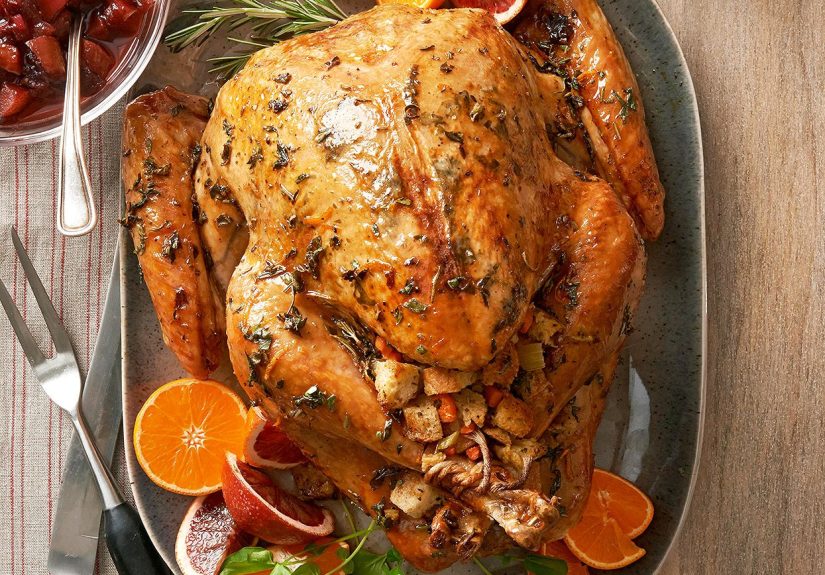
A stuffed turkey is basically Thanksgiving on “hard mode.” Not because you can’t do itbecause now you’re cooking
two things at once: a big bird (that dries out if you sneeze at the wrong time) and a bread-based sponge
sitting in the center like it’s waiting to audition for a food-safety documentary.
The good news: you can absolutely get safe and juicy results. The even better news: you don’t need
guesswork, complicated math, or a third cousin who “just knows when it’s done.” You need two things:
a reliable thermometer and a realistic cooking-time range.
The two rules that matter more than any “minutes per pound” myth
Rule #1: Temperature beats time
Turkey is considered safe when it reaches 165°F in the thickest parts of the meat, and if it’s
stuffed, the center of the stuffing must also reach 165°F. That stuffing is the reason stuffed
birds are trickier: it heats slowly and it sits where raw juices can drip during cooking.
Rule #2: Cook a stuffed turkey at 325°F (or higher), not lower
Food-safety guidance commonly recommends roasting stuffed poultry in an oven set no lower than 325°F.
Lower temps can keep the stuffing in the “warm but not safe” zone for too long.
Why stuffing changes the timeline (and can dry out your bird)
Think of a stuffed turkey like a winter coat with a loaf of bread inside it. Heat has to travel through the turkey
and into the stuffing. Meanwhile, the turkey’s breast meat is sitting closer to the hot oven air and can hit “done”
sooner than the stuffing does. That’s why many cooks (and some test kitchens) recommend baking stuffing separately
for easier safety and better texture.
Still want stuffing in the bird? Totally fair. Just know you’re trading convenience for traditionand your strategy
needs to be: cook the turkey gently enough for juiciness, but long enough for the stuffing to reach 165°F.
Stuffed turkey cooking time chart (325°F oven)
Use the ranges below as a planning tool, not a finish line. Ovens vary, turkey shapes vary, and stuffing density
really varies (hello, “I packed it in so it would fit”). Always confirm with a thermometer.
| Turkey Weight | Approx. Time (Stuffed) at 325°F |
|---|---|
| 8 to 12 pounds | 3 to 3 1/2 hours |
| 12 to 14 pounds | 3 1/2 to 4 hours |
| 14 to 18 pounds | 4 to 4 1/4 hours |
| 18 to 20 pounds | 4 1/4 to 4 3/4 hours |
| 20 to 24 pounds | 4 3/4 to 5 1/4 hours |
| 24 to 30 pounds | 5 1/4 to 6 1/4 hours |
Quick rule of thumb: many guides estimate a stuffed turkey at about 15 minutes per pound at 325°F,
but the chart above is a better starting point because it reflects real-world ranges.
Step-by-step: how to cook a stuffed turkey safely and keep it juicy
1) Start with a fully thawed turkey (seriously)
A partially frozen turkey cooks unevenly and can stretch the timing in unpredictable ways. Plan refrigerator thawing
at roughly one day per 4–5 pounds, or use the cold-water method at about 30 minutes per pound
(changing the water every 30 minutes).
2) Make stuffing safely (and don’t pre-stuff the bird)
- Prepare stuffing right before roasting. Don’t stuff the turkey the night before and park it in the fridge like a science experiment.
- Cook any meat, seafood, or aromatics first before mixing into the stuffing. This reduces risk and helps even cooking.
- Spoon stuffing in loosely. You want hot air and heat to move through it. Packing it tight is how people create “crispy skin + raw stuffing” stress.
3) Preheat the oven to 325°F and set up for even roasting
Place the turkey breast-side up on a rack in a roasting pan. A rack helps hot air circulate and keeps the underside
from steaming in drippings. Many cooks like to tent with foil early and uncover later for browning, which can help
protect the breast from drying out.
4) Use a thermometer the right way (this is where champions are made)
Insert an instant-read thermometer into the thickest part of the breast and thigh (avoid bone). For probe thermometers,
placement in the deepest part of the breast is commonly recommended, again avoiding bone and aiming for the center of the meat.
Then check the center of the stuffing too.
Your goal is 165°F in the turkey and 165°F in the stuffing. If the turkey is done first,
you can remove the stuffing and bake it in a dish until it reaches 165°F (and honestly, this move can save both safety and juiciness).
5) Rest the turkey before carving (and before pulling out stuffing)
Resting helps juices redistribute so the first slice doesn’t turn your cutting board into a soup plate. Guidance often suggests
letting the bird stand about 20 minutes before removing stuffing and carving.
How to keep a stuffed turkey juicy (without playing food-safety roulette)
Use technique, not wishful thinking
-
Dry brine (salt ahead): Salting the turkey 12–24 hours ahead can help it retain moisture and taste seasoned all the way through.
(Also: it’s the easiest “chef trick” that doesn’t require chef confidence.) - Shield the breast if it browns too fast: Foil is not cheating; it’s sunblock for poultry.
- Skip constant basting: Opening the oven repeatedly drops heat and can lengthen cooking time, which doesn’t help a stuffed bird.
- Don’t cram the stuffing: Loose stuffing heats more evenly and gives you a better shot at “safe stuffing, juicy turkey.”
A note on “older” doneness temperatures you’ll still see online
Some cooking sites and legacy recipes mention higher turkey temperatures (like 170°F for breast or 175°F for thigh).
Modern food-safety guidance centers on 165°F as the minimum safe internal temperature; some cooks still prefer
dark meat cooked higher for texture. If you choose to take thighs higher, do it intentionallydon’t accidentally overcook the breast
while waiting for the stuffing.
Common stuffed-turkey timing mistakes (and how to dodge them)
Mistake 1: Starting too late because “it’s only a few hours”
Stuffed turkeys often take longer than people expect, and “a few hours” doesn’t include resting, carving, gravy-making, or the
part where someone asks you to explain how Wi-Fi works. Use the chart, add buffer time, and aim to be done early.
Early turkey can rest. Late turkey becomes a new family legend.
Mistake 2: Trusting minutes-per-pound like it’s a law of physics
Minutes per pound is a rough estimate; actual cooking time depends on oven accuracy, pan type, turkey shape, how cold the bird was
going in, and how tightly the stuffing is packed. Use time to plan, and temperature to finish.
Mistake 3: Not checking the stuffing temperature
The turkey might look beautifully browned and smell like victory, while the stuffing is still not at 165°F. Check the center of the
stuffing with a thermometerevery time.
FAQ: quick answers you’ll actually use
How long do I cook a 12-pound stuffed turkey at 325°F?
Plan on about 3 to 3 1/2 hours, then verify 165°F in both turkey and stuffing.
How long do I cook a 20-pound stuffed turkey at 325°F?
Plan on about 4 3/4 to 5 1/4 hours, then verify with a thermometer.
Can I cook stuffing separately and still get “turkey flavor”?
Yesand this is a popular compromise. Bake dressing in a dish for safer, crispier texture, then moisten with pan drippings
(after the turkey is safely cooked).
What if my turkey hits 165°F but the stuffing hasn’t?
Remove the stuffing and bake it in a casserole dish until the center reaches 165°F. This protects the turkey from overcooking while
still getting safe stuffing.
Real-world experiences and lessons from the “stuffed turkey timeline” (extra notes)
If you’ve ever hosted a holiday meal, you’ve probably lived some version of this story: the turkey goes in on time, confidence is high,
and thensuddenlyit’s been three hours and the thermometer is telling you a plot twist. Stuffed turkeys create that drama more often
because the bird can be nearly done while the stuffing is still catching up. Many home cooks report the same moment of realization:
the outside looks perfect, but the inside still needs time. That’s why experienced cooks plan their schedule with a buffer and treat
“done early” as a feature, not a failure.
Another common experience is the “stuffing optimism problem.” People tend to pack stuffing tighter than they think. It’s easy to do:
you spoon it in, press it down “just a little,” and repeat until the cavity is full. The result is a dense mass that heats slowly.
Cooks then keep roasting so the stuffing reaches 165°F, and the breast meat takes the fall. The lesson that usually sticks after one
dry-turkey year: loose stuffing is safer stuffingand juicier turkey insurance. If you want more stuffing than the
cavity can hold loosely, bake the rest in a dish and enjoy the best of both textures.
There’s also the “my oven is a liar” experience. Many ovens run hot or cool, especially during long roasts. People set 325°F, assume
it’s 325°F, and then wonder why the turkey is ahead of schedule (or taking forever). A cheap oven thermometer can be eye-opening.
Once cooks realize the oven might be off by 25°F (sometimes more), they stop treating the clock like gospel. They start checking
temperature earlier than they think they need tobecause turkey can go from “not yet” to “oops” faster than anyone wants to admit.
A final, surprisingly emotional experience: resting time. When the turkey is finally out, the whole kitchen wants to move straight
into carving mode. But cooks who’ve done this a few times learn that rushing the carve is like opening a shaken sodajuices spill,
slices dry out, and the board becomes a puddle. Resting feels like “doing nothing,” but it’s actually the last active step in staying
juicy. Hosts who build a 20–30 minute rest into their plan often say it’s the moment they finally feel in control: the turkey rests,
the stuffing gets checked, the gravy gets finished, and the meal starts on your schedule instead of the turkey’s.
Put all those experiences together and a pattern emerges: the most successful stuffed-turkey cooks aren’t necessarily the ones with
fancy recipes. They’re the ones who (1) plan a time range, (2) use a thermometer in the right spots, (3) keep stuffing loose, and
(4) give the bird a proper rest. That’s how you end up with turkey that’s safe, stuffing that’s actually cooked through, and a table
that remembers you for the right reasons.






 Close
Close