
Table of Contents >> Show >> Hide
- Why Classroom Walls Matter in Secondary Classrooms
- Start With Less, Not More
- Make Walls Functional, Not Just Attractive
- Put Student Work at the Center
- Use Walls to Build Belonging and Representation
- Support Independence With Visual Systems
- Make Walls Readable and Accessible
- Match Wall Space to Your Subject
- Refresh Displays on a Realistic Schedule
- What Teachers Should Avoid on Classroom Walls
- Real Classroom Experiences: What Works Over Time
- Conclusion
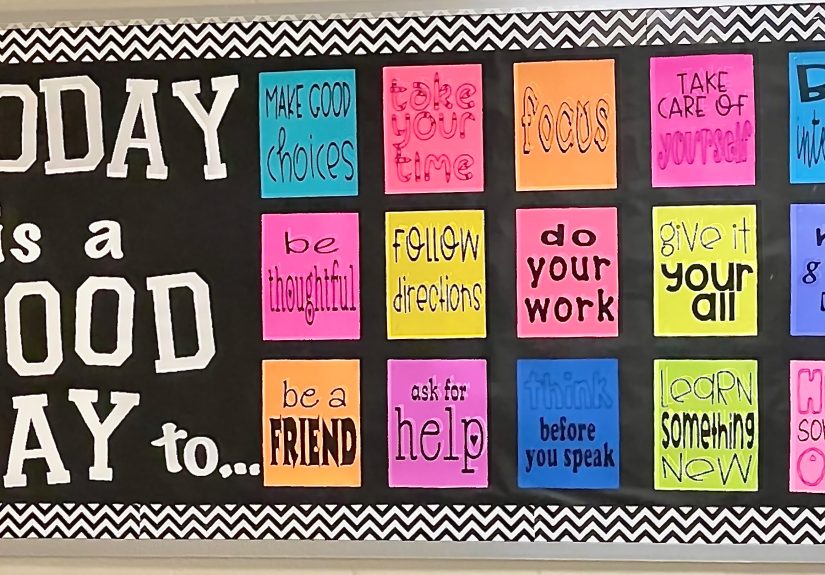
Classroom walls can do a lot of heavy lifting. They can calm a room down, point students toward the work that matters, make routines easier to follow, and help teenagers feel like they belong. Or, if we are being honest, they can also turn into a paper explosion of random posters, faded motivational quotes, and bulletin boards that have not been updated since someone still used the phrase “groovy.”
For middle and high school teachers, the best classroom walls are not the busiest or the prettiest. They are the most useful. In secondary classrooms, students move fast, juggle multiple subjects, and notice inauthentic decor from a mile away. They do not need walls that scream. They need walls that support learning, independence, and identity without making the room feel like a craft store lost a fight.
If you want your classroom walls to work harder and smarter, the goal is simple: make every display earn its spot. That means using wall space to clarify expectations, showcase student thinking, support literacy and content learning, and create a room that feels welcoming to a diverse group of adolescents. When teachers approach walls as tools instead of wallpaper, the classroom starts to feel more focused, more human, and much more effective.
Why Classroom Walls Matter in Secondary Classrooms
Middle school and high school students are old enough to ignore what is irrelevant and young enough to still benefit from strong visual support. That combination matters. A good wall display can remind students how to structure a paragraph, solve a multi-step equation, analyze a historical source, or revise a lab conclusion. It can also signal something equally important: you are seen here, and your thinking belongs here.
That is why effective classroom wall ideas for middle school teachers and high school teachers go beyond decoration. A smart secondary classroom environment uses walls to do four jobs at once: reduce confusion, reinforce learning, increase student ownership, and build belonging. When the walls help students remember what to do, where to look, and why their work matters, the room becomes easier to navigate academically and emotionally.
Start With Less, Not More
The first rule of classroom wall design is not glamorous, but it works: do less. Teenagers already process a flood of information every day. If every inch of your room is covered, the walls stop helping and start competing for attention. A cluttered room can feel noisy even when nobody is talking.
That does not mean your classroom has to look cold or blank. It means the visual environment should be intentional. Keep permanent displays limited to what students will truly use across the year. Save seasonal, unit-based, and celebratory items for rotating spaces. White space is not wasted space. It gives students’ eyes a place to rest and makes important information easier to spot.
Think of it this way: if everything is highlighted, nothing is highlighted. A clean, organized wall tells students where the learning lives. That is especially important in middle and high school, where clarity often wins over cuteness.
Make Walls Functional, Not Just Attractive
The best classroom walls act like silent co-teachers. They do not simply make the room look nice; they actively support instruction. In practical terms, that means dedicating prime wall space to the tools students use again and again.
Create a Focus Wall for the Current Unit
A focus wall is one of the most effective ways to use classroom walls in secondary grades. Instead of pinning up broad standards and hoping for the best, build a section that shows students what they are learning right now and what quality work looks like. This wall can include the essential question, key vocabulary, sentence stems, rubric language, model responses, revision reminders, and examples of strong student work.
For example, an eighth-grade English teacher might post a claim-evidence-reasoning model, sentence starters for analysis, and an annotated student paragraph. A biology teacher might display the unit question, academic vocabulary, a diagram students must interpret, and a sample lab conclusion with notes about what makes it strong. A history teacher might post sourcing questions, a model DBQ paragraph, and a mini-checklist for corroboration. This kind of display gives students something they can actually use when they get stuck.
Use Anchor Charts That Grow With Learning
Anchor charts are not just for elementary classrooms. Secondary students benefit from them too, especially when the charts are created with students and updated over time. The key is to make them age-appropriate and specific. A giant rainbow chart titled “Good Job, Writers!” is not going to win many teenagers over. A clean chart showing how to embed quotations, revise for precision, or solve systems of equations has a much better chance.
In middle and high school classrooms, anchor charts work best when they are concise, visible, and tied to current learning. If a chart is not relevant anymore, rotate it out. Classroom walls should feel alive, not preserved in amber.
Put Student Work at the Center
If your walls only show teacher-made materials, they quietly send the message that the room belongs to the adult. If they display student thinking, process, and progress, they send a better one: this is a shared learning space.
Displaying student work is one of the smartest classroom wall ideas because it supports both motivation and learning. Students pay more attention to work created by people like them. They can compare, borrow strategies, and recognize that strong work is not magic. It is made step by step.
Try showing more than polished final pieces. Include drafts, revisions, planning pages, sketch notes, and reflections. In a writing classroom, post beginning, middle, and final versions of one assignment to make growth visible. In math, hang multiple solution paths to the same problem. In science, show lab claims that demonstrate different levels of reasoning. In social studies, post examples of strong sourcing, questioning, or interpretation. This helps turn bulletin boards into learning tools instead of trophy cases.
And yes, student work should be readable. If you are posting it, place it where students can actually look at it without needing mountaineering gear. Eye-level displays are far more useful than work stapled three feet above normal human vision.
Use Walls to Build Belonging and Representation
One of the most powerful uses of classroom walls is helping students feel recognized. This matters enormously in middle and high school, when identity is developing quickly and students are highly alert to what is valued in a room.
A welcoming classroom wall should reflect the students who learn there, not just the content being taught. That can look different depending on your students and your subject area. You might include multilingual signs, maps connected to students’ backgrounds, book covers featuring diverse authors, scientist and historian spotlights that break the usual pattern, student-created identity poems, or displays that celebrate the languages and experiences students bring into the room.
The most effective version of representation is not performative. It is not a once-a-year heritage month board thrown together in twelve minutes with a packet of clip art. It is a steady message that different cultures, voices, experiences, and perspectives belong in the classroom every day. When students see themselves and each other reflected on the walls, the room feels less generic and more honest.
Support Independence With Visual Systems
Good classroom walls also reduce the number of questions teachers have to answer repeatedly. That alone may be reason enough to love them.
Use wall space to post routines, procedures, and visual supports that help students move through class more independently. In secondary classrooms, that might include:
- steps for turning in work
- bell-ringer directions
- make-up work procedures
- group discussion norms
- technology expectations
- lab safety reminders
- common annotation symbols
- revision checklists
- classroom supply labels
These kinds of visual supports are especially helpful for multilingual learners, students with executive functioning challenges, and anyone who benefits from consistency. Labels, icons, and translated or visual signage can make the classroom easier to navigate without putting students on the spot. That is not just efficient teaching; it is inclusive teaching.
Make Walls Readable and Accessible
Even the best idea falls flat if students cannot read or use it. Accessibility should shape every decision you make about classroom displays. Choose legible fonts, high-contrast colors, and enough spacing so text does not look like a legal document written for ants. Keep important information in places students can see from their seats or access up close during work time.
It also helps to think through who might struggle with a display. Is the font too small? Are colors too similar? Is the language too dense? Does the display assume all students process information in the same way? An accessible wall gives students multiple entry points, such as visuals, clear headings, examples, and straightforward language.
For older students, accessibility and maturity can absolutely coexist. A ninth-grade classroom does not need to look childish in order to be supportive. Clean design, strong contrast, purposeful icons, and concise language can create a room that feels respectful and usable at the same time.
Match Wall Space to Your Subject
The best use of classroom walls depends partly on what you teach. There is no single perfect formula, but there are patterns that work especially well in secondary classrooms.
English Language Arts
Use walls for mentor texts, discussion stems, annotation codes, writing moves, genre features, revision strategies, and student writing. A vocabulary wall can work well if it is active and tied to reading and writing, not just a dusty graveyard of words no one has used since October.
Math
Post problem-solving routines, common error reminders, worked examples, math vocabulary, and multiple strategies for solving the same kind of problem. A “What to Do When You’re Stuck” board can be surprisingly powerful in a math classroom.
Science
Feature diagrams, lab procedures, safety protocols, claim-evidence-reasoning models, academic vocabulary, and examples of scientific explanation. Unit-based visual references can help students connect abstract concepts to concrete examples.
Social Studies
Walls can support sourcing, contextualization, argument writing, timelines in progress, key concepts, map skills, and document analysis questions. Student-created displays work especially well here because they emphasize interpretation, not memorization alone.
World Languages and Multilingual Support
Use visual vocabulary supports, sentence frames, conversation stems, language structures, cultural connections, and multilingual labels. Walls can reinforce language without making the room feel over-scripted.
Refresh Displays on a Realistic Schedule
One reason classroom walls stop being useful is simple: they become invisible. Students stop noticing displays that never change, and teachers stop seeing them too. The solution is not to redecorate every weekend like a caffeinated home makeover show host. It is to build a manageable rotation plan.
Divide your wall space into three categories: permanent, semi-permanent, and rotating. Permanent displays include procedures students use all year. Semi-permanent displays last for a quarter or semester. Rotating displays change with the unit, project, or class goals. This system keeps the room fresh without making you feel like bulletin board maintenance is now your second job.
You can also involve students in updating displays. Ask them to nominate strong examples, create summary charts, design vocabulary visuals, or reflect on which supports actually helped them. When students help shape the room, they are more likely to use it.
What Teachers Should Avoid on Classroom Walls
Sometimes the best advice is knowing what to skip. Classroom walls are less effective when they are overloaded with decorative posters, overly busy borders, tiny print, or displays that are never referenced during instruction. The same goes for generic slogans that sound nice but do little to help students learn. Teenagers can spot fake inspiration faster than you can say “Live, Laugh, Learn.”
It is also worth avoiding walls that celebrate only the highest achievers. A display that always features the same students can unintentionally narrow the room’s definition of success. Aim for growth, process, effort, and a range of strengths. Let walls show that learning is something students build, not something a select few arrive with.
Real Classroom Experiences: What Works Over Time
Teachers who use classroom walls well often arrive at the same lesson the hard way: more stuff does not equal more support. One middle school English teacher may start the year with inspirational posters, decorative borders, and a giant word wall full of terms that look impressive but are rarely used. By October, students are not looking at any of it. The room feels busy, but it is not especially helpful. Then the teacher strips the walls back and replaces them with a focus wall, two anchor charts built during lessons, and a rotating section for student paragraphs. Suddenly students start standing up during work time to check the model paragraph, compare transitions, and reread a class-created chart about strong evidence. The walls begin doing real work.
In a high school science room, a teacher may notice that students struggle to write lab conclusions independently. Instead of repeating directions every period, the teacher creates a clean wall display with sentence frames for claims, examples of evidence, and a reminder about linking data to reasoning. Next to it, the teacher posts two anonymous student samples: one strong, one still developing, both annotated. Over time, students start using the display without being prompted. The teacher answers fewer “What do I write?” questions, and the room becomes more self-sustaining.
Another strong example comes from classrooms that use walls to build belonging. A secondary teacher serving multilingual learners might add translated labels, multilingual greetings, maps, and student-created identity pieces. Families visiting the classroom immediately see a difference. Students do too. The walls say, without saying it awkwardly, that home languages and lived experiences are assets here. That kind of message matters, especially for adolescents who are still deciding whether school feels like a place where they can fully participate.
Some teachers find success by starting with blank walls and letting the class build the room together. This approach can feel risky at first, especially for teachers who like to be prepared, but it often creates stronger ownership. In the first few weeks, the walls slowly fill with norms the class developed, favorite lines from reading, content charts, photos of projects, and examples of student thinking. By the end of the semester, the room reflects the actual learners inside it rather than a generic back-to-school vision from August.
The biggest takeaway from real classroom experience is that the most effective walls are not static. They evolve with the class. They respond to student needs. They support current work. They make room for student voice. And they respect the fact that adolescents want environments that feel useful, clear, and real. Teachers do not need perfect bulletin boards. They need walls that help students think, belong, and keep going when the work gets tough.
Conclusion
When middle and high school teachers use classroom walls well, they create more than a decorated room. They create a practical learning environment that supports instruction, independence, belonging, and student voice. The strongest classroom walls are focused, readable, student-centered, and connected to what students are doing now. They make the invisible parts of learning more visible.
So before adding one more poster, ask one simple question: what job will this wall do for students? If the answer is clear, keep it. If not, save yourself the staples. In secondary classrooms, the best walls are not the loudest ones. They are the ones that quietly help students learn better every single day.






 Close
Close