
Table of Contents >> Show >> Hide
- Why a Dead Whale Is Prime Ocean-Floor Real Estate
- The Three Stages of a Whale Fall Neighborhood
- Meet the Residents: From Sharks to “Zombie Worms”
- Why Scientists Think Whale Falls May Be “Stepping Stones”
- Famous Whale Falls That Changed the Science
- What a Whale Fall Teaches Us About the Ocean
- Experiences From the Deep: What Following a Whale Fall Really Feels Like
- Conclusion
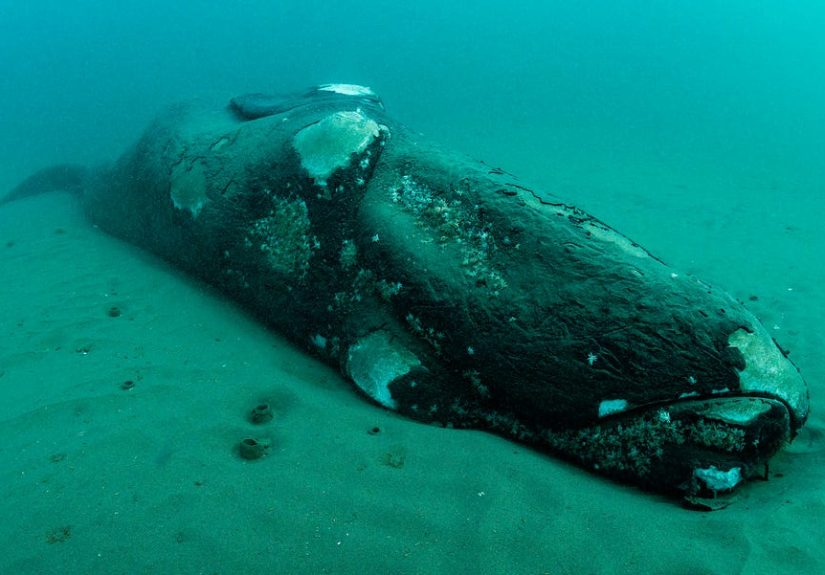
Most real estate listings brag about “great bones,” but deep-sea life takes that phrase to a wildly literal level. When a whale dies and sinks to the ocean floor, its body does not simply vanish into the dark. It becomes a whale fall: a giant, nutrient-packed, apartment complex, buffet hall, and long-term community center rolled into one enormous package. In the food-poor deep ocean, that is not just exciting. It is the ecological equivalent of someone dropping a fully stocked luxury condo tower into a desert.
That is why scientists keep returning to whale carcasses with remotely operated vehicles, cameras, and the kind of excitement most people reserve for playoff tickets. A whale fall is a rare chance to watch nature recycle one of the largest animals on Earth into an entire neighborhood of sharks, crabs, snails, bacteria, worms, and other creatures that seem as if they were designed by a committee of marine biologists and horror movie writers. Strange? Absolutely. Essential? Also absolutely.
If the phrase ocean’s hottest housing complex sounds dramatic, good. It should. A whale carcass can support life for years, sometimes decades, and in some cases scientists have found astonishing biodiversity on a single skeleton. What looks like a tragedy from the surface becomes, on the seafloor, one of the most important housing and feeding opportunities in the deep sea.
Why a Dead Whale Is Prime Ocean-Floor Real Estate
The deep sea is not exactly famous for its endless snack options. Far below the sunlit surface, food is usually scarce, arriving mostly as a slow rain of organic matter drifting down from above. Then suddenly, a whale drops in. It is like a fully catered block party falling out of the sky.
Whales are enormous reservoirs of energy. Their blubber, muscle, connective tissue, and bones contain a massive amount of organic material. When that material reaches the bottom, it creates an oasis in a place where life often survives on leftovers. A single whale fall can attract scavengers almost immediately, then sustain new communities in overlapping waves as decomposition continues.
Scientists love whale falls because they reveal how life persists in extreme environments. They also help explain deep-sea biodiversity, chemosynthesis, and the surprising ways disconnected habitats may be linked. In plain English, a dead whale is not the end of a story. It is an ecological handoff, with each new resident taking over from the last tenant.
The Three Stages of a Whale Fall Neighborhood
1. The Mobile Scavenger Stage: The Grand Opening
The first residents are the ocean’s cleanup crew. Think hagfish, sleeper sharks, crabs, amphipods, fish, and other scavengers that can detect a major meal from surprising distances. They arrive fast and get to work stripping the soft tissue. This stage is messy, crowded, and very efficient. If the deep sea had a demolition company, this would be it.
At this point, the whale carcass looks less like a skeleton and more like a feast in progress. Cameras have captured eelpouts, octopuses, and a rotating cast of scavengers using fresh carcasses as a short-term feeding hub. For scientists, this stage is a reminder that the deep sea is not lifeless and sleepy. It is opportunistic, responsive, and suddenly very busy when dinner lands.
2. The Enrichment Opportunist Stage: The Budget Renters Move In
Once the big eaters have torn through the soft tissue, the surrounding sediment becomes enriched with organic scraps. That opens the door for smaller animals that thrive in nutrient-rich mud. Polychaete worms, crustaceans, mollusks, and other invertebrates move into the nearby seafloor and begin feeding on what the larger scavengers left behind.
This is where a whale fall starts acting less like a one-night food frenzy and more like a functioning housing development. The neighborhood expands beyond the bones themselves. It spreads into the sediment, creating a wider ecological footprint. In other words, the whale is not just feeding whoever is sitting at the table. It is fertilizing the whole block.
3. The Sulfophilic Stage: The Long-Term Residents Take Over
Then comes the weirdly elegant final act. Whale bones are rich in lipids, and as those compounds break down, microbes generate sulfides. Those sulfides support chemosynthetic bacteria, which become the base of a more specialized food web. This stage can last for years, sometimes decades, turning the skeleton into a durable deep-sea habitat.
This is the phase that makes whale falls scientifically irresistible. The bones do not just sit there. They become chemical engines. Instead of relying on sunlight, life here can be fueled by chemical reactions. That connects whale falls to other deep-sea habitats such as hydrothermal vents and cold seeps, where chemosynthesis also supports unusual ecosystems.
Meet the Residents: From Sharks to “Zombie Worms”
Any housing complex worth its salt needs a memorable tenant list, and whale falls deliver. Early arrivals can include sharks, hagfish, crabs, amphipods, and fish that strip away tissue. Later, smaller invertebrates settle in around the carcass. Then the true celebrities appear: bone-eating worms in the genus Osedax, sometimes nicknamed zombie worms or, less politely, snotworms.
These worms are among the most unforgettable specialists in marine biology. Instead of chewing bones like a cartoon dog, they send root-like structures into the skeleton and rely on symbiotic bacteria to help unlock nutrients from the fatty material inside. It is one of those biological tricks that sounds made up until you see the footage and realize nature remains undefeated in the category of “things no screenwriter would dare pitch.”
Researchers have also found clams, mussels, limpets, bacteria, snails, isopods, tube worms, anemones, corals, and other animals associated with whale falls. In one Antarctic whale-fall discovery, scientists reported at least nine species new to science. On another skeleton, researchers documented extraordinary diversity, with as many as 190 macroscopic bottom-dwelling species found on a single whale skeleton. For a dead body in the dark, that is a wildly successful housing market.
Why Scientists Think Whale Falls May Be “Stepping Stones”
One of the coolest ideas in deep-sea ecology is that whale falls may help species move between other rare habitats. Some organisms found on whale carcasses are closely related to, or even shared with, animals from hydrothermal vents and methane seeps. That has led scientists to suggest whale falls might act as biological stepping stones across the seafloor.
Imagine isolated neighborhoods connected by occasional but valuable pit stops. A whale carcass lands, supports a community for years, then disappears. Over evolutionary time, those temporary habitats may help species disperse, survive, and adapt. It is a little like a chain of pop-up cities in the abyss, except the architecture is made of ribs and vertebrae and the power source is decomposition.
That idea also helps explain why whale falls matter beyond pure curiosity. They may play a real role in maintaining biodiversity across deep-sea ecosystems. When whale populations decline, the number of these organic habitats may decline as well, shrinking opportunities for specialized species that depend on them.
Famous Whale Falls That Changed the Science
Scientists first recognized whale falls as a distinct phenomenon in the late twentieth century, and for years they remained surprisingly hard to find. That is part of what made the recent surge in observations so exciting. A mapped area in Southern California’s San Pedro Basin, for example, suggested more than 60 whale falls may exist in one surveyed region, a number that stunned researchers because formally documented whale falls had been relatively rare worldwide.
Then there is the long-watched site near Clayoquot Slope off British Columbia, originally discovered in 2009 and revisited multiple times by scientists using ROV surveys and photogrammetry. More than a decade later, the skeleton was still supporting a rich benthic community, including gastropods, crabs, isopods, rattail fish, and tube worms that appeared to be long-term residents. That kind of persistence turns a whale fall from a brief spectacle into a long-running ecological drama.
In Antarctic waters, researchers found a whale skeleton that had likely been on the seafloor for decades and was still hosting a thriving community, including species new to science. More recently, deep-sea expeditions off Argentina reported the country’s first deep-water whale fall, again highlighting just how much biodiversity can gather around a carcass in the dark ocean.
All of this helps explain why whale falls seem to inspire the same response in ocean scientists every time: part scientific seriousness, part delighted disbelief. They are rare, visually striking, biologically rich, and full of clues about how the deep sea works.
What a Whale Fall Teaches Us About the Ocean
The biggest lesson is also the oldest one in ecology: nothing is wasted. A whale’s death becomes food, habitat, chemistry, structure, and opportunity. One body supports multiple communities in sequence, each one transforming the remains and passing resources along to the next group.
Whale falls also reveal how connected marine systems really are. A living whale helps ocean ecosystems through nutrient cycling during life. After death, that same animal can continue supporting biodiversity on the seafloor. It is an astonishing extension of ecological value. The whale is not just important while swimming. It remains important when it stops.
There is also a conservation angle here. If human activity dramatically reduces whale populations, it can reduce the number of whale falls reaching the seafloor. That means fewer habitats for highly specialized species. In other words, protecting whales may protect a lot more than whales. It may help preserve deep-sea communities that most people will never see, but that are still part of the ocean’s living infrastructure.
Experiences From the Deep: What Following a Whale Fall Really Feels Like
There is something almost theatrical about the way people experience a whale fall, even though it unfolds in total darkness. For scientists watching from a control room, the first sight of a carcass on an ROV feed is often a strange mix of surprise, professional focus, and childlike awe. One minute the camera is drifting over cold sediment, rocks, or low-relief seafloor. The next minute a rib cage appears out of the black like the remains of a sunken cathedral. Then the screen fills with movement. Snails. Crabs. Fish. Bacterial mats. Bones that look empty until you notice they are absolutely packed with tenants.
That experience matters because whale falls are one of the few deep-sea stories that feel instantly understandable and completely alien at the same time. Everyone understands that death feeds life on some level. Forests do it. Grasslands do it. Compost piles definitely do it, sometimes with an aroma that leaves no room for interpretation. But seeing that same rule play out 4,000 or 10,000 feet underwater, on the body of a whale, hits differently. It is grander, stranger, and somehow more emotional.
For expedition teams revisiting a known whale fall over many years, the experience changes again. The site becomes familiar. Scientists remember what a jawbone looked like during an earlier dive, or which species clustered near certain vertebrae, or how much of the skeleton was still exposed. A revisit is not just a field trip. It is a reunion with a habitat that is changing in slow motion. Photogrammetry surveys, sediment samples, and eDNA work may sound technical, but emotionally there is a simple core to it: the researchers are watching time work on a giant body, and watching an entire community respond.
There is also the public experience, which may be the most important one in the long run. When museums and aquariums explain whale falls, people tend to lean in. Kids are fascinated because the story has bones, giant animals, deep-sea weirdos, and worms with nightmare branding. Adults are fascinated because the whole process quietly rewires how they think about the ocean. The deep sea stops feeling empty. It starts feeling populated, dynamic, and deeply connected to life at the surface.
Even from a storytelling perspective, whale falls are unforgettable. They force us to trade the usual language of endings for the language of transformation. A carcass becomes a habitat. Bones become shelter. Bacteria become chefs. Worms become demolition experts. The seafloor becomes a neighborhood. And suddenly the ocean does not seem like a place where things disappear. It seems like a place where things are passed on.
That may be the most lasting experience tied to this topic: wonder mixed with humility. Whale falls remind us that the ocean is running ancient systems whether or not humans are watching. They remind us that some of Earth’s most important communities are hidden in darkness, surviving on chemistry, patience, and opportunity. And they remind us, with a slightly morbid sense of humor, that in nature even a luxury housing complex can start with a very large dead whale and a lot of excellent bones.
Conclusion
So how did this whale carcass become the ocean’s hottest housing complex? By doing what nature does best: recycling the extraordinary into the essential. A whale fall is a feast, a shelter, a chemical habitat, and a launchpad for biodiversity in one of the harshest places on Earth. It feeds the first wave, enriches the neighborhood, powers a bacteria-based economy, and keeps giving long after the splash is over.
The next time someone says the deep sea is empty, you can gently correct them. It is not empty. It is just running on a different schedule, with stranger tenants, darker hallways, and a much stronger appreciation for premium bones.







 Close
Close