
Table of Contents >> Show >> Hide
- Marriage License vs. Marriage Certificate (Yes, They’re Different)
- Quick Snapshot: Alaska Marriage License Requirements
- The 9 Steps to Apply for a Marriage License in Alaska
- Step 1: Confirm You’re Eligible (Age, Status, and the “Already Married” Problem)
- Step 2: Choose Where You’ll Apply (Vital Records Office or Court Office)
- Step 3: Gather the Info You’ll Need (So You Don’t Play “Guess That Date”)
- Step 4: Fill Out the Alaska Marriage License Application Carefully
- Step 5: Get the Application Signed and Notarized
- Step 6: Submit the Application and Pay the Fee (Exactly as Required)
- Step 7: Respect the Waiting Period (and Know When a Waiver Might Exist)
- Step 8: Pick Up (or Receive) the License and Check the Expiration Date
- Step 9: Have the Ceremony, Get Proper Signatures, and File the Completed Paperwork Fast
- Who Can Officiate a Wedding in Alaska?
- Common Mistakes That Delay Alaska Marriage Licenses
- FAQ: Applying for a Marriage License in Alaska
- Can we apply for an Alaska marriage license online?
- Do both of us need to show up in person to apply?
- How long does it take to get a marriage license in Alaska?
- How long is an Alaska marriage license valid?
- Can we do a “quick ceremony” the same day we receive the license?
- What if we’re eloping somewhere remote?
- Real-World Experiences & Pro Tips (500+ Words)
- Conclusion
Getting married in Alaska can feel like planning a romantic expedition: breathtaking scenery, dramatic weather, and at least one person saying, “Wait… do we need a witness or a parka first?” The good news: the Alaska marriage license process is pretty straightforward once you know the rules, the timelines, and where to send your paperwork so it doesn’t disappear into the Great White Administrative Void.
This guide breaks down how to apply for a marriage license in Alaska in nine clear steps, plus real-world tips, examples, and common mistakes to avoidso your big day doesn’t get delayed by a missing signature, a wrong fee amount, or a surprise three-business-day waiting period.
Note: This is general information, not legal advice. Rules can vary by office and can change, so always confirm details with the issuing office if you have a tight timeline.
Marriage License vs. Marriage Certificate (Yes, They’re Different)
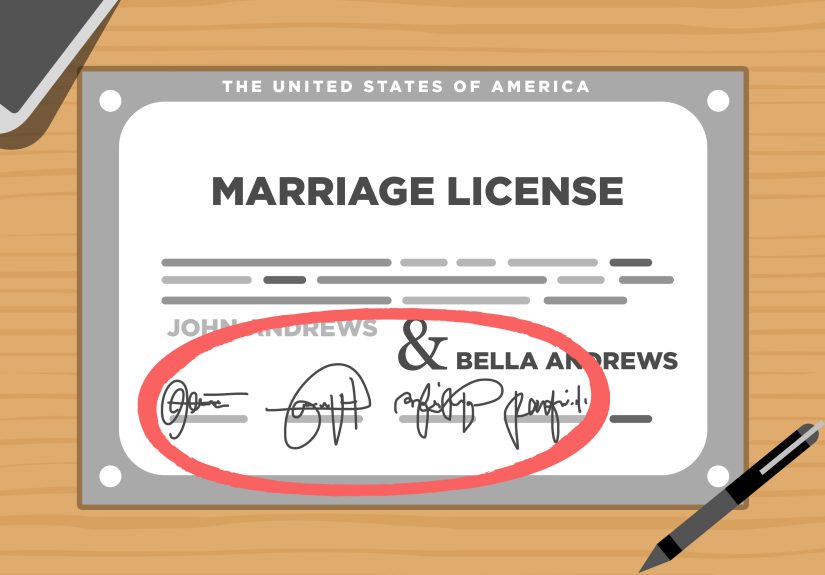
Think of the marriage license as your “permission slip” to get married in Alaska. You get it before the ceremony. After the ceremony, the completed paperwork is filed, and then you can order a marriage certificate, which is the official proof you’re legally married (useful for name changes, insurance, benefits, and explaining to your bank why you’re smiling so much).
Quick Snapshot: Alaska Marriage License Requirements
- Residency: You do not need to be an Alaska resident to apply.
- Where it’s valid: Alaska licenses are valid only for marriages performed in Alaska (including Alaska state waters).
- Fee: Commonly $60 for the application; mailed-out/priority shipping options may increase the total.
- Waiting period: A three-day waiting period (often described as three full business days) starts once the application is received.
- Expiration: The license is valid for about three months from the date of issuance.
- Proxy weddings: Not allowedboth parties must be physically present for the ceremony.
The 9 Steps to Apply for a Marriage License in Alaska
Step 1: Confirm You’re Eligible (Age, Status, and the “Already Married” Problem)
Start with eligibility, because it’s the least fun partbut it’s cheaper than discovering an issue after you’ve booked a glacier flight. In general, both parties must be adults to marry without extra paperwork. Alaska also has special rules for minors, including additional forms and court involvement.
- Age: Adults can apply normally. Minors may require parental consent and a court order, and Alaska generally does not allow marriage under a certain age.
- Prior marriages: If either of you has been married before, you’ll typically list details about prior marriages; additional documents may be required in certain timing windows.
- Legal capacity: You must be able to consent, and you can’t already be legally married to someone else.
Step 2: Choose Where You’ll Apply (Vital Records Office or Court Office)
Alaska lets couples submit a marriage license application through Alaska Vital Records or, in many areas, an Alaska Court office. This is especially helpful if you’re traveling outside major cities.
Pro tip: some courts may not issue marriage licenses, so don’t assume you can walk into any courthouse and walk out with paperwork like you’re in a movie. If you’re in a larger city or on a tight schedule, confirm where licenses are issued before you arrive.
Step 3: Gather the Info You’ll Need (So You Don’t Play “Guess That Date”)
Most delays happen because someone forgets a detail that feels “minor” until it becomes a checkbox on an official form. Before you fill out anything, gather:
- Government-issued photo ID (driver’s license, passport, etc.).
- Full legal names, dates of birth, and current addresses.
- Social Security numbers (if applicable).
- Prior marriage details (dates and how/when it ended).
- Divorce documentation if required based on how recently the divorce was finalized.
If you’re traveling from out of state or out of the country, make a “paperwork pouch” and keep it with your carry-on. Alaska is not the place to realize your passport is in the suitcase currently touring the baggage carousel in a different time zone.
Step 4: Fill Out the Alaska Marriage License Application Carefully
You can typically download and print the application in advance. Print clearly, double-check spelling, and use consistent legal names that match your IDs. Tiny mistakes can create big headaches laterespecially if you’re trying to order certified copies for a name change.
Example: If your ID says “Katherine” but you write “Katie,” the office may require corrections before issuing the license. Save the nicknames for your vows.
Step 5: Get the Application Signed and Notarized
Alaska commonly requires the application to be signed in the presence of an authorized official (often a notary). Depending on how you apply, you may do this at a Vital Records office, a court office, or through a notary public.
If you’re applying from outside Alaska, notarization is the make-or-break detail. Plan ahead: finding a notary is usually easy, but doing it the day before you fly out tends to create the kind of stress that makes people argue about airports and snacks.
Step 6: Submit the Application and Pay the Fee (Exactly as Required)
Submit your completed application to the issuing office with payment in the accepted form (commonly check or money order). Fees can differ based on whether you want the license mailed and whether you choose faster shipping.
- Standard fee: Often around $60 for the license application.
- Mailed/priority option: If you need it mailed with tracking, expect an additional charge and plan for transit time.
Money tip: write payment exactly as instructed and include all required items in one packet. “I sent the check last week” is not as comforting as “I sent the check with the application, IDs, and everything stapled neatly like an adult.”
Step 7: Respect the Waiting Period (and Know When a Waiver Might Exist)
Alaska is known for mountains, moose, and a three-day waiting period that begins when the application is received by the issuing office. In practice, this is often described as three full business days.
If you’re planning a quick elopementsay, you land on Tuesday and want to marry on Wednesdaythis waiting period is the part that ruins the montage. Plan to submit early or adjust your ceremony date accordingly.
In certain circumstances, Alaska law provides a path for the waiting period to be waived due to hardship or delaybut that’s not a “walk-in and wink” situation. If you think you need a waiver, contact the issuing office immediately and ask what documentation is required.
Step 8: Pick Up (or Receive) the License and Check the Expiration Date
Once the waiting period has passed and the license is issued, you’ll pick it up or receive it by mail (depending on your application method and the office). Before you leave the counteror before you tuck it into your wedding backpackdo a quick audit:
- Are your names spelled correctly?
- Is the license issued for Alaska?
- Did you note the expiration window (often about three months from issuance)?
- Do you understand what needs to be signed after the ceremony?
Timing tip: Many couples apply so the license is issued close enough to the wedding date that it won’t expire, but early enough that the waiting period doesn’t threaten the plan.
Step 9: Have the Ceremony, Get Proper Signatures, and File the Completed Paperwork Fast
Your license isn’t “finished” until after the ceremony. Alaska requires the ceremony to be performed by an authorized officiant and properly documented afterward. Generally:
- Both parties must be present (no proxy marriages).
- Witness requirement: Alaska’s witness rules have been described differently across sources over time. Practically, bring at least one adult witnessand if you can, bring two to avoid any surprises with older forms or local expectations.
- Signatures matter: The couple, witness(es), and officiant sign in the appropriate sections.
- Filing deadline: The completed marriage paperwork must be returned/registered promptlyoften within a short statutory window.
After filing, you can order certified copies (your marriage certificate). If you’re changing a name or updating benefits, request certified copies early so you’re not stuck waiting while your “newlywed glow” turns into “newlywed paperwork fatigue.”
Who Can Officiate a Wedding in Alaska?
Alaska is relatively flexible about who may solemnize a marriage. Depending on the situation, this can include religious leaders, judicial officers, and other authorized officials. Alaska also allows a marriage commissioner appointment, which can let a friend or relative officiate if they obtain the proper appointment through the court.
If you’re going the “our best friend will officiate” route, don’t wait until the week of the ceremony. Court procedures can vary by district, and a marriage commissioner appointment typically has a fee.
Common Mistakes That Delay Alaska Marriage Licenses
- Not planning for the three-business-day waiting period. This is the #1 timeline surprise.
- Using names that don’t match IDs. Legal documents love consistency.
- Forgetting notarization. Especially common for out-of-state couples applying by mail.
- Paying the wrong amount or using an unaccepted payment method.
- Assuming witness rules are the same everywhere. Bring an extra witness if possiblefuture-you will be grateful.
- Missing the filing window after the ceremony. Don’t let your license sit in a suitcase with your souvenir magnets.
FAQ: Applying for a Marriage License in Alaska
Can we apply for an Alaska marriage license online?
You can usually download the application form online, but the application process typically still requires signatures, notarization, and submission to the issuing office with payment. If you’re not in Alaska yet, plan for notarization and mailing logistics.
Do both of us need to show up in person to apply?
Many couples apply in person, but Alaska also offers mail-based options in certain situations. The key is that required signatures must be properly witnessed/notarized and the issuing office must receive everything needed to issue the license.
How long does it take to get a marriage license in Alaska?
The big scheduling factor is the three-day waiting period that starts once the application is received. Mailing time and office processing time can add more days, especially if you’re applying from far away or choosing non-tracked mail.
How long is an Alaska marriage license valid?
Alaska marriage licenses are commonly valid for about three months from the date of issuance. That means the ceremony must happen before it expires.
Can we do a “quick ceremony” the same day we receive the license?
Often, yesbecause the waiting period generally happens before issuance. Once issued and in hand, you can typically marry any time before expiration, as long as the ceremony meets legal requirements.
What if we’re eloping somewhere remote?
Remote Alaska is magical, but it’s not always printer-friendly. Get your paperwork handled early, choose tracked mailing if you need documents shipped, bring backup copies, and assign one person the job of “guardian of the license” so it doesn’t get packed with the trail mix.
Real-World Experiences & Pro Tips (500+ Words)
Let’s make this feel less like a checklist and more like something humans actually do. Below are a few realistic Alaska marriage license scenarios (names changed, stress levels preserved) that show how couples successfully navigate the process.
Experience #1: The “We’re Flying In for a Long Weekend” Couple
Taylor and Jordan planned a Friday ceremony near Anchorage and booked flights to arrive Wednesday evening. Their original timeline was: land Wednesday, grab the license Thursday morning, marry Friday. The problem? The waiting period clock starts when the application is received. If they submitted on Thursday, Friday was too soon. The fix was simple: they completed the application ahead of time, arranged notarization at home, and submitted early enough that the waiting period cleared before their arrival. When they landed, it wasn’t a paperwork scrambleit was a “let’s go eat something warm” moment.
Pro tip: If you’re traveling, build your plan around the waiting period first, then everything else. Your photographer can be flexible; statutes are less emotionally available.
Experience #2: The “We Want Our Friend to Officiate” Crew
Sam and Casey wanted their best friend to officiate on a lakeshore. Alaska can allow this via a marriage commissioner appointment (handled through the court), but the friend assumed it was an online form. It wasn’t. They called the local court, learned the district’s procedure, paid the fee, and received the appointment order. On the day of the ceremony, they had the appointment paperwork printed and the marriage license ready. The ceremony was perfectshort, sweet, and only mildly windy.
Pro tip: If your officiant is a friend, assign them “paperwork responsibility” weeks ahead. The words “I’ll figure it out later” are how you end up with an accidental rehearsal dinner instead of a wedding.
Experience #3: The Witness Mix-Up (and the Easy Save)
Chris and Morgan heard “you need witnesses” but didn’t agree on the number. One source said one witness, another said two. They did the smartest thing possible: brought two friends. The officiant checked the form, used the witness lines provided, and everything was signed correctly. No last-minute panicking. No asking a random hiker to participate in a legal act of love. Just a smooth ceremony and a celebratory hot chocolate afterward.
Pro tip: If you’re unsure about witness requirements, bring an extra adult witness. It costs nothing and prevents chaos.
Experience #4: The Post-Ceremony Paperwork Crash
Avery and Reese nailed everything up to the ceremonyand then they tossed the signed license into a bag and forgot about it for a few days while they road-tripped. When they finally looked at the instructions, they realized the completed document needed to be returned quickly for registration. They overnighted it back and avoided a bigger mess, but the stress was unnecessary.
Pro tip: Decide in advance who returns the completed license. Put a calendar reminder on your phone for the day after the ceremony. Newlyweds are adorable, but newlyweds are also tired.
Experience #5: The “We’re Divorced… Recently” Detail
One couple assumed they needed a divorce decree no matter what. Another assumed they never needed it. The real-world reality is more nuanced: offices may only require proof in certain recent-divorce situations. The lesson: disclose prior marriages accurately on the application, and if your divorce was finalized recently, call the issuing office and ask what to include. That five-minute call can prevent a multi-day delay.
Pro tip: If you’ve been married before, keep digital and paper copies of key documents available when you applyespecially if your timeline is tight.
Conclusion
Applying for a marriage license in Alaska isn’t complicatedbut it is timing-sensitive. If you remember just a few things, make them these: plan around the waiting period, submit a clean application with proper notarization, confirm where your license will be issued, and don’t forget the post-ceremony filing step. Do that, and you’ll spend less time thinking about forms and more time enjoying the best part of getting married in Alaska: the moment when the view looks fake and your love doesn’t.







 Close
Close