
Table of Contents >> Show >> Hide
- Plan First: Dimensions That Actually Work Outdoors
- Pick Your “Stunning” Style: Four Outdoor Coffee Table Looks
- Materials That Don’t Quit When the Weather Gets Rude
- Build Guide: A Weekend Slatted-Top Outdoor Coffee Table
- Weatherproofing: Make Your Table Last (Not Just “Survive”)
- Styling Your Outdoor Coffee Table So It Looks “Retail,” Not “Random”
- Make It Sturdy: Small Upgrades That Feel Expensive
- Maintenance: Keep It Nice Without Making It a Whole Thing
- FAQ: Quick Answers Before You Build
- Experience-Based Lessons: What DIYers Learn After Building an Outdoor Coffee Table (Extra )
- Final Thoughts
An outdoor coffee table is the unsung hero of patio life. It holds your iced coffee, your chips and salsa,
your “I’m just going to set this here for a second” phone… and somehow becomes the unofficial meeting point
for every person within a 20-foot radius. The good news? You can build a DIY outdoor coffee table
that looks custom, survives the weather, and fits your space like it was meant to be there (because it was).
This guide walks you through smart planning, sturdy building techniques, and simple styling tricks that make
your table look “designer” without the designer price tag. We’ll keep it practical, a little funny, and very
focused on resultsbecause nobody wants a wobbly table that drinks rainwater for fun.
Plan First: Dimensions That Actually Work Outdoors
Before you buy lumber, decide what your table needs to do. Is it mainly for drinks? Snacks? Board games?
A dramatic candle arrangement that makes your patio feel like a boutique hotel? Your answers affect size,
height, and whether you want a shelf.
Quick sizing rules for a patio coffee table
- Height: Aim for about 16–20 inches tall for most outdoor seating setups.
- Length: A good range is 36–48 inches (or about two-thirds the length of your outdoor sofa).
- Width: 18–24 inches keeps it functional without turning your patio into an obstacle course.
- Spacing: Leave about 18–24 inches between seating and table edges so people can move comfortably.
Bonus tip: if you have deep lounge chairs, keep the table slightly lower. If you love eating at the table
(hello, outdoor taco nights), consider a “chat height” table instead of a coffee height one.
Pick Your “Stunning” Style: Four Outdoor Coffee Table Looks
“Stunning” doesn’t have to mean complicated. Choose a style that matches your patio vibe and your tool comfort level.
1) Slatted-top farmhouse (beginner-friendly)
A slatted top looks classic outdoors and helps water drain instead of pooling. It’s also forgiving: tiny gaps
hide tiny mistakes. (We love a supportive design.)
2) Modern box frame (clean lines, modern payoff)
A rectangular “picture frame” base with a thick top feels modern and high-end. Great if you want a crisp look,
especially with black hardware or a contrasting stain.
3) Tile-top or stone-look (statement piece)
Want “wow”? Add exterior-rated tile, a stone-look paver top, or a faux concrete finish. It instantly upgrades
the vibe and adds weight so the table feels anchored in windy weather.
4) Storage shelf (the clutter tamer)
A lower shelf holds outdoor pillows, citronella, or a basket of “stuff we swear we’ll put away later.”
Storage makes your patio look styled even when life is not.
Materials That Don’t Quit When the Weather Gets Rude
Best woods for an outdoor coffee table
- Cedar: A favorite for outdoor furniturenaturally resistant, lighter weight, and easy to work with.
- Redwood: Beautiful and durable, usually pricier and sometimes harder to find depending on location.
- Teak: The luxury optionoily, weather-resistant, and famously long-lasting (also famously expensive).
- Pressure-treated pine: Budget-friendly and outdoor-rated, but it needs time to dry and works best with the right finish.
If you’re building your first patio coffee table, cedar or pressure-treated lumber is usually the sweet spot:
accessible, workable, and plenty strong when built well.
Hardware and glue that belong outside
- Exterior screws: Use coated deck screws or stainless steel screws for better corrosion resistance.
- Exterior wood glue: If you use pocket holes or glued joints, choose a glue rated for outdoor moisture exposure.
- Corner reinforcement (optional): Small brackets inside the frame can add rigidity without changing the look.
Tools (choose your adventure)
- Measuring tape, speed square, pencil
- Miter saw or circular saw (a store can also cut lumber for you)
- Drill/driver + bits, clamps
- Sander or sanding block
- Pocket hole jig (optional, but very handy)
Safety note: wear eye protection, clamp your work, and go slow. If you’re new to power tools, build with a
trusted adult who can help you stay safe and keep cuts accurate.
Build Guide: A Weekend Slatted-Top Outdoor Coffee Table
Here’s a straightforward build that looks polished and holds up outdoors. This plan creates a table about
40 inches long, 22 inches wide, and 18 inches tall. Adjust measurements to fit your space.
Cut list (example)
- Legs: 4 pieces of 4×4 (or doubled 2x4s), cut to 17″ (final height depends on top thickness)
- Long aprons: 2 pieces of 2×4, cut to 37″
- Short aprons: 2 pieces of 2×4, cut to 19″
- Top slats: 1×4 or 1×3 boards, cut to 40″ (quantity depends on width + spacing)
- Lower shelf slats (optional): 1×4 or 1×3 boards, cut to 37″
- Shelf supports: 2×2 or 2×4 cleats, cut to fit inside the frame
Step 1: Build the base frame
Attach the long and short aprons to the legs, forming a rectangle. Check for square as you gomeasure diagonals
corner-to-corner; if both diagonals match, your frame is square. Use exterior screws (and exterior glue if you want extra strength).
Step 2: Add shelf supports (optional)
If you want a lower shelf, attach cleats along the inside of the long aprons, positioned 4–6 inches above the ground
(or higher if you want extra foot clearance). This creates a ledge for shelf slats to sit on.
Step 3: Install the slatted top
Lay your top slats across the frame. Use spacers (a pencil works in a pinch) to keep gaps consistent.
Those small gaps help with drainage and give the table that “made on purpose” look. Screw the slats down from the top,
pre-drilling near board ends to reduce splitting.
Step 4: Add the shelf slats (optional)
Drop shelf boards onto the cleats with small gaps between them, then secure with screws. A shelf instantly makes the table look
more substantialand more expensive.
Step 5: Sand and soften edges
Outdoor furniture should feel good to touch. Sand everything smooth, then slightly round sharp edges.
This helps finishes adhere and reduces splinter risk. It also makes the piece look finished instead of “garage-born.”
Weatherproofing: Make Your Table Last (Not Just “Survive”)
Outdoor projects fail in predictable ways: water gets into end grain, finishes peel, fasteners rust, and wood swells and shrinks with seasons.
The fix is a smart finish system and a little maintenance. Not dramatic maintenancemore like “tiny spa day once in a while.”
Option A: Penetrating oil (easy refresh, natural look)
Tung oil or linseed oil blends soak into wood and give a warm, natural finish. They’re easy to recoat and don’t peel like some film finishes.
You will need periodic touch-ups, but they’re low-stress.
Option B: Exterior stain + sealer (color + protection)
If you want color (cedar glow, driftwood gray, modern espresso), an exterior stain can deliver it while helping protect the surface.
This is a great middle ground: styled look, practical durability.
Option C: Spar urethane / marine-style clear coat (high protection, needs upkeep)
If your patio gets intense sun and weather, a spar urethane or marine-style clear finish can add strong moisture resistance and UV protection.
The key: apply it correctly and expect to refresh it every couple of years. For beginner-friendly application, thin coats and patience win.
Option D: Paint (bold, clean, and surprisingly forgiving)
Exterior paint can be a fantastic choice if you want a crisp, modern look or a pop of color. Use the right primer when needed, apply thin coats,
and consider a clear protective topcoat for extra durabilityespecially on the tabletop where cups and trays constantly scrape.
Don’t skip end-grain protection
End grain is where wood drinks moisture the fastest. Sealing it well (with finish, and optionally extra protection at cut ends) dramatically improves longevity.
If your table will live uncovered, take the extra time to coat those cut ends carefully.
Styling Your Outdoor Coffee Table So It Looks “Retail,” Not “Random”
Building is half the glow-up. Styling is what makes the table look intentional, welcoming, and worth bragging about.
The trick is balancing function (you still need a place to set a drink) with vibes (you want it to look nice).
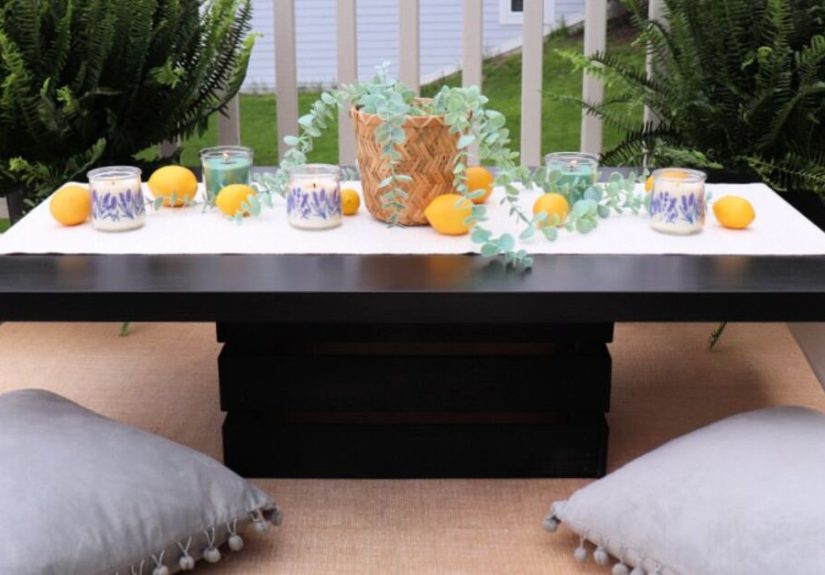
Use a tray to create an instant “anchor”
A tray corrals smaller items and keeps your table from looking cluttered. Choose something weather-friendlymetal, sealed wood, or resin.
Bonus: you can pick the whole tray up when it’s time to clean or when surprise guests arrive and you need to look like you have it together.
Try the “rule of three” for decor
Group items in odd numbersthree is the easiest. For example: a small plant, a candle/lantern, and a stack of outdoor-friendly books or a decorative object.
Vary heights so the arrangement feels layered, not flat.
Add one soft element
Outdoors can look hard (wood, metal, stone). Add softness with a small folded throw, a weather-resistant cushion nearby, or a woven basket on the shelf.
It makes the whole patio feel like an outdoor living room.
Seasonal swaps that take two minutes
- Spring: small vase with greenery, citronella ready, pastel accents
- Summer: melamine drinkware, bright flowers, a big serving tray
- Fall: mini pumpkins, warm-toned lantern, plaid throw
- Winter (mild climates): evergreen sprigs, battery candles, cozy textures
Make It Sturdy: Small Upgrades That Feel Expensive
- Leveling feet: Perfect for uneven patiosno more “leaning tower of iced coffee.”
- Corner blocks inside the frame: Hidden strength where it matters.
- Chamfered edges: A tiny detail that screams “finished.”
- Contrast finish: Natural top + painted base = designer energy.
- Hidden shelf basket: Turns “stuff” into “styled storage.”
Maintenance: Keep It Nice Without Making It a Whole Thing
A quick routine keeps your weatherproof outdoor coffee table looking sharp:
- Wipe down with mild soap and water when it looks dusty or pollen-attacked.
- Tighten screws seasonally (wood moves with humidity and temperature changes).
- Refresh finish when water stops beading on the surfaceor when the top looks dry and tired.
- Use a cover in harsh seasons if possible. It’s like sunscreen for furniture, except less sticky.
FAQ: Quick Answers Before You Build
Should my outdoor coffee table match my furniture?
Not perfectly. Matching can look “catalog.” Coordinating looks curated. Choose one connectioncolor, material, or shapeand let the rest be complementary.
Is a slatted top better outdoors?
Often, yes. Small gaps reduce water pooling and help boards dry faster after rain or humidity.
What’s the easiest finish for beginners?
Penetrating oils and stain/sealer combos are beginner-friendly because they’re easier to touch up and less likely to show brush marks.
Clear coats look amazing but require more careful prep and maintenance.
Experience-Based Lessons: What DIYers Learn After Building an Outdoor Coffee Table (Extra )
Ask a bunch of people who’ve built an outdoor coffee table, and you’ll notice a pattern: the table usually turns out great, but the learning happens in the
little details. The kind you only notice after the first rainstorm, the first barbecue, or the first time someone sets down a sweating glass and leaves a
mysterious ring that looks like a ghost tried latte art.
One common “aha” moment is realizing that outdoor furniture lives in a totally different world than indoor furniture. Indoors, wood gets to relax.
Outdoors, it expands and contracts like it’s training for a gymnastics competition. DIYers often say their first build taught them to leave tiny gaps where
boards meet, especially on slatted tops and shelves. Those gaps aren’t flawsthey’re escape routes for water and breathing room for wood movement.
Another big lesson: the tabletop takes the most abuse. People drag trays, slide plates, and tap cups down like they’re auditioning for a percussion band.
DIYers who finish the whole table but forget extra attention on the top usually end up refinishing sooner. A practical trick many builders adopt is applying an
extra coat (or two) to the tabletop and the top edges, because that’s where moisture and friction team up.
Then there’s the “finish reality check.” Clear outdoor finishes can look incredible at firstglossy, rich, and expensive-looking. But DIYers quickly learn that
sunlight is not a gentle roommate. If the table sits in direct sun, the finish can fade, crack, or peel over time unless it’s maintained.
That’s why experienced builders often choose a finish based on how they want to live: if they’d rather do quick touch-ups than strip and refinish,
they lean toward oils and stain/sealer options. If they love that polished look and don’t mind periodic maintenance, they go with spar-style clear coats.
A surprisingly common experience is the “wobble moment.” The table looks perfect in the garage, but the patio is slightly uneven, and suddenly it rocks like a
tiny boat. DIYers who’ve been there often recommend leveling feet as a simple upgrade that saves your sanity. It’s one of those details you never notice
when it’s done rightand notice every single time when it’s missing.
Styling teaches its own lessons. Many DIYers start by decorating the table with everything they own: lantern, plant, books, bowl, candle, random seashell,
possibly a decorative pineapple (no judgment). Then they discover the magic of restraint. The most “stunning” outdoor coffee tables usually have
one strong anchor (like a tray) and a few intentional pieces. It leaves room for actual livingsnacks, games, elbows, and the occasional pizza box.
Finally, DIYers often say the best part isn’t just the tableit’s what it changes. A well-built coffee table makes the patio feel complete, like an actual outdoor
living room. Suddenly you sit outside more. You host more. You slow down a bit. And you get the quiet satisfaction of knowing that when someone says,
“Where did you get that table?” you get to answer: “Oh, this? I built it.” (And then pretend you didn’t replay that moment in your head later.)
Final Thoughts
A DIY outdoor coffee table is one of the best “weekend projects with big payoff” builds you can tackle. Build it with outdoor-smart materials,
protect it with a finish that matches your lifestyle, and style it with just enough intention to feel elevatedbut still usable. If it holds your coffee,
survives a surprise rain, and makes your patio feel like a place you actually want to hang out, you nailed it.





 Close
Close