
Table of Contents >> Show >> Hide
- First, a Quick Reality Check: Clean vs. Disinfect
- What You’ll Need
- The 10-Minute Bathroom Floor Clean (Weekly “Reset”)
- Deep Clean Your Bathroom Floor (Monthly or As Needed)
- Pick the Right Method for Your Floor Type
- Stubborn Bathroom Floor Problems (And What Actually Works)
- When (and How) to Disinfect a Bathroom Floor Safely
- How Often Should You Clean a Bathroom Floor?
- of Real-Life Bathroom Floor Cleaning Experiences
- Final Thoughts
Bathroom floors have two modes: “pretty okay” and “how did we get here?”
Between shower steam, toothpaste drips, mystery splashes near the toilet (you know the zone), and the hair that
somehow multiplies when you’re not looking, bathroom floors get dirty fast.
The good news: cleaning a bathroom floor doesn’t have to be a weekend-length drama. With the right routine,
the right cleaner for your floor type, and a little strategy (read: don’t mop yourself into a corner like a sitcom
character), you can keep your floor clean, less slippery, and way less “ick.”
First, a Quick Reality Check: Clean vs. Disinfect
Most of the time, what your bathroom floor needs is cleaningremoving dirt, grime, soap scum,
and whatever your socks just discovered. Disinfecting is different: it’s about killing germs.
You don’t need to disinfect the entire floor every single time you clean it (and your lungs will thank you).
Think of it this way: cleaning is the “remove the mess” step, and disinfecting is the
“reduce germs” step. When you do disinfect, you’ll get better results if you clean first.
What You’ll Need
You don’t need a closet full of products. You need a few basics and one “optional but nice” tool if your grout
is going through something.
Basic supplies
- Broom, microfiber dust mop, or vacuum (hard-floor setting)
- Microfiber mop or a soft mop (flat mops are great for corners)
- Bucket (two buckets if you want to feel like a cleaning pro)
- Mild dish soap or a pH-neutral floor cleaner
- Microfiber cloths or old towels for drying
- Soft brush or old toothbrush (for edges and grout)
- Gloves (highly recommended if you’re using stronger products)
Optional “deep-clean” helpers
- Baking soda (great for gentle scrubbing)
- Hydrogen peroxide (helpful for brightening grout)
- Oxygen bleach (like Oxi-type products) for tough grout stains
- A squeegee (not just for showersalso great for quick drying)
The 10-Minute Bathroom Floor Clean (Weekly “Reset”)
This routine is the sweet spot: fast enough that you’ll actually do it, thorough enough that your bathroom stops
feeling like it’s auditioning for a grime documentary.
-
Ventilate and clear the floor.
Turn on the bathroom fan or crack a window. Move the trash can, bathmat, and anything else that’s camping on your
floor. If your bathmat is suspiciously crunchy, toss it in the wash or set it aside for later cleaning. -
Dry clean first (this matters).
Sweep, dust mop, or vacuum. Hair + dust + water turns into “floor smoothie,” and nobody wants that. Pay extra
attention to corners, behind the toilet, and along the tub. -
Spot-treat the trouble zones.
Look for sticky toothpaste spots, makeup smudges, or soap drips. Add a tiny bit of dish soap to warm water and
wipe them with a cloth. For dried-on gunk, let a damp cloth sit on it for a minute before scrubbing. -
Mop with the right amount of water.
Mix warm water with a small amount of mild cleaner (follow label directions if you’re using a store product).
Your mop should be damp, not dripping. Start at the farthest corner and work toward the door.
If you’re using a bucket, change the water when it starts looking like iced coffee. -
Rinse (if needed) and dry.
If your cleaner leaves residue, do a quick pass with clean water. Then dry the floor with a towel or microfiber
cloth. Drying is underratedit prevents streaks, reduces slipping, and keeps grime from re-settling in the grout.
Deep Clean Your Bathroom Floor (Monthly or As Needed)
If your floor has grime in the corners, dull tile, dark grout lines, or that “something is off” vibe, do a deeper
clean. This is also the move after a plumbing leak, a particularly humid season, or a household that treats the
bathroom like a mini waterpark.
Step 1: Do the weekly routine first
Sweep/vacuum and mop once. Deep cleaning works better when you’re not scrubbing through loose dirt.
Step 2: Focus on edges, corners, and around the toilet
Dip a cloth or soft brush in warm soapy water and scrub along baseboards, behind the toilet, and around the tub.
These areas collect splashes and dust, then get ignored until they become a personality trait.
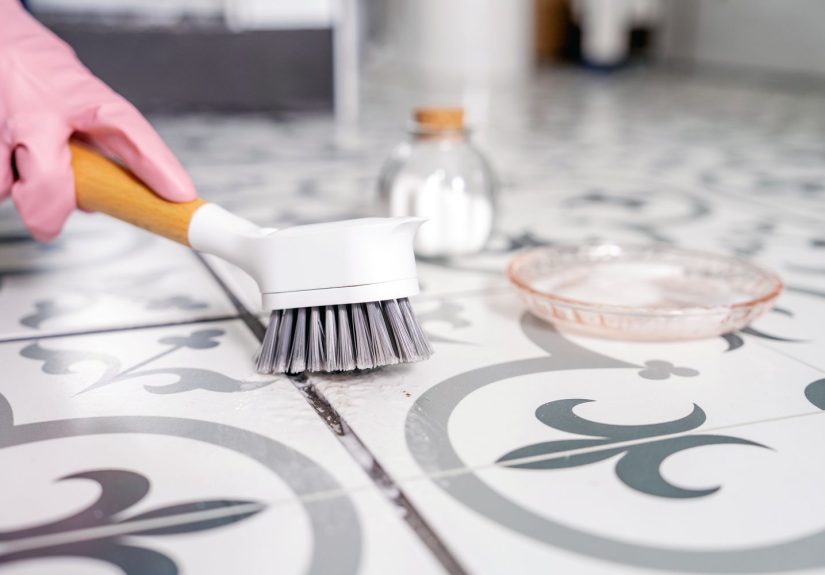
Step 3: Treat grout (the floor’s little dirt magnet)
Grout is porous, which means it loves to hold onto stains. For many bathrooms, a simple paste works wonders:
-
DIY grout paste: mix baking soda with a little water (or hydrogen peroxide for extra brightening)
until it’s spreadable. - Spread it on grout lines, let it sit for 5–10 minutes, then scrub with a toothbrush or grout brush.
- Rinse well and dry thoroughly.
If grout is heavily stained, an oxygen bleach product can help. Always follow the label directions, and test in a
small hidden spot firstespecially if your grout is colored.
Step 4: Remove “floor haze” and soap scum film
If your tile looks clean but still dull, you may be dealing with residue from soap, hard water minerals, or too much
cleaner. Use a mild cleaner, don’t overdo the product, and rinse afterward. Drying with a microfiber towel can bring
back shine without needing anything fancy.
Pick the Right Method for Your Floor Type
Bathroom floors aren’t all the same, and using the wrong cleaner can leave damage, haze, or slippery residue.
Here’s how to clean a bathroom floor based on what you’re working with.
Ceramic or porcelain tile
- Best cleaner: warm water + a small amount of mild dish soap or pH-neutral cleaner
- Best mop: microfiber or chamois-style mop (less chance of pushing dirty water into grout)
- Avoid: abrasive pads, waxy cleaners, and harsh chemicals unless truly needed
Tile is durable, but grout is the weak link. Keep your routine gentle, rinse well, and deep clean grout when it
starts to darken.
Vinyl sheet, vinyl tile, or luxury vinyl plank (LVP)
- Best cleaner: a vinyl-safe cleaner or mild soap in warm water
- Key rule: use a damp moptoo much water can seep into seams and cause problems
- Avoid: soaking the floor, harsh scrubbers, and strong solvents
Vinyl is forgiving, but it’s not invincible. Your goal is to clean the surface without flooding it. Wring out the mop
like you mean it.
Natural stone (marble, travertine, limestone, slate)
- Best cleaner: stone-safe, pH-neutral cleaner (or very mild soap and water)
- Key rule: avoid acidic cleaners (like vinegar or lemon) that can etch stone
- Maintenance tip: consider sealing stone and grout as recommended
Stone looks amazing, but it’s sensitive. Treat it gently and skip DIY acids. If your stone floor is sealed, keep it
that way by using products that won’t strip the sealant.
Laminate (including “water-resistant” laminate)
- Best cleaner: minimal water, microfiber mop, laminate-safe cleaner
- Key rule: clean quickly and dry immediately
- Avoid: steam mops and soaking the floor
Laminate and standing water are not friends. Even water-resistant floors do best with a “less moisture, more wipe”
approach.
Stubborn Bathroom Floor Problems (And What Actually Works)
Problem: Black or pinkish buildup near the shower or grout
Bathrooms are humid, which makes them prime real estate for mildew and biofilm. Improve ventilation (fan on during
showers and for a bit after), dry floors, and clean regularly. For grout, use the baking soda paste method and rinse well.
Problem: The floor feels sticky after you mop
Usually, that’s product residue. Use less cleaner next time, and rinse with clean water. Also, change mop water more
oftendirty water dries into sticky film, which is rude.
Problem: White haze on tile
This can be mineral deposits or cleaner buildup. Try a gentle clean with warm water and mild soap, rinse thoroughly,
and dry. If you suspect hard water deposits, choose a tile-safe product designed for mineral buildup (and avoid acidic
solutions if you have natural stone).
Problem: Funky odor that returns fast
Odors often come from damp mats, lingering moisture, or grime under/around the toilet. Wash mats weekly, dry the floor
after mopping, and scrub the base of the toilet and nearby edges during deep cleans. Better airflow helps a lot.
When (and How) to Disinfect a Bathroom Floor Safely
Disinfecting is most useful after illness, contamination with bodily fluids, or when you’re cleaning a bathroom that
hasn’t been cleaned in… let’s call it “a while.” For routine weekly cleaning, soap and water is often enough.
Disinfecting rules that prevent regrets
- Clean first. Dirt blocks disinfectants from doing their job.
-
Follow label directions. Disinfectants need a specific contact timethe surface must stay
visibly wet long enough to work. - Never mix chemicals. Especially products containing bleach and ammonia or other cleaners.
- Ventilate well. Fan on, window cracked if possible.
If you use diluted bleach
Use a properly diluted bleach solution only on surfaces that can handle it, and only when appropriate. Mix carefully,
use room-temperature water, and make a fresh solution as needed. Apply, keep the surface wet for the recommended time,
then rinse if required and allow to air dry.
If bleach feels like overkill for your situation, you’re probably right. Many people get excellent results with regular
cleaning and targeted disinfecting when it actually matters.
How Often Should You Clean a Bathroom Floor?
The best schedule is the one you can stick toso here’s a practical plan that works for most households:
Daily (or every other day)
- Hang or spread out bathmats so they dry
- Pick up hair tumbleweeds (seriously, it helps)
- Quick wipe around the toilet zone if needed
Weekly
- Sweep/vacuum + damp mop
- Wash bathmats and wipe baseboards if they look dusty
Monthly
- Deep clean edges, corners, and grout lines
- Check for leaks and address damp areas fast
of Real-Life Bathroom Floor Cleaning Experiences
If you’ve ever cleaned a bathroom floor and felt like it got dirty again while you were still holding the mop, welcome
to the club. Bathroom floors have a special talent: they collect grime in the places you don’t look until the moment
you kneel down, and suddenly you’re eye-level with a corner that looks like it’s been marinating since last year.
One common experience: you start strong. You remove the bathmat, andsurprisethere’s a perfect outline of dust and
lint underneath it, like the floor has been making a “before” photo for an infomercial. You sweep, and the dust pile
seems suspiciously large for a room that’s roughly the size of a walk-in closet. Then you notice the hair. Not just a
few strands. A whole ecosystem. It clings to baseboards, wraps around toilet bolts, and gathers in corners like it’s
paying rent.
Another classic moment happens mid-mop: you realize your water has turned a shade best described as “sad latte.”
That’s when people learn the value of changing mop waterbecause re-dipping a mop into that bucket is basically
reapplying yesterday’s dirt with confidence. The floor might look wet, but it won’t look clean. Switching to fresh
water feels like a cheat code. Suddenly, the tile looks brighter and the grime stops smearing into streaks.
Grout brings its own storyline. Plenty of people have had the experience of thinking, “My tile looks fine,” until
sunlight hits the floor at the wrong angle and reveals every grout line like a road map. The first time you try a
baking soda paste and scrub with an old toothbrush, it’s weirdly satisfyinglike erasing pencil marks. Then you look
at the section you haven’t cleaned yet and realize you’ve accidentally created a “half-cleaned” comparison photo.
That’s motivation and mild panic, all in one.
And let’s talk about the area around the toiletthe place where cleaning confidence goes to be tested. Many people
discover that wiping the floor isn’t enough; you need to hit the edges and the base where splashes and dust combine
into a stubborn ring. Once it’s cleaned properly, the whole bathroom feels fresher, even if nothing else changed.
It’s one of those small wins that makes the effort feel worth it.
The best long-term experience most people report is this: after a few consistent weeks of quick weekly cleaning, the
deep cleans get easier. Grout stains lighten, corners don’t build up as fast, and the bathroom stops feeling like it
requires a hazmat suit. The floor becomes something you can clean in minutes instead of something you avoid until
guests are coming over. That’s the real secretsmall, regular wins beat heroic, exhausting cleaning marathons every time.
Final Thoughts
Learning how to clean a bathroom floor isn’t about finding one magical product. It’s about using the right method for
your floor type, doing dry cleanup first, mopping with the right amount of water, and giving grout the occasional
attention it demands. Keep it simple, keep it consistent, and your bathroom floor will stop being the villain of your
cleaning routine.





 Close
Close