
Table of Contents >> Show >> Hide
- Understand the climate before you buy a tree
- Choose the right pistachio tree and pollinator setup
- Prepare the soil like you actually want the tree to live
- When and how to plant a pistachio tree
- Watering a pistachio tree without drowning it
- Pruning and training for structure, light, and future harvests
- Feeding the tree and watching for nutrient problems
- Common problems: diseases, pests, and rookie mistakes
- How long does it take to get pistachios?
- Harvesting pistachios the right way
- Real-life growing experiences: what planting a pistachio tree actually feels like
- Conclusion
If you have ever looked at a bowl of pistachios and thought, “I should grow my own snack tree,” first of all, admirable ambition. Second, pistachio trees are not exactly low-maintenance houseguests. They are wonderfully tough in the right climate, but they are also picky about heat, winter chill, drainage, and pollination. In other words, they are less “plant it and forget it” and more “plant it, study it, and occasionally stare at it like a weather analyst.”
The good news is that learning how to plant and grow a pistachio tree is absolutely possible if you match the tree to the right site and understand what it needs. Pistachios thrive in regions with long, hot, dry summers and cool winters. They hate soggy roots, dislike humid drama, and need both male and female trees for nut production unless you graft male wood into a female canopy. Once established, though, a pistachio tree can become a long-lived, productive, and surprisingly handsome part of a home orchard.
This guide walks through the real-world process of growing pistachios, from climate and soil prep to watering, pruning, pollination, and harvest. We will also cover the part nobody loves but everybody needs: patience. Because pistachio trees do not hand out nuts like party favors in year one. They are building a legacy, not a vending machine.
Understand the climate before you buy a tree
The first rule of pistachio growing is brutally simple: the tree must fit your climate. Pistachios perform best where summers are intensely hot and dry, and where winters provide enough chill to break dormancy properly. That means they are much better suited to parts of California, Arizona, New Mexico, west Texas, and similar dry inland climates than to humid regions or cool summer zones.
A pistachio tree generally needs roughly 850 to 1,000 chill hours below 45 degrees Fahrenheit, depending on the source and growing conditions. It also benefits from very warm summer weather, and some extension guidance describes temperatures above 100 degrees Fahrenheit as ideal for good nut fill. That sounds extreme to humans, but pistachios are not humans, and they have no opinion on your sunscreen budget.
Just as important, pistachios prefer dry weather during bloom and nut maturation. Wet spring weather can interfere with pollination and increase disease pressure, while overly wet conditions later in the season can contribute to shell staining, blights, and root problems. If your area regularly has muggy summers, frequent rainfall, or poor air circulation, a pistachio tree may survive, but it may never become the nut-producing champion you imagined.
Best site conditions for a pistachio tree
- Full sun all day
- Hot, dry summers
- Cold enough winters for dormancy
- Excellent drainage
- Enough space for a mature canopy and root system
- Good air movement without constant damaging wind
Choose the right pistachio tree and pollinator setup
Pistachio trees are dioecious, which is the botanical way of saying the male and female flowers live on separate trees. The female tree produces the nuts. The male tree produces the pollen. A female pistachio planted alone will not set a useful crop. It may look healthy, leafy, and deeply committed to wasting your optimism, but it will not give you pistachios.
For home growers, the classic combination is a female ‘Kerman’ with a male ‘Peters,’ though the best cultivar choice may depend on your nursery and region. In commercial orchards, pollinator ratios vary, but home-garden guidance often suggests one male for every 10 to 15 female trees, while other extension sources cite one male for at least every eight females. In a backyard, one male and one female are the simplest setup. If space is tight, some growers graft male branches into a female tree so one tree can handle both the pollen and the nut production job.
It is also worth buying a grafted nursery tree rather than trying to grow a pistachio from seed for nut production. Seed-grown trees are unpredictable, slow, and may not even turn out to be the sex you need. That is a very long gardening gamble. Grafted trees offer known cultivars, more reliable performance, and a clearer path to harvest.
Prepare the soil like you actually want the tree to live
Pistachios are more tolerant than many fruit and nut trees when it comes to alkaline or somewhat salty soil, but that does not mean they enjoy swampy ground, compacted clay, or a planting hole that turns into a bathtub every time you irrigate. They do best in deep, well-drained soil, especially light- to medium-textured loams with enough aeration for healthy root growth.
If your soil drains slowly, fix that before planting or choose another site. Root and crown diseases, especially Phytophthora, are closely linked to prolonged saturation and poorly drained soils. Overirrigation can be just as dangerous as drought. That is why successful pistachio growing is less about random watering enthusiasm and more about controlled, deep moisture management.
Before planting, loosen a broad area rather than digging a narrow, neat little grave. Check drainage by filling a test hole with water and seeing how quickly it drains. If water lingers, the tree will complain later by declining, yellowing, or dying. Trees are famously bad at sending polite emails, so do the test now.
Soil tips that matter
- Avoid sites with standing water after rain or irrigation
- Do not plant where runoff collects
- Keep the crown area dry and well aerated
- Use berms or raised planting if drainage is questionable
- Be cautious with former crop ground that may carry soil-borne disease issues
When and how to plant a pistachio tree
In warm pistachio-growing regions, container-grown pistachio trees are often planted during the dormant season, especially in winter. Planting while the tree is dormant helps reduce stress and gives roots time to settle in before the main growing push. Commercial guidance also notes transplanting and budding schedules that vary by rootstock and region, but for home gardeners, the practical goal is simple: plant when the weather is mild and the tree is not under heat stress.
Choose a site in full sun with enough room. Pistachio trees are slow growing at first, but mature trees can become large, often around 20 to 25 feet tall and 25 to 30 feet wide. A backyard tree should not be crammed next to a wall, packed under power lines, or squeezed into a corner like a guilty houseplant.
- Dig a hole wide enough to spread roots without bending or circling them.
- Set the tree at or just slightly deeper than the level it grew in the container, following nursery guidance for the grafted tree.
- Backfill with native soil unless a soil test suggests a specific amendment need.
- Water thoroughly to settle the soil and remove large air pockets.
- Stake the young tree if needed, especially in windy sites.
- Mulch lightly, but keep mulch away from the trunk and crown.
Do not bury the trunk flare and do not create a permanent mud ring around the base. Pistachios want deep rooting and oxygen around the crown, not a spa treatment made of standing water.
Watering a pistachio tree without drowning it
This is where many growers get tripped up. Pistachio trees are drought tolerant once established, but high-quality nut production still requires regular water. Those two ideas are not contradictory. A mature tree can survive dry conditions better than many other crops, but if you want good growth, split nuts, and better kernel quality, the tree still needs serious moisture at the right times.
Extension guidance notes that mature pistachio trees in hot climates can use around 40 gallons of water per day by mid-May and up to 50 gallons per day from early July through harvest. That does not mean dumping a giant splash onto the tree whenever you remember. It means maintaining soil moisture deeply and consistently while avoiding saturation.
Low-volume irrigation systems such as drip or minisprinklers are usually a smart fit because they deliver water efficiently and reduce waste. Newly planted trees need close attention, especially around the root ball, but overwatering young trees is a classic mistake. If the foliage starts yellowing slightly and the soil stays too wet, the tree is not thanking you. It is suffering quietly.
Smart watering habits
- Water deeply so moisture reaches well below the surface
- Adjust frequency based on heat, soil texture, and tree age
- Monitor the root zone, not just the top inch of soil
- Do not let water pond for long periods
- Keep irrigation off the trunk and crown area
Pruning and training for structure, light, and future harvests
Pistachios bear on one-year-old wood, and much of their growth occurs near the tips of branches. That means pruning is not just cosmetic. It shapes the canopy, improves light distribution, supports future fruiting wood, and keeps the tree manageable. Young trees need training early so they develop a strong scaffold structure. Mature trees benefit from heading and thinning cuts that help keep the canopy upright and compact.
One key recommendation from pistachio home-garden guidance is to head back shoots to force lateral growth. Mature branches are often cut while leaving a few vegetative buds beyond the fruit buds, which helps prevent dieback and supports next season’s growth. Shorter fruiting spurs should not be hacked off indiscriminately, or you will prune away tomorrow’s pistachios with today’s confidence.
Prune out broken, dead, crossing, or diseased branches. In wetter spring weather, remove blighted growth promptly. Also understand that pruning can influence alternate bearing. Pistachios naturally swing between heavier and lighter crop years, and good pruning and irrigation can reduce that tendency somewhat, though not eliminate it entirely.
Feeding the tree and watching for nutrient problems
Pistachios need balanced nutrition, but they are not a crop that rewards random fertilizer dumping. Nitrogen demand rises during active growth and kernel development, and extension schedules often split nitrogen applications across the season rather than delivering it all at once. For home growers, that usually translates to moderate, timed feeding instead of one dramatic spring feast.
Micronutrients matter too. Pistachios are often associated with zinc and boron deficiencies, and those shortages can affect fruit set and shoot growth. Some home-garden recommendations suggest foliar nutrient sprays during the active season for young trees, especially where deficiencies are common. If your leaves look odd, your growth is weak, or your nut set is disappointing, a soil or leaf analysis is smarter than guessing with a fertilizer bag in one hand and hope in the other.
Common problems: diseases, pests, and rookie mistakes
The biggest pistachio mistakes are usually not exotic. They are familiar, boring, and devastating: poor site choice, bad drainage, wrong climate, missing pollinator, and impatient watering habits. Get those wrong and no amount of motivational speeches will help the tree.
Phytophthora root and crown rot is strongly associated with excessive soil moisture and poor drainage. Verticillium wilt can also be serious, and some extension guidance warns against planting pistachios where cotton or other high-risk hosts may have been grown. Wet bloom periods may encourage Botrytis or Alternaria issues, while insect pests such as navel orangeworm, stink bugs, and plant bugs can reduce nut quality. Sanitation matters too. Old nuts left in the tree or on the ground can support pest carryover.
Signs something is going wrong
- Yellowing foliage in persistently wet soil
- Weak, stunted shoot growth
- Branch dieback or scorch symptoms
- Poor nut set despite a healthy-looking female tree
- Shell staining or poor split development
How long does it take to get pistachios?
Here comes the patience chapter. Pistachio trees usually begin producing a small crop around 4 to 6 years after budding or roughly 5 to 6 years after planting, depending on the tree and conditions. A significant crop often does not arrive until year 7 or 8, and full bearing may take 10 to 12 years. Yes, that is a long timeline. No, yelling at the sapling does not accelerate it.
That slow start is one reason site selection matters so much. A pistachio tree is a long game. If you plant it in the wrong climate, in soggy soil, or without pollination, you might wait years just to confirm that you made a bad decision. In the right location, however, the tree can become more productive with time and deliver worthwhile harvests for decades.
Harvesting pistachios the right way
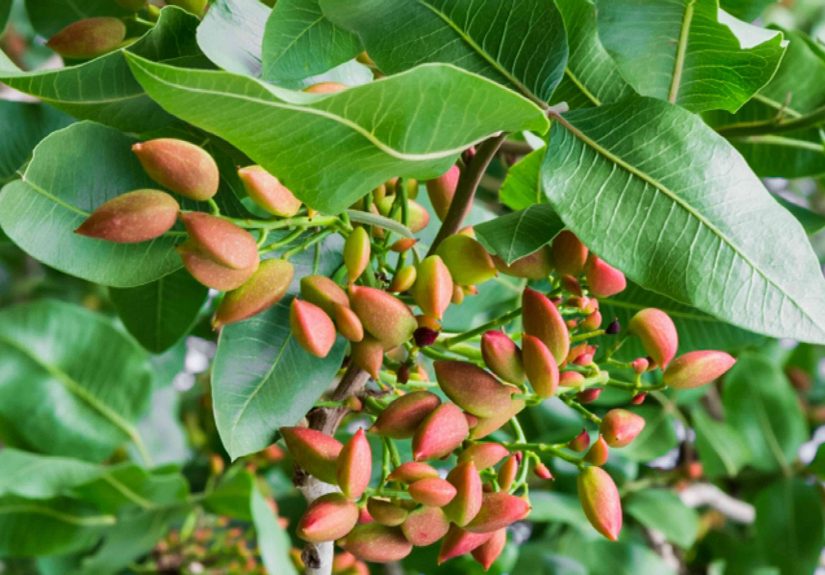
Pistachios are ready to harvest when the hull changes color and slips easily from the shell, usually around early to mid-September in classic growing regions. Timing matters. Harvest too early and kernels may be underdeveloped. Harvest too late and shell staining, mold risk, insect damage, and bird losses all become more likely. Extension guidance also emphasizes hulling and drying quickly after harvest to protect quality.
For a home grower, nuts can be knocked or shaken onto clean tarps. Do not let them fall onto bare soil if you can avoid it. Once harvested, hull them promptly and dry them thoroughly. Pistachios are one of those crops where post-harvest handling can make the difference between “delicious homegrown nuts” and “why do these look suspicious?”
Real-life growing experiences: what planting a pistachio tree actually feels like
Growing a pistachio tree is a lesson in delayed gratification, weather obsession, and humble pie. The first year often feels quiet. You plant the tree, water carefully, stare at it every three days, and then wonder whether anything is happening at all. The answer is yes, but mostly underground. Pistachios are not show-offs in the early years. They are building roots, adjusting to the site, and deciding whether your garden is worthy of their long-term commitment.
One of the most common experiences new growers report is surprise at how much the success of the tree depends on what is happening beneath the surface. A pistachio can look fine for a while even when drainage is poor, then suddenly decline once the roots begin to suffer. That is why experienced growers talk so much about soil, irrigation, and crown health. It sounds less exciting than harvest photos, but it is the part that determines whether harvest photos ever happen.
Another real-world lesson is that pistachio trees teach patience better than almost any motivational poster. In year two or three, you may get beautiful growth and still no nuts. In year four or five, you may finally see the beginning of something useful, only to realize the tree is alternating between stronger and lighter years. A pistachio tree makes you respect time. It rewards consistency, not frantic correction. People who do best with pistachios tend to be the growers who observe carefully, make small adjustments, and do not try to fix every minor issue with a dramatic gardening stunt.
There is also the pollination lesson, which can be deeply educational and mildly embarrassing. Many first-time growers fall in love with the idea of a single pistachio tree, then later discover that the female tree needs nearby male pollen. That realization tends to arrive with the emotional weight of a tax notice. Fortunately, once you understand the male-female relationship, the solution is straightforward: plant both, or graft male branches into the female canopy if space is limited.
Experienced growers also learn to read the tree in a practical way. Shorter-than-normal new shoots may point to water stress. Yellowing foliage may hint at excess moisture or nutrition issues. Poor nut fill can send you back to irrigation timing, heat accumulation, or pollination. The tree becomes a long-term conversation, although admittedly a one-sided one. It never says, “I need less water and better drainage, please.” It just changes its leaves and waits for you to notice.
Then there is the first meaningful harvest, which tends to feel absurdly satisfying for a crop that took years to arrive. After so much waiting, checking, pruning, and climate-watching, you finally get hulls that slip, shells that open, and nuts you can actually process. Even a modest crop feels like a victory because it proves the entire system worked: the site, the chill, the heat, the water, the pollination, and the patience all lined up. A pistachio tree never gives you instant gratification, but when it finally does pay off, it feels earned in the best possible way.
Conclusion
If you want to plant and grow a pistachio tree successfully, think like a strategist, not just a shopper at a nursery. Start with climate. Choose a hot, sunny, dry site with excellent drainage. Make sure you have a pollination plan. Water deeply but never sloppily. Prune for structure and fruiting wood. Watch for nutrient issues and disease pressure. Most of all, give the tree time.
Pistachios are not the easiest nut tree for every backyard, but in the right region they can be one of the most rewarding. They combine resilience, beauty, and serious long-term productivity. Get the fundamentals right, and one day your snack bowl may become the most satisfying “I grew this myself” flex in the neighborhood.






 Close
Close