
Table of Contents >> Show >> Hide
- What Is Snakes and Ladders?
- What You Need to Play
- How to Set Up the Game
- How to Play Snakes and Ladders
- How Do You Win?
- Common House Rules and Variations
- Is There Any Strategy?
- Snakes and Ladders vs. Chutes and Ladders
- The History of Snakes and Ladders
- Why the Game Still Works
- Best Tips for Teaching Kids to Play
- What Playing Snakes and Ladders Actually Feels Like
- Final Thoughts
Snakes and Ladders is one of those rare board games that can turn a perfectly calm room into a tiny soap opera in under five minutes. One player is soaring toward victory, another is giving a dramatic speech about injustice, and someone very small is shouting, “I was on 97!” If that sounds familiar, congratulations: you already understand the emotional core of the game.
Still, the rules are wonderfully simple. That simplicity is exactly why Snakes and Ladders has survived for generations and why its American cousin, Chutes and Ladders, remains a family-game classic. Whether you are teaching a child to play for the first time, settling a house-rule debate, or just wondering why this game has such a long history, here is everything you need to know.
What Is Snakes and Ladders?
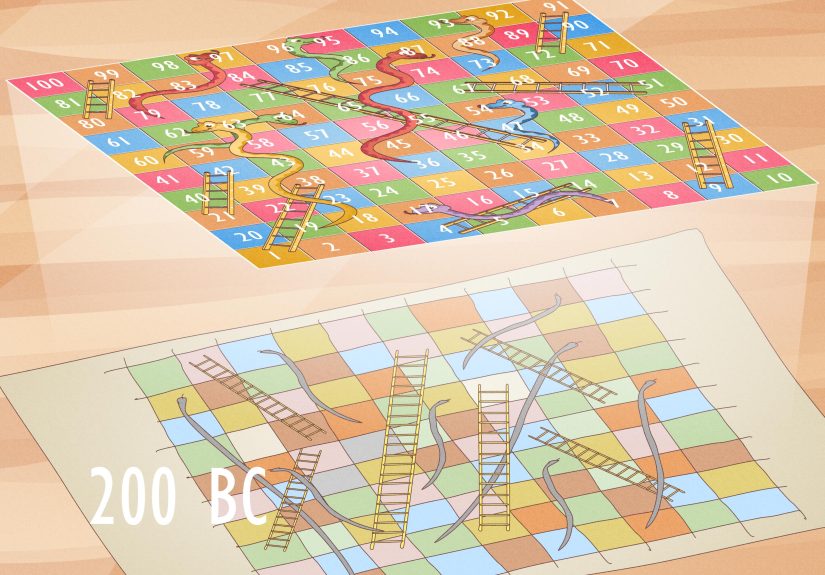
Snakes and Ladders is a race-style board game in which players move a token across a numbered board, usually from 1 to 100. If you land on the bottom of a ladder, you climb up. If you land on the head of a snake, you slide down. That is the whole magical, maddening formula.
In many U.S. homes, the best-known version is Chutes and Ladders, which swaps snakes for playground slides or chutes. The idea stays the same: lucky spaces move you forward, unlucky ones send you backward, and the finish line always looks much closer than it really is.
What You Need to Play
You do not need much to get started:
Standard game materials
A Snakes and Ladders board usually has numbered squares, a set of player tokens, and either one die or a spinner. Traditional versions often use dice. Many American retail versions use a spinner instead, especially those designed for younger children.
Number of players
Most versions work best with 2 to 4 players, though some sets allow more. The game is especially good for young kids because turns are quick, the goal is clear, and no reading is required once everyone understands the symbols.
How to Set Up the Game
Set the board flat on a table or the floor. Each player chooses a token and places it on the starting space or just off the board near square 1, depending on the version you own. Decide who goes first. Families often use the classic method: highest roll goes first. Other families use the more scientific method of “youngest player because they are already halfway under the table and impossible to negotiate with.”
After that, line up the turn order and begin.
How to Play Snakes and Ladders
1. Roll the die or spin the spinner
On your turn, roll the die or spin the spinner. Move your token forward the number of spaces shown.
2. Follow the path of the board
The board usually runs left to right on one row, then right to left on the next, zigzagging all the way to 100. If you have ever gotten lost on row 47, do not worry. You are not bad at the game. You are simply human.
3. Climb ladders
If your token lands exactly on the bottom of a ladder, move it immediately to the square at the top of that ladder. Ladders are the game’s version of a random miracle. No planning, no bargaining, no résumé required.
4. Slide down snakes
If your token lands on the head of a snake, slide it down to the square at the tail. In American versions with chutes or slides, the same rule applies: land on the top, go down to the bottom.
5. Keep taking turns
Play continues in order until one player reaches the final square and wins.
How Do You Win?
In the most common rule set, the first player to reach square 100 wins the game. Some versions require an exact count, meaning if you are on 98 and roll a 4, you do not move. You wait and try again next turn. Other versions allow you to move past 100 or bounce backward from the last square.
This is why it is smart to settle the finish-line rule before anyone starts. Few household conflicts are as unnecessary as a deep philosophical disagreement about whether an 8 from square 97 should count.
Common House Rules and Variations
Snakes and Ladders is easy to customize, which is one reason it has lasted so long. Here are some of the most common variations.
Exact-count finish
This is the classic approach in many commercial editions. You must land exactly on the final square to win.
Bounce-back finish
If you roll too high, you move to 100 and then count backward the extra spaces. This keeps the ending dramatic and slightly cruel, which is very on-brand for this game.
Extra turn on a certain roll
Some families let players roll again after getting a 6. This speeds up the game and adds more excitement, though it can also make lucky players look suspiciously blessed by the board-game gods.
Play with multiple dice
Using two dice makes movement faster and less predictable. It also shortens the game, which may be good news if one player has already delivered three speeches about fairness.
Custom snakes and ladders
Teachers and parents often create themed versions where ladders reward helpful behavior or correct answers, while snakes represent mistakes, missed steps, or silly setbacks. This works especially well for classroom review games.
Giant floor version
A giant floor board turns the game into a full-body activity. Kids become the tokens, which adds movement and a little extra chaos in the best possible way.
Is There Any Strategy?
Let us be honest: Snakes and Ladders is mostly a game of chance. You do not choose how far to move, and you cannot avoid a snake if the roll sends you there. Compared with strategy-heavy games, this one is pure randomness wearing a cheerful face.
That said, there are still a few smart ways to approach it:
Pick the rules in advance
The biggest strategic move happens before the first turn. Decide whether you are using exact count, bounce-back, or extra-roll rules. Clear rules make the game smoother and keep the fun from getting derailed by mid-game courtroom arguments.
Use it as a learning game
For younger players, the real “strategy” is practicing counting, recognizing numbers, waiting for a turn, and coping with setbacks. Those are important game skills and life skills. Sadly, the game does not help much with learning how to be chill after sliding from 99 to 7.
Keep the mood light
This may sound silly, but it matters. The game is most fun when everyone treats the ups and downs as part of the joke. Snakes and Ladders works best when players expect drama and laugh at it.
Snakes and Ladders vs. Chutes and Ladders
These games are closely related, but there are a few differences worth knowing.
Traditional Snakes and Ladders
This version uses snakes and ladders, often with a more classic or international look. Many boards use a die and keep the original symbolism of rise and fall.
American Chutes and Ladders
The U.S. version softens the imagery for young children by replacing snakes with chutes or slides. Instead of moral danger represented by a snake, you get the far friendlier message of “oops, playground problem.” Same emotional damage, cuter graphics.
The History of Snakes and Ladders
The history of Snakes and Ladders is much more interesting than its simple rules might suggest. The game is widely traced back to ancient India, where early forms were associated with moral and spiritual ideas rather than just family entertainment. In those older versions, upward movement symbolized virtues or positive qualities, while downward movement represented failings, temptations, or moral setbacks.
In other words, this was not originally just a children’s pastime. It was a lesson dressed up as a game board.
Over time, the game traveled beyond India and was adapted in Britain. As it moved across cultures, the symbolism shifted. The structure stayed recognizable, but the emphasis became less spiritual and more child-friendly. Eventually, the game reached the United States, where it became best known as Chutes and Ladders.
The American version simplified the imagery and leaned hard into accessibility for young players. That helped make it a staple of preschool and early elementary game shelves. The result is a fascinating cultural journey: a game with philosophical roots became one of the most familiar beginner board games in America.
That long journey also explains why the game exists in so many forms around the world. Some versions still echo older themes of reward and consequence. Others are pure family fun. But the core design has barely changed: move, rise, fall, repeat, and hope the next turn is less emotionally expensive.
Why the Game Still Works
Snakes and Ladders has survived because it does several things very well at once.
It is easy to learn
Most players can understand the game in under two minutes. That makes it perfect for young children and mixed-age groups.
It teaches basic game habits
Children practice turn-taking, counting spaces, reading numbers, and following simple rules. The game also gives them experience with winning, losing, and recovering from ridiculous setbacks.
It creates instant suspense
No one stays comfortably ahead for long. A perfect ladder can change everything. So can one awful snake. The game keeps everybody emotionally invested, even when nobody is fully in control.
It feels fair, even when it feels rude
Because luck drives the outcome, younger players do not feel outmatched by more experienced ones. Everyone is at the mercy of the board. That kind of randomness makes the game welcoming, even when it is being a little mean.
Best Tips for Teaching Kids to Play
If you are introducing the game to a beginner, keep it simple.
Use a short explanation
Try: “Roll, move, go up ladders, go down snakes, first to the top wins.” That is usually enough.
Model one turn
Show a sample roll and move a piece along the board so the child sees the zigzag pattern.
Count aloud together
This helps with number recognition and makes the game feel interactive.
Celebrate the funny parts
If someone slides way down the board, keep it playful. A laugh goes a long way when a child has just gone from “future champion” to “back near the beginning.”
What Playing Snakes and Ladders Actually Feels Like
One reason this game has never really disappeared is that the experience of playing it is bigger than the rules. On paper, Snakes and Ladders is almost absurdly basic. In real life, it becomes a tiny emotional roller coaster with a board, a die, and a cast of deeply invested people.
For young kids, the experience often begins with optimism. The board is bright, the numbers are clear, and the idea seems easy enough: move forward and reach the top. Then the first ladder appears, and suddenly the game feels magical. A child who was counting carefully two seconds ago is now convinced they are an unstoppable genius. Five minutes later, they land on a snake and learn one of the oldest truths in gaming: confidence is temporary.
For parents, the experience is different but equally familiar. You start by thinking this will be a quick, wholesome game before dinner. Then you discover that every single move requires a dramatic reaction from someone at the table. One child is celebrating like they won a major sports championship after climbing a ladder from 12 to 38. Another is quietly developing a personal grudge against square 87. You are not just hosting a game anymore. You are moderating a tiny reality show.
In classrooms, Snakes and Ladders often feels surprisingly useful. Children get repeated practice with counting, taking turns, and staying engaged while others play. Even better, they learn that progress is not always smooth. That may sound like a huge philosophical lesson for a board game with cartoon snakes on it, but the lesson lands anyway. Kids see that a setback is not the end of the game. You just wait for your next turn and keep going.
There is also something charming about how the game levels the playing field. The oldest cousin, the youngest sibling, the visiting grandparent, and the child who just learned to count to 100 can all sit down together and have a real shot at winning. The game does not care who is the smartest or fastest. It simply asks whether luck is smiling on you today, which is both democratic and slightly terrifying.
And then there is the ending, which is always more dramatic than it has any right to be. The final stretch of the board can feel endless. Players hover near the finish, overshoot, slide down, bounce back, and start bargaining with fate. The whole room starts watching every roll like it matters on a national level. When someone finally wins, it usually feels less like a quiet victory and more like surviving a small weather event.
That is the real secret of Snakes and Ladders. People do not remember it because it is complex. They remember it because it creates stories. The unbelievable comeback. The brutal fall from the last row. The game night where a six-year-old beat everybody. The moment everyone laughed at the exact same disaster. Simple games rarely stay alive for centuries unless they make people feel something, and this one definitely does.
Final Thoughts
Snakes and Ladders remains popular because it does not pretend to be anything it is not. It is easy, fast, unpredictable, and just dramatic enough to keep everyone hooked. Its long history gives it real cultural weight, but its modern appeal is wonderfully simple: almost anyone can play, and almost every round produces a story worth retelling.
So if you want a game that teaches basic skills, works across ages, and occasionally causes a player to stare into the middle distance after one tragic roll, Snakes and Ladders still gets the job done. Roll the die, respect the ladder, fear the snake, and try not to get emotionally attached to square 94.
:





 Close
Close